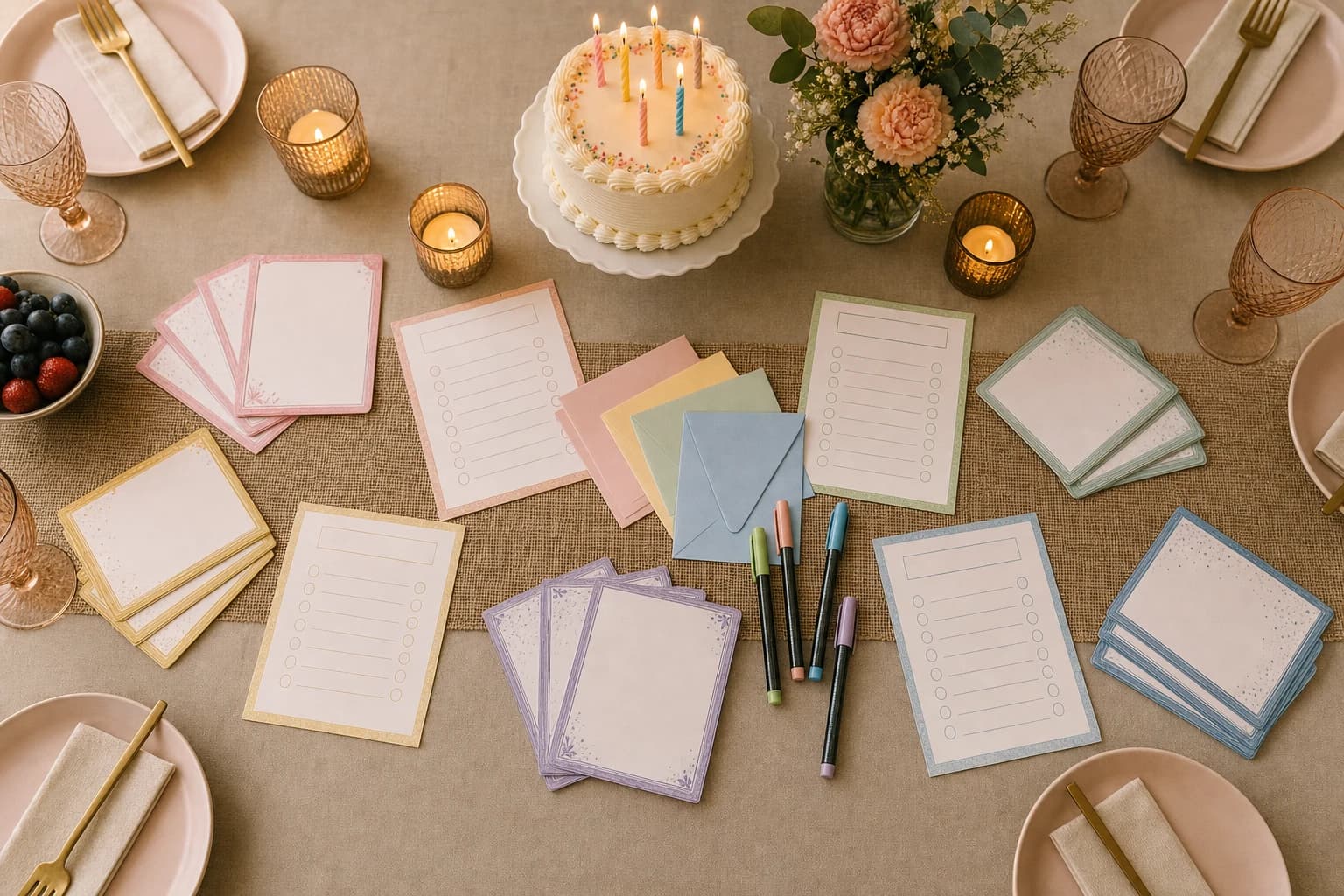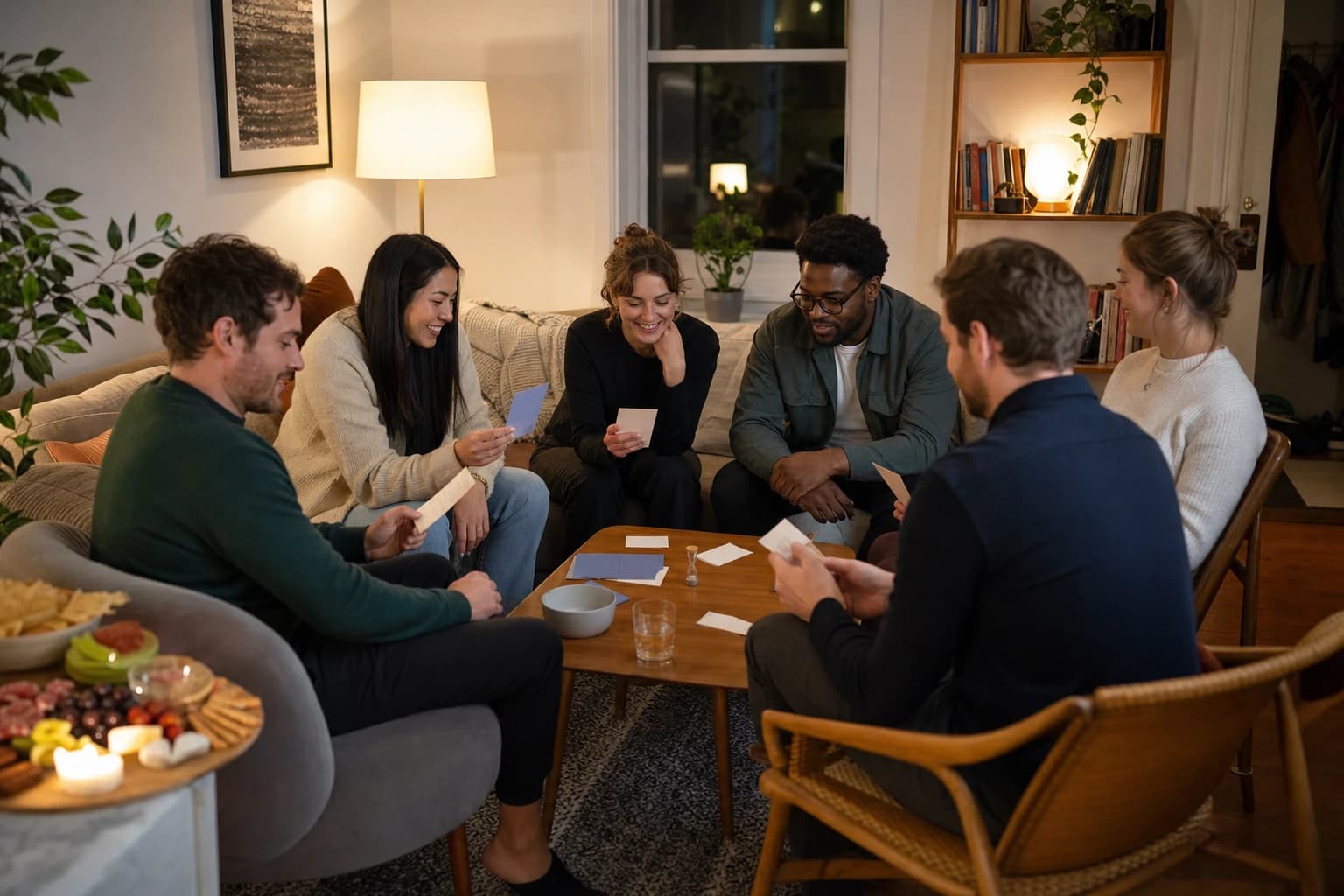
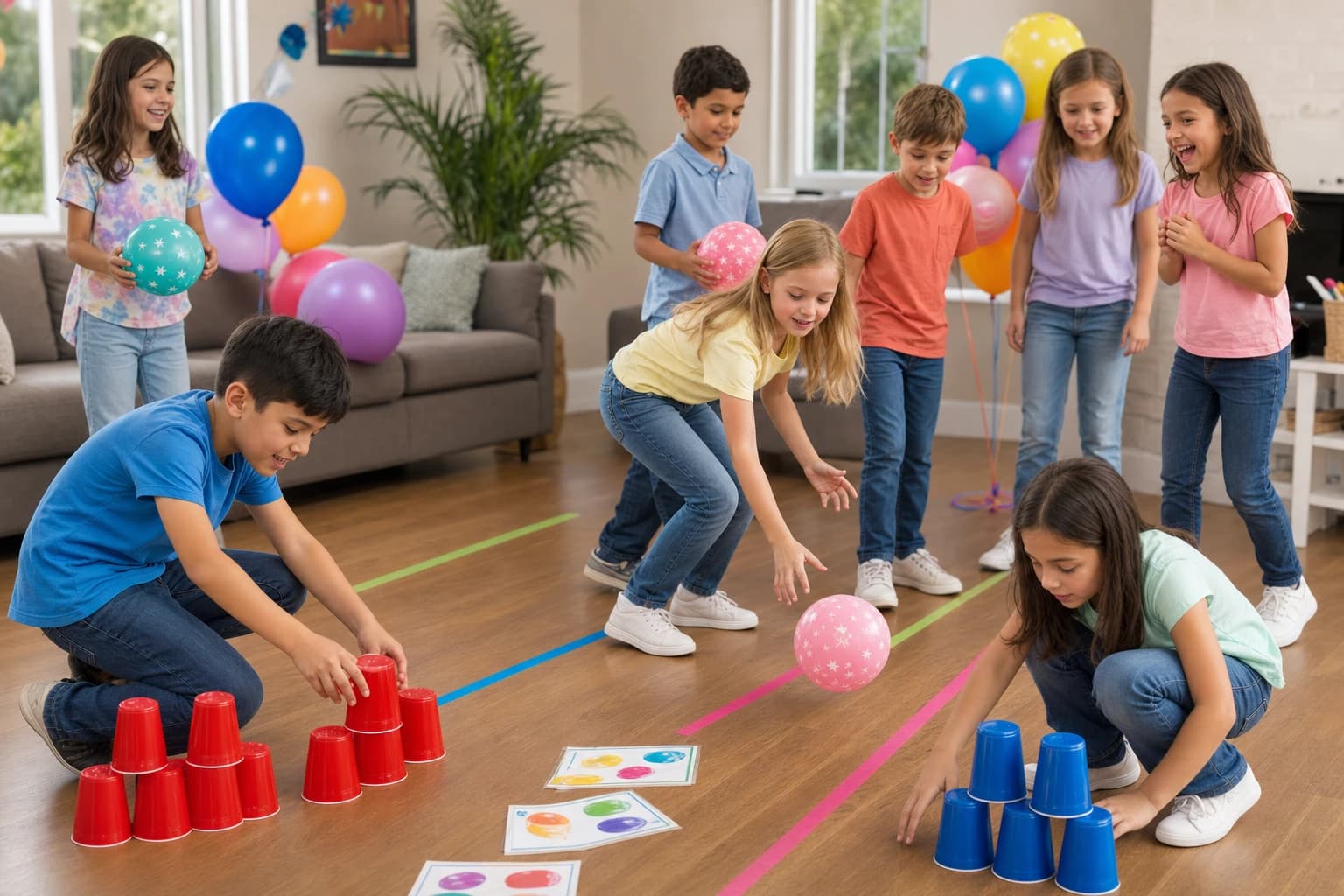
Planning indoor birthday party games for kids ages 6-10 can feel tricky because the same group may include early readers, confident 10-year-olds, shy guests, and children who need to move. The best party plan usually mixes active games, quieter challenges, and a few easy backups that work in a living room, classroom, community room, or rented hall.
This guide gives you 25 kids indoor party games with simple rules, supply lists, space notes, mess levels, and age-friendly variations. Use the table first to build a balanced schedule, then choose the games that fit your room and your group.
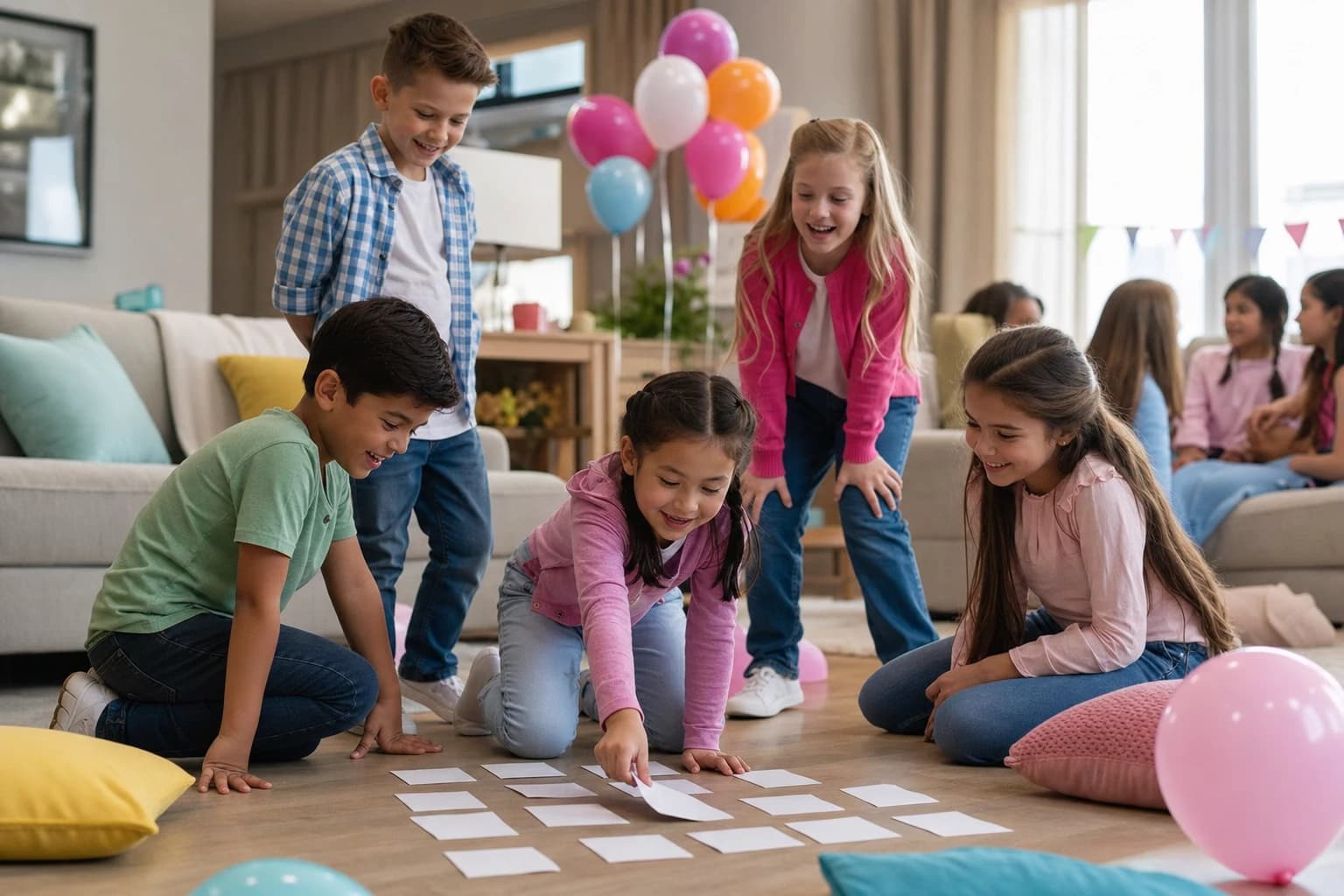
Quick Party Planner: Choose Games by Energy, Space, and Mess
For a two-hour indoor party, plan about 60 to 75 minutes of games. Leave time for arrivals, food, cake, gifts if you open them, and transitions. A good rhythm is one warm-up game, two active games, one calmer game, food or cake, then two flexible games before pickup.
| Game | Energy | Space Needed | Mess Level | Best For |
|---|---|---|---|---|
| Musical Statues | High | Medium | None | Fast start, mixed ages |
| Balloon Keep-Up | High | Medium | Low | Team play without running |
| Floor Is Lava Path | High | Medium | None | Obstacle fun |
| Relay Dress-Up | High | Large | Low | Rented hall or classroom |
| Indoor Scavenger Hunt | Medium | Any | Low | Small teams |
| Pass the Parcel Challenges | Low | Small | Low | Calming the room |
| Guess the Sound | Low | Small | None | Quiet reset |
| Cup Stack Race | Medium | Table or floor | None | Skill challenge |
| Treasure Bowl | Low | Table | Medium | Sensory play |
Before You Start: Supplies and Safety Checks
Most of these indoor games for kids party planning use household supplies. Keep everything simple so you are not managing complicated props while guests are arriving.
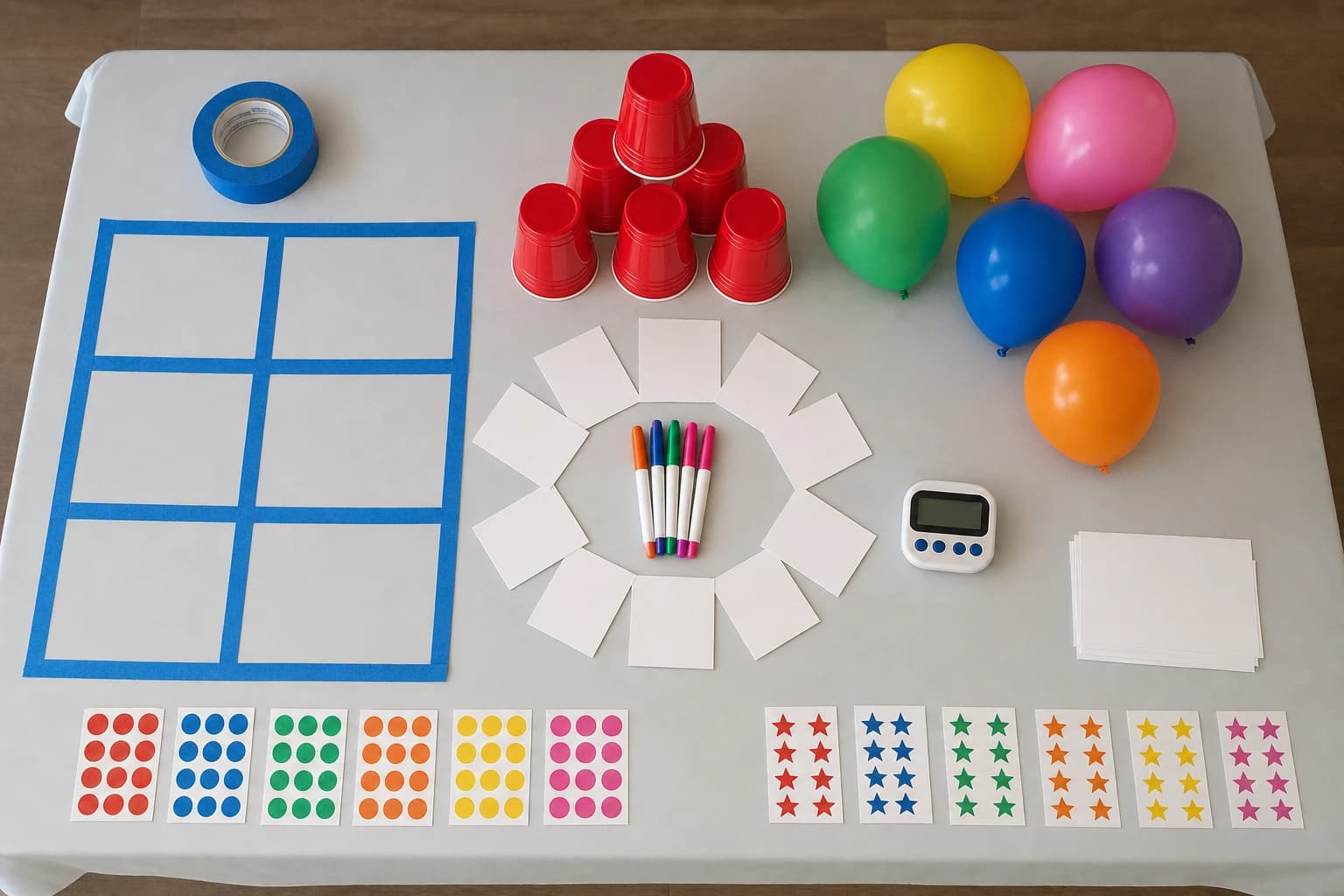
- Basic supplies: painter’s tape, paper plates, plastic cups, balloons, index cards, pencils, small prizes or stickers, music speaker, laundry basket, scarves or socks, and a timer.
- Room setup: move sharp-edged furniture, tape down rugs that slide, and mark “no running” zones if the floor is slick.
- Fair play: use teams, timed rounds, or “personal best” scores so children are not eliminated early and left watching.
- Small objects: if younger siblings are present, avoid tiny prizes, marbles, or loose candies. The American Academy of Pediatrics offers choking prevention guidance for families at HealthyChildren.org.
High-Energy Indoor Birthday Party Games
Use these when the group is restless or after most guests have arrived. Set clear boundaries before you begin: where children can move, what counts as “out,” and whether running is allowed.
1. Musical Statues
Materials: music player. Space: medium. Time: 8 minutes.
- Play music while children dance inside the marked area.
- Pause the music. Everyone freezes like a statue.
- Instead of sending players out, choose the funniest freeze, the stillest freeze, or the best superhero pose for each round.
Variation: For birthday games for 6 year olds, call out simple poses. For older kids, require a theme such as “robot,” “famous painting,” or “sports moment.”
2. Balloon Keep-Up Teams
Materials: 2 to 4 balloons. Space: medium. Time: 10 minutes.
- Split children into teams of 3 to 5.
- Each team must keep one balloon in the air without grabbing it.
- After 60 seconds, add a challenge: only elbows, only knees, or everyone must tap once before anyone taps twice.
Note: Pick up broken balloon pieces immediately, especially if toddlers are nearby.
3. Floor Is Lava Path
Materials: cushions, paper plates, or foam mats. Space: medium. Time: 12 minutes.
- Create a path from one side of the room to the other using “safe islands.”
- Children cross without touching the floor.
- If a foot touches the floor, the player returns to the last island, not the beginning.
Variation: For a harder version, let each team move only three islands as they travel.
4. Relay Dress-Up
Materials: two baskets with the same items: hat, scarf, oversized shirt, sunglasses, and gloves. Space: large. Time: 10 minutes.
- Make two teams. Place each basket at the far end of the room.
- One player runs or walks quickly to the basket, puts on every item, poses, removes the items, and returns.
- The next player repeats until all teammates finish.
Fairness tip: Use walking only if the space is small or the floor is slippery.
5. Animal Parade
Materials: animal cards or slips of paper. Space: medium. Time: 8 minutes.
- Each child draws an animal card.
- They move around the room as that animal without saying its name.
- Other children guess the animal. Then switch cards.
Variation: Use “mythical creatures” or “video game-style movements” for birthday games for 10 year olds who want something less babyish.
Medium-Energy Games for Living Rooms and Classrooms
These games keep children engaged without turning the room into a race track. They are useful after snacks or when you need a flexible activity that can handle late arrivals.
6. Indoor Scavenger Hunt
Materials: clue cards and 10 to 15 small objects. Space: any. Time: 15 minutes.
- Hide items in safe, visible places: under a chair, beside a plant, behind a pillow.
- Give each team a checklist with pictures or simple words.
- Teams bring items to the finish table or take turns pointing to them if you do not want items moved.
Tip: Use color clues for younger children and riddles for older children.
7. Cup Stack Race
Materials: 20 plastic or paper cups per team. Space: table or floor. Time: 10 minutes.
- Teams build a pyramid with 10 cups, then take it down into one stack.
- Each player must place or remove at least one cup.
- Run three rounds: fastest, tallest stable tower, and most creative shape.
8. Mystery Bag Guess
Materials: cloth bag and 8 safe objects such as a spoon, toy car, cotton ball, crayon, sock, and keychain. Space: small. Time: 10 minutes.
- A child reaches into the bag without looking.
- They describe the object using texture, shape, and size.
- They make one guess, then reveal it.
Variation: Award points for descriptive words, not just correct guesses.
9. Paper Plate Snowball Toss
Materials: paper plates, rolled socks or crumpled paper balls, painter’s tape. Space: small to medium. Time: 10 minutes.
- Tape three target lines on the floor: 1 point, 2 points, and 3 points.
- Players toss three “snowballs” onto the plates or into a laundry basket.
- Let each child try twice and keep a team score.
10. Birthday Bingo
Materials: bingo cards with party pictures or words, counters, and caller cards. Space: table or floor. Time: 12 minutes.
- Make cards with 4 by 4 squares so the game stays quick.
- Use pictures such as cake, balloon, candle, gift, pizza, star, and music note.
- Call one card at a time until someone gets a row, column, or four corners.
Tip: Give everyone a sticker at the end so the prize does not depend only on winning.
11. Tape Line Challenges
Materials: painter’s tape. Space: hallway or open floor. Time: 8 minutes.
- Place a straight tape line on the floor.
- Children try challenges: heel-to-toe walk, backwards walk, beanbag balance, or side steps.
- Make it cooperative by having the group complete 20 total successful crossings.
12. Hot Potato With Silly Tasks
Materials: soft ball or plush toy, music, task cards. Space: small. Time: 10 minutes.
- Children sit in a circle and pass the “potato” while music plays.
- When the music stops, the child holding it draws a task card.
- Tasks should be quick: name three animals, do five robot moves, or make a silly face.
No-elimination rule: After completing the task, the child stays in the game.
13. Marshmallow or Cotton Ball Spoon Walk
Materials: spoons and cotton balls or large marshmallows. Space: medium. Time: 10 minutes.
- Mark a start and finish line about 10 feet apart.
- Players carry one cotton ball on a spoon without using their other hand.
- If it drops, they pick it up and continue from the drop spot.
Cleaner option: Use cotton balls instead of food.
14. Charades Chain
Materials: action cards. Space: small. Time: 12 minutes.
- One child acts out an action card such as brushing teeth, flying a kite, or making pizza.
- The first guesser joins the actor for the next card.
- By the end, several children are acting together, which keeps the mood playful.
15. Build-a-Monster Team Drawing
Materials: large paper, markers, timer. Space: table or floor. Time: 10 minutes.
- Each team gets one sheet of paper.
- Players take 20-second turns adding one monster feature.
- After 5 minutes, teams name the monster and describe its special power.
Mess note: Use washable markers and keep lids in a bowl.
Low-Mess Quiet Games for Calming the Party
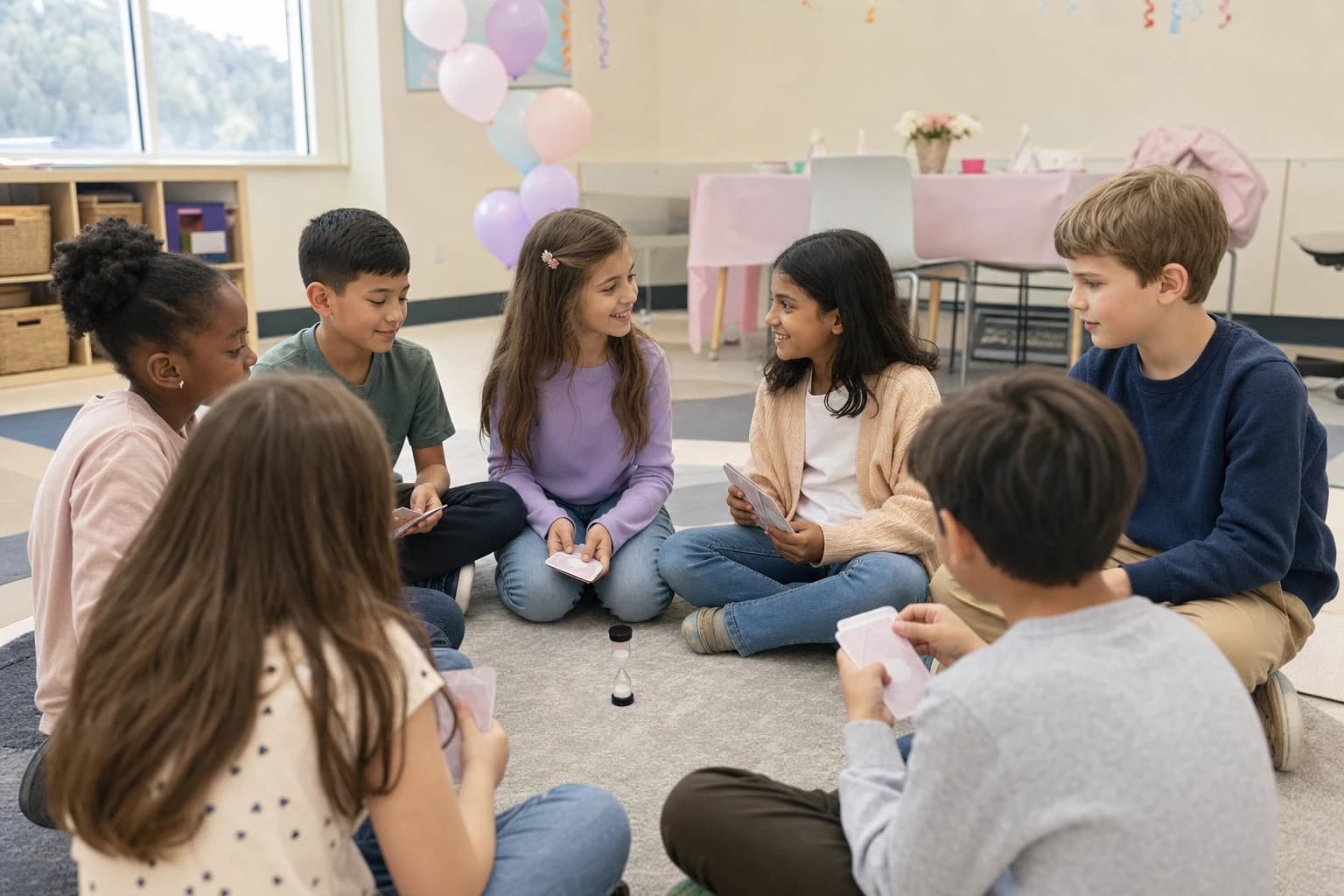
Quiet games are not just fillers. They help children reset before food, cake, or pickup, and they are especially helpful in apartments or classrooms where noise matters.
16. Pass the Parcel Challenges
Materials: wrapped layers of paper, small notes, optional stickers. Space: small. Time: 12 minutes.
- Wrap a small prize or note in several layers.
- Place a simple challenge between layers: “clap a rhythm,” “tell a joke,” or “name a favorite dessert.”
- Pass the parcel while music plays. When it stops, the holder opens one layer and completes the challenge.
17. Guess the Sound
Materials: items that make sounds, such as keys, paper, zipper, coins in a jar, or a book closing. Space: small. Time: 8 minutes.
- Children close their eyes or face away.
- Make one sound behind a screen or table.
- Children write or whisper their guess, then reveal the answer.
Variation: Let older kids create the sounds for another team.
18. Would You Rather Corners
Materials: question cards. Space: small to medium. Time: 10 minutes.
- Label one side of the room “A” and the other “B.”
- Ask a light question: “Would you rather have a pet dragon or a robot helper?”
- Children move to their answer side. Invite one or two to explain briefly.
Tip: Avoid questions about money, appearance, or family situations.
19. Memory Tray
Materials: tray, towel, 12 small objects, paper, pencils. Space: table. Time: 10 minutes.
- Show the tray for 30 seconds.
- Cover it with a towel.
- Players write or draw as many objects as they remember.
Variation: Remove one item secretly and ask the group what changed.
20. Story Dice Without Dice
Materials: cards with characters, places, and objects. Space: small. Time: 10 minutes.
- Put character cards in one pile, place cards in another, and object cards in a third.
- A child draws one from each pile.
- The group builds a 60-second story using all three prompts.
For older kids: Add a genre card such as mystery, comedy, or adventure.
Small-Space and Backup Games
These are the games to keep in your pocket when plans change, the room is smaller than expected, or children finish another activity faster than you thought.
21. Sticker Detective
Materials: one sheet of stickers. Space: any. Time: 8 minutes.
- Choose one detective to close their eyes.
- Place a sticker on one player’s shirt sleeve or hand.
- The detective asks up to five yes-or-no questions to find the sticker holder.
Tip: Use stickers that remove easily and avoid placing them on hair or delicate clothing.
22. Minute-to-Win-It Cup Flip
Materials: one plastic cup per player, timer. Space: table. Time: 8 minutes.
- Place cups upside down at the table edge.
- Players tap the rim to flip the cup right-side up.
- Give each player 60 seconds and count successful flips.
Variation: Make it a team total instead of individual scores.
23. Human Tic-Tac-Toe
Materials: tape grid on the floor, two sets of colored paper badges. Space: medium. Time: 10 minutes.
- Create a 3 by 3 grid with painter’s tape.
- Two teams take turns sending one player to stand in a square.
- The first team to make three in a row wins the round.
For larger groups: Run quick rounds and rotate players in after each round.
24. Treasure Bowl
Materials: large bowl, dry rice or shredded paper, 15 small objects, cups. Space: table. Time: 12 minutes.
- Hide objects in the bowl filler.
- Players have 20 seconds to find one object by touch.
- They place found objects into a team cup and pass the bowl along.
Mess control: Put the bowl on a tray or towel. If food allergies or cleanup are a concern, shredded paper is the easier choice.
25. Birthday Person Trivia
Materials: 8 to 10 questions about the birthday child. Space: small. Time: 8 minutes.
- Prepare simple questions: favorite color, favorite snack, favorite animal, or dream superpower.
- Guests hold up one, two, or three fingers for multiple-choice answers.
- After each answer, let the birthday child reveal the correct choice.
Keep it kind: Avoid questions that could embarrass the birthday child or guests.
A Simple 2-Hour Indoor Party Game Schedule
If you are not sure how to combine the games, use this sample schedule and adjust the timing. The key is to avoid stacking five active games in a row.
- 0:00 to 0:15 arrivals: Birthday Bingo or Build-a-Monster Team Drawing.
- 0:15 to 0:30 warm-up: Musical Statues and Animal Parade.
- 0:30 to 0:50 main activity: Indoor Scavenger Hunt or Floor Is Lava Path.
- 0:50 to 1:10 food break: Snacks, pizza, or cake setup.
- 1:10 to 1:30 skill games: Cup Stack Race and Paper Plate Snowball Toss.
- 1:30 to 1:45 quiet reset: Guess the Sound or Memory Tray.
- 1:45 to 2:00 pickup window: Would You Rather Corners or Birthday Person Trivia.
Common Mistakes to Avoid
- Too many elimination games: Children who are out early may get bored or upset. Use points, teams, or funny challenge cards instead.
- Rules that take too long to explain: If the rules take more than one minute, simplify the game.
- No transition plan: Keep a quiet game ready for the moments before cake or pickup.
- Ignoring the room: A great hall game may become unsafe in a living room. Choose walking versions when space is tight.
- Prizes for only one winner: Stickers, stamps, or small take-home favors reduce pressure and keep the mood friendly.
FAQ: Indoor Birthday Party Games for Ages 6–10
How many games do I need for a two-hour indoor birthday party?
Plan 6 to 8 games, but expect to play 5 or 6. Keep two backup games ready in case an activity ends quickly or the group needs to calm down.
What are good birthday games for 6 year olds indoors?
Good choices include Musical Statues, Balloon Keep-Up, Animal Parade, Birthday Bingo, and Paper Plate Snowball Toss. Use picture clues, short turns, and no-elimination rules.
What are good birthday games for 10 year olds indoors?
Try scavenger hunts with riddles, Cup Stack Race, Human Tic-Tac-Toe, Charades Chain, Memory Tray, and team challenge relays. Older kids often enjoy games that include strategy or creative rules.
How do I keep indoor party games from getting too loud?
Alternate active games with seated games. Use a hand signal, timer, or short music cue for transitions instead of shouting over the group.
What if I have a mixed-age group?
Use teams with older and younger children together. Give younger players simpler roles and older players leadership jobs, such as reading clues or keeping score.
Final Thoughts
The easiest indoor birthday party games for kids ages 6-10 are the ones with clear rules, ordinary supplies, and flexible difficulty. Choose a mix of movement, teamwork, and quiet challenges, then match each game to your actual room. With a simple schedule and a few backups, you can keep the party moving without turning the day into a complicated production.