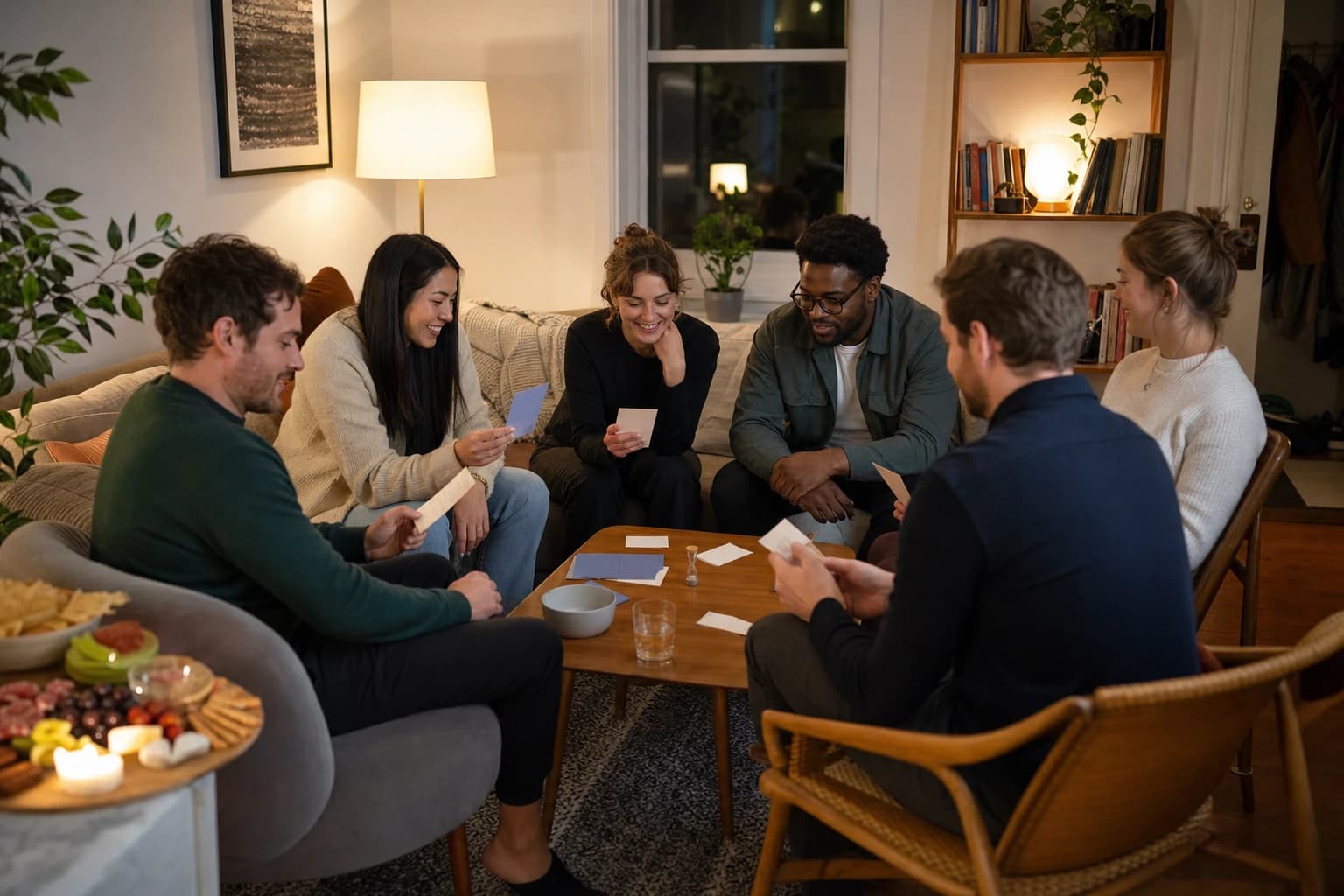
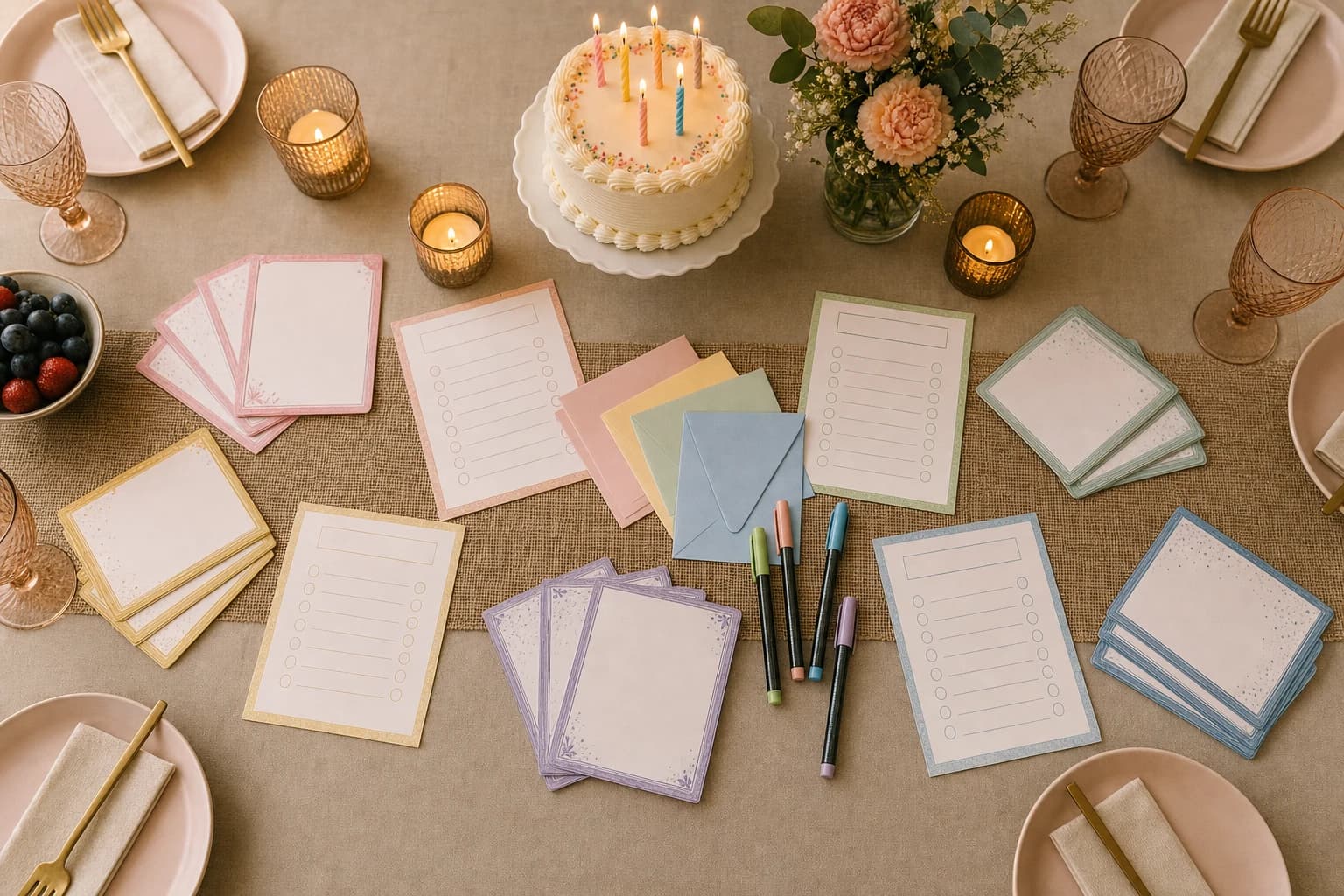
A birthday dinner at home can feel special without turning the whole evening into a complicated event. A well-made printable party game kit for birthday dinner gives the host a simple plan: print a few pages, place them near the table, and pull out the right game when conversation needs a lift.
This guide shows you how to create a complete kit from scratch, including prompt cards, score sheets, answer keys, host instructions, and a tidy way to package everything. The goal is not to make a designer-level product. It is to make birthday dinner party games printable, clear, personal, and easy to run while food, guests, and timing are all happening at once.
What a Birthday Dinner Game Kit Should Include
A useful dinner party game printable kit is more than a stack of random questions. It should help the host run the evening with very little explaining. For a birthday dinner, plan for 3 to 5 short games rather than one long game. This gives you flexibility if dinner runs late, guests arrive at different times, or the group is more chatty than expected.
For most at-home birthday dinners, a complete kit should include:
- Host instruction sheet: one page with the order of games, estimated time, what to hand out, and when to reveal answers.
- Prompt cards: short conversation starters, birthday questions, or creative challenges cut into cards.
- Score sheets: one sheet per guest or team, with space for names and points.
- Answer key: private host page for trivia, quiz rounds, or “guess the birthday person” games.
- Tiebreaker questions: 3 to 5 quick questions in case two players or teams tie.
- Optional labels: small page labels such as “Round 1,” “Answer Key,” or “Do Not Open Until Dessert.”
If your guests do not know one another well, add one gentle icebreaker before competitive games. For more ideas, see icebreaker party games for adults who do not know each other well. If you are planning a small apartment dinner, no-equipment party games for adults that work in small apartments can also help you choose games that do not require extra space.
Tools and Materials
You can build the kit with basic home supplies. The list below assumes 8 guests, but it is easy to adjust.
- Computer, tablet, or phone with a document editor
- Printer access, or a local print shop option
- 8 to 12 sheets of plain paper for score sheets and instructions
- 2 to 4 sheets of heavier paper or cardstock for prompt cards, if available
- Scissors or a paper trimmer
- 8 pens or pencils, plus 2 extras
- Envelopes, paper clips, or binder clips to separate rounds
- Optional: stickers, colored paper, washi tape, or ribbon for presentation
Use US Letter paper, A4 paper, or whatever size your printer normally uses. PDF is usually the safest format for sharing or printing because it preserves layout across devices; Adobe’s overview of what a PDF is explains why the format is commonly used for consistent document viewing and printing. Still, always test-print one page before printing the full kit, because printer margins and scaling settings can change the final look.
Quick Planning Formula
For a relaxed birthday dinner, aim for one 5-minute icebreaker, one 10-minute birthday quiz, and one 10-minute table game. Add one backup game for later, but do not force every page into the evening.
Choose Games That Fit a Dinner Table
The best at home birthday party games for adults are easy to explain, do not require standing up, and let people keep eating or chatting between turns. Avoid games that need loud shouting, physical movement around the room, or long written answers while plates are on the table.
Here are four printable-friendly game types that work especially well at a birthday dinner:
| Game type | Best moment to play | Pages to include | Personalization idea |
|---|---|---|---|
| Birthday person trivia | Before or after the main course | Question sheet, score sheet, answer key | Ask about favorite foods, childhood hobbies, travel memories, or funny preferences |
| Who Said It? | Before dinner or during dessert | Quote cards, answer sheet, answer key | Use short quotes from family or friends, collected before the party |
| Would They Rather? | As a light icebreaker | Prompt cards only | Make choices specific to the guest of honor, such as beach trip vs. city weekend |
| Memory Match | After dessert | Memory prompts, writing slips, host instructions | Guests write a memory, and the birthday person guesses who wrote it |
If the birthday dinner includes mixed ages, choose team-based rounds so adults, teens, and kids can contribute together. You may find useful formats in team party games for family game night with mixed ages.
Step-by-Step: Build the Printable Kit
1. Set the evening structure before designing pages
Write down the dinner flow first. A simple plan might be: guests arrive, drinks and appetizers, first game, dinner, dessert, final game. Once you know when each game happens, the kit becomes much easier to organize.
For an 8-person birthday dinner, plan about 25 to 30 total minutes of game time across the whole evening. That is enough to add energy without making the dinner feel like a scheduled program.
2. Pick 3 main games and 1 backup game
Choose games with different moods. For example:
- Warm-up: “Would They Rather?” prompt cards, 5 minutes.
- Main game: birthday person trivia, 10 minutes.
- Personal game: memory cards, 10 minutes.
- Backup: tiebreaker or quick “Two Truths and a Birthday Lie,” 5 minutes.
This mix gives the evening variety: light conversation, a little competition, and a personal moment centered on the person being celebrated.
3. Create a one-page host instruction sheet
The host sheet is the most important page in the kit. Keep it plain and practical. Include the following:
- Game order
- Estimated time for each game
- Materials needed for each round
- What the host should say to introduce the game
- How points are awarded
- When to reveal the answers
Example host note: “Round 2: Birthday Trivia. Hand each guest one score sheet. Read the 10 questions aloud. Guests write answers privately. After question 10, swap sheets or let guests self-score. Award 1 point per correct answer.”
4. Write prompt cards that are short and specific
Prompt cards should be readable at a glance. A good card has one clear question, not a paragraph. Use large text and plenty of white space. For a birthday dinner, 24 prompt cards are usually enough: 12 light questions, 6 birthday-specific questions, and 6 funny or imaginative questions.
Examples:
- What is one food the birthday person would happily eat twice in one day?
- Would they rather have a surprise party or plan every detail themselves?
- What song belongs in the soundtrack of their life right now?
- If they opened a tiny restaurant, what would be the signature dish?
Avoid prompts that embarrass guests, pressure people to reveal private information, or turn the party into a roast unless you are certain the birthday person enjoys that style of humor.
5. Design score sheets that are easy to use at the table
A score sheet should not be crowded. For a 10-question trivia game, create a numbered list from 1 to 10 with a blank line after each number. Add a name line at the top and a score box at the bottom.
If guests are seated close together, consider team score sheets instead of individual ones. Teams of 2 work well for dinner because they let people quietly discuss answers without stopping the whole table.
6. Make the answer key private and unmistakable
The answer key should be labeled clearly so it does not accidentally get passed around. Put “HOST ANSWER KEY” at the top. If you are printing in black and white, use a border, gray box, or “Host Only” label rather than relying on color.
For open-ended trivia, decide in advance what counts as correct. If the question is “What is the birthday person’s favorite dessert?” and the answer is “cheesecake,” decide whether “strawberry cheesecake” or “any cheesecake” earns the point. Small decisions like this prevent awkward scoring debates.
7. Add simple personalization without needing design skills
Personalization matters more than fancy graphics. You can make DIY printable party games feel custom with a few simple details:
- Use the birthday person’s first name in game titles.
- Add a favorite color as a border or heading color.
- Include 3 inside jokes that are warm, not mean.
- Use favorite foods, hobbies, pets, music, or travel memories as trivia topics.
- Name the rounds after parts of the meal, such as “Appetizer Round” and “Dessert Round.”
If you do use photos, choose clear images and make sure the person is comfortable with them being printed and passed around. For a polished look without design software, keep all pages to the same fonts, heading size, and margin spacing.
8. Export, test print, and assemble
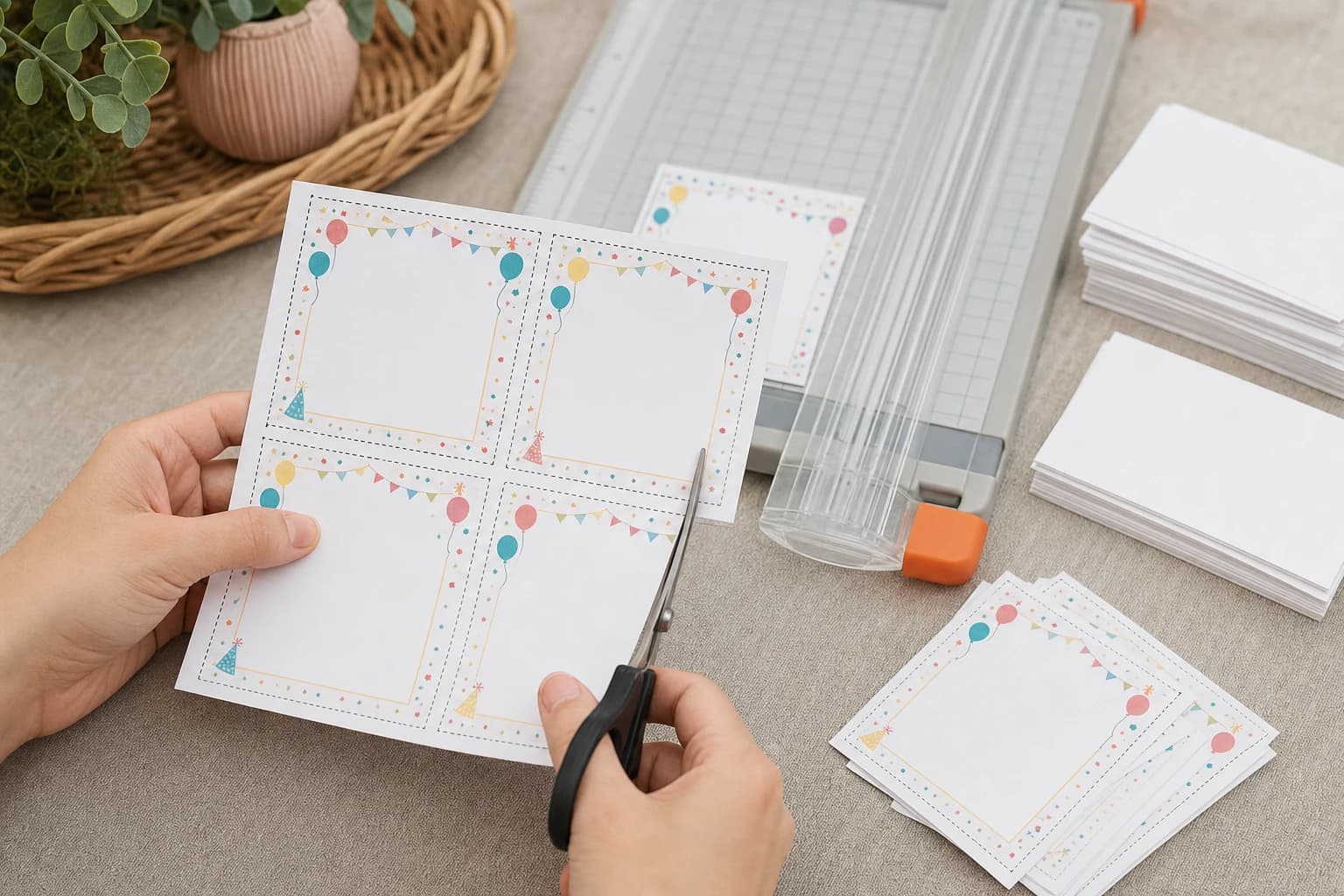
Before printing the full kit, print one prompt-card page and one score sheet. Check three things: the text is large enough to read, the page does not cut off at the edges, and the cards are easy to cut apart. If anything looks cramped, reduce the number of cards per page instead of shrinking the text.
When everything is ready, assemble the kit in order:
- Host instruction sheet on top
- Round 1 prompt cards
- Round 2 score sheets
- Round 2 answer key in a separate envelope
- Round 3 memory slips or prompt cards
- Tiebreaker card
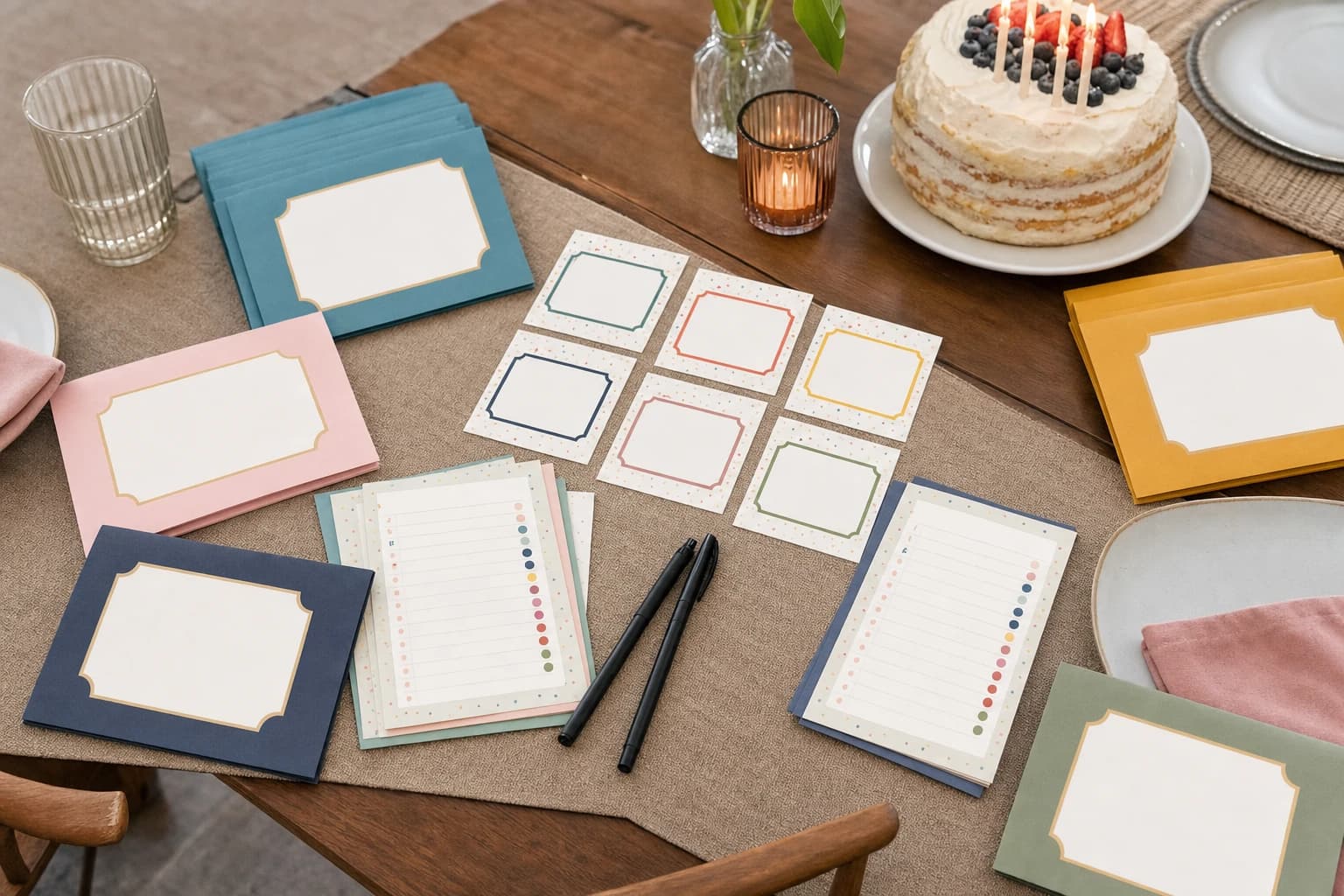
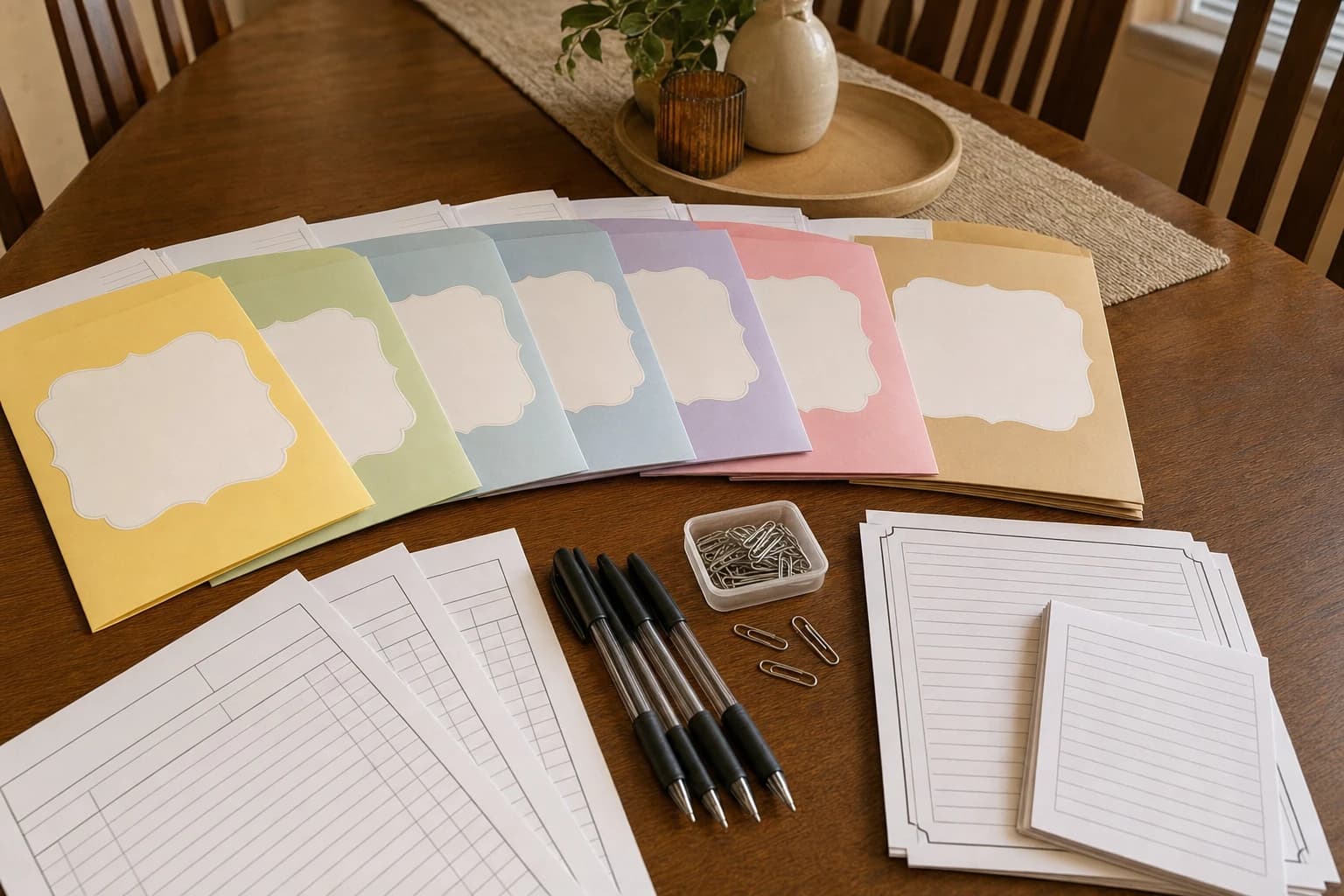
Clip each round separately or place it in a labeled envelope. The host should be able to grab one section without sorting through loose paper in front of guests.
Printable Page Templates to Include
You do not need complicated templates. The following page list is enough for most birthday dinners with 6 to 12 guests.
- Page 1: Host guide. Include game order, rules, and timing.
- Page 2: Prompt cards. Use 8 cards per page for easy cutting.
- Page 3: Trivia score sheets. Put two score sheets per page if you want to save paper.
- Page 4: Answer key. Keep it separate from player pages.
- Page 5: Memory slips. Create small blanks that say, “A memory I have with you is…”
- Page 6: Tiebreakers and bonus questions. Useful if the group wants one more round.
If your group is larger, print extra score sheets and divide guests into teams instead of adding more rules. For very large groups, you may want a different format; this guide to large group party games for 20 to 50 people focuses on keeping everyone involved without elimination.
Common Mistakes to Avoid
- Making the games too long. A dinner party is still a meal. Short rounds usually feel better than one long quiz.
- Using tiny text. Guests should not need to hold cards inches from their faces. Keep prompt text large and uncluttered.
- Forgetting the answer key. If you create trivia, make the answers before the party begins.
- Choosing overly personal questions. Keep the tone kind, especially if coworkers, in-laws, or new friends are attending.
- Not printing extras. Print at least two spare score sheets and bring extra pens.
- Overdesigning the pages. Decorative backgrounds can make text harder to read. Simple pages usually work better at a dinner table.
Small Details That Make the Kit Feel Finished
Use a cover sheet with the birthday person’s name, the date, and a simple title such as “Birthday Dinner Games.” Place the host-only pages in a different envelope. Put pens in a cup or small basket near the table before guests arrive. If you are using teams, place one score sheet and one pen at each team’s seat before the first game starts.
For a casual dinner, you can let guests pull prompt cards from a bowl. For a more organized evening, the host reads each card. Both versions work; choose the one that matches the group’s energy.
FAQ
How many games should I include in a printable birthday dinner kit?
Include 3 main games and 1 backup game. You may only play two or three, but the backup gives you an easy option if guests want more after dessert.
What size should printable prompt cards be?
A practical size is 8 cards per standard page, which makes each card large enough for one short prompt. If your text is longer, use 4 cards per page instead.
Can I make birthday dinner party games printable without design software?
Yes. A basic document editor is enough. Use consistent headings, large readable text, simple borders, and clear labels. Personal details are more important than elaborate graphics.
What games work best for adults at home?
Adults usually respond well to short, low-pressure games such as birthday trivia, “Would They Rather?”, memory prompts, and quote guessing. Avoid games that interrupt the meal or require too much movement.
Should I make individual or team score sheets?
Use individual score sheets for 4 to 8 guests. Use team score sheets for larger groups, mixed ages, or tables where guests may feel more comfortable answering with a partner.
Conclusion
A printable party game kit for birthday dinner works best when it is simple, organized, and personal. Start with the dinner flow, choose a few short games, and build only the pages the host will actually use: instructions, prompt cards, score sheets, answer keys, and a backup round.
You do not need advanced design skills to make the kit feel thoughtful. Clear wording, readable pages, labeled envelopes, and questions that reflect the birthday person will do more for the evening than complicated artwork. Print one test page, keep the host sheet on top, and your birthday dinner games will be ready before the first guest sits down.