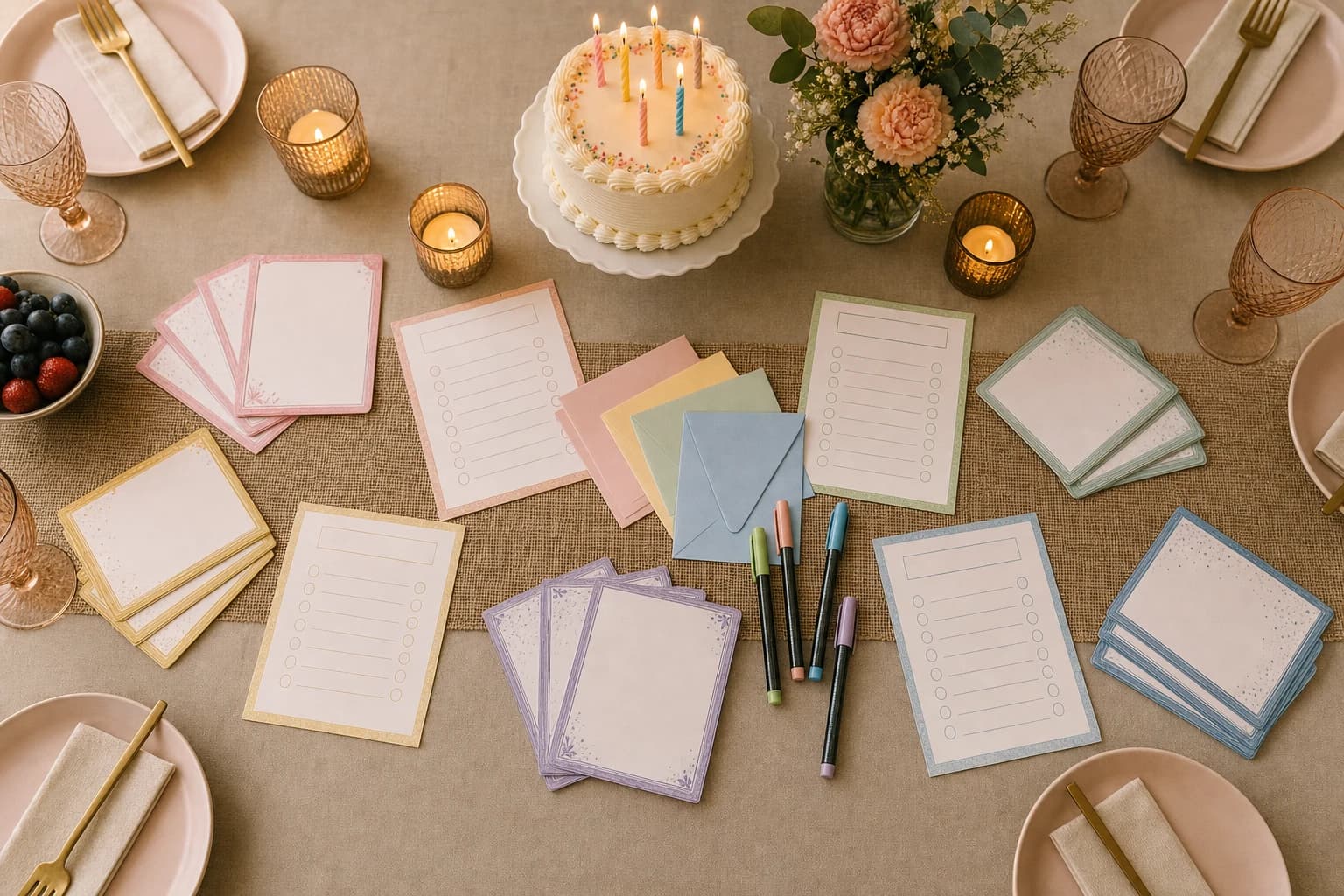

When adult guests do not know each other well, the wrong icebreaker can make the room feel more awkward, not less. The goal is not to force instant closeness. It is to give people a simple reason to talk, laugh lightly, and learn a few names without feeling put on the spot.
This guide focuses on icebreaker party games for adults that are low-pressure, easy to explain, and flexible enough for dinner parties, housewarmings, neighborhood gatherings, work socials, and mixed friend groups. Each game includes an opt-out option and avoids embarrassing prompts, performance pressure, or overly personal questions.

The Best Icebreaker Party Games Feel Optional, Not Forced
A strong adult icebreaker has three qualities: it is quick to understand, it gives people something safe to say, and it allows different personality types to participate comfortably. That means no surprise speeches, no dares, no romantic questions, no confessions, and no games that require guests to reveal personal details before trust exists.
For groups of strangers, design the first 20 to 40 minutes of the party around gentle structure. After that, the game should fade into normal conversation. You are not trying to keep adults in a classroom-style activity all night. You are building a bridge from arrival awkwardness to a relaxed party rhythm.
If your party is in a small apartment or you want ideas that require almost nothing to set up, you may also like No-Equipment Party Games for Adults That Work in Small Apartments. For bigger guest lists, see Large Group Party Games for 20 to 50 People That Keep Everyone Playing.
Quick Setup Checklist for Low-Pressure Icebreakers
- Best group size: 6 to 24 people for most games below; split larger groups into tables or clusters of 5 to 8.
- Time needed: 10 to 30 minutes, depending on the game and group size.
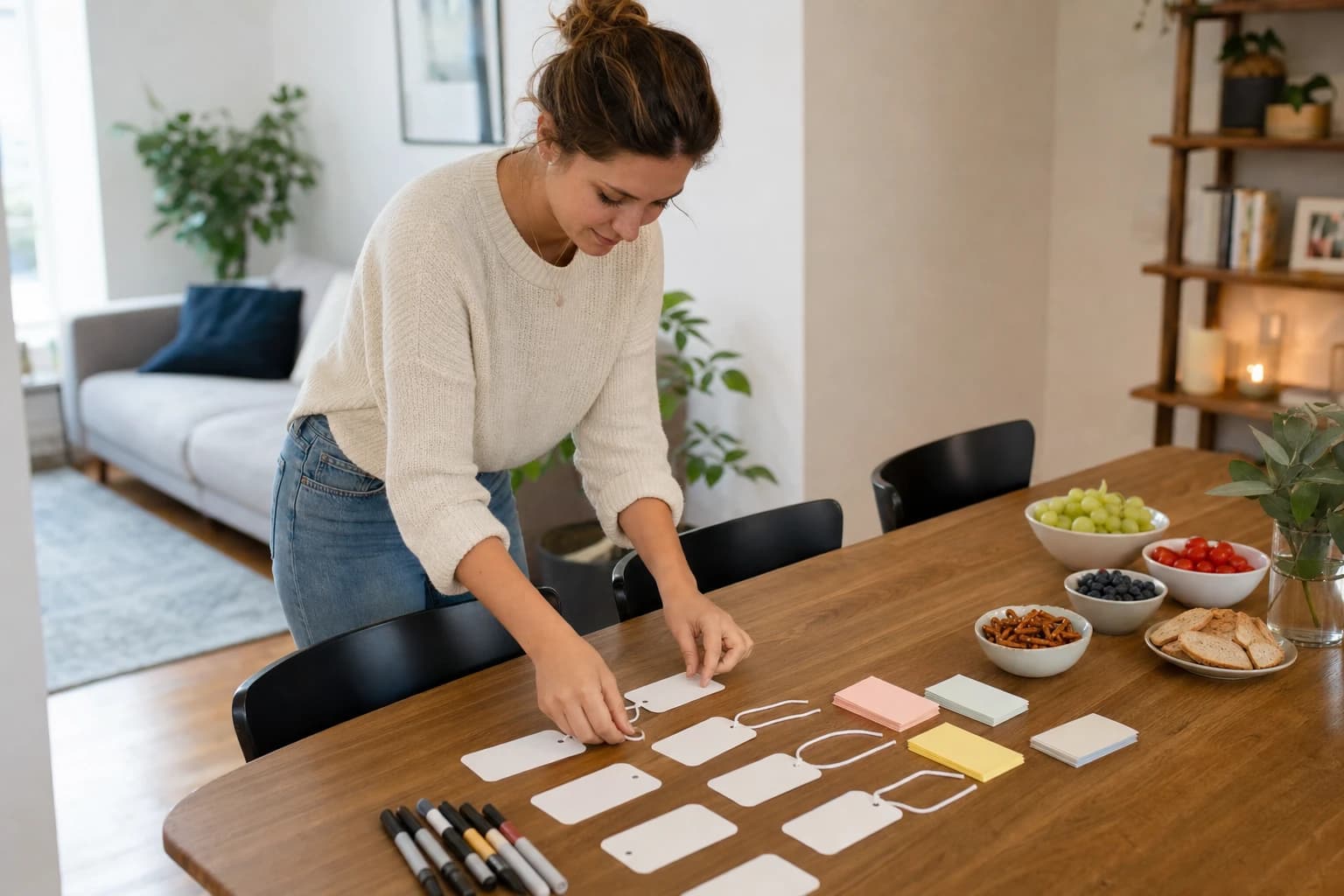
- Materials: index cards or sticky notes, pens, a bowl or basket, optional timer, and simple name tags.
- Room setup: chairs in small circles, standing stations, or a snack table nearby so the activity feels casual.
- Host script: prepare one sentence that makes participation feel safe: “You can pass on any prompt, trade cards, or just listen for a round.”
How to Introduce an Icebreaker Without Making It Awkward
The way you introduce the game matters as much as the game itself. Adults can sense when an activity is secretly a test of charm, confidence, or cleverness. Keep your tone light and practical.
- Start after the first arrivals have a drink or snack. Do not begin at the door. Give people 10 to 15 minutes to settle in.
- Explain the purpose plainly. Say, “Most of us know only a few people here, so this is just a quick way to learn names and find easy conversation threads.”
- Limit the time. Tell guests the activity will take 10 or 15 minutes. A known endpoint makes participation easier.
- Offer an opt-out before anyone needs it. Say, “Passing is always allowed.” This prevents guests from feeling singled out later.
- Model a simple answer first. Give a short, ordinary response instead of a polished or hilarious one. This lowers the bar for everyone.
Short, prompt-based speaking is used in many group settings. For example, Toastmasters International describes Table Topics as a way to practice brief impromptu responses. At a party, keep that idea much softer: answers should be optional, short, and socially safe.
10 Low-Pressure Icebreaker Games for Parties
Use these as written or adapt them to your group. Each one is designed for adults who may be meeting for the first time.
1. Two-Minute Common Ground
Best for: 8 to 24 guests. Time: 10 minutes. Materials: none.
Divide guests into groups of 3 or 4. Each group has two minutes to find three things everyone has in common. The common ground cannot be “we are all at this party” or “we all live on Earth.” Good examples include liking spicy food, having a sibling, preferring window seats, or owning too many reusable bags.
After two minutes, each group shares one commonality with the room. Keep it moving. If a group cannot find three, one is enough.
Opt-out version: Guests can contribute only yes or no answers. No one has to explain a story behind the commonality.
2. Name Tag Plus One
Best for: open-house style parties. Time: ongoing. Materials: name tags and markers.
Instead of plain name tags, ask guests to add one low-stakes detail under their name. Examples: “Sam — always orders fries,” “Priya — learning Italian,” or “Marcus — team early bedtime.”
The detail acts as a conversation handle. Guests can approach someone and say, “I also always order fries,” which feels easier than opening with a personal question.
Opt-out version: Let guests write only their name or choose from preset labels such as “coffee,” “dogs,” “movies,” “travel,” or “books.”
3. The Gentle Question Bowl
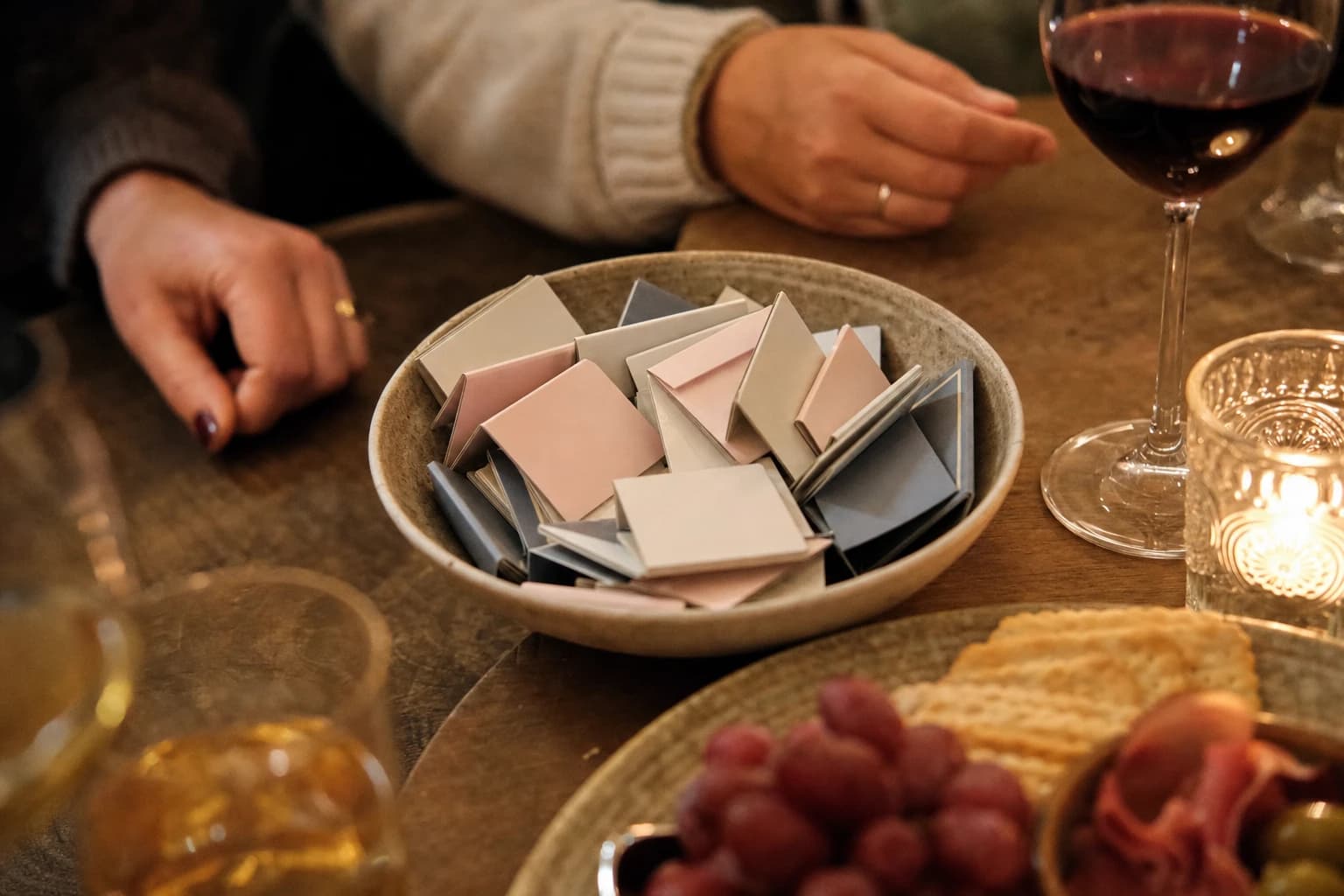
Best for: seated groups of 6 to 14. Time: 15 to 20 minutes. Materials: bowl, folded question slips.
Write 20 safe prompts and place them in a bowl. Guests draw one and answer in 30 seconds or less. The host should include trade and pass options.
- What is a small thing that improves your day?
- What snack disappears fastest in your home?
- What is a place you would happily visit again?
- What is a skill you respect in other people?
- What is a movie or show you can rewatch?
- What is your most used kitchen item?
Avoid prompts about dating history, income, politics, religion, family conflict, body image, or anything that sounds like therapy.
Opt-out version: Allow guests to answer as themselves, answer for “most people,” or trade the prompt.
4. Snack Table Match-Up
Best for: casual mingling. Time: 10 to 15 minutes. Materials: small cards.
Give each guest a card with a harmless category, such as “salty,” “sweet,” “crunchy,” “spicy,” “cheesy,” or “fresh.” Guests find others with the same card and introduce themselves while grabbing food. Once matched, they answer one question: “What is one snack you always appreciate at a party?”
This works because the activity is anchored around food, not personal exposure. It also naturally moves people toward the snack area.
Opt-out version: A guest can simply stand with a group and listen while eating.
5. Vote With Your Feet
Best for: 10 to 30 guests with open floor space. Time: 10 minutes. Materials: none.
Label one side of the room “Option A” and the other “Option B.” Read simple either-or questions and ask guests to move to their answer. Examples: coffee or tea, beach or mountains, cook or order in, text or call, early bird or night owl.
After each round, invite people near each other to exchange names and one sentence about their choice. Keep each round under one minute.
Opt-out version: Guests can stand in the middle for “both,” “neither,” or “I refuse to choose.”
6. Three Object Stories
Best for: dinner tables or living rooms. Time: 15 minutes. Materials: 10 to 15 everyday objects.
Place simple objects on a tray: a key, mug, coaster, pen, candle, rubber band, postcard, spoon, or battery. Each guest chooses one object and answers a low-pressure prompt: “This reminds me of…” or “I use something like this when…”
The object gives people a starting point, which reduces the pressure to invent an interesting fact about themselves.
Opt-out version: Let guests choose an object for someone else to discuss only if that person agrees; otherwise they can pass.
7. Shared Playlist Builder
Best for: music-friendly gatherings. Time: 10 minutes, then ongoing. Materials: paper list or shared playlist.
Ask each guest to add one song that fits a neutral theme: “song for cooking,” “song for a road trip,” “song for cleaning,” or “song that improves a rainy day.” Do not require anyone to defend their taste. Later in the party, play the list quietly in the background.
Opt-out version: Guests can suggest a genre, decade, or artist instead of a specific song.
8. Find Someone Who, But Softer
Best for: groups that need movement. Time: 12 to 18 minutes. Materials: printed grid or note cards.
Traditional “find someone who” games can become too personal. Use soft prompts instead. Guests walk around collecting names for statements such as:
- Has a favorite local restaurant
- Knows a good board game
- Has taken a train trip
- Likes breakfast for dinner
- Can recommend a podcast
- Has kept a houseplant alive
Set a realistic goal: collect five names, not complete the entire sheet. The point is conversation, not winning.
Opt-out version: Guests can pair up and fill the sheet together.
9. Table Topic Trios
Best for: dinner parties. Time: 15 minutes. Materials: prompt cards.
Place three cards at each table: one practical, one playful, and one preference-based. For example: “What is a useful app you actually use?”, “What fictional place would be fun to visit?”, and “Do you prefer planned weekends or open weekends?”
Guests choose only one card. This gives the group control and avoids the trapped feeling of going around the table one by one.
Opt-out version: A guest can ask the question to the table without answering first.
10. The Exit Ramp Compliment
Best for: ending the icebreaker. Time: 5 minutes. Materials: none.
After any icebreaker, ask each small group to name one topic they want to continue discussing. For example: “local restaurants,” “travel mishaps,” “old movies,” or “dogs.” Then say, “Great, keep those conversations going while everyone refreshes drinks.”
This is not a compliment game in the personal sense. It is a transition tool. It helps guests move from structured play into natural mingling.
Which Icebreaker Should You Choose?
| Party situation | Best game | Why it works | Time |
|---|---|---|---|
| Guests arrive at different times | Name Tag Plus One | It works without gathering everyone at once | Ongoing |
| Dinner party with assigned seats | Table Topic Trios | Small groups choose their own prompt | 15 minutes |
| Guests seem quiet or hesitant | Two-Minute Common Ground | People talk in small groups, not in front of everyone | 10 minutes |
| You want movement and energy | Vote With Your Feet | Simple choices create quick visible connections | 10 minutes |
| Casual food-centered gathering | Snack Table Match-Up | The activity blends naturally with eating and mingling | 10 to 15 minutes |
| Guests include introverts or coworkers | The Gentle Question Bowl | Prompts are controlled, short, and easy to pass | 15 to 20 minutes |
Rules That Keep Adult Icebreaker Activities Comfortable
Low pressure does not mean boring. It means the host removes the parts that make adults brace themselves. Use these rules for nearly any icebreaker games for parties where guests are strangers or loose acquaintances.
- No mandatory personal stories. Let people share preferences, opinions, or light experiences instead of private history.
- No elimination. The first activity should not send anyone out of the game or make them feel unsuccessful.
- No ranking people. Avoid “most likely to,” “best answer,” or “funniest person” formats with new groups.
- No physical contact required. Many adults dislike being asked to hold hands, hug, dance, or act something out with strangers.
- No alcohol dependency. A good party game should work whether guests drink or not.
- No hidden embarrassment. If a prompt would make a reasonable guest worry about being judged, replace it.
If you later want higher-energy games after people are comfortable, you can shift into more active options. For seasonal gatherings, Christmas Party Games for Families With Kids, Teens, and Adults Together includes ideas that can be adapted for mixed-age groups.
How to Transition From Icebreakers Into the Rest of the Party
The biggest mistake is letting the icebreaker run too long. Stop while the room is warming up, not after the energy drops. A good transition makes the activity feel like the beginning of the party, not the main event.
- End with a practical cue. Say, “Let’s pause here so everyone can refill plates.” Food and drinks create a natural movement break.
- Carry forward the best conversation threads. Mention two or three topics you heard: “I heard a lot of restaurant recommendations and travel stories, so keep those going.”
- Remove the game materials slowly. Leave prompt cards on a side table for guests who want them, but stop directing the room.
- Introduce people by connection. Instead of only saying names, say, “Nina, this is Carlos. You both mentioned hiking.”
- Switch to background structure. Put on music, open dessert, start a casual card table, or invite guests to the balcony or kitchen.
Common Icebreaker Mistakes to Avoid
- Starting with “tell us something interesting about yourself.” This sounds simple but can feel like a spotlight. Use a more specific prompt.
- Choosing games that reward the loudest guests. Small-group formats usually work better than whole-room performance.
- Ignoring the room layout. If guests cannot hear, move into groups of 4 to 6 instead of shouting across the room.
- Using inside jokes. New guests should not feel like they arrived in the middle of someone else’s reunion.
- Forgetting late arrivals. Pick at least one ongoing icebreaker, like name tags or prompt cards, so newcomers can join easily.
Host Tips for Mixed Comfort Levels
Most adult parties include a mix of extroverts, introverts, couples, solo guests, coworkers, neighbors, and friends from different parts of your life. Build the first activity for the most cautious guest, not the most outgoing one. The outgoing guests will still participate, but the quieter guests will not feel cornered.
Use pairs or groups of three before whole-room sharing. Keep the first prompt factual or preference-based. If someone passes, respond warmly and move on immediately: “Absolutely, no problem.” Do not joke about it or try to persuade them.
Finally, remember that silence is not always failure. A few seconds of thinking time can make answers better and calmer. Hosts often rush because they feel responsible for every pause, but adults do not need every moment filled.
FAQ: Icebreaker Games for Adults Who Just Met
What is the least awkward icebreaker for adults?
Name Tag Plus One is one of the least awkward options because guests can participate at their own pace. It gives everyone a conversation starter without requiring a group announcement.
How long should an adult icebreaker last?
For most parties, 10 to 20 minutes is enough. If the group is large, split guests into smaller clusters rather than extending one activity for too long.
What questions should I avoid with strangers?
Avoid questions about income, dating, politics, religion, health, family conflict, embarrassing memories, or anything that pressures people to reveal private information.
How do I make icebreakers comfortable for introverts?
Use small groups, allow passing, provide written prompts, and avoid games that require performing in front of the whole room. Let guests listen for a round if they prefer.
Can icebreaker party games work without supplies?
Yes. Two-Minute Common Ground and Vote With Your Feet need no supplies. Clear rules and a relaxed host matter more than materials.
Conclusion
The best icebreaker party games for adults do not try to make strangers instantly close. They create small, safe openings: a shared preference, a snack recommendation, a song, a common interest, or a simple name-to-face connection.
Choose one structured activity, keep it short, allow passing, and transition into food, music, or open conversation before the room gets tired. When guests feel they have permission to participate at their own comfort level, introductions become easier and the rest of the party feels more natural.