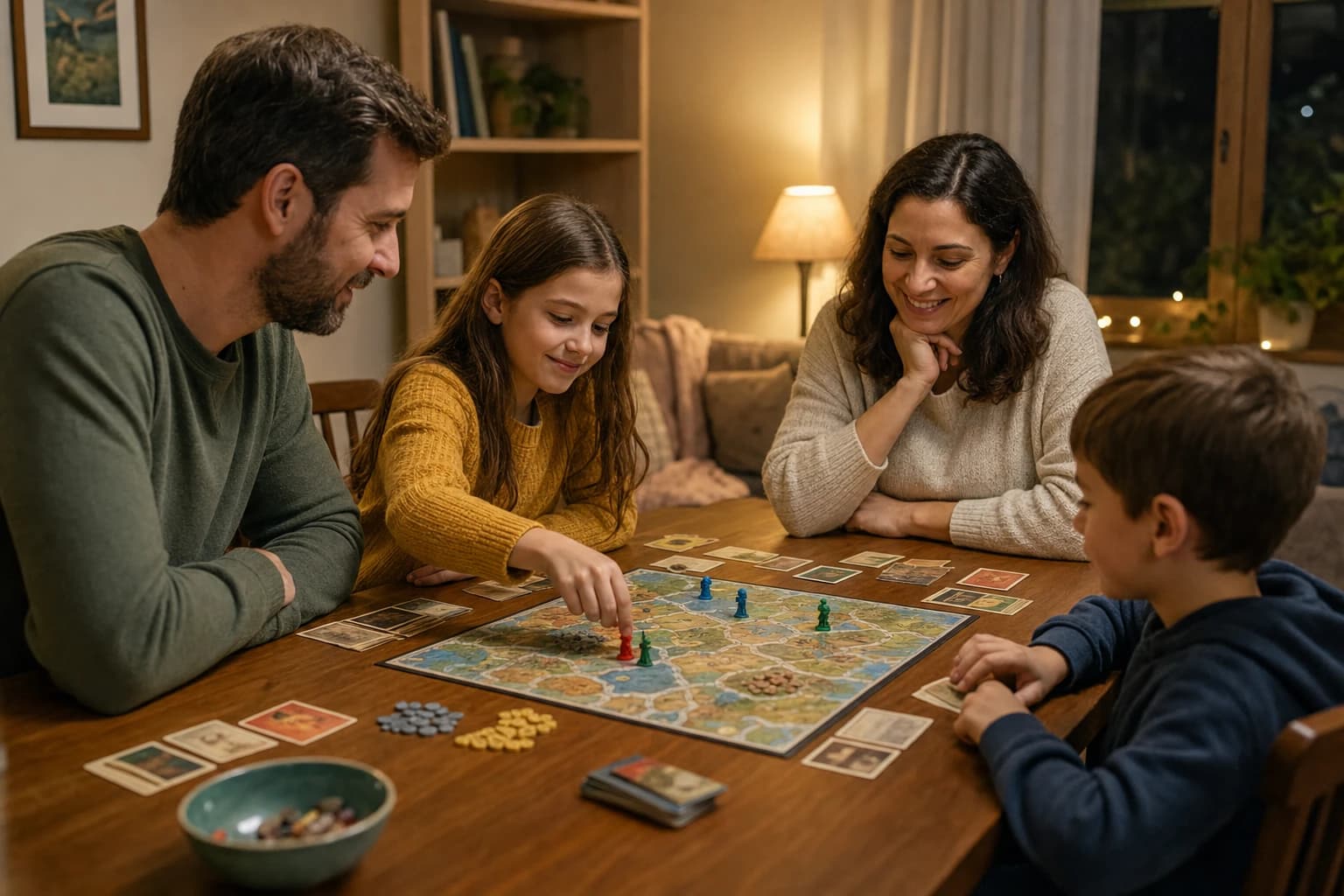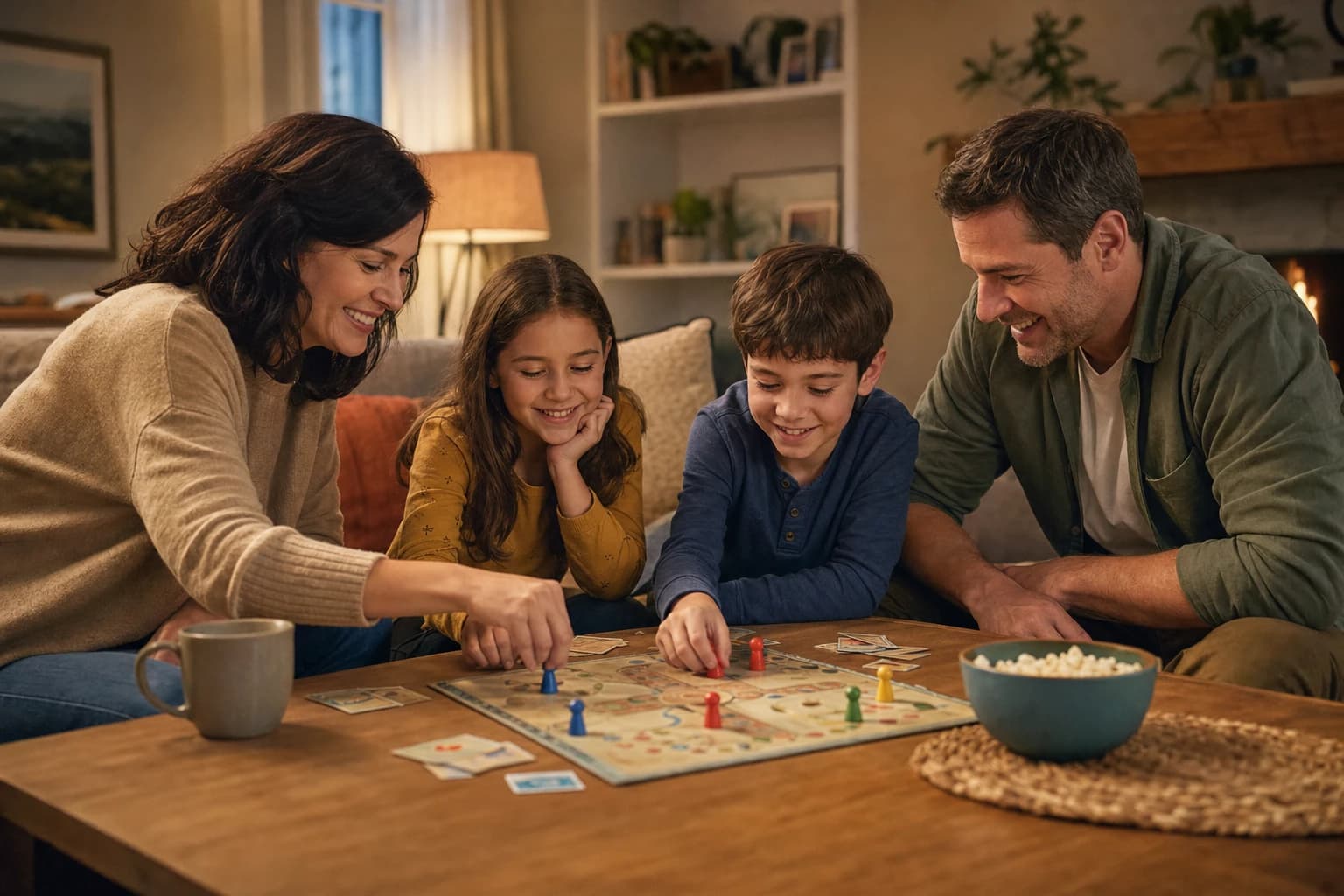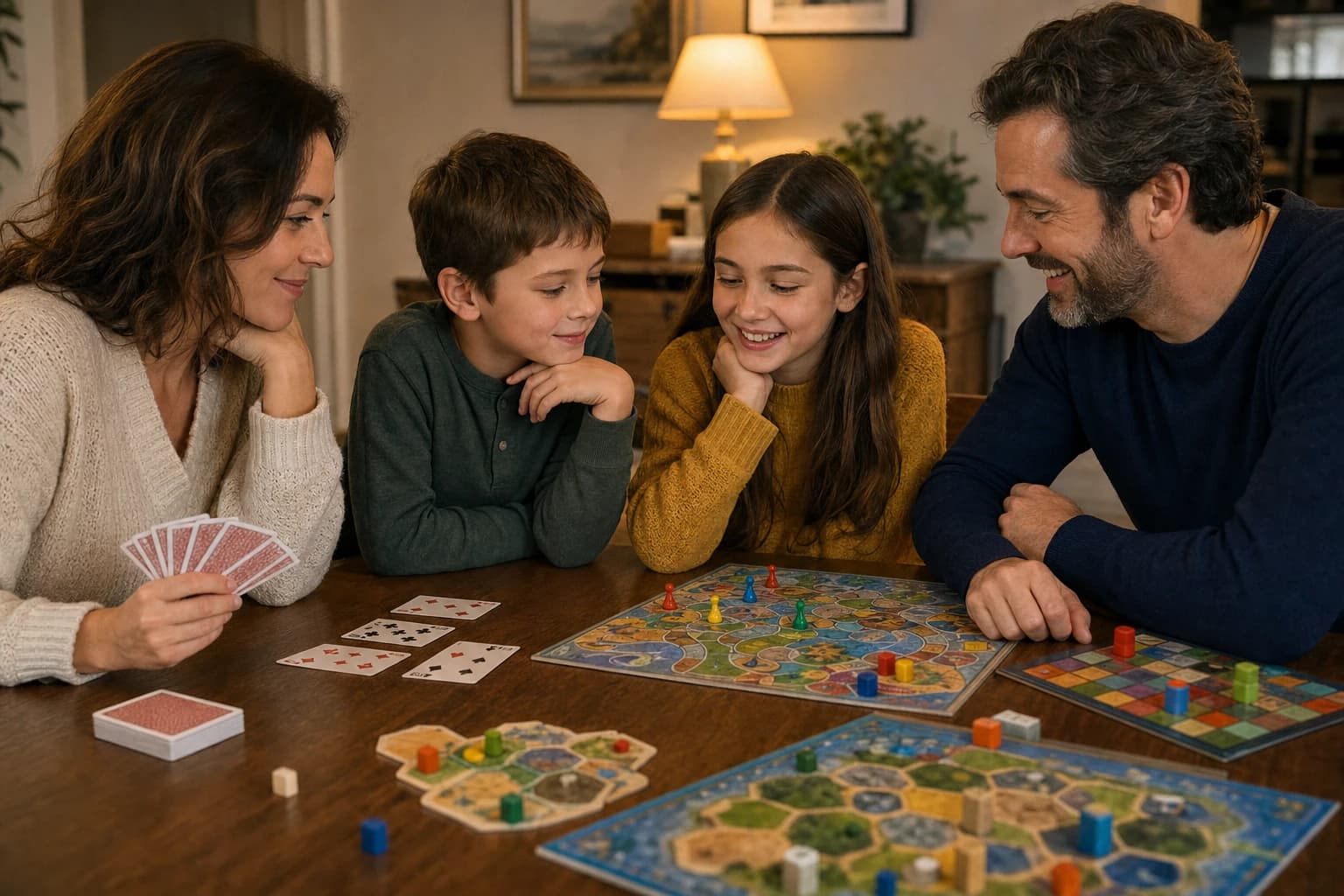
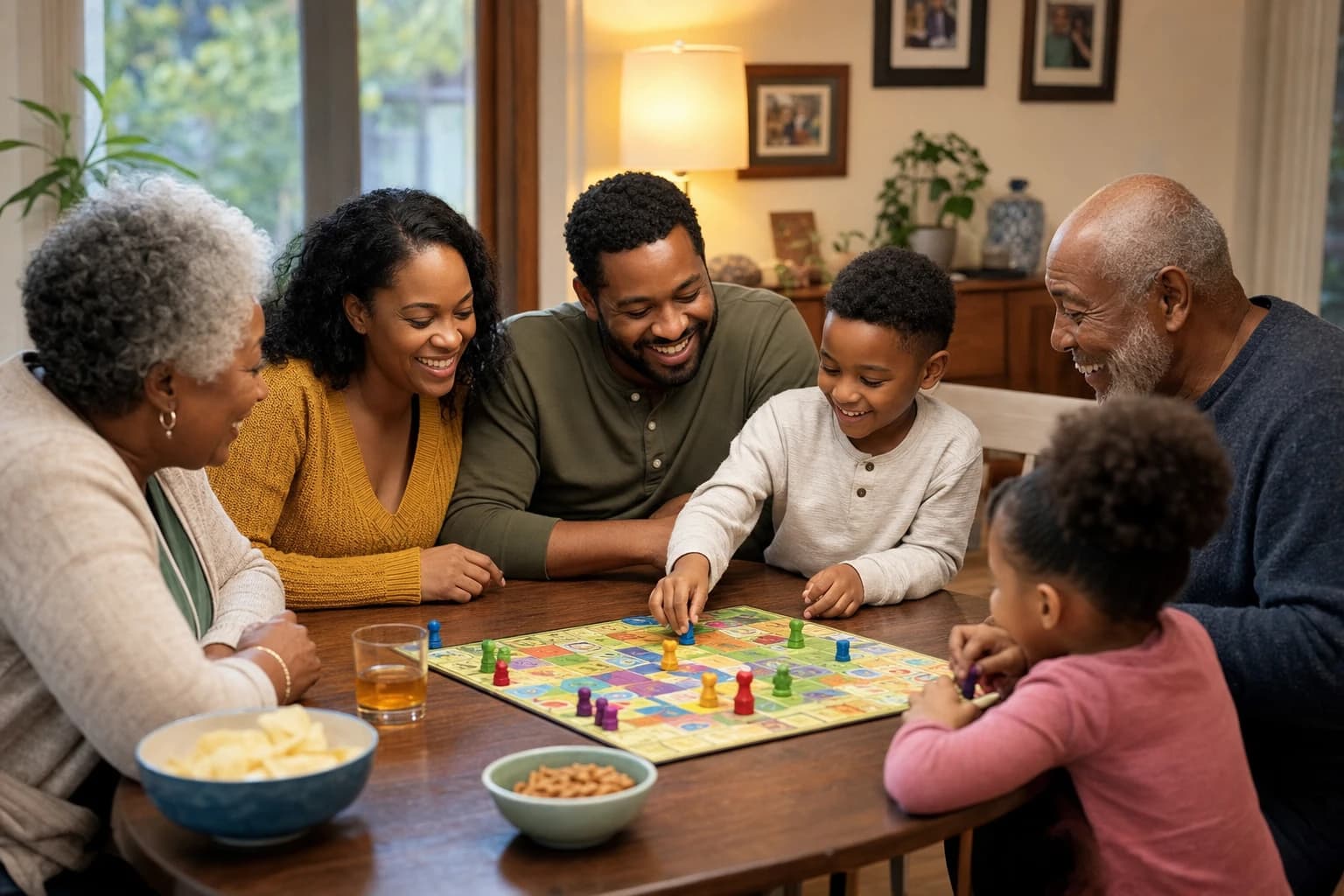
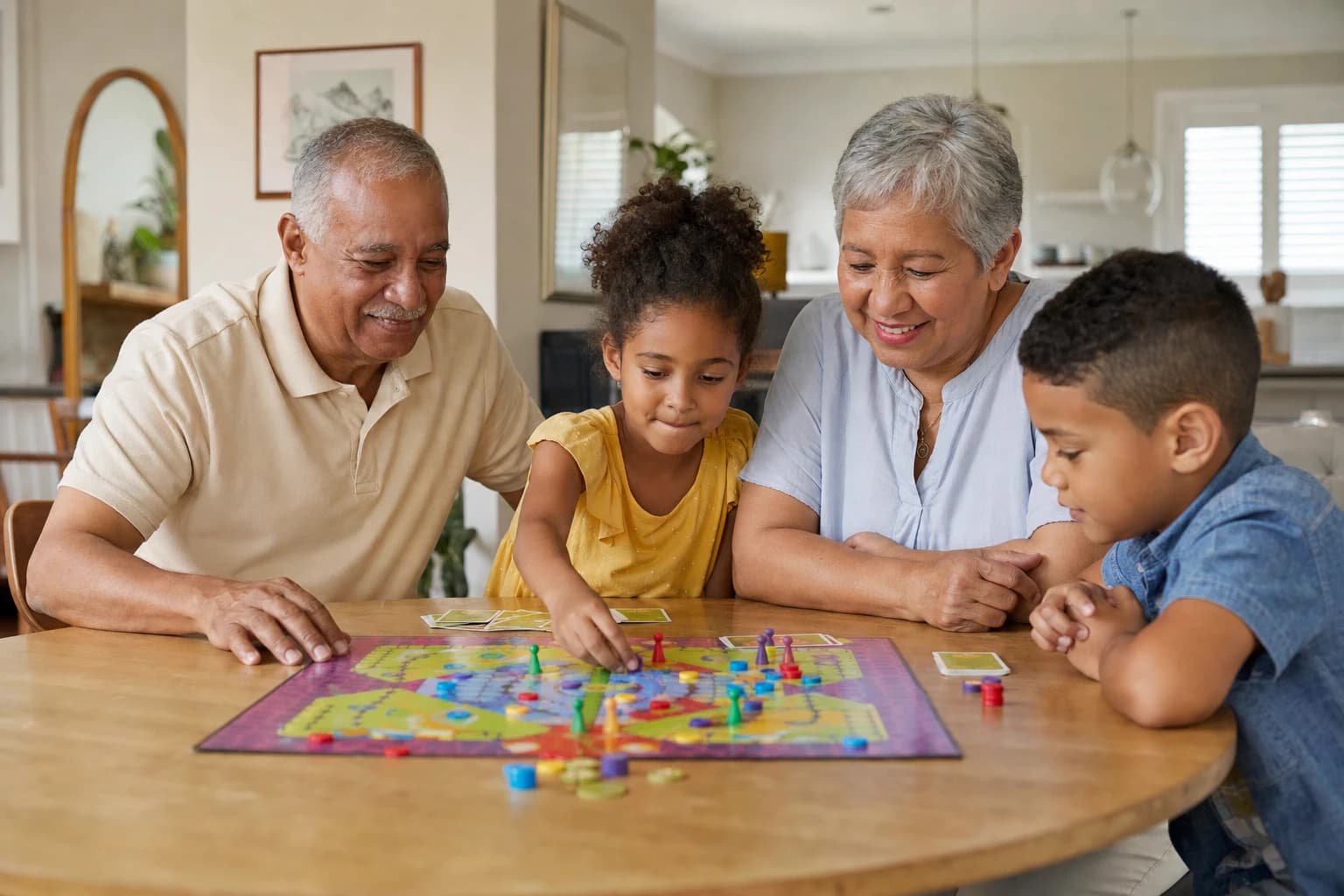
Finding the best board games for grandparents and kids is not just about choosing games marked for a wide age range on the box. A game can be technically suitable for ages 8 and up and still be frustrating if the print is tiny, the rules take 25 minutes to explain, turns drag on, or one adult ends up coaching every move.
For a good multigenerational game night, the better question is: can a child, parent, and grandparent all make real choices, stay involved between turns, and enjoy the table without feeling rushed or left behind? This guide compares family board games through that lens: reading level, setup time, turn length, dexterity requirements, memory load, table space, and ways to include younger children without turning grandparents into supervisors.
Quick answer: the most grandparent-and-kid friendly picks
If you want a short list before reading the full comparison, start here:
- Best overall: Qwirkle for simple matching, meaningful choices, no reading, and flexible pacing.
- Best for young children: Hoot Owl Hoot! because it is cooperative, color-based, and gentle.
- Best for mixed ages 7 and up: Ticket to Ride: First Journey because it gives kids a real board-game experience without the longer strategy load of the original.
- Best low-reading classic feel: Rummikub or Sequence, especially for families who like numbers, patterns, and familiar playing-card logic.
- Best for grandparents who dislike noisy games: Azul, Kingdomino, or Blokus, all of which can be played calmly with mostly visual decisions.
- Best cooperative option: Outfoxed! for children who get upset by losing or for families that want everyone solving a mystery together.
Publisher age recommendations are useful as a starting point, but they do not tell the whole story. Before buying or teaching a game, it is worth checking the official rules or publisher page for the edition you own. For example, Hasbro maintains an official instructions library for many of its games at Hasbro Instructions, which can help you confirm components, rules, and setup before family game night.
What makes a board game work for grandparents and kids?
Multigenerational board games need to be fair without being exhausting. Many family game nights fail for predictable reasons: one person cannot read the small cards, one child checks out during long turns, the board takes over the entire table, or the youngest player needs constant help.
The best games usually share seven traits:
- Low reading load: Icons, colors, numbers, and shapes are easier to share across ages than long text cards.
- Short setup: A five-minute setup feels manageable after dinner. A 20-minute setup can drain the room before play begins.
- Short turns: Children and adults both stay more engaged when turns usually last under one minute.
- Clear visual state: Everyone can see what is happening on the board without memorizing hidden rules.
- Low dexterity demand: Small, slippery, or stack-heavy pieces can be frustrating for players with stiff hands or younger children still developing fine motor control.
- Forgiving strategy: A game should allow mistakes without making a player feel doomed for the next 45 minutes.
- Real choices for kids: The child should not merely roll and move while adults make all the decisions.
Games with heavy negotiation, lots of hidden information, long card text, timed drawing, or tiny components can still be fun for the right group. They are just less reliable as default board games for seniors and children, especially when the family has different reading speeds, energy levels, and patience levels.
Comparison table: best board games for grandparents and kids
The table below focuses on practical family-night criteria rather than only theme or popularity. Times and difficulty can vary by edition and group, so treat them as planning guidance rather than promises.
| Game | Best for | Reading load | Setup and turns | Watch-outs | Why it works across generations |
|---|---|---|---|---|---|
| Qwirkle | Best overall visual strategy | None after rules | Setup is quick; turns are usually brief | Tiles need table space as the grid expands | Players match colors and shapes, so children can participate while adults still find strategy. |
| Hoot Owl Hoot! | Young children and cooperative play | Very low | Fast setup; simple turns | Too simple for older kids if played often | Everyone works together, which reduces tears and coaching pressure. |
| Outfoxed! | Cooperative mystery | Low to moderate | Setup is moderate; turns are short | Some children need help with deduction | The mystery structure gives grandparents and kids a shared problem to discuss. |
| Ticket to Ride: First Journey | Kids ready for route planning | City names required | Moderate setup; turns are simple | Map reading may need support for younger players | It feels like a full board game but keeps the original concept simpler and shorter. |
| Sequence | Classic card-and-board play | Low if players know card ranks | Quick setup; very short turns | Board spaces can be small for some players | It blends card matching with team play and familiar patterns. |
| Rummikub | Numbers, patterns, and relaxed competition | Numbers only | Setup takes a few minutes; turns vary | Later turns can become mentally busy | It rewards pattern recognition and can be paced slowly without ruining the game. |
| Kingdomino | Spatial planning without heavy rules | Very low | Fast setup; short turns | The five-by-five grid can confuse very young kids at first | Drafting tiles gives meaningful choices, but the rules are easy to repeat. |
| Azul | Calm, tactile strategy | None after rules | Setup is quick; round structure is clear | Small tiles may be fiddly for some hands | Beautiful components and visible choices make it satisfying without loud chaos. |
| Blokus | No-reading spatial play | None | Very fast setup; quick turns | Players who struggle with spatial puzzles may need a practice round | One rule carries most of the game: pieces touch only at corners. |
| Sushi Go! | Fast card drafting | Low, mostly icons | Very fast setup; simultaneous choices | Scoring needs explanation for first-timers | Everyone chooses at the same time, so there is very little waiting. |
| Just One | Word-based party play | Moderate | Quick setup; short rounds | Requires writing and reading clues | It is cooperative, funny, and easy to scale for older children and adults. |
| Sorry! | Very simple classic play | Low card reading | Fast setup; short turns | Take-that moves can frustrate sensitive kids | It is familiar, inexpensive, and easy to teach, though not the most strategic option. |
Detailed recommendations by family situation
1. Qwirkle: best overall for grandparents and kids
Qwirkle is one of the strongest easy board games for grandparents because the rules are based on matching colors and shapes, not reading paragraphs of text. On a turn, a player places tiles that share either a color or a shape. That is simple enough for many children to understand, but adults can still think about scoring, blocking, and building bigger lines.
The main advantage is shared visibility. Everyone can see the board growing, and players can quietly think about possible moves before their turn. That reduces the need for constant reminders. It also gives grandparents room to play strategically without making a younger child feel lost.
Best adaptation: for early elementary children, skip competitive scorekeeping for the first round. Instead, count only completed six-tile lines as special moments. Once everyone understands placement, add the full scoring.
2. Hoot Owl Hoot!: best for preschoolers and early readers
Hoot Owl Hoot! works well when the youngest player is too young for route planning, hand management, or long-term strategy. Players cooperate to move owls back to the nest before sunrise. Because the decisions are based mostly on colors, young children can make choices without having every move translated.
This is a good choice when grandparents want to play with grandchildren rather than supervise them. The adult can ask, Which color gets an owl closest to home? instead of saying, No, you should move this piece.
The limitation is replay value for older children. If the group includes an 11-year-old and a preschooler, this can be a warm-up game rather than the whole evening.
3. Outfoxed!: best cooperative mystery
Outfoxed! gives families a shared detective story. Players gather clues and eliminate suspects while trying to catch the fox. It is useful for mixed ages because older players can model reasoning aloud: We know the fox has a hat, so this suspect cannot be the fox.
That kind of table talk helps younger children participate without being commanded. It also gives grandparents a natural role as co-detectives, not referees. The memory load is moderate because players must connect clues to suspects, but the board keeps much of the information visible.
Best adaptation: place clue information where everyone can see it and invite each player to explain one reason before the group decides. This slows the game slightly but keeps children involved in the deduction.
4. Ticket to Ride: First Journey: best first route-building game
Ticket to Ride: First Journey is a child-friendly version of the route-building idea from Ticket to Ride. Players collect colored train cards and claim routes between cities. It is a strong pick for families who want something more substantial than roll-and-move games but not as long or demanding as many hobby board games.
The reading load is mainly city names and destination cards. For children who are still building reading confidence, pair them with a parent for the first round or read the destinations aloud at the start of each turn. Grandparents who enjoy maps, travel themes, or light planning often find this more engaging than purely luck-based games.
Table note: this game needs a stable surface with room for the map, train pieces, cards, and tickets. A dining table is better than a small coffee table.
5. Sequence: best familiar team game
Sequence combines playing cards with a board. Players place chips on matching card spaces and try to form a line. It is easy to explain and works especially well in teams, which is helpful when one younger child needs quiet support.
The best multigenerational setup is not always kids versus grandparents. Try mixed teams: grandparent and child against parent and child. That turns advice into teamwork instead of correction. The child still gets to play cards and place chips, while the older teammate can help notice opportunities.
The main drawback is visibility. Some editions have small card images on the board. If a player has trouble seeing them, seat that person closest to the board and use high-contrast lighting.
6. Rummikub: best for number-loving families
Rummikub is a classic tile game built around runs and groups of numbers. It has very little reading, which makes it friendly for many ages, but it does ask players to hold patterns in mind. For grandparents who like card games such as rummy, it often feels familiar.
Turns can become longer when the board fills with possible rearrangements. To keep the game pleasant, agree before starting that a player may say I will make a simple move rather than searching for the perfect one. You can also use a casual turn timer, not as pressure, but as a reminder to keep the table moving.
Best adaptation: for younger children, allow an adult to help identify legal sets, but let the child choose which set to play. That keeps the decision in the child’s hands.
7. Kingdomino: best simple strategy with a small footprint
Kingdomino asks players to build a small kingdom from domino-like landscape tiles. It is a good bridge between children’s games and modern family strategy games. The rules are not text-heavy, and the five-by-five kingdom limit gives the game a tidy structure.
The skill is spatial planning: choosing tiles that fit and score. A younger player may place a tile poorly, but the game is short enough that a mistake does not ruin the whole night. Grandparents who enjoy puzzles often appreciate that every turn feels like a small placement problem.
If the table is crowded, give each player a placemat-sized area for their kingdom. This prevents accidental bumping and makes the five-by-five limit easier to see.
8. Azul: best calm tactile game
Azul is attractive on the table and has satisfying tile drafting. It is one of the better multigenerational board games for families who want a quiet, thoughtful pace. There is no reading during play, and the choices are visible.
However, the small tiles may not be ideal for every player. If a grandparent has trouble pinching or sorting small pieces, use shallow bowls or small trays to organize the tiles. Good lighting also matters because color differences drive the game.
Best adaptation: play one open practice round and ignore scoring mistakes. Once players see how tiles move from factories to the board, the rest becomes much clearer.
9. Blokus: best no-reading spatial challenge
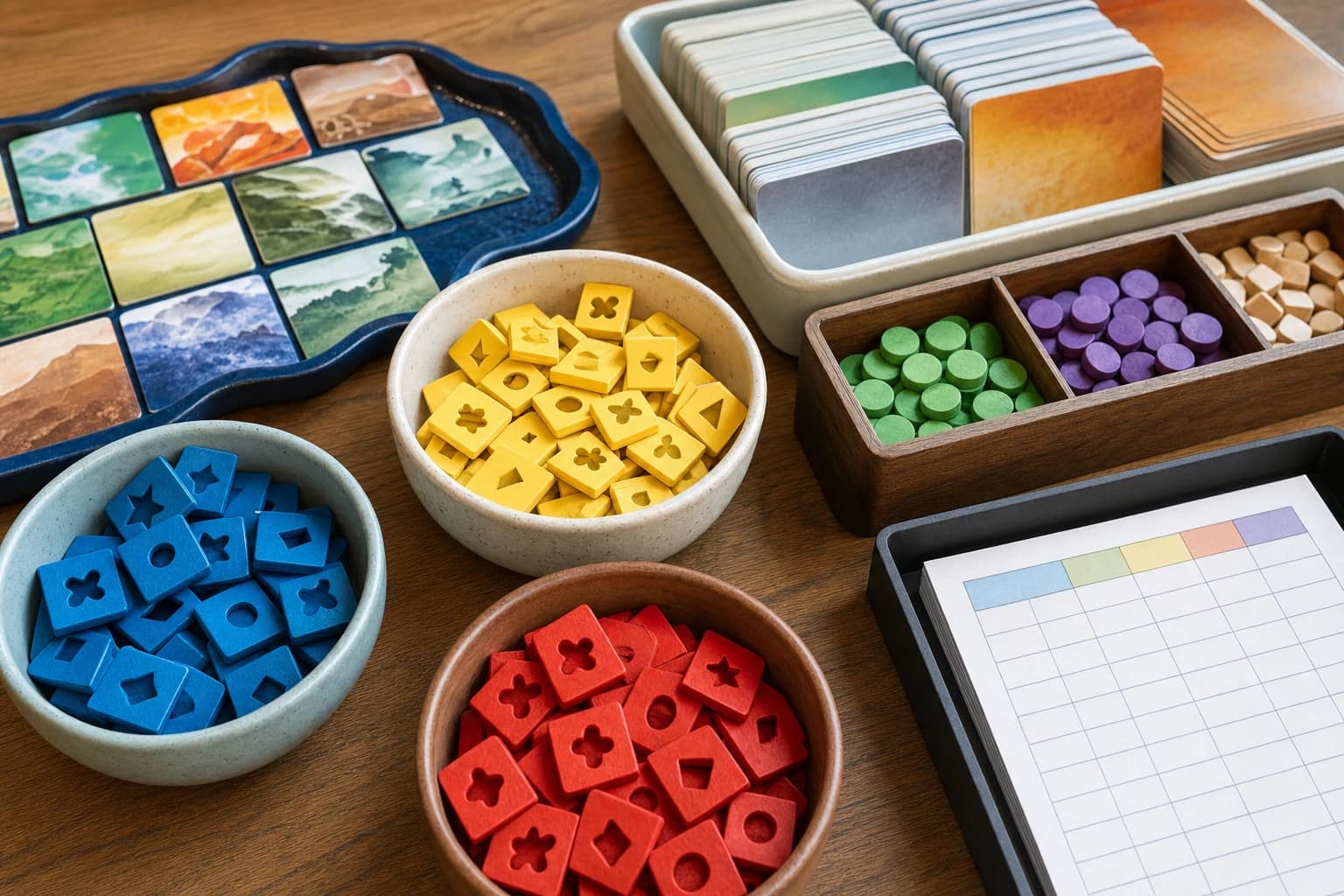
Blokus has one of the simplest rules to remember: your pieces must touch your other pieces at corners, not edges. That makes it easy to teach and quick to begin. It also has no hidden reading requirement, which helps when the group includes early readers or players who prefer visual games.
The challenge is spatial thinking. Some players see the board easily; others need a few turns before it clicks. Play the first round as a learning game and let people take back a move if they immediately see why it does not work. Once everyone understands the corner-touching rule, the game becomes smooth.
10. Sushi Go!: best quick card game for low waiting time
Sushi Go! is technically a card game, but it belongs on this list because it works so well at a family board-game table. Players choose one card, pass the hand, and repeat. Because everyone chooses at the same time, nobody waits long for a turn.
The first game requires a scoring explanation, and some cards are easier than others. For a child’s first round, name the simplest scoring goals: collect dumplings, match tempura pairs, and do not ignore pudding. After one round, most players understand the rhythm.
This is a good after-dinner option when the family wants a complete game in a short window. It also fits smaller tables better than sprawling boards.
11. Just One: best word game for older kids and grandparents
Just One is cooperative and social. One player guesses a word while everyone else writes one-word clues. Matching clues cancel out, so the group must think creatively. It is excellent for older children, teens, parents, and grandparents who enjoy language games.
It is less suitable for early readers or anyone who dislikes writing under light pressure. If handwriting is difficult, let players speak clues quietly to a neutral helper who writes them down, or use thick dry-erase markers for better grip and visibility.
12. Sorry!: best simple classic when energy is low
Sorry! is not the most strategic game here, but it remains useful for low-energy family nights. It sets up quickly, the goal is obvious, and many adults already know the basic rhythm. For grandparents and kids who want easy movement around a board, it can work well.
The caution is emotional: sending another player back to start can be funny for some children and upsetting for others. If your family has sensitive players, use a house rule for the first game: say good move when someone bumps you, and keep the tone playful rather than triumphant.
How to choose the right game for your family night
The best game depends less on age and more on the people at the table. Use this simple selection method before buying or pulling a game from the closet.
Materials for a smoother game night
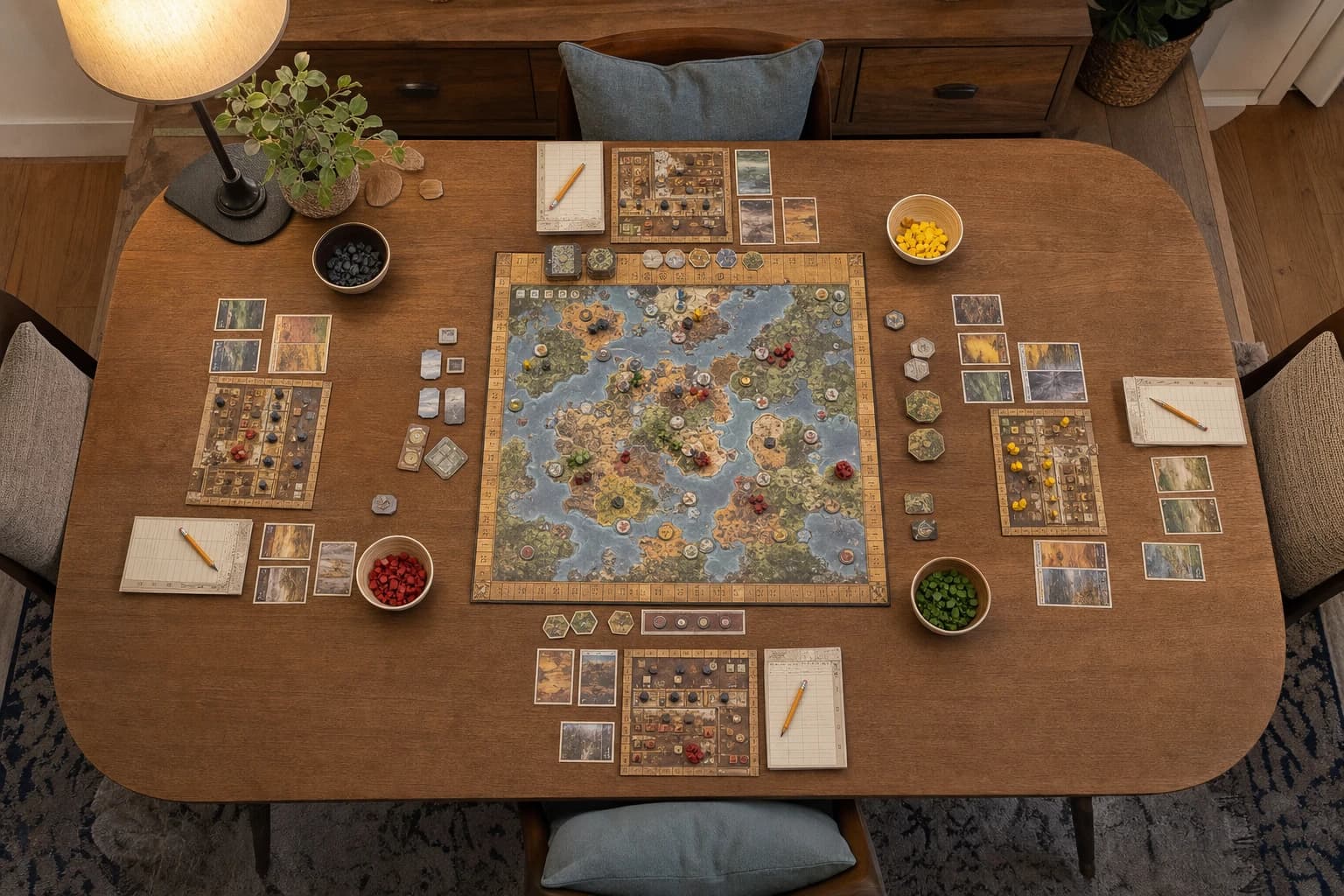
- A table large enough for the board plus each player’s cards or tiles
- Good overhead or lamp lighting, especially for games with small icons
- Small bowls, ramekins, or trays for tokens and tiles
- A notepad and thick pen for scoring if the game requires it
- Reading glasses, if needed, placed before the game starts
- A 30- to 60-minute time window, depending on the game
Step-by-step selection method
- Start with the youngest true player. Choose a game where the youngest child can make at least one real decision each turn. If they only roll dice and wait, they may lose interest.
- Check the reading burden. If more than one player needs help reading every turn, pick a visual game such as Qwirkle, Blokus, Kingdomino, or Azul.
- Limit the first game to 45 minutes or less. Long games are risky when attention spans and energy levels differ. Play two short games rather than one marathon.
- Choose teams carefully. Pair a child with a grandparent when the game has hidden planning, such as Sequence or Ticket to Ride: First Journey. Keep the child responsible for final choices when possible.
- Teach with one sample turn. Do not read the whole rulebook aloud. Explain the goal, show a turn, then begin with reminders as needed.
- Use a practice round. For scoring-heavy games such as Azul or Sushi Go!, make the first round low-stakes and correct mistakes kindly.
- Stop while the table is still happy. Ending after one good game is better than forcing a second game after children or adults are tired.
Ways to help younger children without making grandparents supervisors
One common family-game-night mistake is putting grandparents in charge of keeping the youngest child engaged. That can turn a fun visit into unpaid refereeing. Instead, build support into the structure of the game.
- Use open coaching for everyone: Allow any player to ask, What are two possible moves? This prevents help from feeling like correction.
- Give children limited choices: Instead of asking a six-year-old to evaluate the entire board, ask, Do you want to play the blue tile here or the green tile there?
- Rotate helper roles: One adult reads cards this round; another tracks score next round.
- Make teams mixed-age: Grandparent-child teams can be lovely, but do not make the same grandparent carry every child’s turn all night.
- Separate winning from learning: Say before the first round, This is the practice game, so we can fix mistakes.
- Use visible reminders: Place a small card on the table with turn steps, such as draw, play, score, pass.
Common mistakes to avoid
Choosing a game only by the age printed on the box
Age labels do not fully capture vision, reading confidence, patience, table space, or whether a child has played similar games before. A 7-year-old who plays often may handle Kingdomino easily, while a tired 10-year-old may prefer Sorry! after a long day.
Starting with the most complicated game in the closet
If grandparents are visiting or children are excited, start with a short success. You can always move to a deeper game later. A quick win builds trust in the evening.
Letting one player dominate strategy
Well-meaning adults sometimes take over a child’s turn. A better habit is to ask questions: What are you trying to collect? or Which space helps you most? The child learns more, and the grandparent is still a player, not a manager.
Ignoring physical comfort
Small cards, dim lighting, low coffee tables, and crowded boards can make a good game feel unpleasant. Use a dining table, organize components, and choose seats intentionally. Players who need to see the board clearly should sit closest to the main action.
Keeping score too seriously
Some families love exact scoring; others do better with relaxed play. If scorekeeping slows the evening, assign one adult scorer or use games where winning is obvious without arithmetic. Cooperative games can also reduce pressure.
Best game picks by age mix
If your family spans many ages, use the youngest active player as the anchor and then add interest for older players.
- Preschooler plus grandparents: Hoot Owl Hoot!, simple matching games, or very short cooperative games. Keep sessions around 15 to 20 minutes.
- Ages 6 to 8 plus grandparents: Qwirkle, Outfoxed!, Sequence, Blokus, and Ticket to Ride: First Journey with light help.
- Ages 9 to 12 plus grandparents: Kingdomino, Azul, Rummikub, Sushi Go!, and Just One.
- Teens, parents, and grandparents: Azul, Rummikub, Just One, Qwirkle, and Sequence in teams.
If the group is larger than a normal board game allows, consider splitting into two tables or using a party game format. For seasonal gatherings, you may also like Christmas Party Games for Families With Kids, Teens, and Adults Together. For no-running options in tight spaces, see Indoor Games for 10 People in a Small Room. If you are planning around very young children, Quiet Indoor Games for Preschoolers on Rainy Days has more low-mess ideas.
A simple buying checklist
Before adding a game to your cart, check these points:
- Can the slowest reader play without reading long cards every turn?
- Can the game be set up in under 10 minutes?
- Will most turns take less than one minute?
- Are the pieces large enough and easy enough to handle?
- Does the game fit on your normal table?
- Can a child make real choices without constant adult direction?
- Is there a cooperative or team option if direct competition causes frustration?
- Can the game end naturally within your family’s attention window?
FAQ
What is the best board game for grandparents and young kids?
For many families, Qwirkle is the best starting point because it uses colors and shapes, has no reading during play, and gives both children and adults meaningful choices. For preschoolers, Hoot Owl Hoot! is usually gentler because it is cooperative and simple.
What games work if a grandparent does not like complicated rules?
Try Sequence, Blokus, Qwirkle, or Sorry!. These games can be taught with a short explanation and one sample turn. Avoid games with long card text or many exception rules for the first round.
Are cooperative games better for multigenerational play?
Cooperative games are often helpful when children are sensitive about losing or when adults want a calmer table. Outfoxed! and Hoot Owl Hoot! let grandparents and children work toward the same goal. Competitive games can still work well if turns are short and the tone stays friendly.
How can younger children play without slowing everyone down?
Give younger children two or three clear options instead of asking them to analyze the whole board. Use practice rounds, visible turn reminders, and mixed-age teams. Let the child make the final choice whenever possible so they remain a player, not a passenger.
What should we avoid for a first family game night?
Avoid games with long setup, tiny text, many special powers, heavy negotiation, or sessions that regularly run longer than an hour. Those games may be fun later, but they are not the safest first choice for grandparents and kids playing together.
Conclusion: choose comfort, clarity, and shared decisions
The best board games for grandparents and kids are not always the flashiest or newest games. They are the games that let everyone understand the goal, take turns without long waits, handle the pieces comfortably, and make real choices. Qwirkle, Hoot Owl Hoot!, Outfoxed!, Ticket to Ride: First Journey, Sequence, Rummikub, Kingdomino, Azul, Blokus, Sushi Go!, Just One, and Sorry! each fit a different family need.
If you are unsure, start with a visual, low-reading game and treat the first round as practice. A successful family game night is not measured only by who wins. It is measured by whether the youngest player wants another turn and the oldest player feels like they were truly part of the fun.