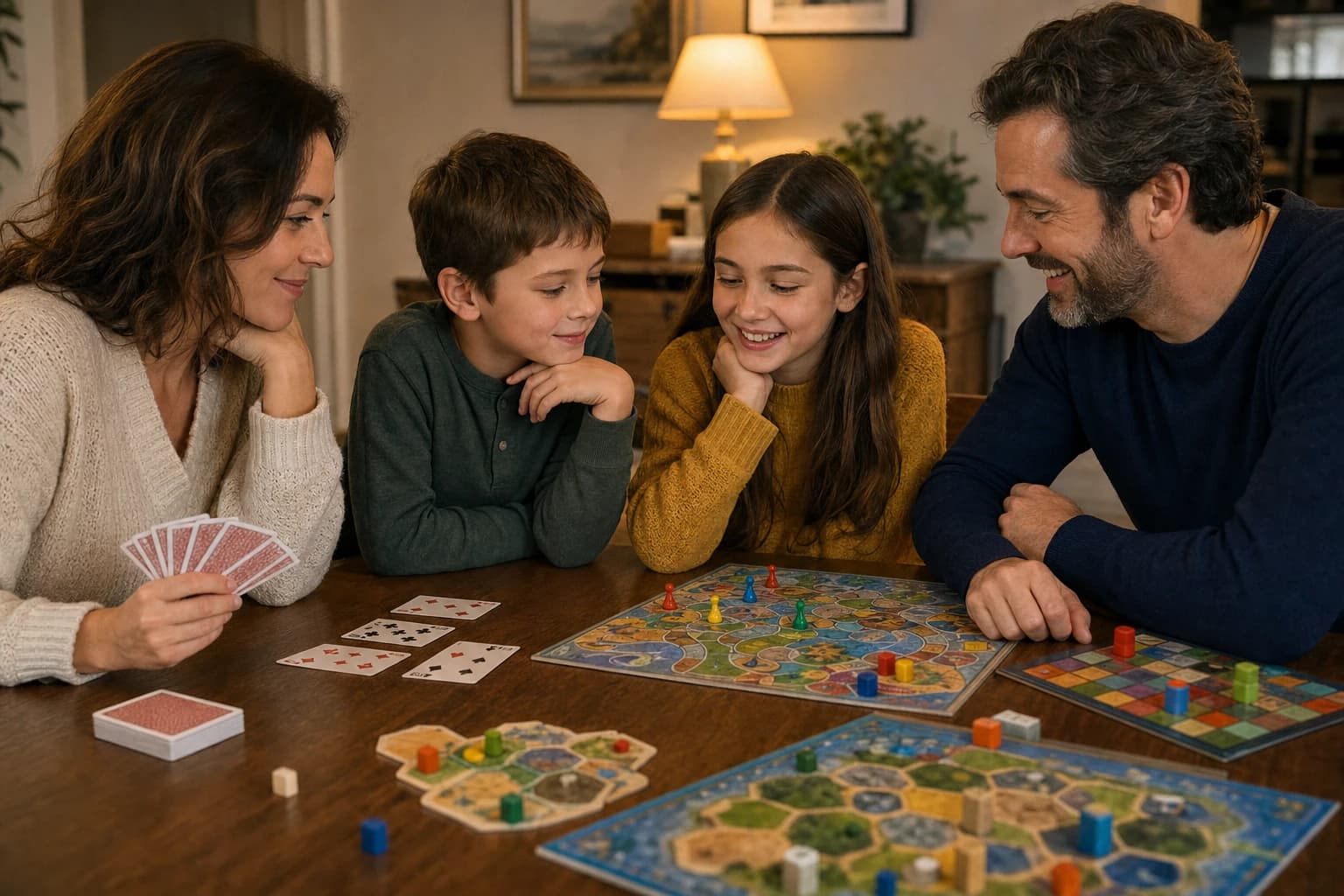
Choosing between card games and board games for family night sounds simple until real life gets involved: one child wants something fast, another wants a big adventure, the table is covered with homework, and nobody wants to spend 25 minutes reading rules. This guide compares card games vs board games for family night in the areas that usually matter most at home: budget, age range, play time, storage, travel, learning curve, and replay value.
The short version is that neither type is automatically better. Card games usually win when you need low cost, small storage, quick setup, and flexible play. Board games usually win when you want a richer theme, a shared table experience, or clearer structure for younger kids. The best choice depends on your household, not on the game category printed on the box.
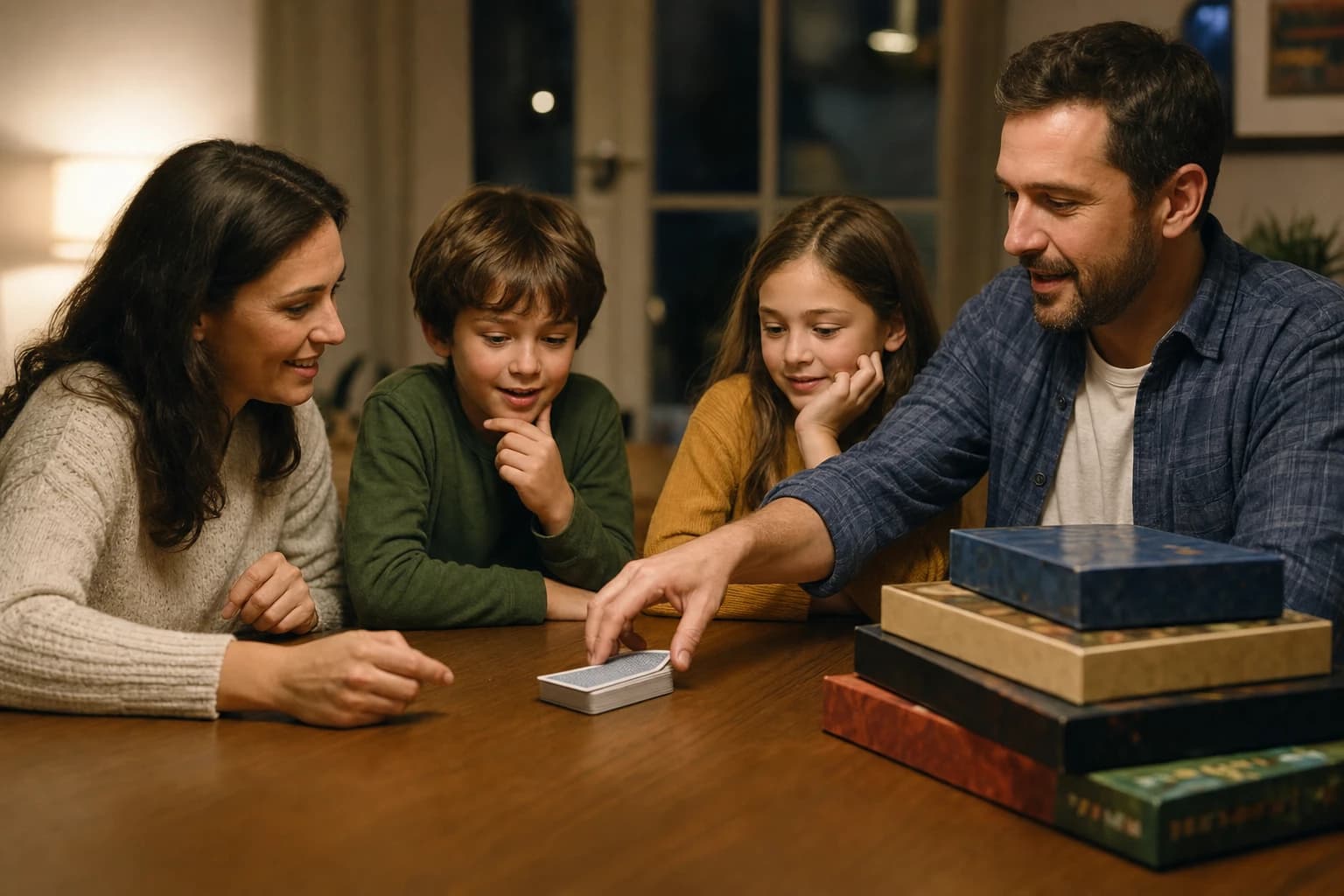
Quick Answer: Which Is Better for Family Night?
For most families, card games are better for frequent weeknight play, while board games are better for planned family game nights when you have more time and table space. A standard deck of cards can support many games, packs small, and is easy to replace. A board game can create a more memorable event because the board, pieces, art, and shared goal give everyone something concrete to focus on.
If you want a simple rule of thumb, use this:
- Choose card games if you have 10 to 25 minutes, a tight budget, limited storage, travel plans, or kids who dislike long explanations.
- Choose board games if you have 30 to 90 minutes, a steady player group, younger children who benefit from visual spaces and pieces, or family members who enjoy theme and strategy.
- Keep both if family night is a regular routine. A small card-game shelf plus 3 to 5 well-chosen board games covers most situations.
If your biggest challenge is time, you may also like Best Quick Family Games Under 15 Minutes for Busy School Nights. For mixed ages, How to Plan a 60-Minute Family Game Night for Mixed Ages Without Anyone Getting Bored can help you build a smoother evening.
Family Game Night Comparison: Cards vs Board Games
The table below is a practical decision matrix. It does not assume every card game or board game works the same way, but it reflects the patterns families commonly notice when choosing what to put on the table.
| Decision factor | Card games usually work best when... | Board games usually work best when... | Household tip |
|---|---|---|---|
| Budget | You want one purchase to support many rule sets, especially with a standard 52-card deck. | You want a complete themed experience and do not mind paying for a dedicated box. | Start with one deck, then add boxed games only for gaps your family actually has. |
| Age range | Players can hold cards, recognize numbers or symbols, and handle hidden information. | Younger kids need visual spaces, tokens, tracks, colors, or a board to understand progress. | For ages under 6, check whether small parts are appropriate and supervise closely. |
| Play time | You need a 5, 10, or 20-minute session that can stop after one round. | You have enough time for setup, teaching, play, and cleanup. | On school nights, choose games with a hard stop: one hand, one round, or one race to a set score. |
| Storage | You live in a small apartment, share a room, or need games that fit in a drawer. | You have shelf space and want components that feel special. | Keep the boxes you truly use; consolidate small card games into labeled pouches if rules are easy to find. |
| Travel | You need a game for a restaurant, hotel, train, or visiting relatives. | You are driving and can pack a box without losing pieces. | For travel, avoid games with many tiny tokens unless you bring a zipper bag or tray. |
| Replay value | You like variation from shuffling, changing partners, and using different rule sets. | You like new maps, boards, powers, missions, or scenarios. | Replay value is highest when the game length matches your family’s actual attention span. |
| Learning curve | You want rules that can be taught verbally and repeated quickly. | You want the board and pieces to remind players what to do next. | Teach only the first turn if possible; let extra rules appear when they matter. |
| Conflict level | You can choose light trick-taking, matching, or cooperative card games to reduce direct attacks. | You can choose cooperative board games or race-style games with less personal targeting. | If one child hates losing, use team play or cooperative games before competitive ones. |
When Card Games Are the Better Choice
Card games shine when family night needs to be simple, cheap, and easy to repeat. A deck of cards can become Go Fish, Crazy Eights, War, Rummy-style games, simple memory games, and many house-rule variations. The United States Playing Card Company’s Bicycle site keeps a public collection of card game rules, which is useful if you want standard references instead of relying only on memory: Bicycle Cards game rules.
Cards also work well when your family has unpredictable attendance. If one parent joins late or a sibling leaves after bedtime, many card games can be played in short hands. You can play one round, stop, and return another day without saving a board state.
Card games are especially strong for tight budgets
If your game budget is small, set a clear limit before browsing. For example, a household can create a useful starter plan with three budget tiers:
- $10 plan: one standard 52-card deck, plus paper for scores.
- $25 plan: two standard decks, one kid-friendly dedicated card game, and a small pouch or deck box.
- $50 plan: several card games with different moods: one cooperative, one silly party-style game, one classic deck, and one travel-friendly set.
Those numbers are not promises about current retail prices; they are practical spending caps. The point is to stop buying random boxes and instead fill specific needs: quick play, travel, mixed ages, or low-conflict play.
Card games are easier to store and carry
A card deck can live in a kitchen drawer, backpack, glove compartment, or bedside table. For families in small apartments, that matters. You do not need a dedicated game closet, and you do not need to clear a large table for every game. Many card games work on a coffee table or picnic blanket.
Cards are also forgiving when plans change. Waiting for food at a casual restaurant? Play a matching game. Rain cancels an outing? Play three quick rounds at the table. Visiting grandparents? A standard deck is familiar enough that older relatives may already know several games. For ideas that bridge generations, see Easy Card Games Kids Can Play With Grandparents Using One Standard Deck.
Where card games can fall short
Cards are not perfect. Hidden hands can frustrate younger children who do not yet understand why they should keep cards private. Some kids also struggle to hold a fan of cards. In that case, use a card holder, place cards face-up for the child, or choose open-information games until they are ready.
Card games can also feel abstract. If your child is motivated by stories, maps, animals, trains, treasure, or building something on the table, a board game may hold attention better than a deck of numbers and suits.
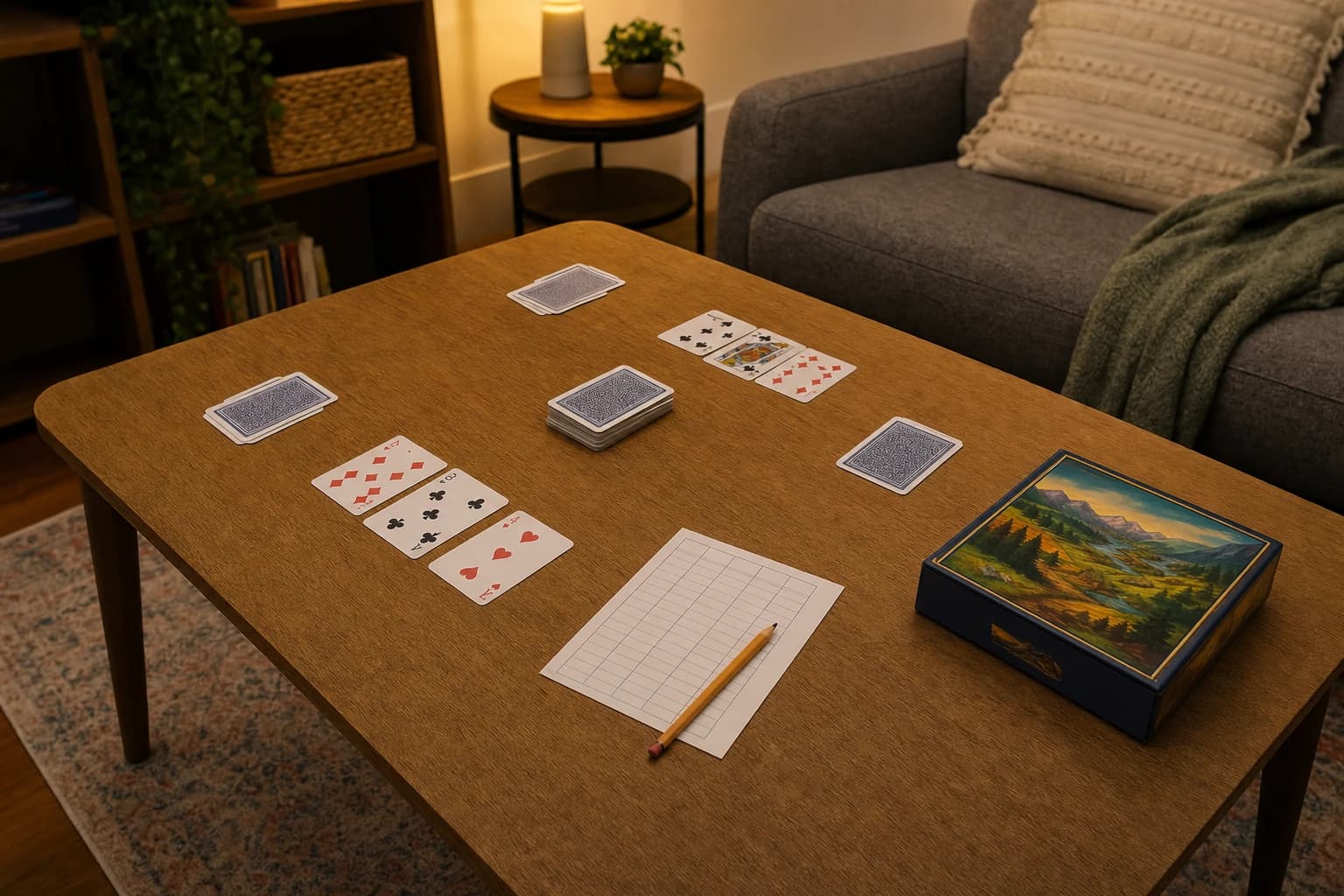
When Board Games Are the Better Choice
Board games tend to win when your family wants a fuller shared experience. A board creates a common focus: everyone can see the path, the pieces, the goal, and who is close to finishing. This helps players who are still learning turn order, counting, movement, and planning.
Board games can also make family night feel like an event. Opening the box, setting up the board, choosing pieces, and moving through a story or race can create a stronger sense of occasion than dealing cards. For many households, that ritual is part of the fun.
Board games can be easier for younger children to follow
For younger kids, a visible board reduces memory load. A child can see their pawn, where it needs to go, and what spaces are coming next. That is different from a hand of cards, where the important information may be hidden or symbolic.
However, age labels matter. Board games often include small pieces, dice, cards, plastic tokens, or cardboard tiles. The U.S. Consumer Product Safety Commission explains that small parts can be hazardous for children under 3, and caregivers should follow age grading and warning labels on toys and games: CPSC toy safety guidance. For family night, that means the “best” game is not only fun—it is appropriate for the youngest child who can reach the table.
Board games offer stronger themes and roles
If your family enjoys pretending, exploring, building, racing, solving mysteries, or working as a team, board games usually offer more structure. The board gives the theme a home. Players can point to the mountain, city, track, island, castle, farm, or marketplace. That physical map can be especially helpful for kids who are not excited by abstract card play.
Cooperative board games are also useful for families who dislike arguments over winning and losing. Instead of “I beat you,” the table can become “Can we solve this together?” If that sounds like your household, consider Best Cooperative Board Games for Families Who Do Not Like Competitive Game Nights.
Where board games can fall short
Board games can be harder to fit into daily life. They often require more table space, more setup, more cleanup, and more patience for rules. A game that says it plays in 45 minutes may still take longer if players are new, tired, distracted, or helping a younger sibling.
Another issue is storage. Big boxes look exciting in the store but can become clutter if they are rarely played. Before buying a new board game, ask: “Where will this live, and when will we realistically play it?” If the answer is unclear, borrow it first if possible, choose a smaller game, or wait.
A Practical Decision Matrix for Common Households
Here is the family game night comparison in real household situations. Use it as a shortcut when you do not want to overthink the choice.
| Household situation | Better default | Why | Best compromise |
|---|---|---|---|
| Small apartment or limited shelf space | Card games | They store in drawers, pouches, or a small basket. | Keep 1 to 2 compact board games for longer weekends. |
| Mixed-age siblings, such as 5, 9, and 12 | Board games | Visual boards help younger children follow the action. | Use team play: one older child partners with the younger child. |
| Travel, hotel stays, or visiting relatives | Card games | They pack light and are easier to replace if lost. | Bring one deck plus one tiny score pad and pencil. |
| Tight budget | Card games | One standard deck supports many games. | Add one board game only after you know your family’s preferred length and style. |
| Short weeknight sessions | Card games | You can play one hand or one quick round. | Choose board games with a true 15-minute play time, not just a short box claim. |
| Kids who need movement or tactile play | Board games | Pieces, dice, tiles, and boards give hands something to do. | Use simple card games with tokens for scoring or matching. |
| Family members who dislike direct competition | Board games | Cooperative board games are easier to find and teach visually. | Try cooperative card games or team-based card play. |
| Grandparents joining | Card games | Classic card rules may already be familiar. | Choose large-print cards or a board with clear contrast and simple turns. |
How to Choose the Best Type of Game for Family Game Night
Use this simple process before buying or picking a game from the shelf. It takes about 5 minutes and prevents the most common family-night mismatch: choosing a game that is good in theory but wrong for the evening you actually have.
What to gather
- A timer or clock
- A clear surface: dining table, coffee table, or floor space
- Paper and pencil for scores or house rules
- Your player list, including the youngest player’s age
- Your realistic time limit, including setup and cleanup
Five-step choice method
- Set the total time first. If you have 20 minutes or less, start with cards. If you have 45 minutes or more, board games become more realistic.
- Name the youngest full participant. Do not choose for the oldest child only. If a 5-year-old is truly playing, avoid games that require silent reading, complex hidden strategy, or tiny pieces they cannot manage safely.
- Decide the mood. Pick one: calm, silly, cooperative, strategic, or fast. Mood matters more than category. A calm card game may beat a chaotic board game right before bedtime.
- Check the surface. If the table is small or shared with dinner plates, choose cards. If you can leave a board out for an hour, a board game is fine.
- Choose an exit rule. Before starting, say when the game ends: one round, first to 50 points, one mission, or 8:00 p.m. This prevents “just one more turn” from becoming bedtime frustration.
Common Mistakes When Comparing Family Card Games vs Board Games
Mistake 1: Buying for the idea of family night, not the real schedule
A beautiful 90-minute game may be a poor fit if your family’s usable attention span after dinner is 18 minutes. Be honest about your week. If game night mostly happens between homework and bedtime, build your collection around short games first. Save longer board games for weekends, holidays, or planned nights.
Mistake 2: Ignoring setup and cleanup time
Play time is not the only time. A board game that plays in 30 minutes may take 5 minutes to set up, 10 minutes to explain, and 5 minutes to put away. That is still reasonable—but only if you counted it. Card games usually have the advantage here because shuffling is often the main setup.
Mistake 3: Expecting one game to satisfy every age
Mixed-age family nights often need adaptation. Younger kids can roll dice, draw cards, manage tokens, or partner with an adult. Older kids can handle scoring, reading cards aloud, or making team decisions. If you want practical adaptation ideas, read How to Adapt Classic Board Games So Younger Kids Can Join Older Family Members.
Mistake 4: Treating “educational” as automatically fun
A game can practice math, reading, memory, cooperation, or planning without feeling like homework. But if the learning goal overwhelms the fun, family night becomes a lesson. Choose games people want to play, then notice the skills they practice naturally.
Mistake 5: Keeping too many games that no one chooses
A crowded shelf makes choosing harder. Keep a simple rotation: a quick card option, a cooperative option, a silly option, a strategy option, and one longer weekend option. If a game has not been chosen in a year and nobody asks for it, consider donating it, trading it, or storing it away.
Best Recommendations by Family Situation
For small apartments
Choose cards first, then add compact board games only if they earn their space. Store games in one basket or one shelf cube. If the game area is also the dining area, avoid games with sprawling boards or many loose pieces.
For mixed-age siblings
Choose board games with visible progress, then simplify rules for the youngest player. Let older siblings take meaningful roles, such as banker, reader, scorekeeper, or team captain. Avoid games where one older child can dominate every decision unless everyone enjoys that dynamic.
For travel
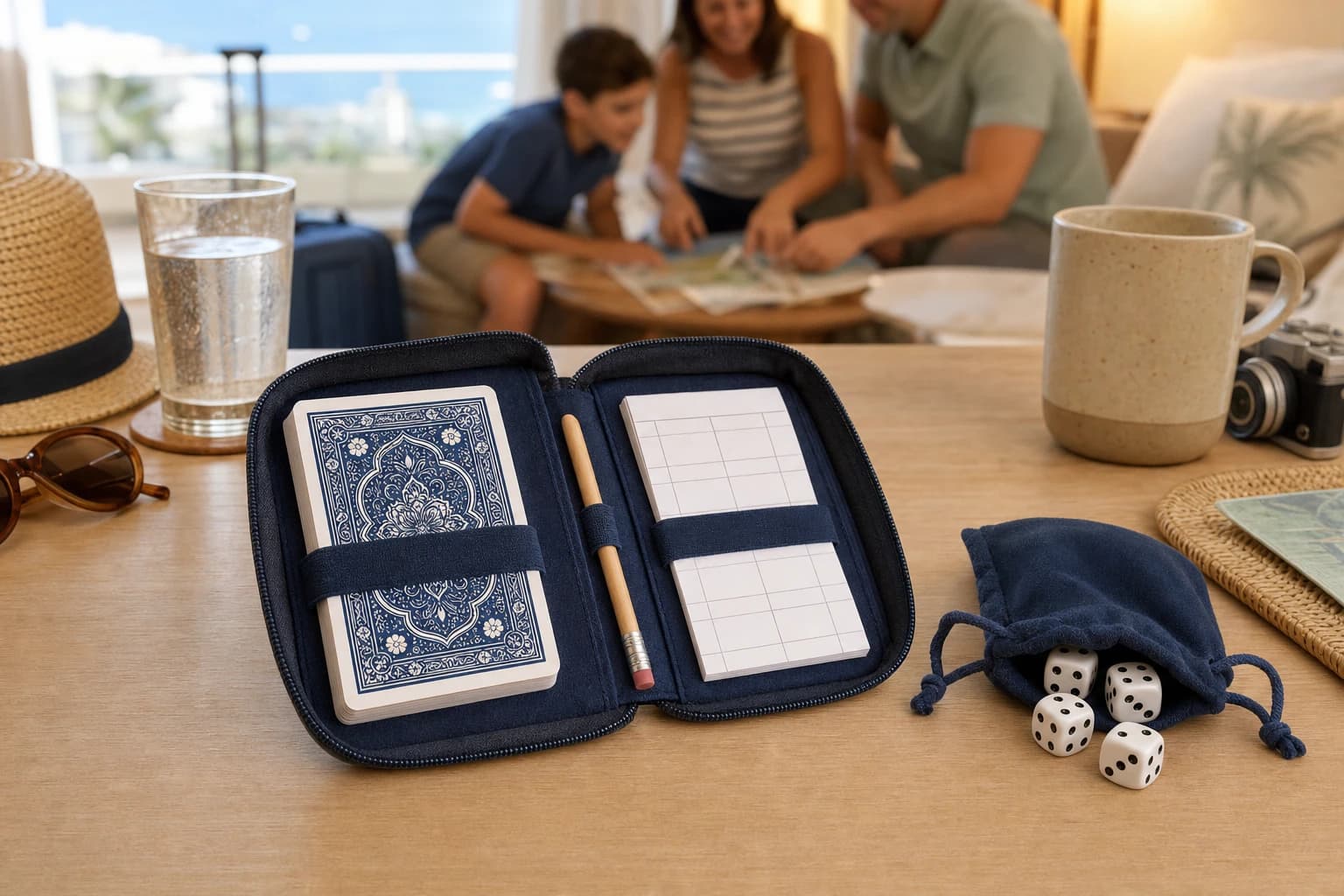
Choose cards, word games, or no-equipment games. A deck, pencil, and folded score sheet can cover a long wait. If you are traveling by car and do not want loose pieces, no-equipment games are even easier; see No-Equipment Family Games for Long Car Rides With Kids Ages 6 to 12.
For tight budgets
Start with a standard deck and learn 5 games before buying anything else. Then notice what your family asks for: more speed, more teamwork, more silliness, or more strategy. Buy to fill that exact gap.
For short weeknight sessions
Use a “one round only” rule. Card games are ideal, but some board games can work if setup is minimal and the end condition is clear. Avoid anything that requires a long rules explanation when people are already tired.
For families who argue during games
Try cooperative board games, team card games, or games with low direct targeting. Also make the first game of the night short. A 10-minute loss is easier to handle than a 75-minute loss.
FAQ: Card Games vs Board Games for Family Night
Are card games or board games better for kids?
It depends on the child’s age and skills. Card games are great for kids who can recognize numbers, match symbols, take turns, and hold cards. Board games are often better for younger kids who need visible pieces, spaces, and progress on the table.
What is the best type of game for family game night on a school night?
For school nights, card games usually work better because they set up quickly and can end after one hand or round. If you choose a board game, pick one that your family already knows and can finish within your available time.
Should every family own both card games and board games?
Most families benefit from having both, but you do not need a large collection. A practical starter set is one standard card deck, one quick dedicated card game, one cooperative game, and one longer board game for weekends.
How do I choose between board games or card games for kids of different ages?
Choose based on the youngest child who is truly participating. For a large age gap, board games with teams often work well because an older child or adult can support the younger player. Simple card games can also work if hands are open and rules are simplified.
Which has better replay value, card games or board games?
Card games often have strong replay value because shuffling, scoring, partnerships, and rule variations change each round. Board games can have excellent replay value too, especially when they include variable setups, different roles, or cooperative challenges. The better value is the game your family will actually replay.
What if one parent likes strategy and the kids want silly games?
Alternate the night into two parts: a short silly game first, then a slightly deeper game for those who want to continue. You can also choose team games where the strategy-minded parent advises without controlling every turn.
Final Verdict: Build a Flexible Game Night Shelf
In the debate over card games vs board games for family night, the winner is the format that fits your household’s real constraints. Card games are the dependable choice for tight budgets, small spaces, travel, and short weeknights. Board games are the better pick when you want theme, structure, visible progress, and a more event-like family night.
The most useful approach is not choosing one forever. Build a small, flexible shelf: cards for everyday play, board games for planned sessions, and cooperative options for nights when competition feels like too much. When the game matches the people, the space, and the time available, family night becomes much easier to say yes to.