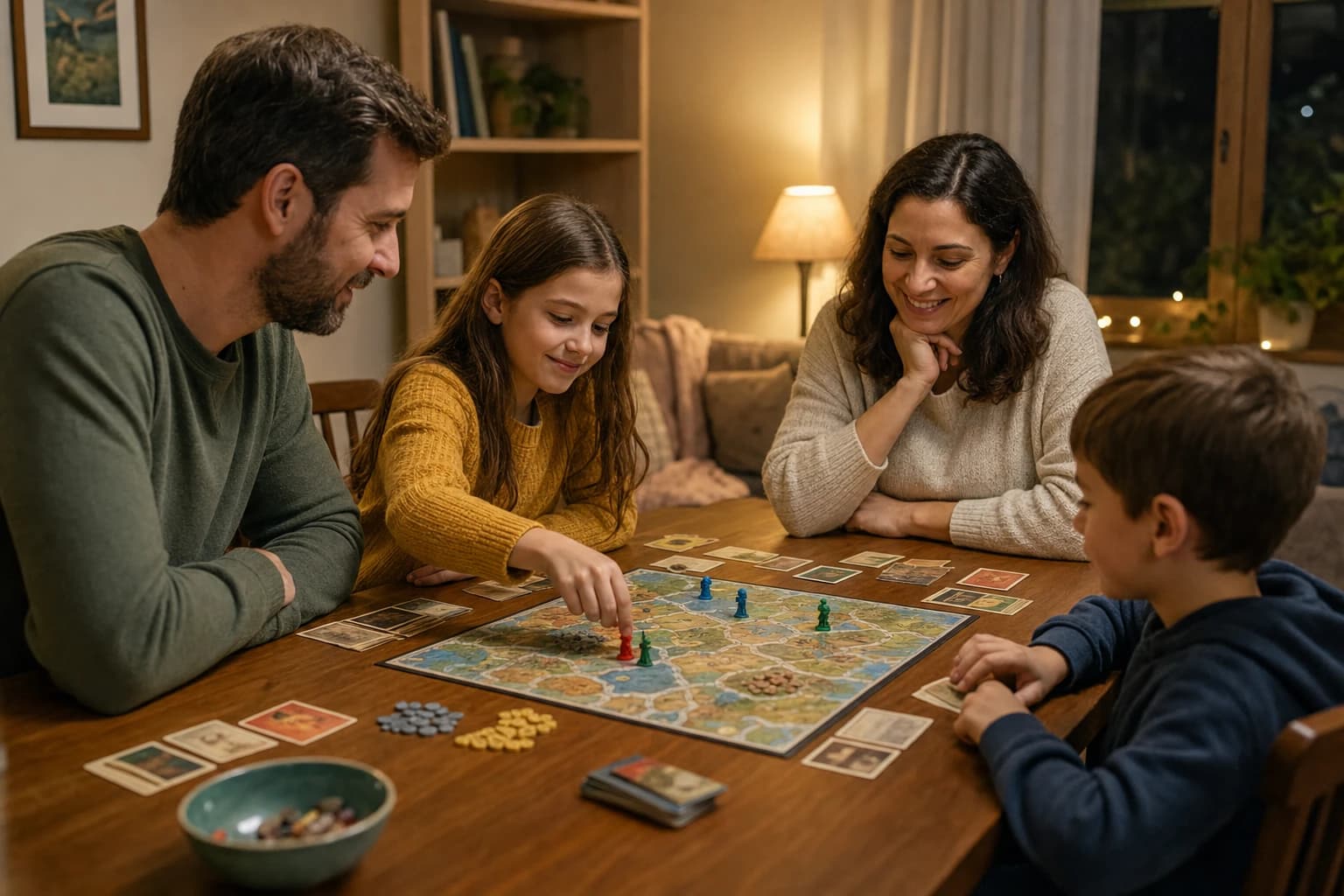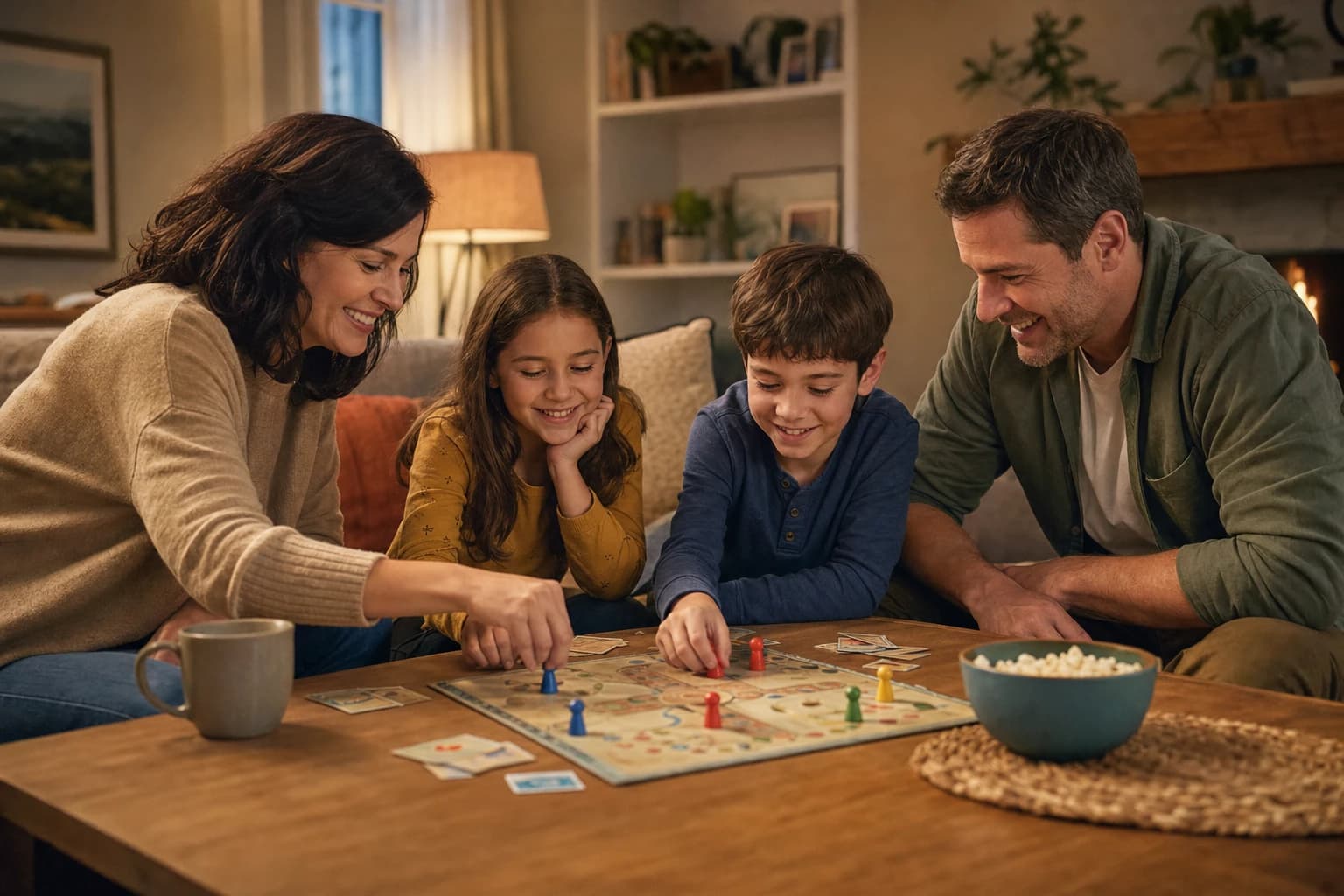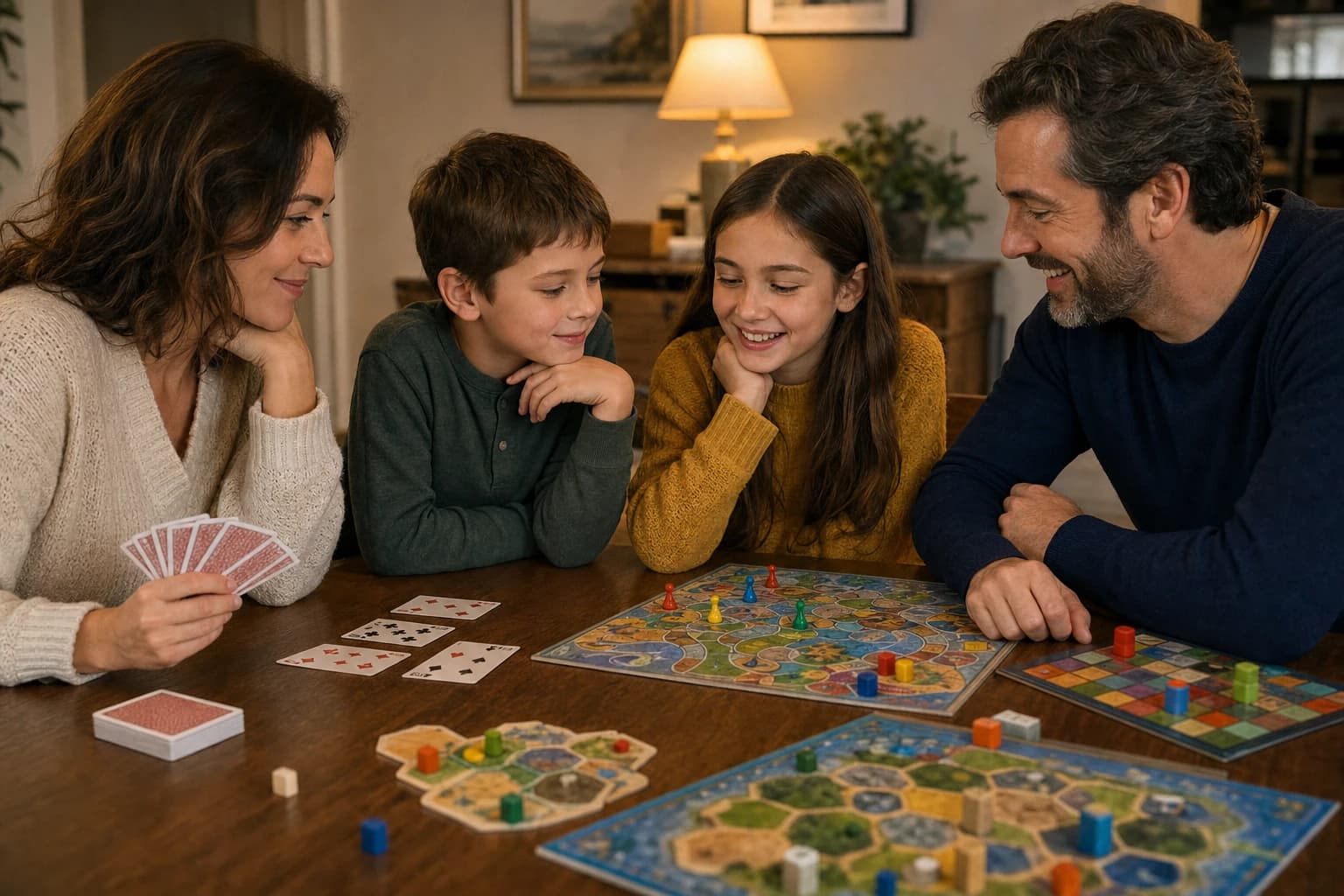
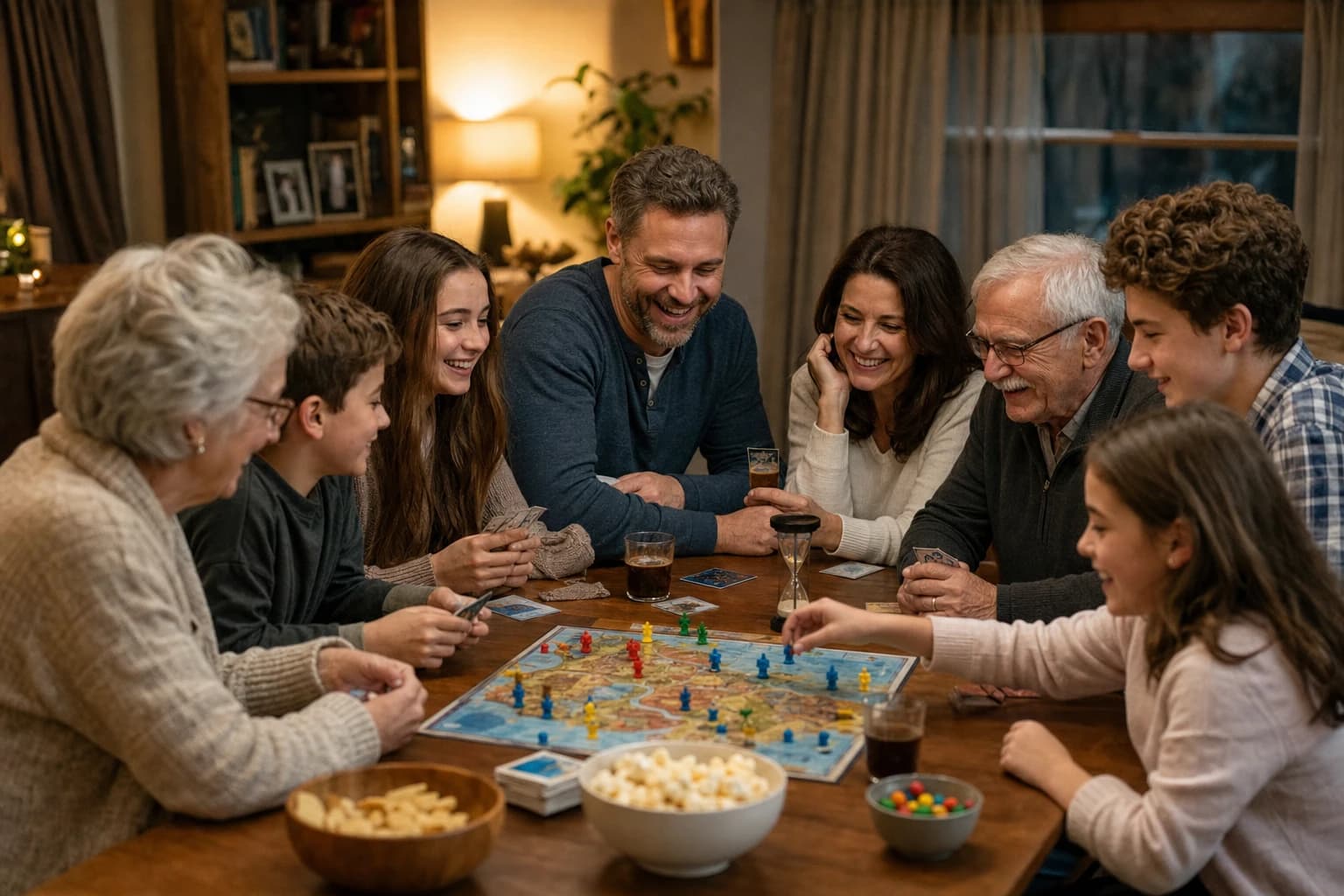
Planning a game night sounds simple until one child wants action, another wants rules explained slowly, and the adults accidentally turn every round into a strategy contest. If you are wondering how to plan a family game night for mixed ages, the trick is not choosing one perfect game. It is building a short, flexible format that changes pace before anyone checks out.
This guide gives you a complete 60-minute plan for a game night for kids and adults, including a warm-up, a main game, snack break, team pairings, fairness rules, and backup options. The goal is a night where younger players can contribute, older players stay interested, and nobody has to sit out for long.
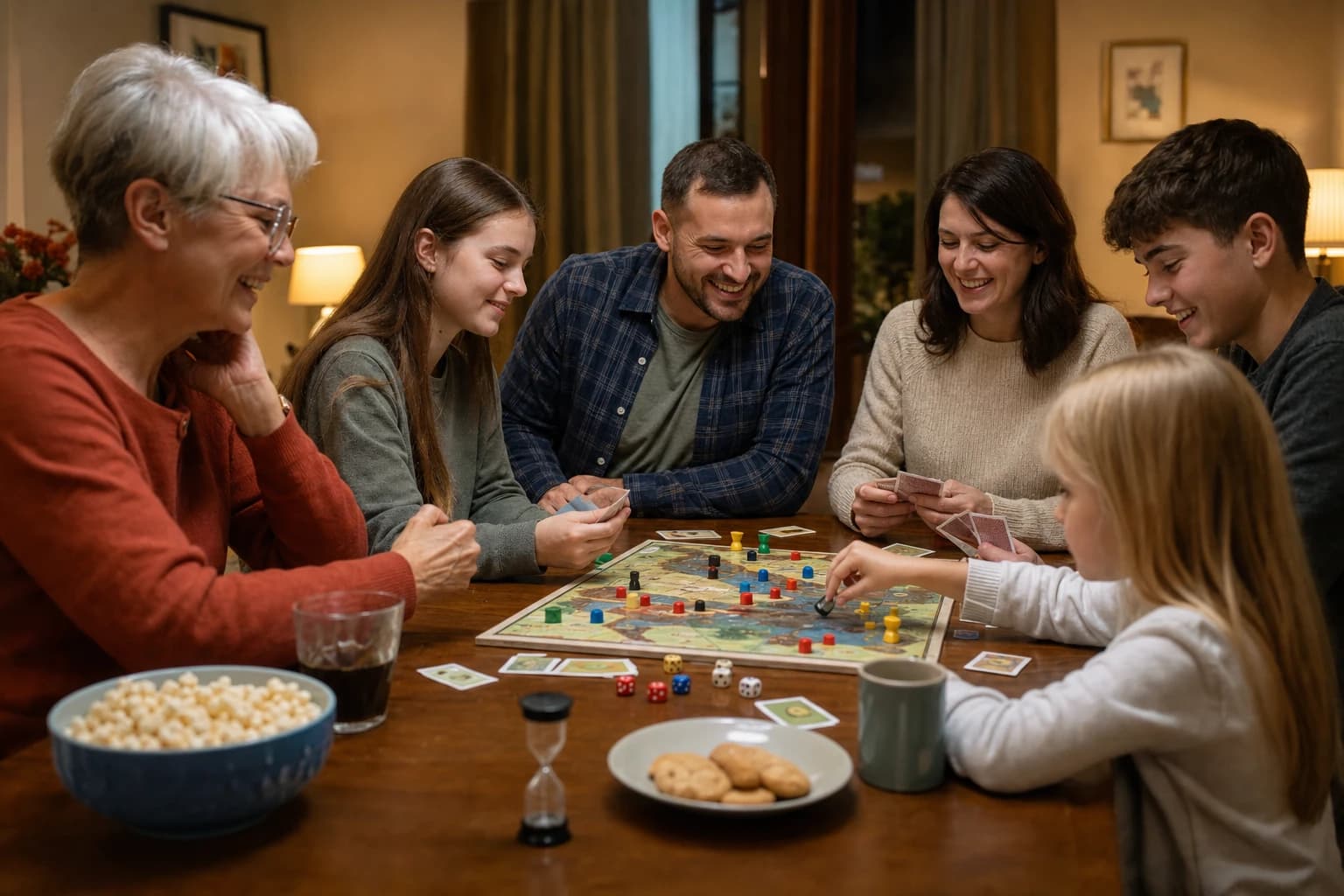
The Short Answer: Use a 60-Minute Game Night Structure
For mixed ages, one hour is usually enough time to feel special without becoming exhausting. A good family game night schedule has four parts: a five-minute setup, a fast warm-up, one main game, a short reset break, and a quick closing game or celebration.
The most reliable format is:
- 0–5 minutes: Set expectations and pick teams.
- 5–15 minutes: Play a simple warm-up game with almost no waiting.
- 15–40 minutes: Play the main game using mixed-age teams or helper roles.
- 40–48 minutes: Take a snack and reset break.
- 48–58 minutes: Play a quick final round or silly challenge.
- 58–60 minutes: End clearly, praise good moments, and choose the next host.
This structure matters because different ages handle waiting, losing, reading, and strategy differently. Instead of asking one game to satisfy everyone, you rotate the kind of fun: movement, teamwork, thinking, snacking, and a light finish.
What You Need Before You Start
You do not need a large collection of board games. In fact, a smaller menu is better because too many choices can slow the night down. Prepare everything before players arrive at the table.
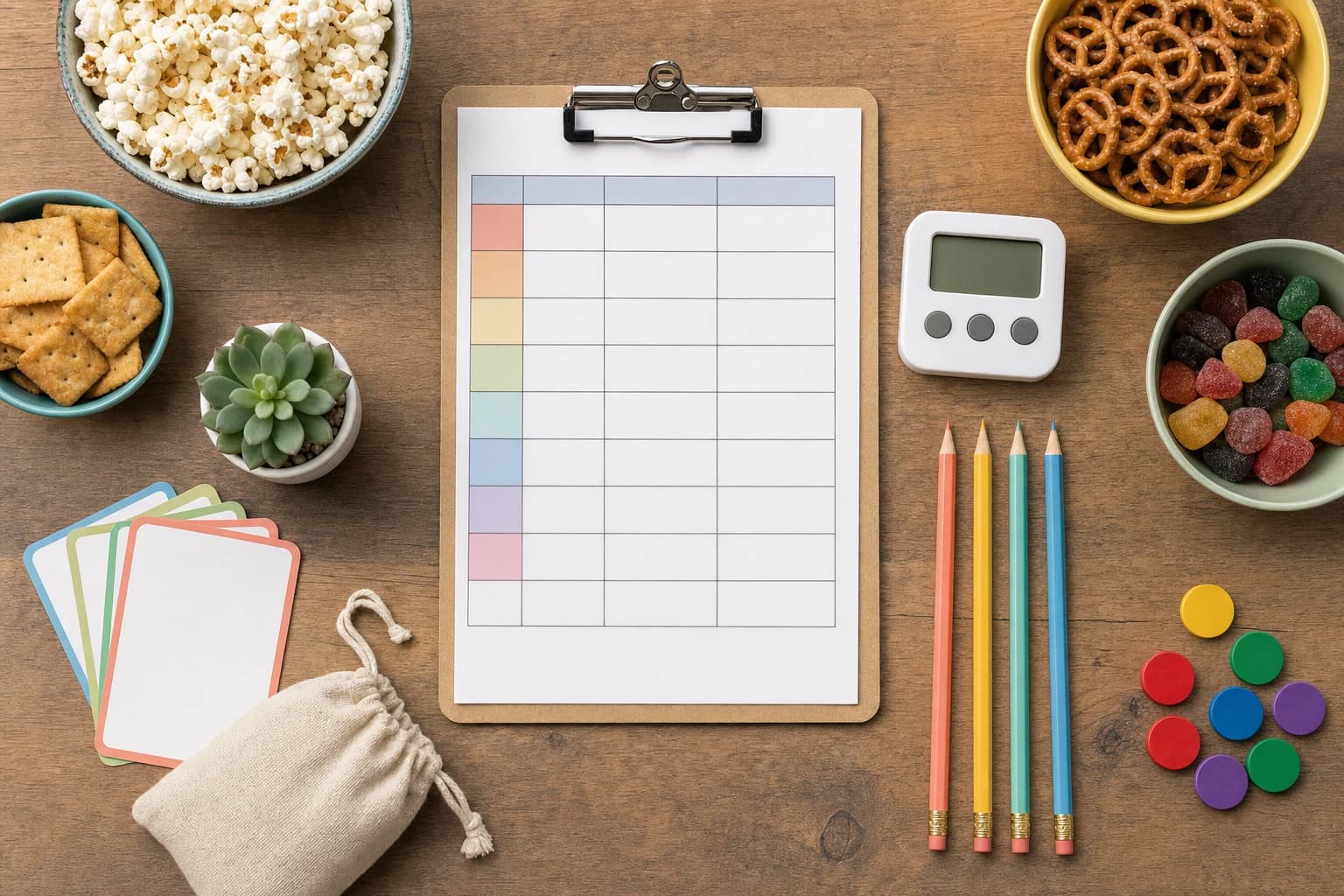
Materials
- One timer or phone timer set to visible alarms
- Two or three game options, not ten
- Paper and pencils for scoring, drawing, or word clues
- A bowl or bag for team slips, prompt cards, or tokens
- Simple snacks that do not leave sticky fingers on cards, such as pretzels, popcorn, apple slices, crackers, or cheese cubes
- Small tokens for younger players to hold, count, trade, or award
- One backup no-equipment game in case the main game falls flat
Safety note for toddlers and preschoolers
If children under 3 are nearby, avoid small game pieces, marbles, dice, beads, coins, and deflated balloons. The U.S. Consumer Product Safety Commission warns that small toy parts and certain small objects can be choking hazards for young children; see the CPSC’s guidance on small parts safety.
A Minute-by-Minute 60-Minute Family Game Night Schedule
Use this schedule as your default plan. Adjust the games, but keep the timing. The timer is not there to make the night strict; it protects the group from a game dragging on until younger players lose interest.
| Time | What to Do | Best Game Type | Why It Works for Mixed Ages |
|---|---|---|---|
| 0–5 min | Welcome, rules, teams, snack reminder | No game yet | Everyone knows the plan before competition starts. |
| 5–15 min | Warm-up round | Guessing, movement, drawing, or “would you rather” style prompts | Low pressure and easy for younger kids to join. |
| 15–40 min | Main game | Team board game, cooperative challenge, trivia with helpers, card game with open hands | The longest section goes to the most structured activity. |
| 40–48 min | Snack and reset | Conversation prompt or score reset | Prevents fatigue and gives frustrated players a fresh start. |
| 48–58 min | Quick closer | One-minute challenges, charades, speed drawing, memory tray | Ends with energy instead of a long unfinished game. |
| 58–60 min | Wrap-up | Choose MVP moments, not just a winner | Rewards teamwork, kindness, and creativity. |
Step-by-Step: How to Run the Night
1. Choose one main game, not a stack of options
Pick the main game before game night begins. It should take 20 to 30 minutes when played casually, not the full time printed on the box if your group tends to discuss every move. Good mixed age family games usually have at least one of these features:
- Teams are allowed.
- Turns are short.
- Reading is optional or can be shared.
- Luck matters enough that adults cannot control everything.
- Players can recover after a bad turn.
Examples include charades, Pictionary-style drawing, picture bingo, cooperative puzzle challenges, simple card games, memory games, or team trivia where younger children can answer picture, animal, food, or music questions. If your family prefers active play, you can also borrow ideas from indoor games for 10 people in a small room and adapt them to a living room.
2. Start with a warm-up that has no elimination
The first game should be nearly impossible to “ruin.” Avoid games where someone is out in the first minute. Try one of these 10-minute warm-ups:
- Two-Clue Guess: One player thinks of an object in the room and gives two clues. Everyone guesses as a team.
- Pass the Sound: One person makes a sound effect, and the next person copies it and adds one. Keep it silly, not perfect.
- Family Favorites Line-Up: Ask a question such as “pancakes or waffles?” Players move to one side of the room or the other, then one person explains their pick.
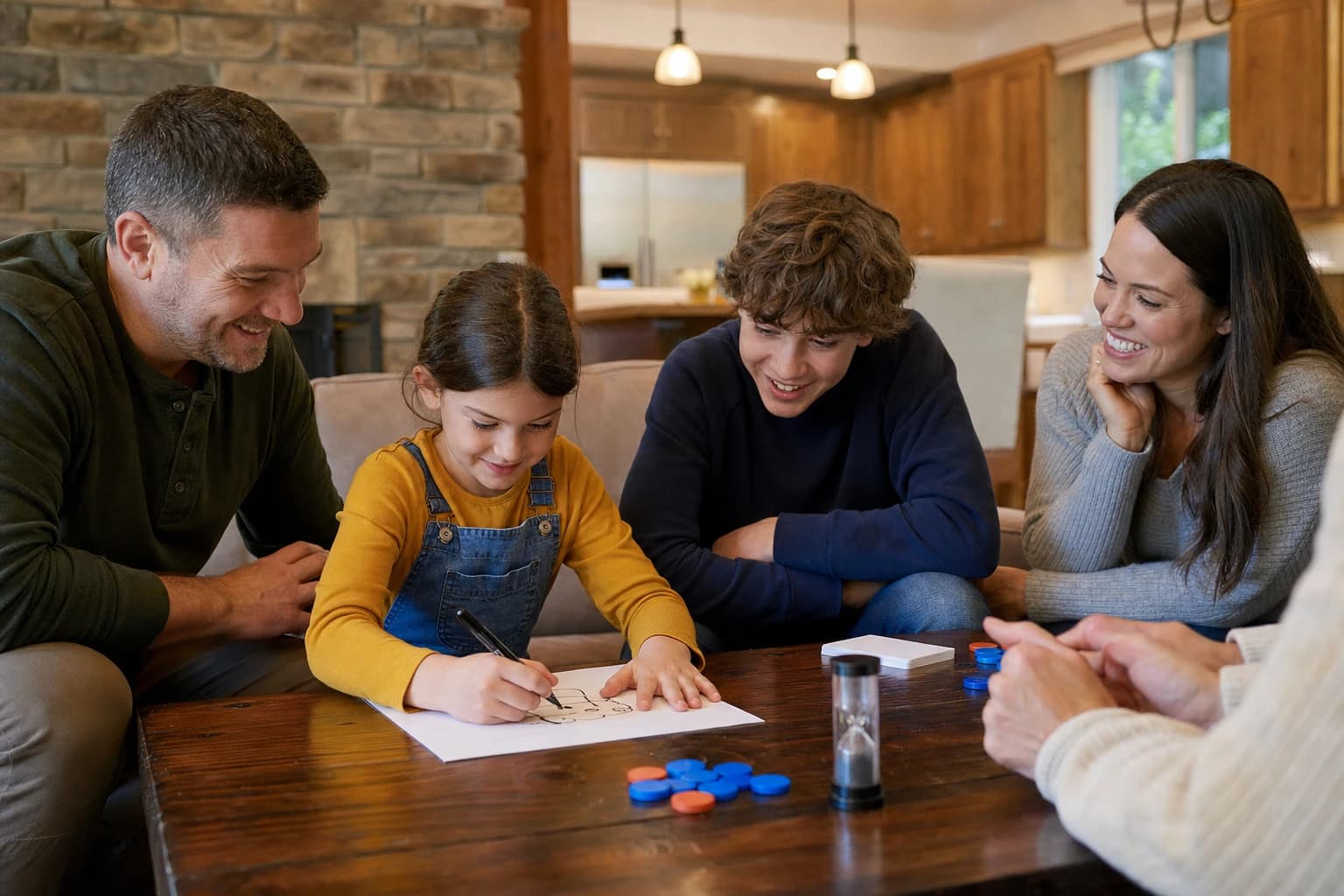
- Ten-Second Drawing: Draw an animal, food, or object in ten seconds. Teams guess quickly and laugh at the drawings.
Warm-ups help shy players speak early and give younger kids a win before the main game begins.
3. Pair ages on purpose
Do not let the oldest players form one team unless the game is completely luck-based. Better pairings are:
- Adult + young child for reading-heavy games.
- Teen + elementary child for drawing, building, or clue games.
- Grandparent + child for memory, storytelling, or trivia with flexible answers.
- Two children + one adult when the adult’s job is only to read cards and keep time.
Give the older player a helper role instead of a commander role. For example: “You may read the card, but the younger teammate chooses the answer,” or “You can give two suggestions, then your teammate decides.”
4. Use fairness rules before the first turn
Fairness rules are easier to accept before anyone is winning. Post or announce three simple rules:
- The youngest capable player starts. This prevents older players from setting the tone too aggressively.
- No coaching after the final answer. Teams can discuss, but once a player decides, the decision stands.
- Winning is one category, not the only category. At the end, name a funniest moment, best helper, best comeback, and most creative answer.
For a game night for kids and adults, this small shift makes a big difference. Adults and teens still get to compete, but younger children are not treated as passengers.
5. Keep the main game short, even if it is going well
Stop the main game at the 25-minute mark or at the next natural checkpoint. If players beg to continue, that is a good sign. It is better to end with “Can we play again?” than to stretch the game until the youngest person wanders away.
If the game has a long scoring system, simplify it. Play to 5 points instead of 20. Use three rounds instead of a full deck. In a board game, end after one trip around the board or after the first person collects three items. House rules are fine as long as everyone hears them before the game starts.
6. Treat the snack break as part of the plan
A snack break is not a failure of attention. It is a reset. Use the break to clear cards, refill water, and quietly adjust if something is not working. If a younger child is frustrated, the break gives them a way back in without a big conversation.
Good snack-break prompts include:
- “What was the funniest answer so far?”
- “Which rule should we keep for next time?”
- “Should the final game be quiet, silly, or active?”
7. End with a fast closer
The closer should take 10 minutes or less and require almost no setup. Choose one:
- One-Minute Charades: Each team gets 60 seconds to act out as many easy words as possible.
- Memory Tray: Put 10 household items on a tray. Players look for 30 seconds, then write or say what they remember.
- Speed Categories: Name as many fruits, animals, or movie characters as possible in 30 seconds.
- Silent Statue Vote: Everyone poses as “a tired robot,” “a sneaky cat,” or “a superhero landing.” Vote for funniest, not best.
If you want more at-home ideas for younger children, the simple-rule format in indoor birthday party games for kids ages 6–10 can be adapted for a family night.
Best Game Types for Mixed Ages
The best family game night ideas at home are not always the most popular boxed games. Look for mechanics that let different strengths matter.
| Game Type | Best For | How to Make It Fair |
|---|---|---|
| Drawing games | Kids who like creativity, adults who do not mind being silly | Use easy words for younger players and ban criticism of drawing skill. |
| Charades | High-energy groups and non-readers | Let younger children choose from picture cards or household objects. |
| Memory games | Elementary kids, grandparents, quieter players | Play in teams and allow one “second look” per team. |
| Cooperative games | Families with big age gaps or sensitive competitors | Set a shared goal, such as beating the timer, instead of beating each other. |
| Trivia | Teens and adults | Use age bands: kids answer kid questions, adults answer harder questions, teams share points. |
Backup Options When the Plan Starts to Fail
Even a good plan can miss. Someone may be tired, the rules may be too hard, or a game may move too slowly. Prepare one backup for each common problem.
- If younger kids are restless: Switch to charades, statue poses, or a quick scavenger hunt for three household items. For a more active weekend version, try a backyard scavenger hunt for kids.
- If older players are bored: Add a constraint, such as drawing with the non-dominant hand or answering trivia with only three-word clues.
- If one player keeps dominating: Move to teams and give that player a support role: timer keeper, clue reader, or judge of funniest answer.
- If conflict starts: Pause scoring for one round and play a cooperative challenge against the timer.
- If everyone is tired: End early with a two-minute “best moment” round. A short happy night beats a long cranky one.
House Rules That Prevent Older Players From Taking Over
Older kids and adults often dominate without meaning to. They read faster, plan ahead, and know how games usually work. Use these house rules to balance the table without making the game feel unfair:
- One-voice rule: During team answers, each player gets one suggestion before anyone gets a second suggestion.
- Child captain rule: The youngest teammate makes the final choice on every other turn.
- Whisper limit: Teams get 20 seconds to discuss, then must answer.
- Role rotation: Rotate reader, mover, drawer, actor, and scorekeeper roles every round.
- Comeback token: Each team gets one token that allows a redo, extra clue, or second guess.
These rules keep the game moving and make sure younger players do meaningful things, not just watch adults play.
Common Mistakes to Avoid
- Starting with the most complicated game. Begin easy, then build.
- Explaining every rule upfront. Teach the first round, then add details as needed.
- Letting eliminated players wait. Use no-elimination formats or give eliminated players jobs.
- Keeping score too seriously. Scores are fun until they become the only thing that matters.
- Ignoring the youngest player’s limit. If the youngest person is done, the group mood usually follows.
For quiet evenings or apartment-friendly play, you may also like quiet indoor games for preschoolers on rainy days, especially if your mixed-age group includes very young children.
FAQ: Planning a Family Game Night for Mixed Ages
What is the best length for a mixed-age family game night?
Sixty minutes is a practical target for many families because it allows variety without becoming too long. If preschoolers are included, plan a 30- to 45-minute version with one warm-up and one main game.
How do I include a child who cannot read yet?
Use picture clues, acting, drawing, matching, movement, or a teammate who reads aloud. Give the non-reader a real decision-making role, such as choosing the final answer or moving the game piece.
Should adults let kids win?
It is better to adjust the rules than fake the outcome. Use teams, easier questions for younger players, extra clues, or comeback tokens so children can compete honestly.
What if one person hates losing?
Choose cooperative games or team challenges against a timer. Also reward non-score achievements, such as best helper, funniest answer, or most creative move.
How many games should we plan for one night?
Plan three: one warm-up, one main game, and one quick closer. Keep one backup ready, but do not present too many choices at the start.
Conclusion
The best way to plan a family game night for mixed ages is to design the flow, not just pick a game. Keep it to 60 minutes, start with an easy warm-up, use mixed-age teams, build in a snack reset, and end with a quick closer. Add simple fairness rules so older players can help without taking over.
When the night is short, varied, and flexible, everyone has a better chance to feel included. That is what turns family game night from a good idea into something people actually want to repeat.