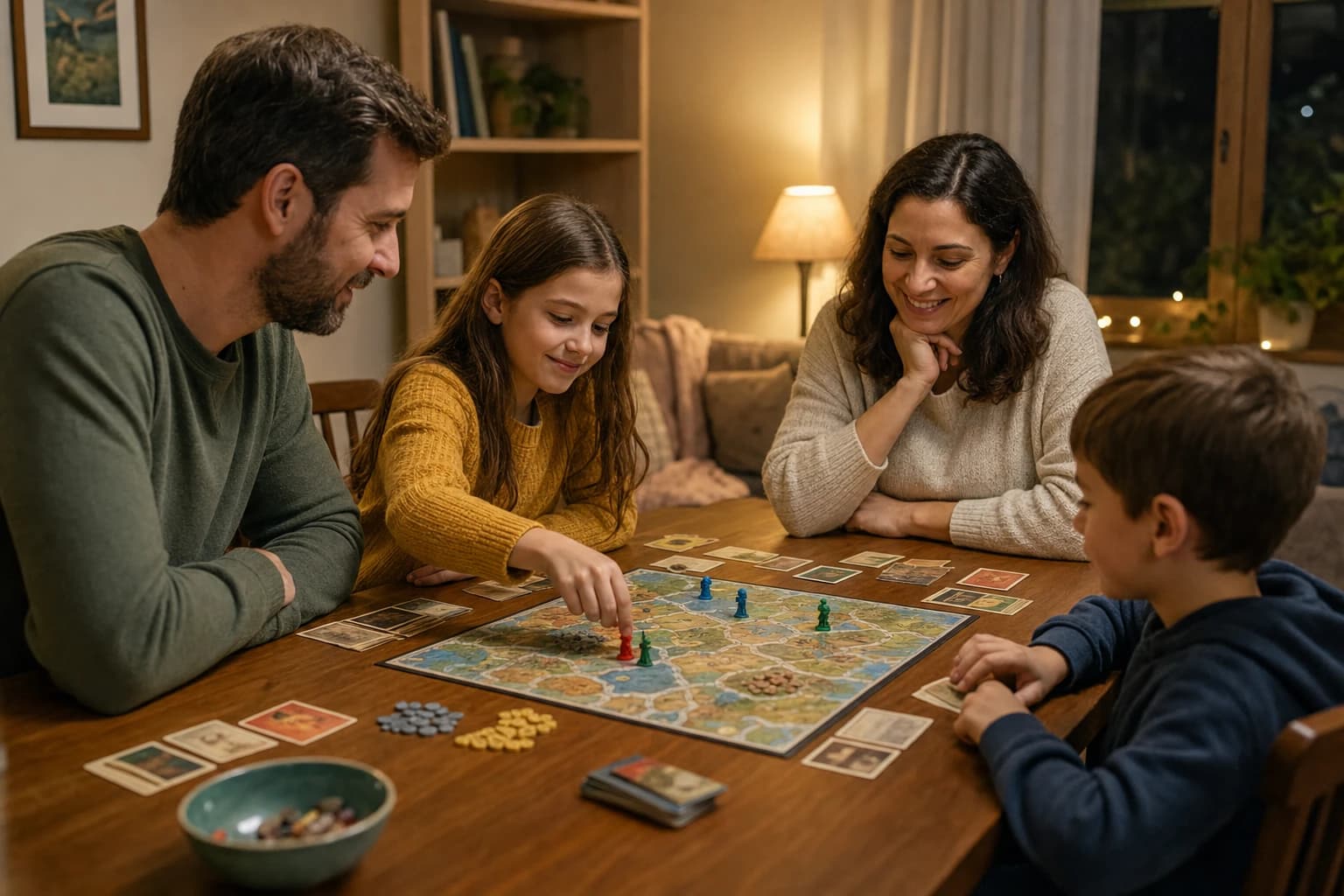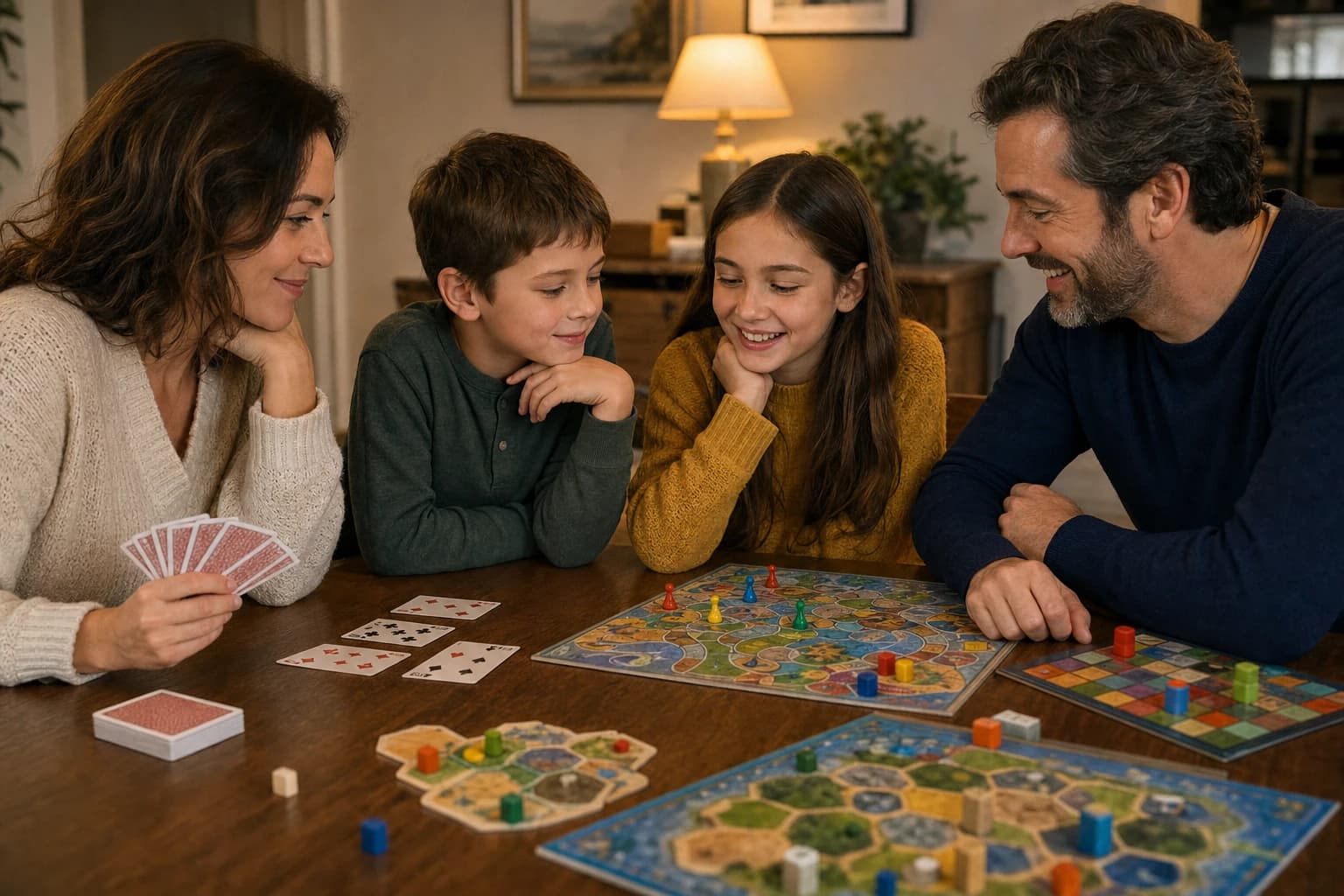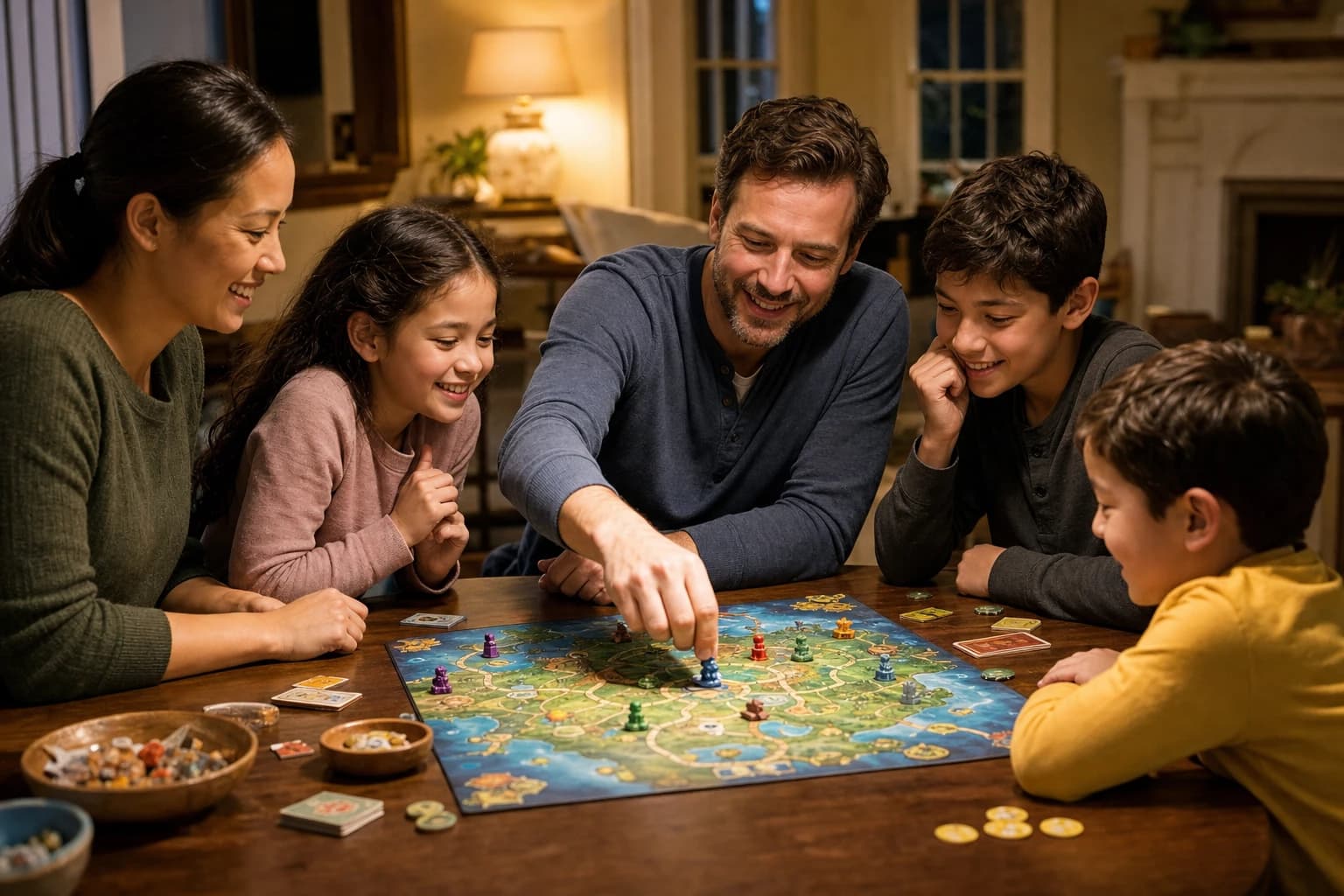
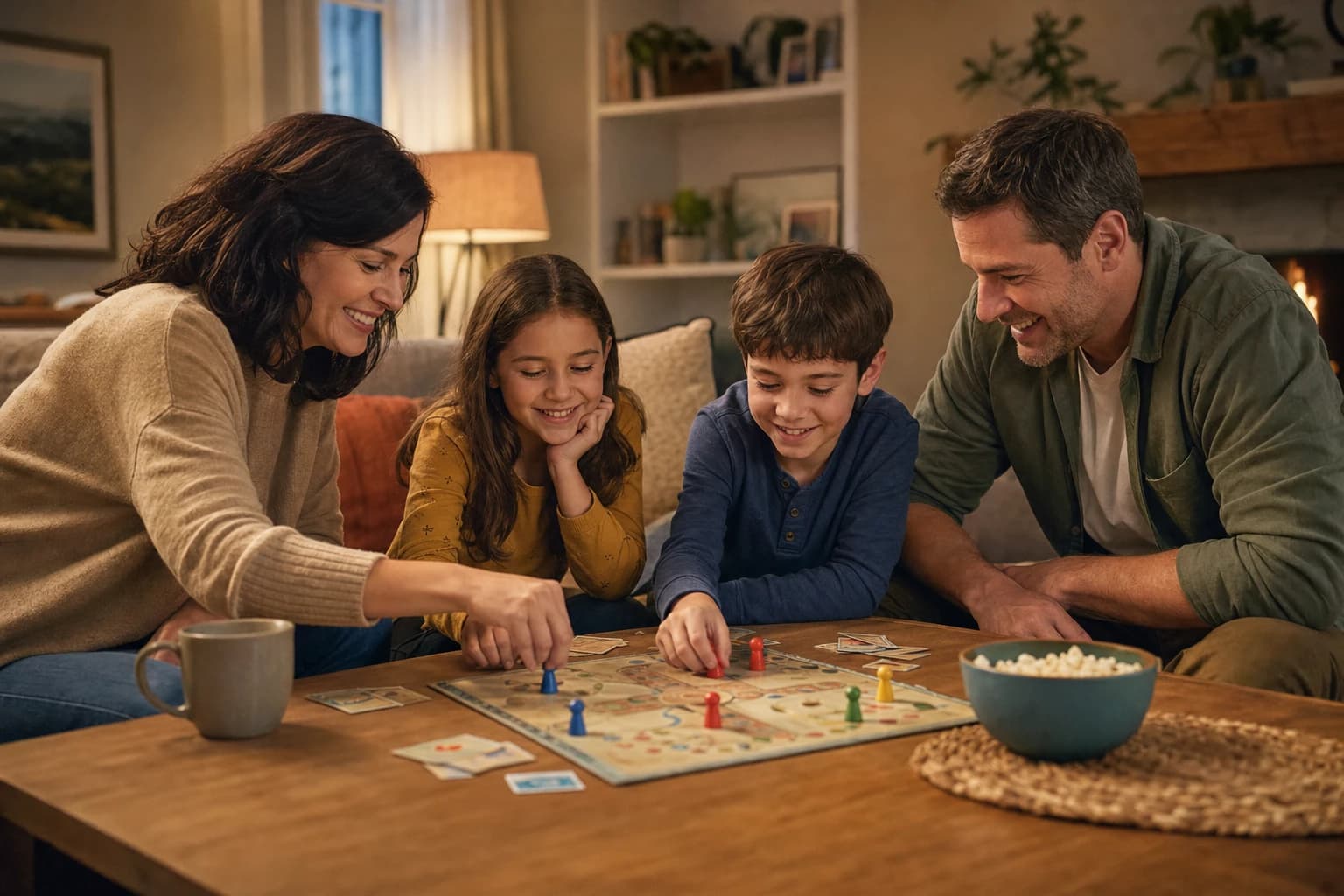
A 30-minute family game night for kids works best when it is short on rules, quick to start, and easy to end before everyone gets overtired. For ages 5–10, the goal is not to squeeze in a full board game marathon. It is to create a small, repeatable routine that gives everyone a turn, keeps waiting time low, and leaves the table on a good note.
This guide gives you a practical minute-by-minute plan, game rotation ideas by attention span, setup shortcuts for busy nights, and a printable-style checklist you can copy before your next screen-free family games at home session.
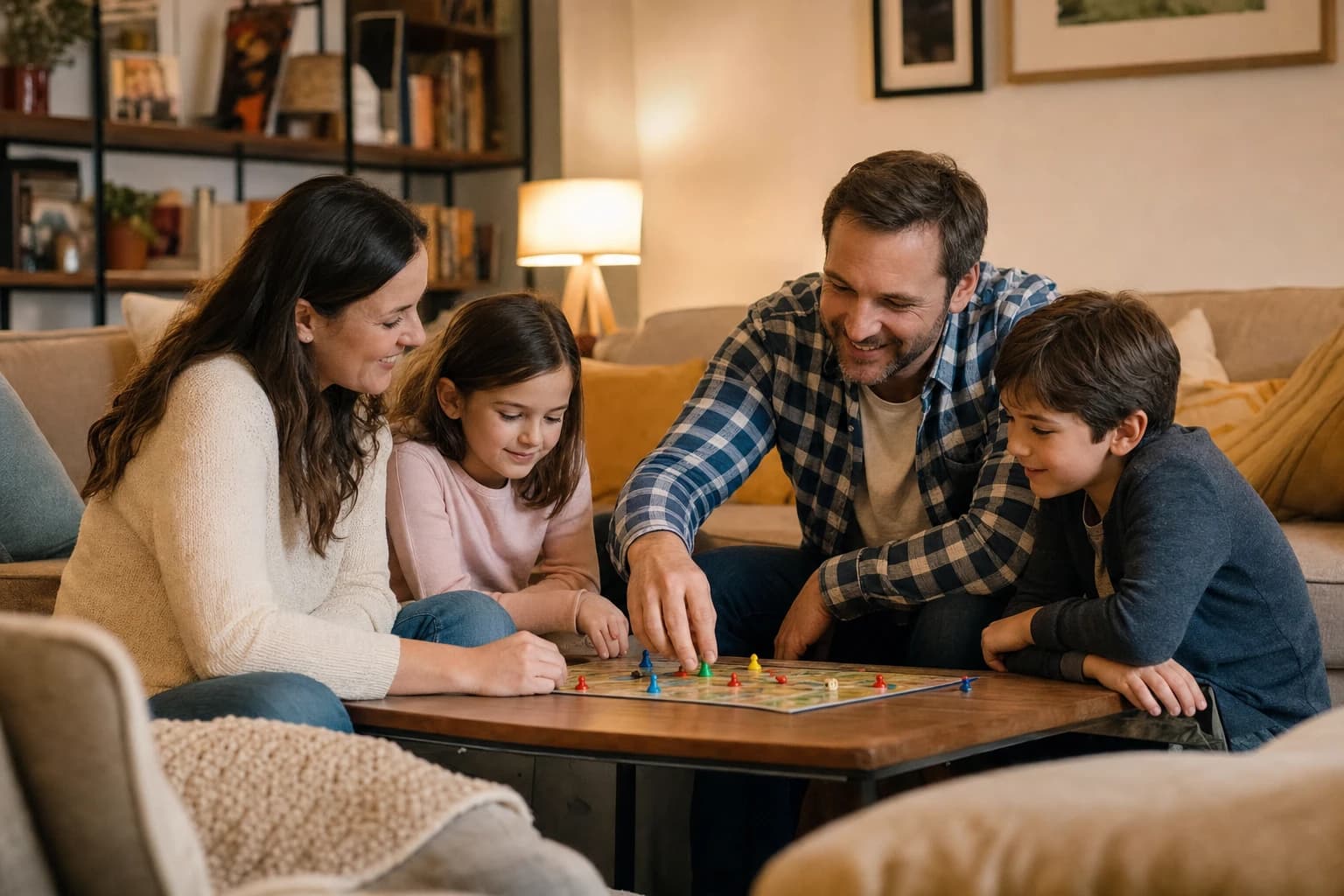
The 30-Minute Plan at a Glance
The easiest structure is three short parts: a warm-up, one main game, and a closing game or family vote. This gives younger kids a fast win early, older kids enough time to think, and parents a clear finish line.
Play is also a meaningful part of childhood, not just a way to fill time. The National Association for the Education of Young Children describes play as central to children’s learning and development, especially when children can explore, communicate, and solve problems with others. You can read more from NAEYC at its play resources page.
| Time | What to Do | Why It Helps |
|---|---|---|
| 0:00–0:03 | Gather, choose seats, set the timer, and explain the night’s plan. | Kids know the game night has a beginning and an end. |
| 0:03–0:08 | Play a 5-minute warm-up such as animal charades or a drawing guess. | Everyone gets moving or laughing before rules get involved. |
| 0:08–0:10 | Teach the main game with one sample turn. | A demonstration is usually clearer than a long explanation. |
| 0:10–0:24 | Play the main game for 14 minutes, or stop at the next natural round. | Short rounds reduce frustration and keep younger players engaged. |
| 0:24–0:28 | Play a quick closer: high-low-funny moment, one-card challenge, or family vote. | The ending feels intentional instead of abrupt. |
| 0:28–0:30 | Clean up together and choose who picks first next time. | Cleanup becomes part of the routine, not a parent-only job. |
What You Need Before You Start
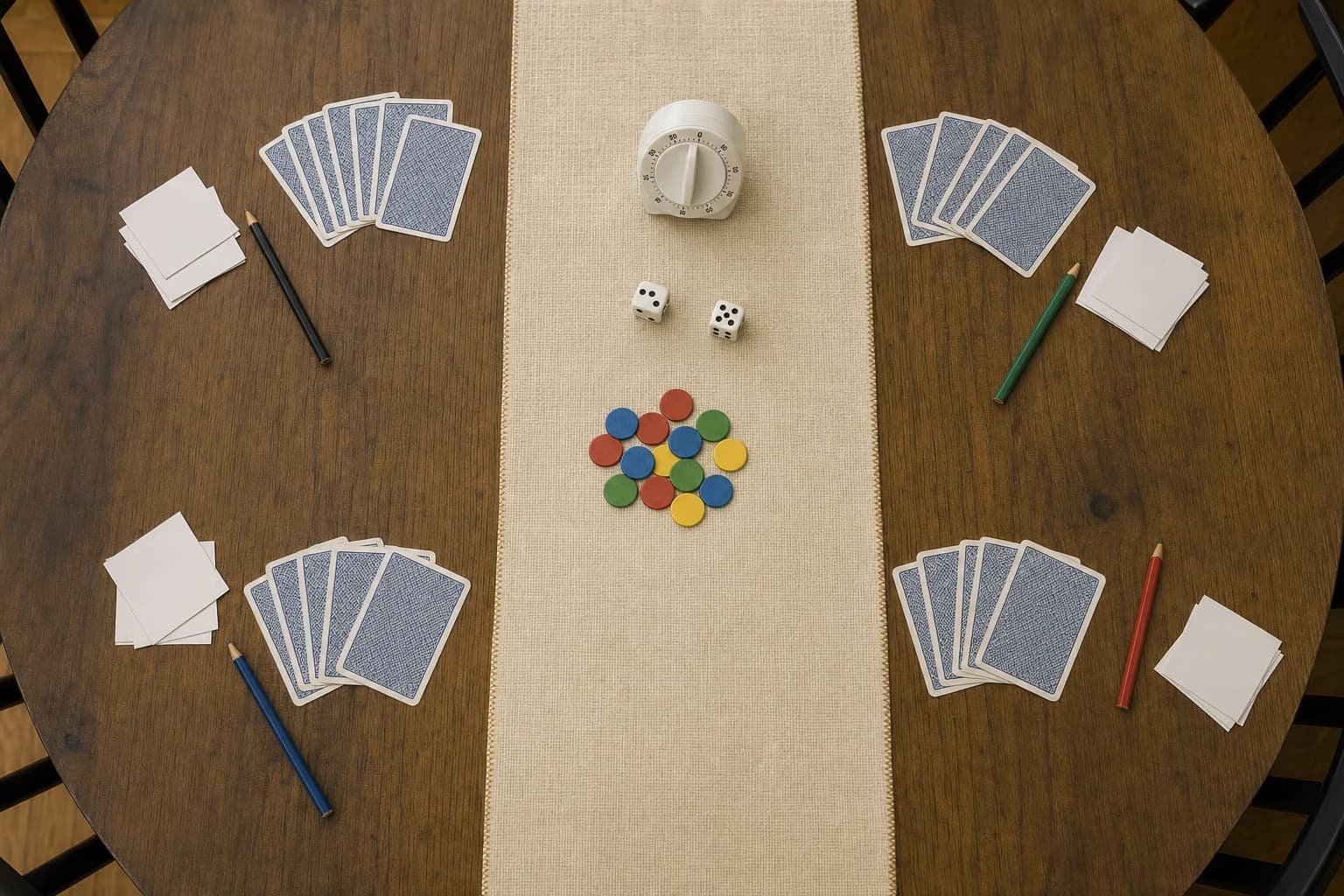
You do not need a closet full of games. For family games for ages 5 to 10, a small kit is enough. Keep it in a shoebox, basket, or zip pouch so you are not searching for dice while the kids lose interest.
- One timer: a kitchen timer, phone timer, or sand timer. If you use a phone, keep it face down and only use the timer.
- One deck of standard playing cards: useful for matching, memory, higher-or-lower, and simple team challenges.
- Two dice: standard six-sided dice are enough for roll-and-move, score races, and quick math-light games.
- Paper and pencils: cut 8 sheets into quarters for drawing, guessing, and secret prompts.
- 10 small tokens: coins, buttons, blocks, or cereal pieces for scoring and turn reminders.
- One backup game: choose something you can explain in under 60 seconds if the main game flops.
Step-by-Step: How to Run the Night
1. Pick the right night and protect the 30 minutes
Choose a time when the family is not rushing into baths, homework, or bedtime. For many families, the easiest slot is after dinner but before pajamas. If your children tend to melt down late in the evening, try a weekend afternoon instead.
Keep the promise small: “We are playing for 30 minutes.” Not “We are having the best game night ever.” A short, repeatable plan is better than a long night that ends in arguing.
2. Choose one warm-up, one main game, and one closer
Do not offer a shelf full of choices at the start. Too many options can turn game night into a debate. Instead, choose three options before you announce it:
- Warm-up: a no-reading, no-setup game that lasts 5 minutes.
- Main game: a card, dice, drawing, guessing, or board game that can be played in short rounds.
- Closer: a 2- to 4-minute ending ritual so nobody feels the game was suddenly taken away.
If you want more short options for school nights, keep a few ideas from Best Quick Family Games Under 15 Minutes for Busy School Nights ready as backups.
3. Teach rules with one sample turn
For ages 5–10, long rule explanations are one of the fastest ways to lose the room. Use this three-sentence format:
- Goal: “We are trying to collect three matching cards.”
- Turn: “On your turn, draw one card and discard one card.”
- End: “When someone has three matches, we finish the round.”
Then take one fake practice turn with open information. Let everyone see the card, the choice, and the result. If a child asks about rare exceptions, say, “Good question. We’ll handle that if it happens.”
4. Use teams when the age gap shows
A five-year-old and a ten-year-old can enjoy the same table, but not always the same responsibility. Teams solve this without making the younger child feel excluded.
Pair a younger child with an adult for reading-heavy cards. Pair an older child with a younger child for drawing or guessing games. Give the younger child a real job, such as rolling dice, moving tokens, choosing a card pile, or giving the final guess.
If your family often has a wider spread of ages, you may also like How to Adapt Classic Board Games So Younger Kids Can Join Older Family Members.
5. Stop before the mood drops
The timer is not the enemy; it is the safety rail. If the main game is going well at minute 24, end after the current round instead of starting another full cycle. A child who says, “Can we play again tomorrow?” is better than a child who leaves frustrated because the night dragged on too long.
Game Rotation Options by Attention Span
Use the child with the shortest attention span as your planning baseline. That does not mean every game must be babyish. It means the turns should be short, the rules visible, and the waiting time low.
| Family Situation | Best Rotation | Good Game Types | Helpful Adjustment |
|---|---|---|---|
| Youngest child is 5 or 6 | 5-minute warm-up + 10-minute main + 5-minute closer | Charades, picture matching, simple dice races, cooperative clean-up challenges | Let the youngest roll, draw, or move pieces every round. |
| Kids are mixed ages 5–10 | 5-minute warm-up + 14-minute main + 4-minute closer | Team guessing, drawing games, modified board games, family trivia about your own home | Use teams and let older kids help create prompts. |
| Everyone is tired after school | 3-minute warm-up + 12-minute calm game + 5-minute ending chat | Memory, “Would you rather,” sorting cards, quiet drawing guesses | Skip scoring or play cooperatively. |
| Kids are full of energy | 5-minute movement warm-up + 12-minute tabletop game + 5-minute silly closer | Statue poses, animal walks, roll-and-act, hallway scavenger clue | Set a clear movement boundary: no running, no climbing. |
Quick Games for Families With Children Ages 5–10
No-equipment warm-ups
- Animal Charades: Each person acts like an animal for 20 seconds while others guess. Use broad animals for younger kids: frog, cat, elephant, snake.
- Two Clues and a Guess: One player thinks of something in the room and gives two clues. “It is red. It is near the door.”
- Freeze Face: One person makes a silly face. Everyone copies it and freezes for 10 seconds. Rotate quickly.
Card and dice games
- Roll to 20: On each turn, roll one die and add it to the team total. Try to land exactly on 20. If the roll would go over, skip or subtract instead.
- Find the Families: Deal 12 face-up cards and race together to find pairs by number or color. For younger kids, ignore suits.
- High-Low Helper: Flip one card. Everyone predicts whether the next card will be higher or lower. Keep it cooperative by counting total correct guesses as a family.
Paper games
- Draw and Guess: Each player has 45 seconds to draw a simple prompt, such as pizza, moon, shoe, or dog. No letters allowed.
- Family Map: Draw a quick map of the room and hide one token. A child marks the map with an X and another child searches.
- Silly Story Pass: Each person adds one sentence to a story. Keep rounds short: five sentences and then stop.
For tight spaces or rainy evenings, Rainy-Day Family Games for a Small Living Room With No Running and Low Mess has more calm options.
Setup Shortcuts That Make the Night Easier
The main problem with family game night is often not the game. It is the friction around the game: missing pieces, snack requests, rule arguments, and cleanup. Remove as many decisions as possible before the timer starts.
- Use a “tonight only” rule card: Write three house rules on a sticky note: kind words, quick turns, finish the round. Point to it instead of lecturing.
- Pre-sort pieces: If a board game has many tokens, put only the needed pieces in a small bowl before calling the kids over.
- Serve a no-mess snack first: If snacks are part of your routine, choose something that does not grease cards or boards. Better yet, finish snacks before play begins.
- Create a turn marker: A toy figure, block, or large button can show whose turn it is. This reduces “Is it my turn?” interruptions.
- Use a cleanup race: Set the timer for 90 seconds and give each child one job: cards, pencils, tokens, chairs.
Printable-Style 30-Minute Planning Checklist
Copy this into a note, print it, or write it on an index card and keep it with your game supplies.
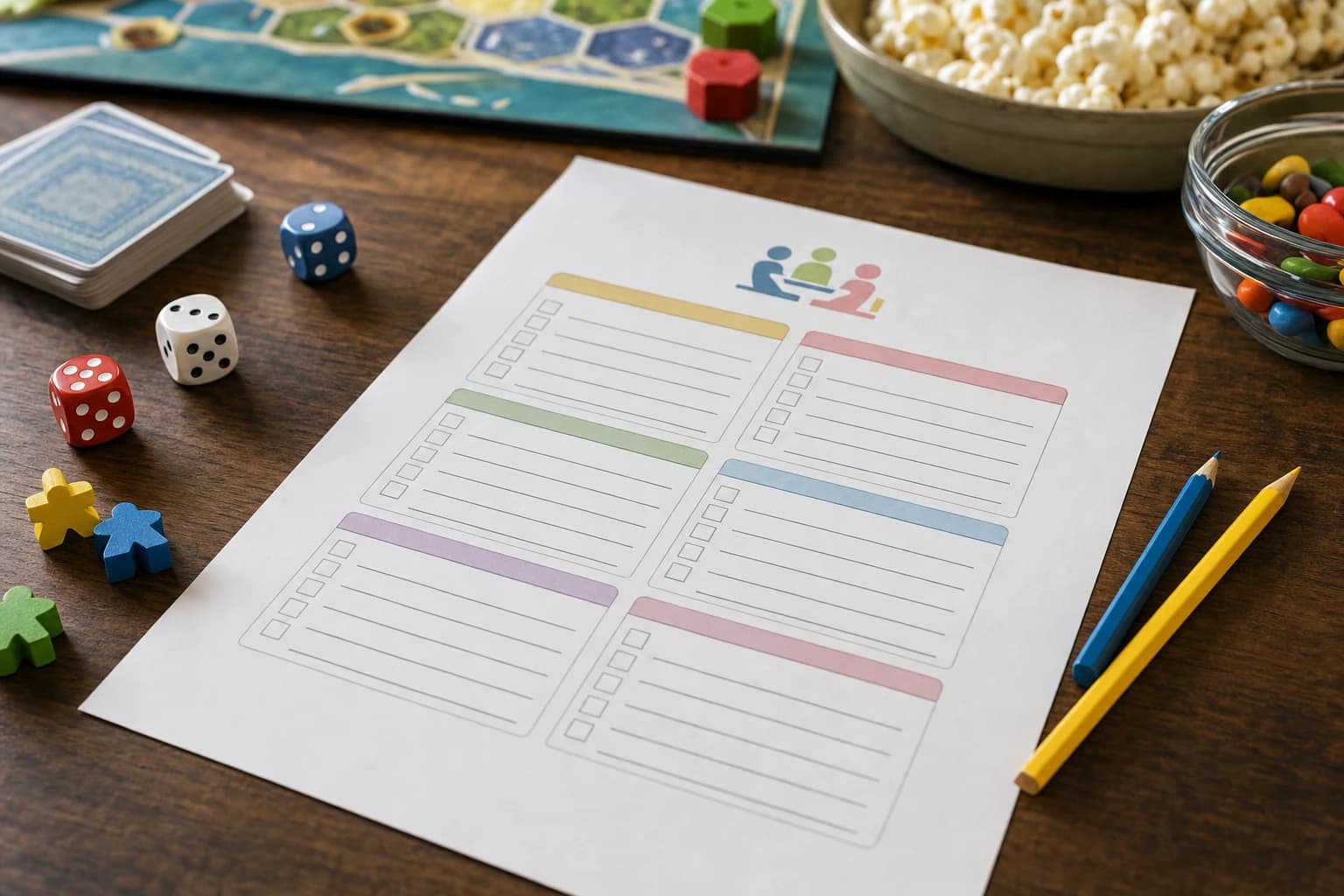
- Choose the time: ____________________
- Choose the warm-up game: ____________________
- Choose the main game: ____________________
- Choose the closer: ____________________
- Put out timer, cards, dice, paper, pencils, and tokens.
- Remove pieces you will not use.
- Decide team pairings if younger kids need help.
- Set the 30-minute timer.
- Explain the goal, turn, and ending in three sentences.
- End after the current round when the timer rings.
- Clean up for 90 seconds together.
- Let one child choose the first game for next time.
Common Mistakes to Avoid
Choosing a game because adults like it
A game can be excellent and still be wrong for a 30-minute family session. If setup takes 10 minutes or the first turn requires a long rules talk, save it for a weekend or for older players.
Letting the most competitive person set the mood
Some kids love winning; others shut down when every move is scored. For young children, mix competitive games with cooperative goals. Try “Can we all beat our last score?” or “Can the family find six matches before the timer rings?”
Correcting every imperfect move
If a child forgets a minor rule, decide whether it truly matters. Correcting every detail can make the game feel like a test. Focus on turn order, safety, and kindness first. Tighten the rules as the game becomes familiar.
Starting a second long game at minute 25
This is the classic trap. Everyone is having fun, so someone suggests one more game. If it cannot finish in 5 minutes, put it on the “next time” list. Ending well is part of the plan.
When to Choose a Longer Family Game Night
A 30-minute plan is ideal for school nights, younger children, and families building the habit. If you have grandparents visiting, cousins over, or older children who want more variety, a longer structure may fit better. For a bigger gathering, see How to Plan a 60-Minute Family Game Night for Mixed Ages Without Anyone Getting Bored.
FAQ
What is the best first game for a 30 minute family game night for kids?
Start with a no-reading warm-up such as animal charades, two clues and a guess, or a quick drawing game. These games begin fast and help younger children participate right away.
How many games should we play in 30 minutes?
Plan for three parts: one 5-minute warm-up, one 12- to 15-minute main game, and one short closing activity. That usually feels complete without becoming rushed.
What if one child is much younger than the others?
Use teams and give the younger child a real job: rolling dice, choosing a card, moving the piece, or making the final guess. You can also simplify scoring while keeping the main idea of the game.
Should parents let kids win?
You do not need to fake outcomes. Instead, choose games with chance, teams, or cooperative goals so younger kids have meaningful ways to contribute. Praise good choices, flexible thinking, and kind play, not only winning.
How do we keep game night screen-free if we use a phone timer?
Set the timer before play starts, turn the phone face down, and avoid using it for photos, messages, or rule searches during the 30 minutes. A kitchen timer or sand timer is even simpler if you have one.
Conclusion: Keep It Short, Clear, and Repeatable
A successful 30-minute family game night for kids ages 5–10 does not need complicated rules or a perfect game collection. It needs a clear schedule, fast turns, a small setup kit, and an ending that happens before everyone is worn out.
Start with one warm-up, one main game, and one closer. Use teams when the age gap is tricky. Stop after the current round when the timer rings. When the routine feels easy, your family can repeat it on busy nights without turning game night into another project.