If game night often ends with one child gloating, another child crying, and an adult quietly putting the box away forever, cooperative games can be a better fit. The best cooperative board games for families still have challenge and excitement, but the players work toward a shared goal instead of trying to knock each other out.
This guide focuses on the emotional side of choosing a game: which titles are gentler for sensitive kids, which ones handle mixed ages well, and which cooperative games still need a little adult guidance to prevent bossy play. The goal is not to remove all disappointment. It is to make the table feel like a team, not a scoreboard.
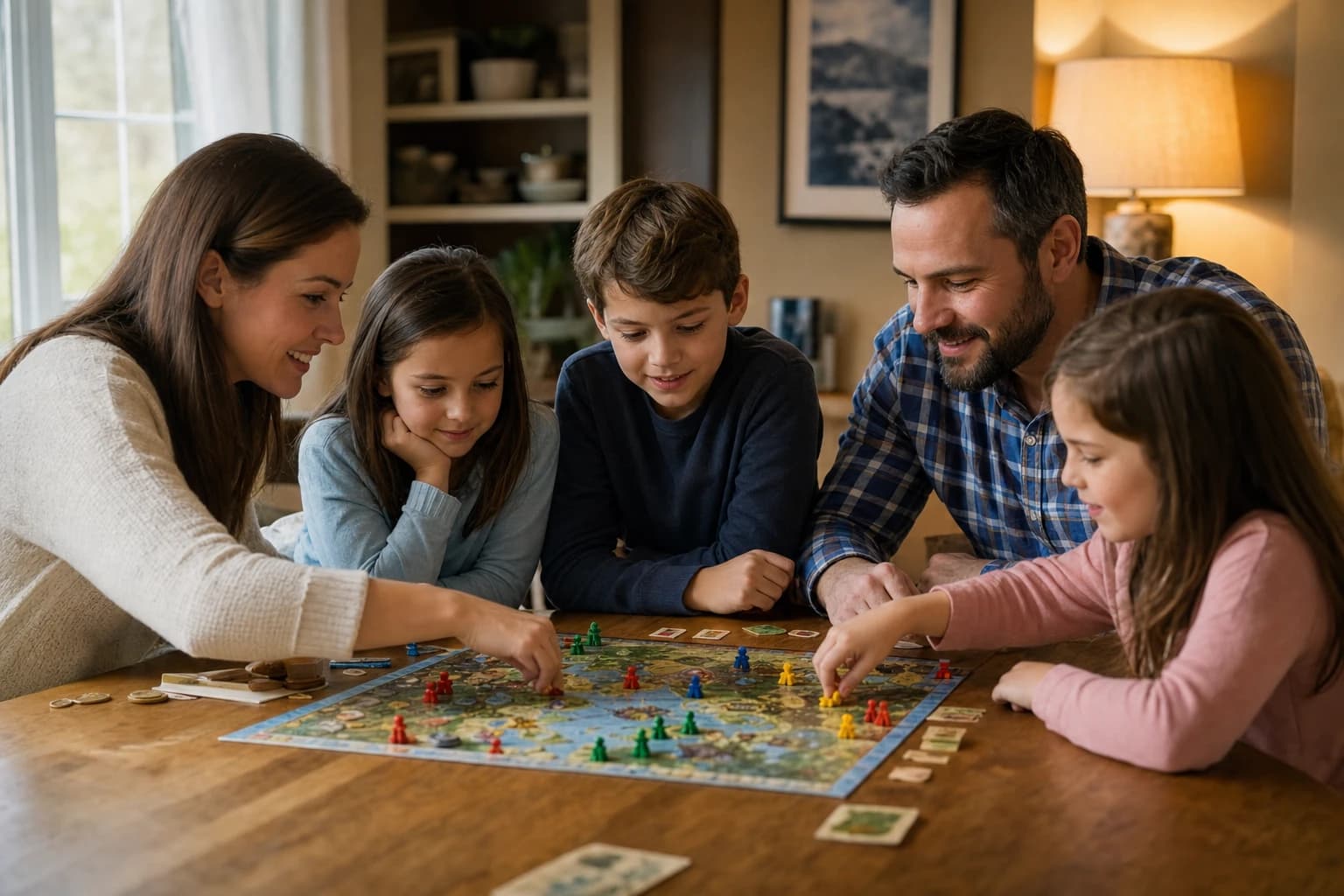
Quick Answer: Best Cooperative Board Games for Families by Need
If you want the shortest possible answer, start with the age and temperament of your players.
- Best first cooperative game for young kids: Hoot Owl Hoot! because the rules are simple, the mood is gentle, and adults can help without taking over.
- Best for sensitive players who dislike losing: Race to the Treasure! because the loss feels like the ogre beat the path, not one child made a mistake.
- Best for kids who like solving mysteries: Outfoxed! because deduction gives everyone something to discuss.
- Best for siblings with a wider age gap: Castle Panic or Forbidden Island, with an adult acting as a facilitator rather than a captain.
- Best for older families who want a real challenge: Forbidden Island or The Crew, depending on whether your group prefers a board adventure or card-based missions.
For families who are just switching away from competitive games, choose a game that lasts under 25 minutes. A short shared loss is easier to shrug off than a 60-minute loss that everyone over-analyzes.
What Makes a Cooperative Game Good for a Conflict-Avoidant Family?
Not every cooperative game is automatically peaceful. Some co-op games create a different kind of conflict: one confident player tells everyone else what to do. This is often called quarterbacking or alpha playing. It is common when all information is public and one older child or adult sees the best move first.
For families trying to avoid arguments, look for four qualities:
- Short turns: Players should not wait long enough to lose interest or criticize each other.
- Simple choices with visible progress: Moving an owl toward the nest or building a path to a key feels satisfying, even for younger kids.
- Shared tension, not personal blame: The storm rises, the fox moves, or the ogre advances. The game creates the pressure, not a sibling.
- Room for small roles: A younger child can draw cards, move a token, roll dice, or check a clue without being responsible for the whole plan.
Publisher ages are useful, but they are not emotional ages. A 7-year-old who handles setbacks calmly may enjoy a harder co-op game. A 10-year-old who hates being corrected may do better with a lighter title and a clear table rule: advice is offered, not commanded.
If your family includes grandparents or a wide spread of ages, you may also like board games for grandparents and kids to play together. If younger siblings often want to join older kids, this guide to adapting classic board games for younger kids has practical ways to simplify turns without making the child feel excluded.
Comparison Table: Cooperative Games by Family Dynamic
The table below uses commonly listed publisher age ranges and play times. Editions can change, so check the current box or publisher page before buying. For example, Gamewright lists Forbidden Island as a 2 to 4 player cooperative game for ages 10 and up, with a 30-minute play time.
| Game | Best fit | Age / players | Typical time | Conflict risk | Why it helps family dynamics |
|---|---|---|---|---|---|
| Hoot Owl Hoot! | Preschool and early elementary families | Ages 4+, 2-4 players | 15 minutes | Low | Color matching and a friendly theme make it easy to cheer for every move. |
| Race to the Treasure! | Sensitive players and new co-op families | Ages 5+, 2-4 players | 20 minutes | Low | The team builds a path together, so success feels collective rather than individual. |
| Outfoxed! | Kids who enjoy clues and mysteries | Ages 5+, 2-4 players | 20 minutes | Low to medium | Deduction encourages discussion, but adults should avoid solving every clue aloud. |
| Mole Rats in Space | Families who want light adventure | Ages 7+, 2-4 players | 20 minutes | Medium | Movement planning is exciting, though some turns can feel more consequential. |
| Zombie Kidz Evolution | Kids who like progress over many sessions | Ages 7+, 2-4 players | 15 minutes | Medium | Short games and unlockable envelopes create enthusiasm, but manage turn fairness carefully. |
| Castle Panic | Mixed-age families with a patient adult | Ages 8+, 1-6 players | 45 minutes | Medium | Players defend the castle together and can trade cards, which supports teamwork. |
| Forbidden Island | Older kids and adults who want strategy | Ages 10+, 2-4 players | 30 minutes | Medium to high | Each role has a special power, but the open board can invite over-directing. |
| The Crew | Older families who like card games | Ages 10+, 3-5 players | 20 minutes | Medium | Limited communication prevents one player from controlling everything, but failed missions can feel abrupt. |
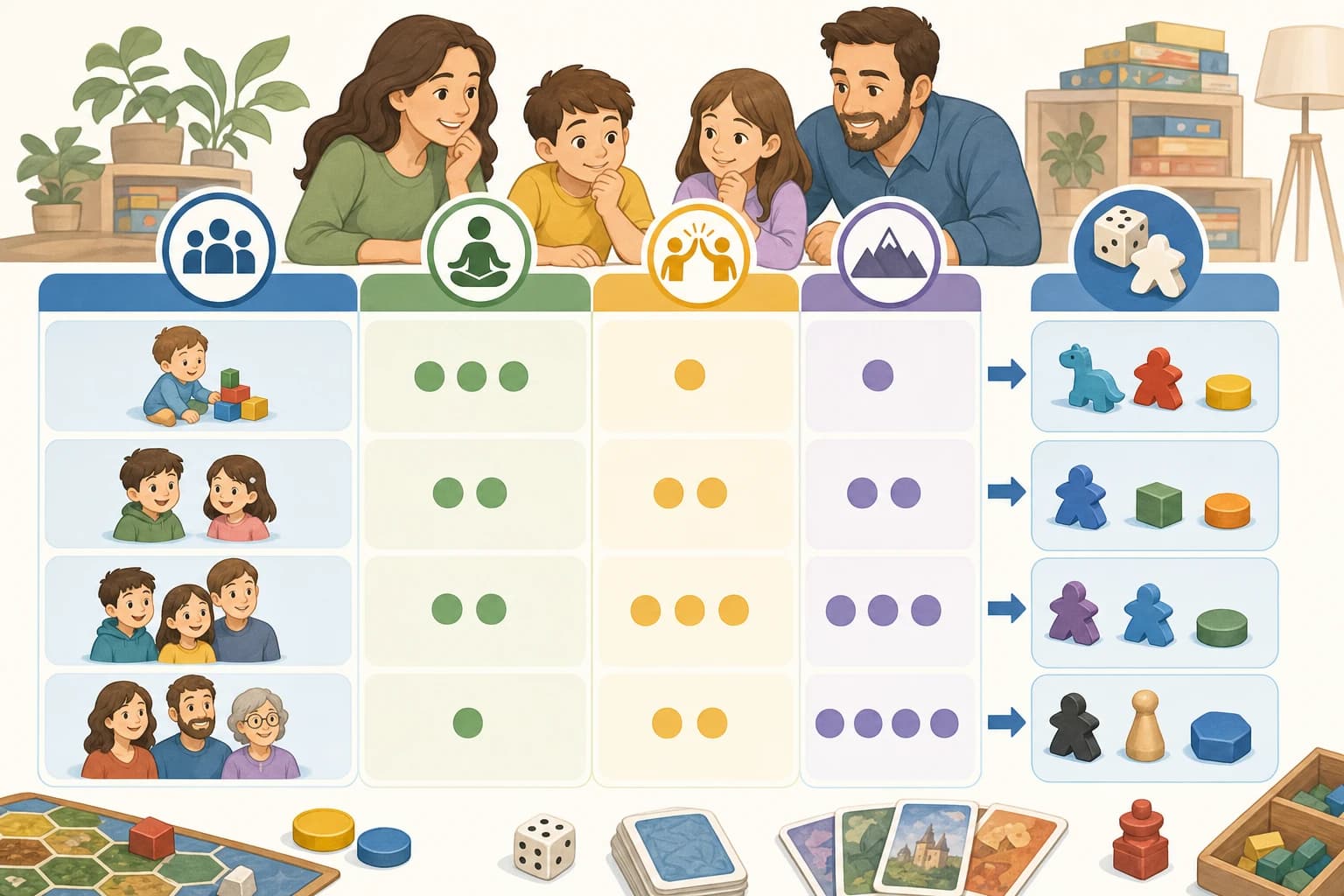
Best Cooperative Board Games for Younger Kids
Hoot Owl Hoot! for a gentle first experience
Hoot Owl Hoot! is one of the easiest non competitive family board games to introduce because the basic choice is clear: play a color card and move an owl to the next matching space. The family is trying to get all owls back to the nest before sunrise.
This works especially well for children who are still learning how to sit through a full game. The theme is calm, the pieces are easy to understand, and the team can celebrate each owl that gets home. A younger player can make real decisions without having to calculate several turns ahead.
Best emotional fit: kids who cry when they are singled out, kids who are still learning turn-taking, and families who want a low-pressure bedtime game.
Race to the Treasure! for kids who need a shared mission
Race to the Treasure! asks players to build a path through the board, collect keys, and reach the treasure before the ogre. It is a good bridge between simple color matching and more strategic planning.
The helpful emotional detail is that everyone contributes path tiles. If the ogre wins, it usually feels like the group ran out of time rather than one player ruined the game. That makes it a strong choice for family board games without winners and losers in the personal sense: the team outcome matters, but no child is ranked.
Best emotional fit: siblings close in age, children who enjoy puzzles, and parents who want a game that invites discussion without heavy rules.
Outfoxed! for clue-loving families
Outfoxed! is a cooperative deduction game about finding the guilty fox before it escapes. Players gather clues and use a decoder-style tool to narrow down suspects.
The mystery structure gives talkative kids a useful outlet: they can explain why a suspect is still possible or why a clue matters. The adult job is to slow down the most eager detective. Try asking, “What do you think we should check next?” instead of announcing the optimal clue.
Best emotional fit: kids who like stories, early readers, and families who want cooperative games for kids and parents that feel more grown-up than basic matching games.
Best Cooperative Games for Mixed-Age Siblings
Mixed ages are tricky because the older child often wants a real challenge while the younger child wants to be included. The best teamwork board games for families give each child a meaningful job without pretending all jobs are equal in difficulty.
Mole Rats in Space for active planners
Mole Rats in Space has players moving around a space station, trying to collect equipment and escape. It is more dramatic than the gentler preschool titles, but still short enough for a school night.
It can be a good sibling game if the older child enjoys planning routes and the younger child enjoys moving pieces and revealing cards. Before the game starts, tell the older player, “You can suggest one idea, then the player whose turn it is chooses.” That one sentence prevents many arguments.
Zombie Kidz Evolution for families who like repeat play
Zombie Kidz Evolution is a cooperative legacy-style game, meaning new material is unlocked as the family keeps playing. The sessions are short, which helps kids accept a loss and immediately try again.
It is not the right theme for every family; some children dislike anything with zombies, even in a cartoon style. It can also create fairness questions around who gets to open envelopes or place stickers. Solve that before the first game by rotating special jobs: one child opens, one reads, one places, and the roles rotate next time.
If your family mostly needs quick weeknight options, see quick family games under 15 minutes for more low-commitment choices.
Castle Panic for a bigger table and a bigger story
Castle Panic is a tower-defense style cooperative game. Monsters approach the castle, players trade cards, and the group tries to survive the attack. It is better for families who can handle a longer game and a busier board.
This game can be excellent for siblings with an age gap because younger players can match colors and zones while older players think about timing and card trades. The risk is that an adult or older child may start managing every hand. To keep it cooperative, ask each player to explain their own card options first.
Best Cooperative Games for Older Kids and Parents
Forbidden Island for strategic teamwork
Forbidden Island is a strong step up for families ready for more strategy. Players explore a sinking island, collect treasures, and escape before key locations flood. Each player has a role with a special ability, which helps different people feel useful.
Because the whole board is visible, it can produce quarterbacking. The game is most enjoyable when the group treats each role as a responsibility. The Pilot decides how to use the Pilot power. The Engineer decides which areas to shore up when several choices are reasonable. Adults can still help, but they should phrase advice as a question.
Best emotional fit: older kids who can handle a tense ending, parents who enjoy puzzles, and families ready for a shared loss that may happen because the game itself is tough.
The Crew for families who dislike bossy table talk
The Crew is cooperative, but it does not feel like a typical board game. It is a trick-taking card game with missions and limited communication. That limited communication is useful for families where one person tends to dominate strategy.
It is best for players who already understand card-game basics. Some missions fail quickly, and that can frustrate children who want to talk through every move. For the right older family, though, the silence becomes the fun: everyone is cooperating, but nobody can simply order the table around.
How to Choose the Right Cooperative Game for Your Family
Use this 5-minute buying checklist
- Choose the youngest player first. If the youngest regular player is 5, do not start with a game listed for ages 10 and up just because adults are bored.
- Keep the first session under 25 minutes. Shorter games reduce emotional investment and make a replay feel possible.
- Check whether all information is public. Public information is easier for young kids, but it also makes bossy advice more likely.
- Look for adjustable difficulty. Many cooperative games let you add or remove challenge, such as changing how many cards begin in play.
- Assign table jobs before opening the box. Examples: card reader, piece mover, rule checker, token organizer, and final-choice maker for the current turn.
For families who are avoiding competitive play because arguments have become predictable, the first game matters. Pick something slightly too easy rather than slightly too hard. A relaxed win teaches the rhythm of teamwork. After that, you can add challenge.
If your children enjoy cooperative play away from the table, cooperative playground games with no elimination can reinforce the same idea: everyone stays involved, and the group works toward a shared goal.
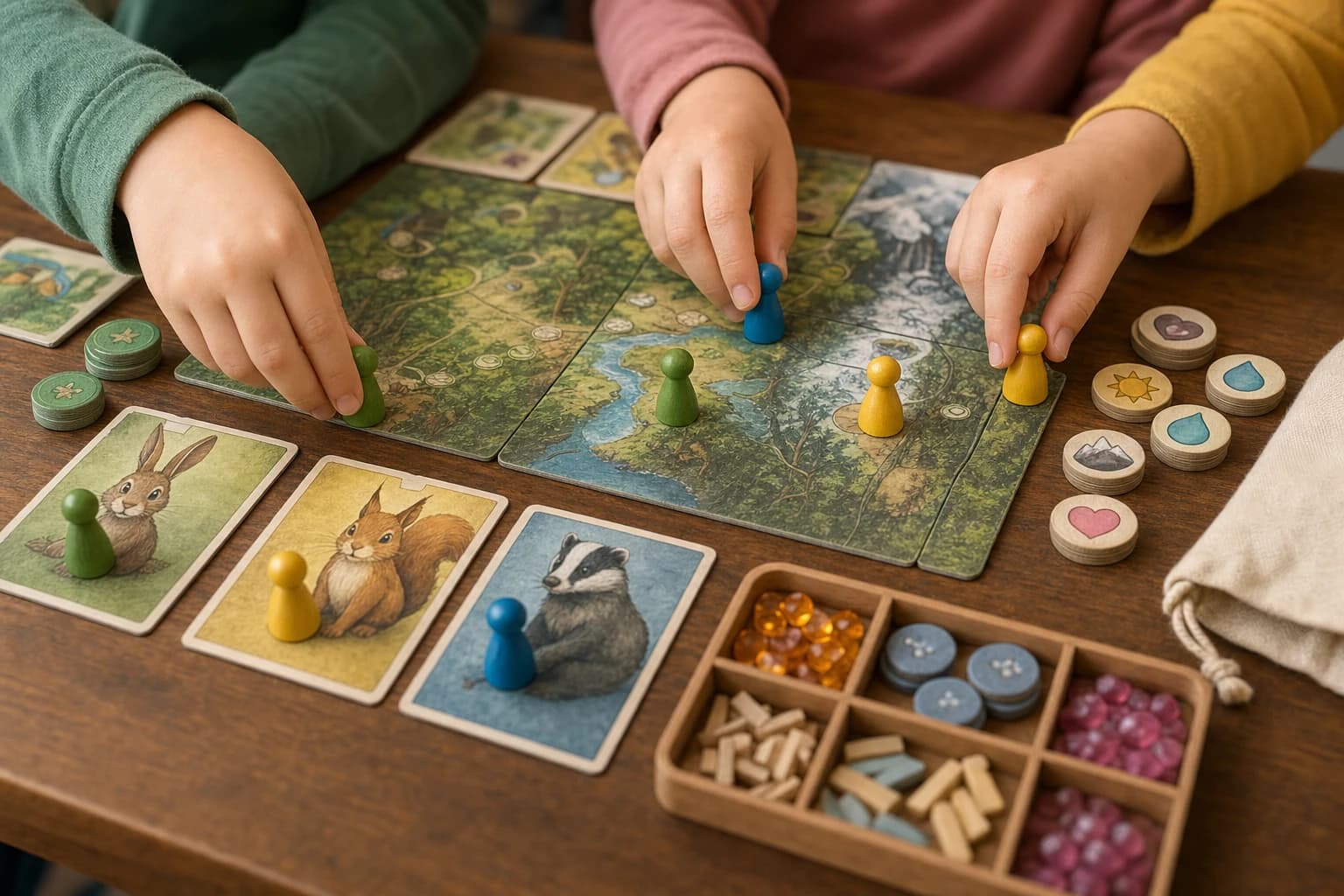
Table Rules That Prevent Cooperative Games from Turning Bossy
The game choice helps, but the table culture matters just as much. Use a few simple rules and say them out loud before the first turn.
- Ask before giving advice. Try: “Would you like an idea?” If the answer is no, the turn player decides.
- The turn player makes the final choice. Even if the move is not perfect, ownership matters.
- Use one-minute team talks. For hard moments, set a quick discussion window, then choose. Endless debate exhausts kids.
- Praise process, not brilliance. Say, “Good teamwork spotting that clue,” rather than, “You made the only right move.”
- Allow a graceful reset. If the first five minutes go badly because rules were misunderstood, restart once without making it a moral lesson.
One helpful phrase is: “We can lose the game and still have a good game night.” Cooperative games are not about guaranteeing victory. They are about making the outcome shared enough that nobody leaves the table feeling targeted.
Common Mistakes When Buying Non Competitive Family Board Games
Choosing a game that is too advanced
A game can be cooperative and still be overwhelming. If a child cannot understand why the team lost, the loss may feel random or unfair. Start with visible cause and effect: the owl needs to reach the nest, the ogre is moving closer, or the island tiles are sinking.
Assuming cooperative means no disappointment
Most cooperative games still have winning and losing. The difference is that the family wins or loses together. If your child is very sensitive, begin with games where losing is quick, gentle, and easy to replay.
Letting adults solve the game
Adults often do this with good intentions. They want the family to win, so they guide every move. Unfortunately, that can make children feel like passengers. A better adult role is narrator: restate the situation, name two or three possible choices, then let the child decide.
Ignoring the theme
Theme affects mood. A spooky or disaster-themed game may be exciting for one child and stressful for another. If game night is meant to be calming, friendly themes like owls, treasure paths, and mysteries are safer starting points than monsters or epidemics.
FAQ
Are cooperative board games really non competitive?
They are non competitive between players. Most still have a shared win or loss against the game system, such as escaping an island or beating an ogre to the treasure. That structure removes the single winner and single loser, which is often what causes family arguments.
What is the best cooperative board game for a 5-year-old?
For many families, Hoot Owl Hoot!, Race to the Treasure!, or Outfoxed! are better starting points than heavier strategy games. Choose based on the child: matching, path-building, or mystery solving.
How do you stop one player from controlling a cooperative game?
Make the turn player the final decision-maker, and require players to ask before offering advice. Hidden-information or limited-communication games can also help older families, but with younger kids the social rule is usually more important than the mechanism.
Can siblings of different ages enjoy the same cooperative game?
Yes, if the game has layered jobs. In Castle Panic, for example, a younger child can help match colors and move monsters while an older child thinks about card trades. The key is giving each child a real responsibility.
What should we play if our family hates losing altogether?
Start with short, gentle cooperative games and play on the easiest setting. Also frame the first few sessions as learning rounds. If losing still ruins the night, choose open-ended family activities for a while, such as storytelling games or puzzles, before returning to win/loss games.
Conclusion: Pick the Game That Matches Your Family Mood
The best cooperative board games for families are not always the highest-rated or most complex titles. They are the games that fit the people at your table. A sensitive 6-year-old may need a gentle path-building game. A strategy-loving 11-year-old may need the tension of Forbidden Island. A family with one bossy player may need firm advice rules more than a new box.
If your goal is a calmer game night, start small: one short cooperative game, one clear table rule, and one shared mission. When nobody has to be the loser, more children are willing to stay at the table for the next round.