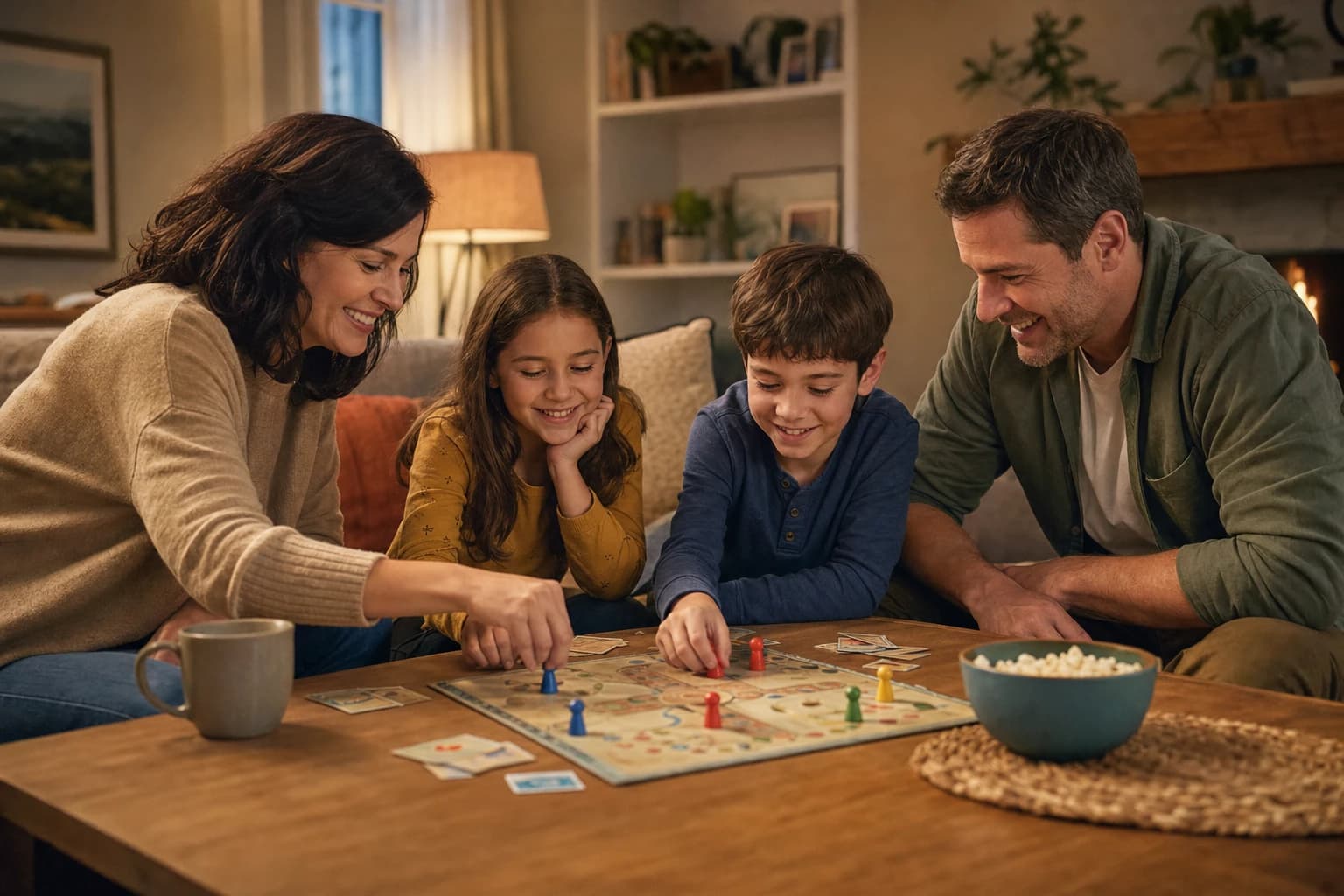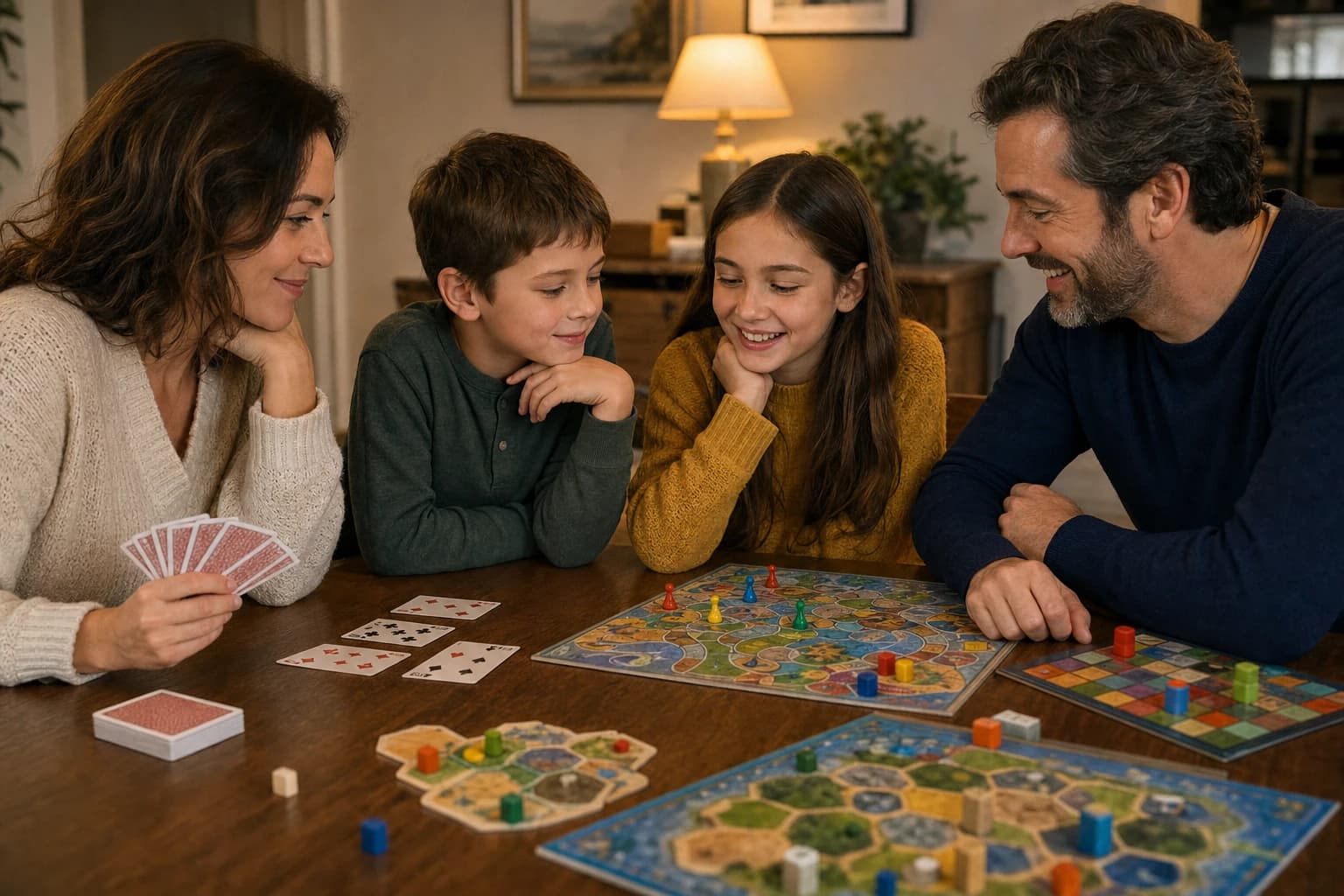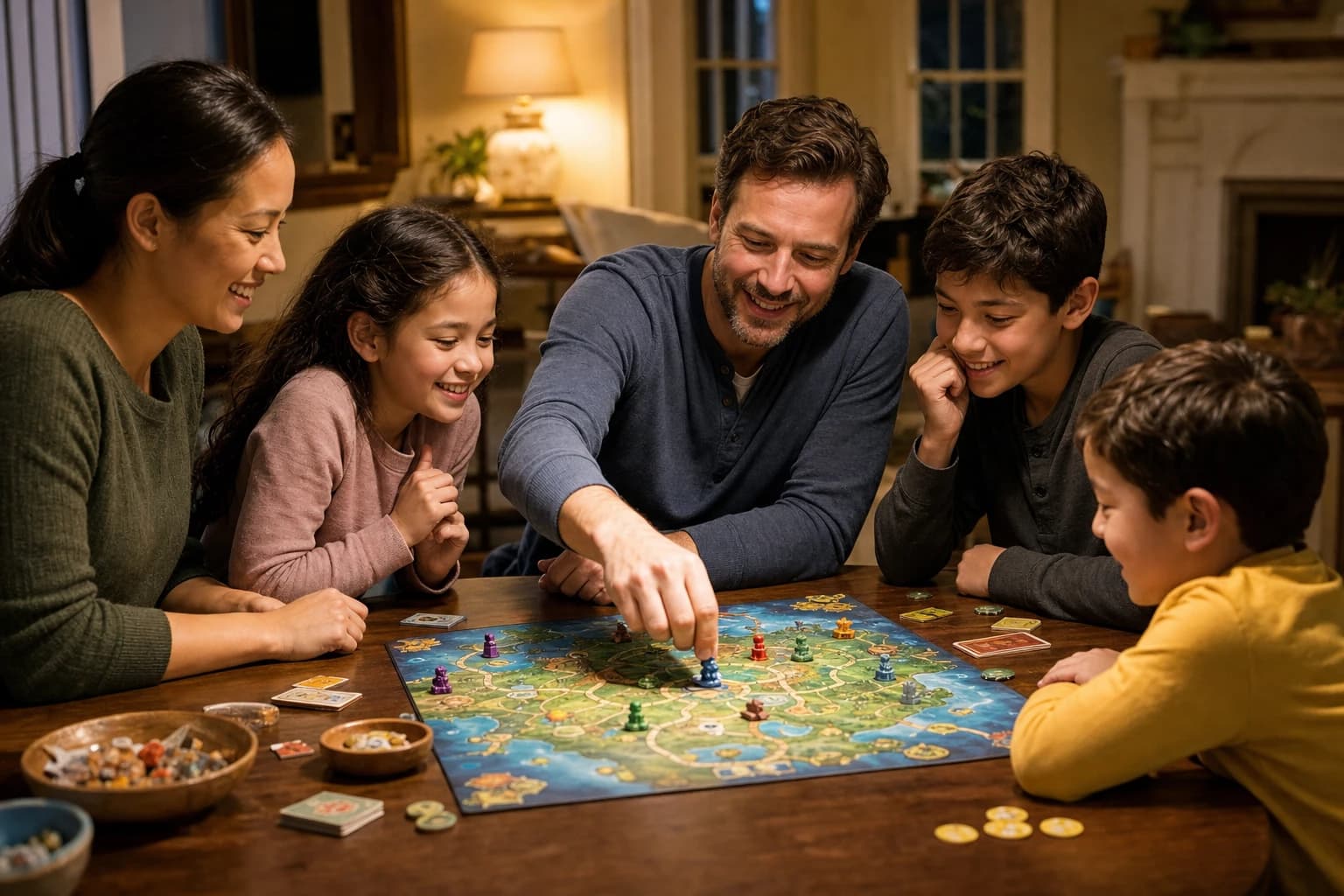
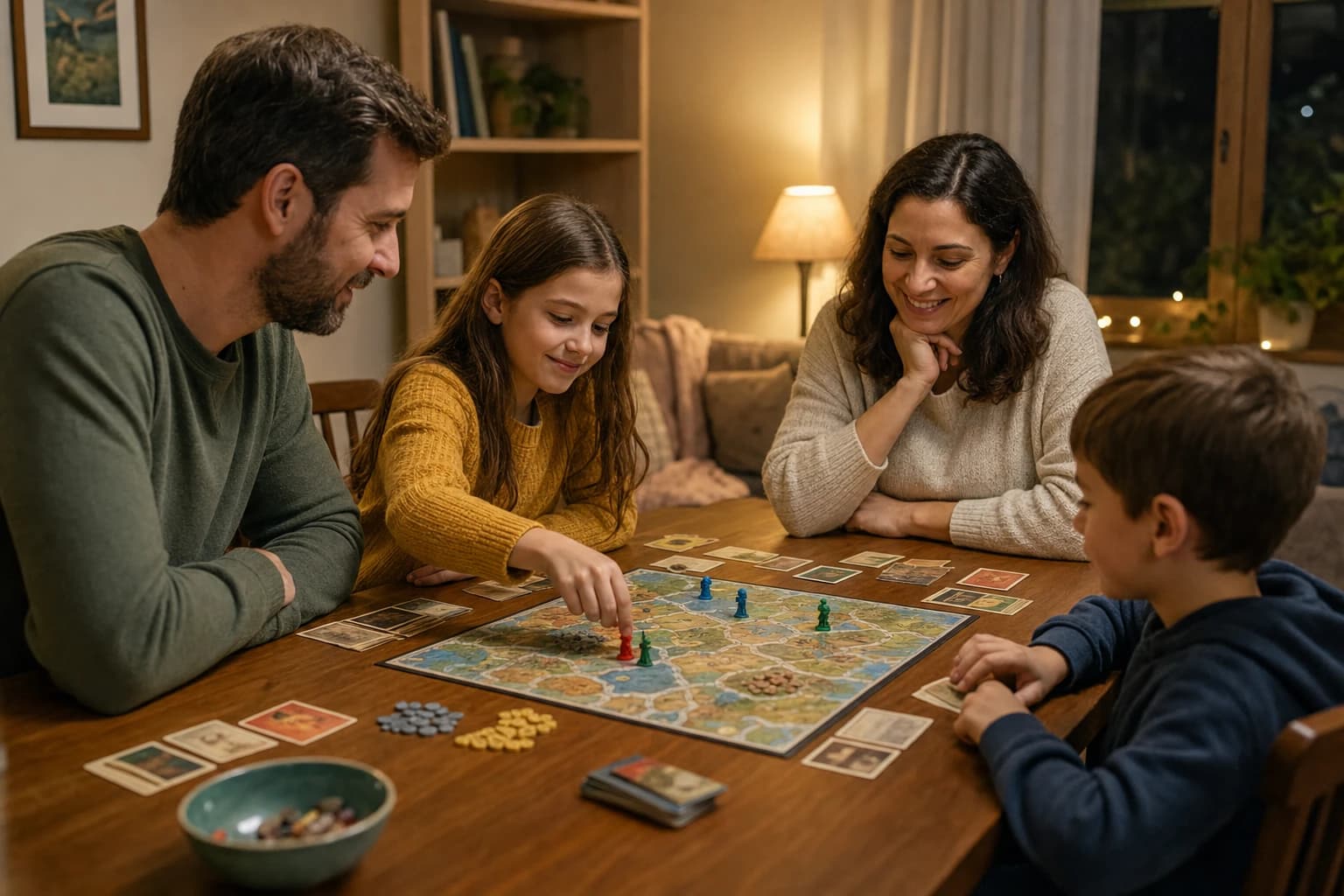
Family board games can turn from cozy to chaotic quickly: one child accuses another of cheating, someone cries after losing, a parent becomes the referee, and the game box goes back on the shelf with everyone frustrated. If you are wondering how to stop arguments during family board games, the goal is not to make children silent or perfectly behaved. The goal is to make the game predictable, fair, and emotionally safe enough that everyone can keep playing.
This guide covers what to do before the game starts, what to say in the moment, how expectations change by age, and which game choices reduce the most common triggers. The ideas are designed for ordinary family game nights, not perfect ones.
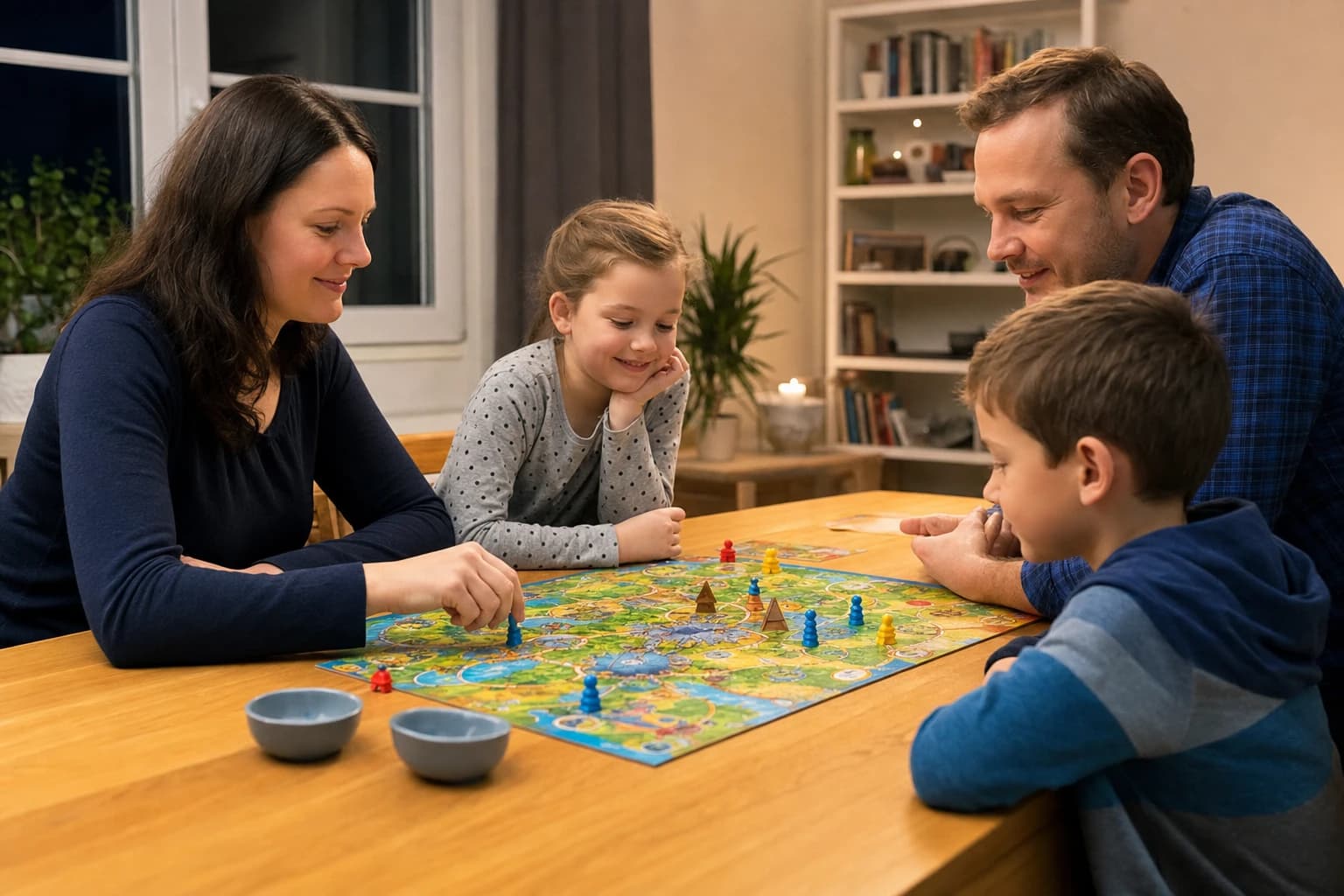
The short answer: prevent the argument before you have to solve it
Most family game night arguments are not really about dice, cards, or tokens. They usually come from one of five triggers: unclear rules, long waiting time, unfair teams, too much competition, or a child who is tired, hungry, or embarrassed.
A strong plan is simple: choose a game that fits the youngest player, explain the house rules before play, keep the game short, and have a calm pause routine ready. When conflict starts, avoid a courtroom-style investigation. Instead, name the problem, reset the rule, and offer a path back into the game.
Try this family rule: The game matters, but people matter more than the game. If the game stops being fun for two people, we pause and fix it.
What you need for a peaceful family game night
You do not need a complicated behavior system. A few simple materials make expectations visible and reduce repeated reminders.
- One age-appropriate game: Aim for a game that can finish in 10 to 30 minutes for younger children, or up to 45 minutes for older kids who can wait and plan.
- A visible timer: Use a kitchen timer or phone timer for turn limits, breaks, or a planned ending time.
- A house-rules card: Write 3 to 5 family rules on an index card and keep it near the board.
- A decision tool: Use a coin, die, or rotating judge for rule questions that are not clearly answered.
- A calm restart phrase: Pick one sentence everyone recognizes, such as Pause. We are fixing the game, not blaming a person.
Step-by-step: how to stop arguments during family board games
1. Choose the game for the most easily frustrated player
If one child often melts down, quits, grabs pieces, or argues over every move, start by lowering the pressure. That does not mean always letting that child win. It means selecting a game with fewer emotional traps.
For preschoolers and early elementary kids, avoid long elimination games where one player sits out for 20 minutes. For mixed ages, consider team play, cooperative games, or a simplified version of a classic. If your children are far apart in age, this guide to adapting classic board games so younger kids can join can help keep older children engaged without leaving younger ones behind.
2. Read the key rules before the first turn
Rule arguments often happen because families begin with a rough memory of the rules, then discover halfway through that different people assumed different things. Before the first turn, read or summarize only the rules that affect conflict:
- How do you win?
- Can players trade, block, or steal?
- What happens if someone makes an illegal move by accident?
- Can a player take back a move?
- How will rule questions be decided?
If a rule is unclear, check the official rules when possible. For example, Hasbro provides official instructions for many family games on its Hasbro instructions site. For non-Hasbro games, the publisher’s website or the rulebook in the box is the best source.
3. Create 3 to 5 house rules and keep them visible
Too many rules become another source of arguments. Keep house rules short and positive. For example:
- We use kind voices, even when disappointed.
- No touching another player’s pieces without permission.
- Ask before taking back a move.
- If the rules are unclear, the decision tool decides for today.
- Everyone says good game at the end.
Explain that house rules are not punishments. They are what make the game playable. If children help create the list, they are more likely to accept it later.
4. Use a pause instead of a lecture
When kids fight during board games, a long lecture usually makes the embarrassed child more defensive. Pause the game and use a short script. Keep your voice lower than the conflict, not louder.
- For cheating accusations: I hear that you think the move was unfair. We are going to check the rule, not call names.
- For yelling: Pause. You can be upset, but you cannot shout at people. Take one breath, then tell us what you need.
- For quitting: You may take a two-minute break. After that, choose to rejoin or end your part calmly.
- For gloating: Winning is allowed. Rubbing it in is not. Try again with a simple yes or good move.
- For tears after losing: Losing feels bad sometimes. You do not have to like it, but you do need to be safe with your words and hands.
The pause should be brief: 30 seconds for a minor issue, 2 minutes for big feelings, and no more than 5 minutes before you decide whether the game can continue.
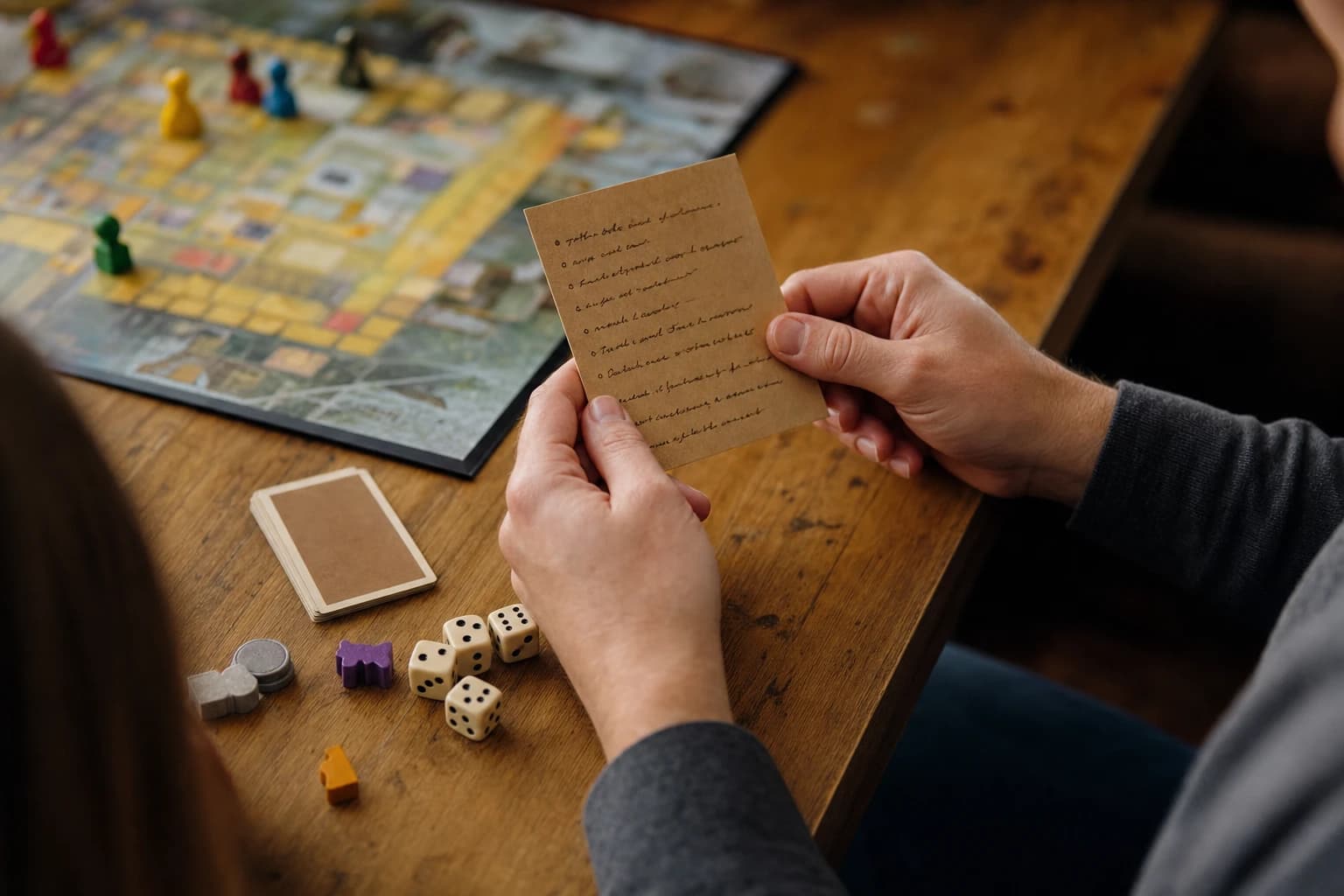
5. Decide what happens after a broken rule
If the consequence changes every time, children will argue about the consequence too. Choose a predictable ladder:
- First problem: Pause, restate the rule, and rewind if needed.
- Second problem: The player takes a one-turn reset or two-minute break.
- Third problem: The game ends for that player or switches to a cooperative activity.
Keep the tone neutral. You are not announcing that anyone is bad at games. You are saying the game cannot continue under those conditions.
Common argument triggers and what to do
| Trigger | Prevention before play | Calm script in the moment |
|---|---|---|
| One child cannot handle losing | Play shorter games and praise flexible moves, not only wins. | I know losing stings. You can be disappointed and still finish kindly. |
| Players argue over rules | Read the win condition and take-back rule before starting. | We will check the rulebook once. If it is still unclear, the die decides for tonight. |
| A child cheats or bends rules | Give younger kids a clear role and keep pieces visible. | That move does not match the rule. Put it back and try the turn again. |
| Older kids dominate younger kids | Use teams, handicaps, or adapted rules. | Your job is to play your best without coaching someone into feeling small. |
| Waiting causes boredom | Choose games with quick turns or simultaneous actions. | Your turn is coming. Hold your question until this player finishes. |
| Gloating or teasing | Agree on one winner phrase and one loser phrase. | Celebrate your win without making someone else the joke. |
How to teach kids to lose gracefully without forcing fake happiness
Learning to lose is a skill, not a personality trait. Children need practice feeling disappointment while staying respectful. That does not happen by telling them to stop crying or by letting them win every time.
Start by separating feelings from behavior. A child may feel angry, sad, or embarrassed. That is acceptable. Throwing pieces, insulting a sibling, or flipping the board is not. This distinction is especially important for younger children, whose self-control and perspective-taking are still developing. The CDC’s developmental milestones are a helpful reminder that children build emotional, social, and communication skills gradually across the early years.
Use specific praise when a child handles disappointment well:
- You lost by one point and still said good game. That took control.
- You asked for a break instead of yelling. That helped everyone keep playing.
- You noticed your sister’s good move even though it hurt your chances.
Avoid making graceful losing sound like pretending not to care. A better message is: You can care a lot and still treat people well.
Age-based expectations: what is realistic?
Conflict can increase when adults expect more emotional control than a child is ready to show. These are general expectations, not rigid rules. Children develop at different speeds, and tiredness, hunger, neurodivergence, and sibling dynamics can change what they can manage on a given night.
- Ages 3 to 5: Expect short attention spans, simple rules, and strong feelings about winning. Use cooperative games, color matching, counting, and very short turns. Adults may need to narrate almost every step.
- Ages 6 to 8: Children can usually follow clearer rules but may still take losing personally. Use visible rules, quick games, and practice phrases like good move or I need a minute.
- Ages 9 to 12: Kids can handle more strategy and fairness discussions, but they may argue intensely if they think a sibling is favored. Let them help choose house rules and rotate who explains the game.
- Teens: Teens may enjoy deeper strategy, bluffing, and negotiation, but sarcasm and dominance can sour the table. Set expectations for tone, especially when younger siblings are playing.
Game-selection tips that reduce family game night arguments
The right game will not solve every conflict, but it can remove predictable pressure points. If your family is stuck in a pattern of arguments, change the type of game for a few weeks instead of trying to force the same difficult game to work.
Choose cooperative games when competition is the trigger
In cooperative games, the family wins or loses together. This can help children practice planning, listening, and handling setbacks without a sibling becoming the enemy. If competition has become the main problem, consider browsing cooperative board games for families and save highly competitive games for days when everyone is rested.
Use quick games on school nights
Long games create more chances for hunger, fatigue, and frustration. A 10-minute game after dinner may be more successful than a 60-minute game near bedtime. For busy evenings, quick family games under 15 minutes are often easier to end on a good note.
Plan mixed-age nights instead of improvising
Mixed ages are one of the biggest sources of family game night arguments. A six-year-old may need help reading cards while a twelve-year-old wants serious strategy. Plan roles before play: one older child can be the banker, one adult can partner with the youngest, and everyone can agree whether coaching is allowed. For longer gatherings, this guide to planning a 60-minute family game night for mixed ages offers a useful structure.
Common mistakes that make arguments worse
- Changing rules mid-game to stop tears: This may calm one child briefly, but it often makes everyone else feel cheated. Make changes before the next round instead.
- Calling a child a sore loser: Labels usually increase shame. Describe the behavior instead: You threw the cards when the score changed.
- Letting the loudest child control the table: A calm child should not have to lose fairness because a louder sibling is upset.
- Making every game a lesson: Children can learn sportsmanship without a speech after every mistake.
- Playing too close to bedtime: If everyone is already tired, choose a five-minute game, a puzzle, or skip game night without guilt.
A simple reset routine for heated moments
- Pause the game: Hands off pieces, cards face down, timer stopped.
- Name the issue: We have a rule disagreement or We have hurt feelings.
- Ask one clear question: What rule do we need to check? or What do you need to rejoin calmly?
- Decide fast: Use the rulebook, house rule, or decision tool.
- Restart with a sentence: We are back in. Next turn starts now.
If the same conflict returns twice, end the game kindly. Ending early is not failure; it teaches that fun requires basic respect.
FAQ
Should I let my child win to avoid an argument?
Occasionally adjusting a game for age is fine, but secretly letting a child win every time can make losing harder later. A better approach is to choose shorter games, use teams, or give younger players a visible handicap that everyone agrees to before play.
What should I do if one child keeps cheating?
First, make sure the child understands the rule. If they do, respond calmly and consistently: reset the move, give one reminder, then use a short break or end their participation for that round. Avoid dramatic accusations.
How do I stop siblings from blaming each other?
Shift from blame to procedure. Say, We are not deciding who is the bad guy. We are checking what happened to the turn. Then use the rulebook, house rule, or a die roll to move forward.
What if my child cries every time they lose?
Do not shame the tears. Set a behavior boundary and offer recovery time. You might say, You can cry and sit with me for two minutes. When you are ready, we will say good game together.
When should we stop playing for the night?
Stop if there is repeated yelling, insults, thrown pieces, or a child cannot recover after a short break. End with a neutral line: This game is not working tonight. We will try again another day.
Conclusion
Stopping arguments during family board games is less about perfect discipline and more about good design. Choose games that fit the players, make the rules visible, keep turns moving, and use short scripts when feelings rise. Children learn to lose gracefully through repeated, manageable practice, not through shame or surprise rule changes.
A peaceful family game night still has disappointment, close calls, and a few groans. That is normal. The difference is that everyone knows how to pause, repair, and return to the fun.