Competitive game nights can be fun, but not every family enjoys the same kind of tension. Some children get discouraged when a sibling wins again. Some adults dislike arguments over rules. And some families simply want a table activity where everyone is solving the same problem instead of trying to beat each other.
This guide compares the best cooperative board games for families by age range, challenge level, reading needs, replay value, and the way each game handles losing together. It also includes practical ways to stop one confident adult from quietly taking over every decision, which is one of the most common problems in cooperative games.
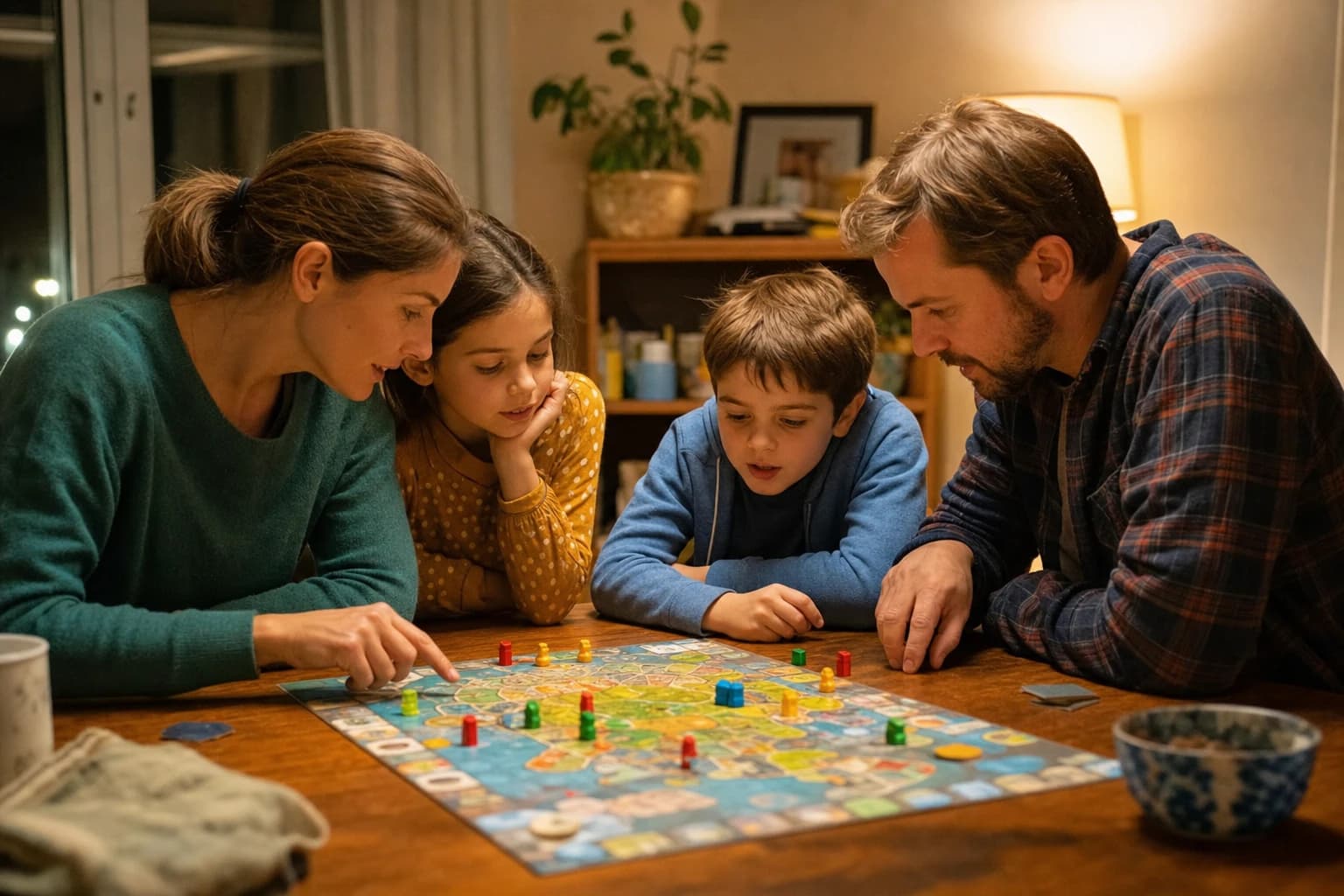
Quick answer: the best cooperative board games for families by age
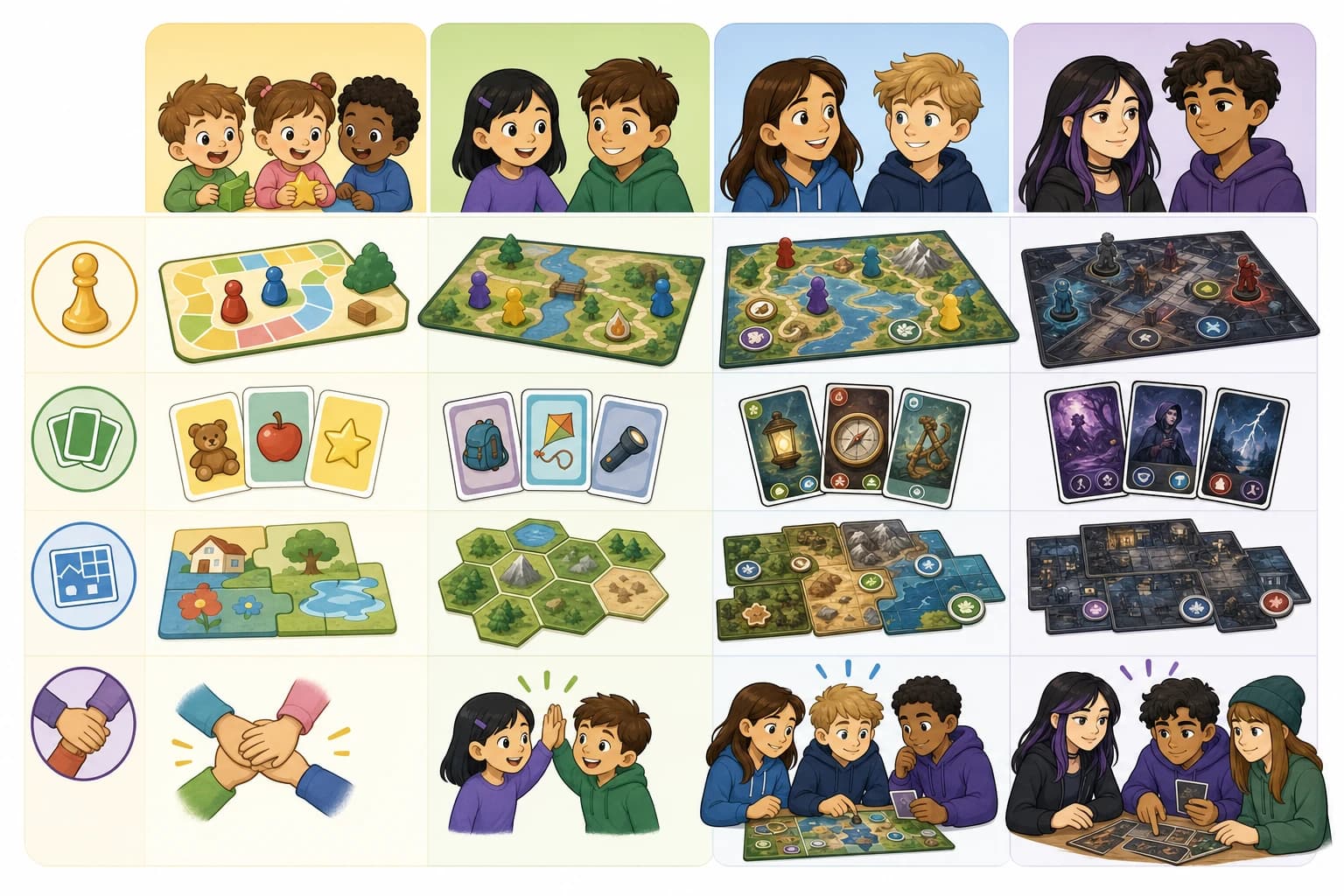
If you want a fast starting point, match the game to your youngest regular player. A game that is too simple for an adult can still work if it gives children meaningful choices; a game that is too complex for the youngest child usually turns into an adult-led activity.
- Ages 2 to 4: First Orchard is one of the gentlest introductions to taking turns and losing to the game instead of to another person.
- Ages 4 to 6: Hoot Owl Hoot!, Race to the Treasure!, and My First Castle Panic are strong choices for simple teamwork with visible progress.
- Ages 5 to 8: Outfoxed!, SOS Dino, and Zombie Kidz Evolution add deduction, planning, and replay value without heavy reading.
- Ages 8 to 10: Magic Maze, Forbidden Island, and Castle Panic suit families ready for more coordination and slightly higher stakes.
- Ages 10 and up: Pandemic, Mysterium, and The Crew: The Quest for Planet Nine are better for families that enjoy discussion, inference, and a challenge that can beat them.
Publisher age ratings are useful, but they are not perfect. They often reflect component safety, reading load, rules complexity, and marketing expectations all at once. For example, Z-Man Games lists Pandemic with its official player count, age guidance, and play time, but a thoughtful 9-year-old who enjoys planning may still handle it with help, while some older children may find it stressful. Use the age on the box as a starting point, not a final decision.
Family cooperative board game comparison table
The table below focuses on the questions that matter most for a non-competitive family game night: who can play, how much reading is required, whether the game stays interesting, and what happens when the group loses.
| Game | Best fit | Challenge level | Reading needs | Replay value | How losing feels |
|---|---|---|---|---|---|
| First Orchard | Toddlers and preschoolers | Very gentle | None after setup | Low to moderate | The raven reaches the orchard first; easy to frame as “try again.” |
| Hoot Owl Hoot! | Preschool to early elementary | Easy | Color recognition, minimal text | Moderate | The sun rises before all owls get home; clear but not harsh. |
| Race to the Treasure! | Ages 5 to 8 | Easy to medium | Minimal | Moderate | The ogre reaches the treasure; the map-building gives children visible reasons why. |
| Outfoxed! | Ages 5 to 8 | Medium | Some symbol and clue interpretation | Moderate to high | The fox escapes; losing usually feels like a mystery that got away, not a personal failure. |
| SOS Dino | Ages 7 to 10 | Medium | Low | Moderate | Dinosaurs or eggs are not saved; can feel more dramatic, so debrief kindly. |
| Zombie Kidz Evolution | Ages 7 to 10 | Medium | Light reading, increasing over time | High because of unlockable content | Zombies overrun the school; short play time makes a rematch easy. |
| Forbidden Island | Ages 8 to adult | Medium to hard | Moderate card text | High due to variable island layout | The island sinks or the team gets trapped; exciting, but can be tense. |
| Magic Maze | Ages 8 to adult | Medium, speed-based | Low once learned | High if your family likes real-time play | The timer runs out; funny for some families, frustrating for others. |
| Pandemic | Ages 10 to adult | Medium to hard | Moderate card and role text | High | Outbreaks or card limits defeat the team; best for families comfortable losing strategically. |
| The Crew: The Quest for Planet Nine | Older kids, teens, adults | Medium to hard | Mission text and trick-taking knowledge | High if the group enjoys card games | One wrong trick can fail a mission; best with patient players. |
Best cooperative games for preschool families
First Orchard
First Orchard is a good first cooperative game because the core question is simple: can everyone pick the fruit before the raven arrives? Young children practice taking turns, matching colors, and moving pieces without having to read, count far ahead, or understand hidden information.
The best part for a non-competitive household is that the “opponent” is a wooden raven, not a sibling. When the raven wins, the table can say, “The raven was quick that time,” rather than “You lost.” The limitation is that older siblings may outgrow it quickly, so it works best when the main player is a toddler or preschooler and older children are willing to help gently.
Hoot Owl Hoot!
Hoot Owl Hoot! is a strong step up because children can suggest moves: which owl should move, and which color space helps most? It introduces planning without turning the game into a long strategy lesson. It also has a built-in difficulty adjustment because families can play with fewer or more owls.
For families looking for family board games without competition, this one is especially useful because the goal is emotionally clear: get the owls home before sunrise. It is easy to narrate, easy to reset, and gentle enough for children who dislike direct conflict.
My First Castle Panic
My First Castle Panic works well for preschoolers who like monsters, castles, and matching. Players work together to stop monsters from reaching the castle by playing cards that match colors and shapes on the path. It has more visible threat than First Orchard, but still stays simple.
One caution: because adults can instantly see the “best” card to play, it is easy to over-coach. Ask the child, “Which monster looks closest?” or “Do you have a card that matches this space?” instead of pointing to the answer.
Best cooperative games for early elementary kids
Race to the Treasure!
Race to the Treasure! asks players to build a path, collect keys, and reach the treasure before the ogre. It is a good bridge between simple color games and true planning games because the board develops as the group places tiles.
The most useful teaching moment is that not every helpful-looking tile is actually helpful. Children can see why a path went the wrong direction or why the team forgot a key. That makes losing easier to discuss because the board shows the story of the choices.
Outfoxed!
Outfoxed! is one of the better cooperative games for kids and parents who enjoy deduction. The players gather clues, eliminate suspects, and try to identify the guilty fox before it escapes. The deduction tool gives children a tactile way to check clues instead of relying only on adult reasoning.
This is a good pick for families with one child who likes mysteries and another who likes moving pieces around the board. Give one player the job of moving the fox, one the job of handling clue cards, and one the job of checking suspects so that nobody becomes a spectator.
Zombie Kidz Evolution
Zombie Kidz Evolution is short, energetic, and unusually replayable because it changes as the family completes games and opens new content. The basic goal is easy to grasp: keep zombies from taking over the school and lock the gates. Over time, new rules and abilities appear.
This is a better fit for children who can handle mild spooky themes. The short play time helps with losing together because a failed game does not consume the whole evening. Families can often say, “Let’s try one more and use a different plan.”
Best team board games for families with older kids
Forbidden Island
Forbidden Island is a classic next step for families ready for roles, hand management, and shared planning. Players collect treasures and escape before the island sinks. The board is made from tiles, so the island layout changes, and the water level creates steady pressure.
This game is exciting, but it can produce “quarterbacking,” where one adult tells everyone exactly what to do. To prevent that, have each player read their own role card and announce one idea before anyone gives advice. You can also use a rule that advice must be phrased as a question: “What happens if you shore up that tile?” rather than “Shore up that tile.”
Magic Maze
Magic Maze is cooperative, but it feels very different from a calm planning game. Players move shared characters through a shopping-mall-style map under a timer, and communication is restricted during much of the game. Instead of one person controlling one pawn, each player controls certain movement directions or actions.
This structure naturally stops one player from running the whole game because no single person can do every action. However, it can be stressful for children who dislike timers or silent play. If your family likes quick, silly pressure, it can be memorable. If your family wants a relaxing evening, choose something slower.
Castle Panic
Castle Panic has players defend a castle from waves of monsters. It can be played with competitive scoring, but families who want a fully cooperative night can ignore individual points and focus on whether the castle survives. It is a good option for mixed ages because younger players can understand “monster is getting closer,” while older players can discuss card trades and priorities.
The downside is that it can run longer than lighter children’s games. It works best when everyone at the table can stay engaged through several rounds of attacks, trades, and repairs.
Best cooperative games for tweens, teens, and adults
Pandemic
Pandemic is one of the best-known modern cooperative games. Players take different roles, travel around a world map, treat disease cubes, trade cards, and try to discover cures before the game’s loss conditions catch up with them. It is a strong family choice when older kids like planning under pressure.
The reason it works is also the reason it can be difficult: the whole table can see many possible actions, and some are clearly better than others. If one adult is very strategic, they may accidentally turn other players into button-pushers. Use turn ownership: on your turn, you make the final decision after hearing no more than two suggestions.
Mysterium
Mysterium is more about interpretation than optimization. One player gives dreamlike visual clues, and the others work together to identify combinations of character, location, and object. It is cooperative, but it feels closer to a family conversation than a puzzle with one obvious best move.
This is useful for families where competitive scoring causes tension but creative guessing feels safe. The main reading requirement is not heavy, but players need patience with ambiguity. A clue might make sense to the clue-giver and look completely strange to everyone else. That is part of the fun, as long as the table stays kind.
The Crew: The Quest for Planet Nine
The Crew is a cooperative trick-taking card game with missions. It is excellent for families that already understand games like Hearts, Spades, or Euchre, but it is not the easiest first cooperative game for children who have never played trick-taking games.
The special challenge is limited communication. Players cannot simply say every card in their hand, so success depends on reading the table. Losing can happen because of one card played at the wrong time, so this is best for patient families who can say, “Now we know what that mission needs,” and try again without blaming the player who made the visible mistake.
How to choose the right non-competitive board game
Use this quick process before buying. It is more reliable than choosing only by theme or online popularity.
- Start with the youngest player’s real skills. Can they read card text? Can they handle a 30-minute game? Can they lose without needing a long reset?
- Pick the type of cooperation. Some games are puzzle-like, such as Pandemic. Some are emotional and story-like, such as Mysterium. Some are fast and physical in energy, such as Magic Maze.
- Check whether the game gives each player a job. Role cards, separate hands of cards, or restricted actions help prevent one person from making every decision.
- Match the stress level to the night. Timers, spreading threats, and sudden loss conditions can be fun, but not when everyone is already tired.
- Decide how long losing should take. For younger kids, a 10- to 20-minute loss is easier to replay than a 60-minute loss.
How each game handles losing together
In a competitive game, a loss usually points toward one winner and one or more losers. In cooperative games, the family loses to the system: the raven arrives, the sun rises, the island sinks, the fox escapes, or the outbreak marker reaches its limit. That shift can reduce sibling conflict, but it does not automatically remove frustration.
For younger children, choose games with a visible, non-personal opponent. First Orchard and Hoot Owl Hoot! are good examples because the loss condition is concrete and easy to narrate. For early elementary children, deduction and route-building games make the reason for losing easier to see. For older kids, games like Forbidden Island and Pandemic make losing feel like a strategic challenge, which can be satisfying for some families and too intense for others.
A helpful post-game habit is the “one thing” debrief. Ask each player for one thing the team did well and one thing to try differently. Keep it short. The goal is not to analyze every mistake; it is to turn the loss into a shared story instead of a blame session.
How to stop one adult from taking over the game
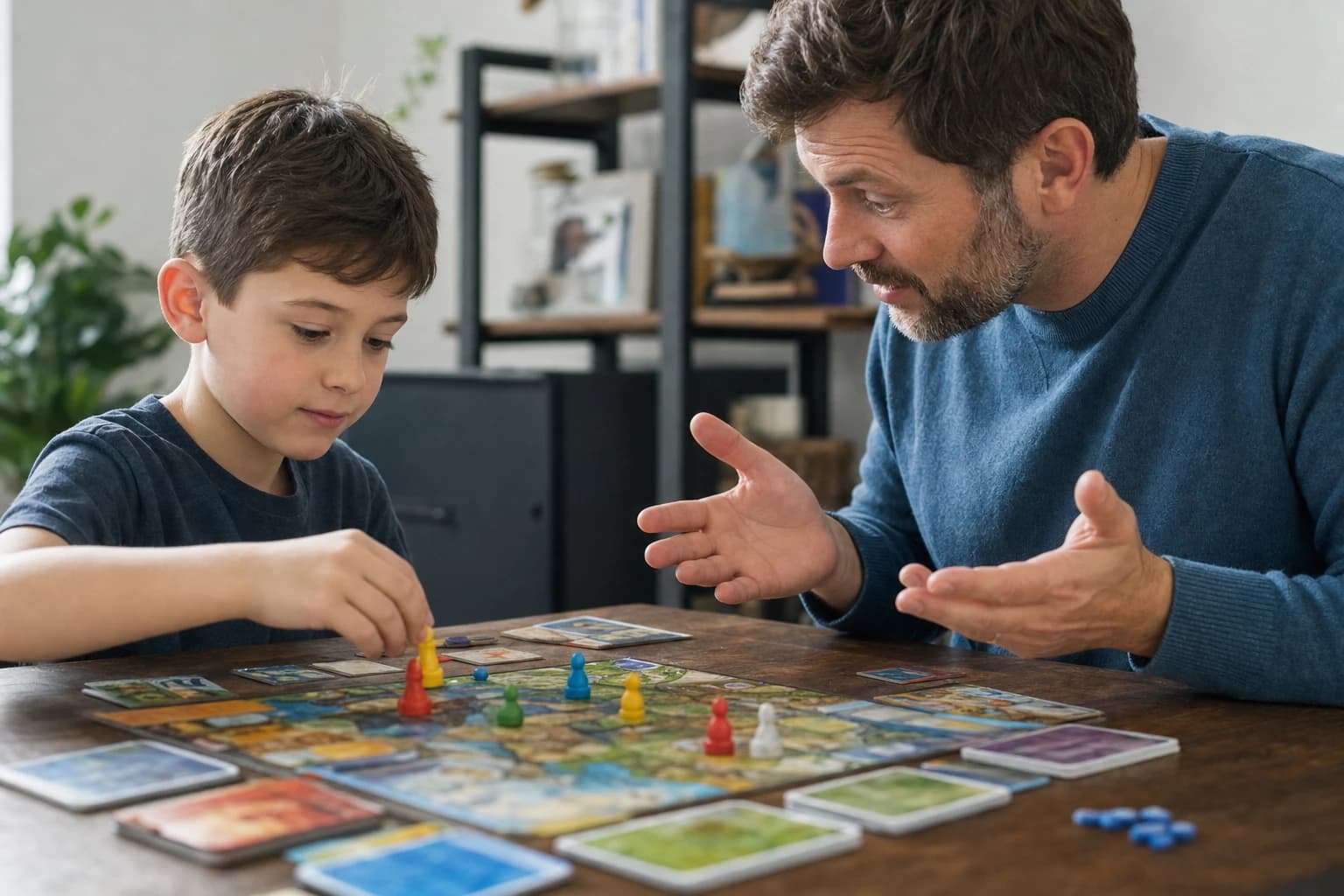
The biggest weakness of many team board games for families is not the rulebook. It is the helpful adult who sees the best move and says it too quickly. This is often called quarterbacking or alpha-gaming. It can make the game smoother, but it also removes the child’s chance to think.
Try these table rules:
- Use a “think first” pause. The active player gets 20 seconds to look at the board before anyone offers advice.
- Limit advice to two voices. If four people all explain options, younger children may stop listening.
- Make advice optional. The active player can say, “I want ideas,” or “I want to decide.”
- Ask questions instead of giving commands. “Which space is in danger?” teaches more than “Move here.”
- Rotate small jobs. One player handles tokens, one reads cards, one watches the timer, and one checks the loss condition.
- Let imperfect moves stand. If the move is legal and not game-ending by accident, allow it. Cooperative games are still games, not efficiency tests.
If your family enjoys indoor play beyond board games, you may also like indoor games for 10 people in a small room or quieter ideas such as quiet indoor games for preschoolers on rainy days. Those can be useful when younger children need movement breaks between longer tabletop games.
Common mistakes when buying cooperative board games
- Buying too hard too soon. A famous cooperative game is not always the right first cooperative game. Start with short, clear games before moving to multi-step strategy.
- Ignoring reading load. A child may understand the goal but still struggle if every turn requires reading card text.
- Choosing only by theme. Dinosaurs, ghosts, castles, and zombies can all be fun, but the mechanism matters more for family harmony.
- Playing when everyone is tired. Cooperative games require listening. If bedtime is close, choose a 10-minute game or save the heavier box for another day.
- Turning every loss into a lesson. A quick, warm reset is often better than a long lecture about planning.
For children around age 8 who need simple, active alternatives, this guide to indoor games for 8-year-olds with no equipment pairs well with board game nights. For larger holiday gatherings, consider Christmas party games for families with kids, teens, and adults together.
FAQ
What is the best first cooperative board game for a family?
For preschoolers, First Orchard or Hoot Owl Hoot! is usually easier than a strategy-heavy game. For early elementary children, Outfoxed! is a strong first choice because the mystery theme gives everyone a reason to talk and participate.
Are cooperative board games really non-competitive?
They are non-competitive between players, but the group still competes against the game system. That means there is still a win or loss, but siblings are not trying to eliminate, outscore, or defeat each other.
Which cooperative games need the least reading?
First Orchard, Hoot Owl Hoot!, My First Castle Panic, and SOS Dino are good lower-reading options once an adult explains the rules. Games such as Pandemic and Forbidden Island require more card and role text.
What cooperative game has the best replay value for kids?
Zombie Kidz Evolution has especially strong replay value for many families because the game changes over repeated plays. Forbidden Island and Pandemic also replay well because setup, roles, and card order change from game to game.
What if my child gets upset when the whole team loses?
Choose shorter games with gentle loss conditions, then use a quick reset. Say what the team did well before discussing a different plan. Avoid blaming one move or one player, even if a mistake was obvious.
Can cooperative games work with only one child and one parent?
Yes. Many cooperative games support two players, but the feel varies. Deduction and planning games often work well with one child and one adult as long as the adult avoids making all decisions.
Conclusion: choose cooperation style before theme
The best cooperative board games for families are not just the ones with the cutest pieces or the most famous names. They are the games that match your child’s age, attention span, reading ability, and tolerance for shared failure.
For very young children, choose gentle games like First Orchard and Hoot Owl Hoot!. For early elementary players, try Outfoxed!, Race to the Treasure!, or Zombie Kidz Evolution. For older children and adults, move toward Forbidden Island, Magic Maze, Pandemic, Mysterium, or The Crew.
Most importantly, protect each player’s right to make decisions. A cooperative game night should feel like “we solved this together,” not “one person solved it while everyone else moved pieces.”