Rainy-day games that actually fit a small living room
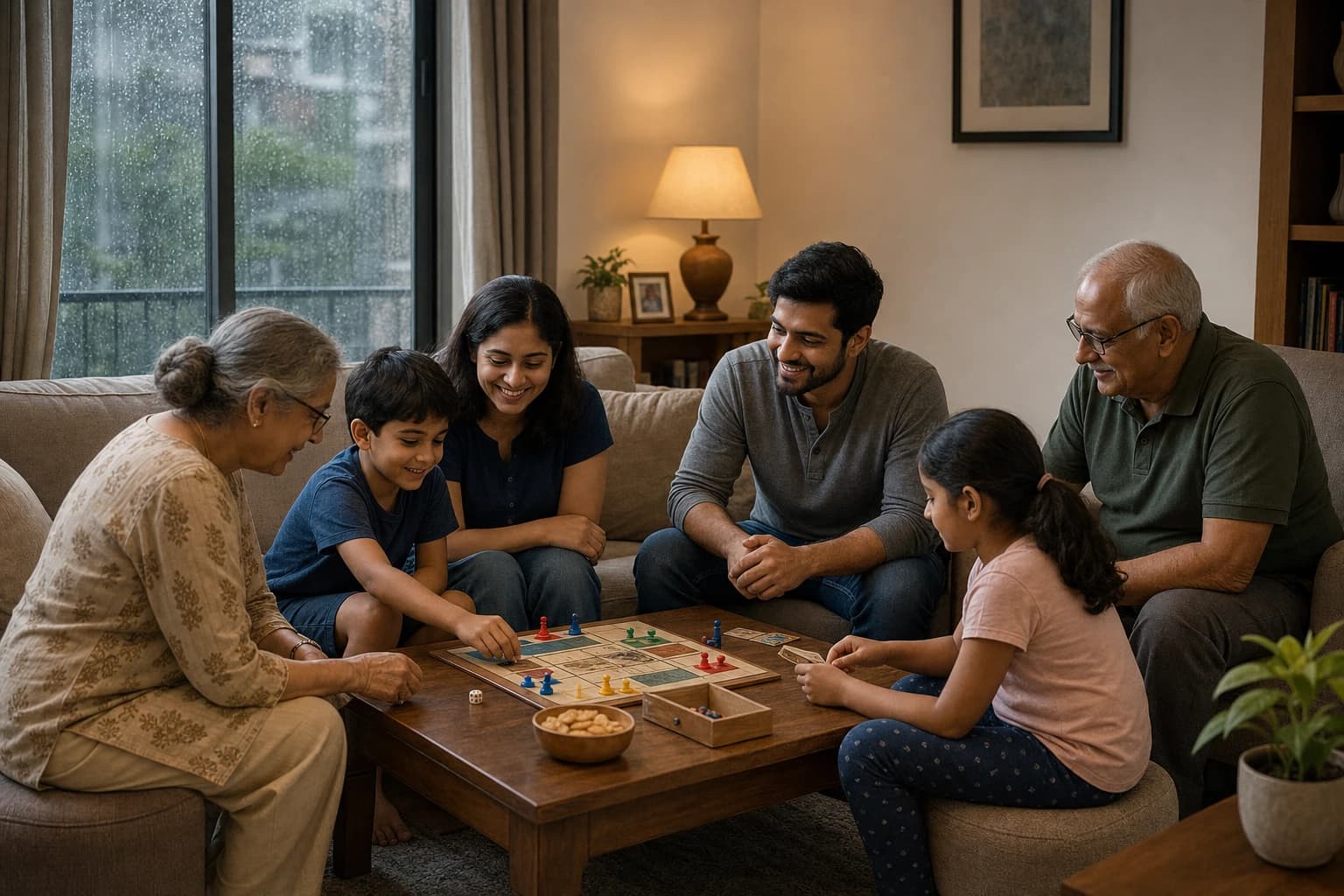
When everyone is stuck indoors, the hard part is not finding a game. It is finding one that does not require running, shouting, moving furniture, or cleaning paint out of the rug afterward. This guide focuses on rainy day family games for small living room spaces: games that work on a rug, around a coffee table, or from the sofa.
You will find quick choices grouped by noise level, energy level, setup time, and space needed, plus simple adaptations for toddlers, older kids, grandparents, and apartment living. The goal is a family game session that feels fun, not like indoor chaos management.
Quick chooser: best games by noise, energy, setup, and space
Use this table when you need a fast answer. The space estimates assume a typical small living room with a sofa, a coffee table, and one open patch of floor about the size of a bath towel or small rug.
| Game | Noise level | Energy level | Setup time | Space needed | Best for |
|---|---|---|---|---|---|
| Category Chain | Quiet talking | Very low | None | Sofa only | Mixed ages, apartments |
| Mystery Bag Guess | Quiet | Very low | 3 minutes | Coffee table | Toddlers to grandparents |
| Pillowcase Charades | Medium | Low | 5 minutes | One standing spot | Kids who need movement |
| One-Sheet Drawing Relay | Quiet to medium | Low | 2 minutes | Table or floor | Creative kids, teams |
| Seated Simon Says | Medium | Low | None | Chair or sofa spots | Preschoolers and early elementary |
| Five-Clue Detective | Quiet talking | Very low | None | Sofa only | Older kids and adults |
| Sock Target Toss | Medium | Moderate | 2 minutes | Clear 4 to 6 feet | Families needing physical play |
| Grandparent Interview Game | Quiet | Very low | None | Anywhere seated | Multi-generation play |
If your room shares walls with neighbors, start with Category Chain, Five-Clue Detective, Mystery Bag Guess, or the Grandparent Interview Game. If kids need more movement, use Sock Target Toss or Pillowcase Charades, but keep the rules seated or standing in place.
Set up the room once, then rotate games
A five-minute setup prevents most rainy-day problems: bumped lamps, arguments about turns, and games that slowly spread across the whole room. Play is valuable for children’s learning and social development; the American Academy of Pediatrics discusses the importance of play in child development in The Power of Play. In a small living room, the best play is usually structured enough to keep everyone safe but flexible enough for different ages.
Simple materials to keep nearby
- 1 pillowcase or tote bag
- 8 to 12 safe household objects, such as a spoon, clean sock, toy car, hairbrush, plastic cup, coaster, or soft ball
- 1 sheet of paper or a small notepad
- 1 pencil or washable marker
- 6 rolled pairs of socks
- 1 laundry basket, mixing bowl, or cardboard box for target games
- A phone timer, kitchen timer, or sand timer
Five-minute setup steps
- Choose the play zone. Pick one clear area: the rug, the space between sofa and TV, or the coffee table. Do not use doorways or the top of stairs.
- Move fragile items first. Relocate mugs, glass decorations, floor lamps with loose cords, and remote controls. Put them on a high shelf or in another room.
- Mark personal spots. Give each player a sofa cushion, chair, pillow, or floor square. This reduces wandering and keeps games from turning into running games.
- Set a round length. Use 5-minute rounds for preschoolers, 8-minute rounds for mixed ages, and 10-minute rounds for older kids and adults.
- Pick a noise rule. Agree on one rule before play starts: whisper, indoor voice, or performance voice. Apartment families may want “performance voice only during your turn.”
Small-room safety rule
Any game can become unsafe if players run, shove, climb furniture, or throw hard objects. Use soft items only for tossing games, keep throws under shoulder height, and stop a round immediately if the play zone starts to expand.
Quiet indoor family games for small spaces
These are the best indoor family games for small spaces when someone is working from home, a baby is napping, or you live above another apartment.
1. Category Chain
Players: 2 or more. Time: 5 to 12 minutes. Mess: none. Space: sofa only.
Choose a category, such as animals, foods, things in a kitchen, movie characters, or objects that are usually blue. The first player names one item. The next player must name a different item in the same category within 5 seconds. If they repeat an answer or cannot think of one, they choose the next category instead of being “out.”
Adaptations: Toddlers can point to an object in the room instead of naming one. Older kids can play alphabetically: apple, banana, carrot. Grandparents can lead categories from family history, such as “places our family has lived” or “old-fashioned candies.”
2. Five-Clue Detective
Players: 3 or more. Time: 10 minutes. Mess: none. Space: seated.
One player secretly thinks of a person, place, animal, household object, or food. They give up to five clues, one at a time. After each clue, every player gets one guess. The fewer clues needed, the more impressive the solve.
Example clues for “umbrella”: “I am used outside,” “I am useful on rainy days,” “I can fold,” “I have a handle,” “I am often kept near a door.”
Make it fair: For mixed ages, require the clue-giver to choose something everyone in the room has seen or heard of. For older players, limit clues to exactly 3 words each.
3. Mystery Bag Guess
Players: 2 to 6. Time: 10 minutes. Mess: very low. Space: coffee table or floor.
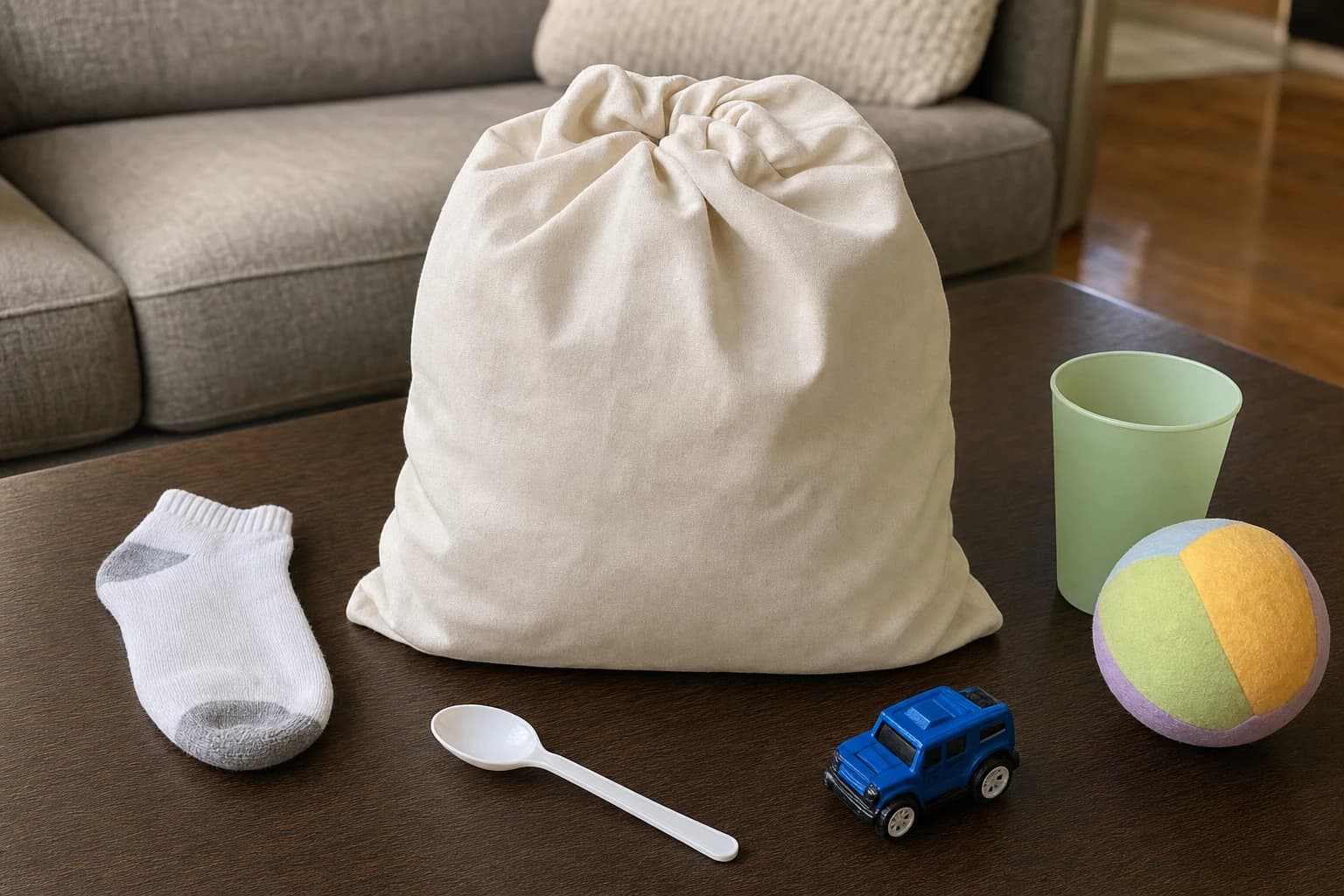
Put 8 to 12 safe objects in a pillowcase. Players reach in without looking and describe what they feel before guessing. Encourage descriptive words: smooth, bumpy, round, cold, soft, flat, bendy.
Good objects: plastic spoon, clean sock, toy block, rubber duck, sealed marker, small book, hairbrush, measuring cup, wooden puzzle piece, soft ball. Avoid sharp objects, breakable items, coins for very young children, or anything with small detachable parts.
Scoring option: 1 point for a correct guess, 1 bonus point for using three descriptive words first.
Low-mess games with light movement
Some rainy day games at home for kids need a little energy release. These options allow movement without running, chasing, jumping, or spreading toys everywhere.
4. Pillowcase Charades
Players: 3 or more. Time: 10 to 20 minutes. Mess: paper slips only. Space: one standing spot.
Write simple actions or characters on small slips of paper and place them in a pillowcase. A player draws one slip and acts it out without speaking. Everyone else guesses.
Small-room prompts: brushing teeth, making soup, opening an umbrella, walking like a penguin, being a sleepy cat, carrying a heavy grocery bag, flying a tiny airplane, building a snowman, looking for lost keys.
No-running rule: The actor’s feet must stay on one pillow, rug square, or taped paper “stage.” This single rule keeps charades from becoming a chase game.
5. Seated Simon Says
Players: 2 or more. Time: 5 to 10 minutes. Mess: none. Space: chairs or sofa.
Play the classic listening game, but everyone stays seated. Use commands that are silly but contained: “Simon says tap your knees,” “Simon says make binoculars with your hands,” “Simon says freeze like a statue,” “Simon says pretend to stir soup.” If the leader gives a command without “Simon says,” players should not do it.
For toddlers: Skip elimination. If someone makes a mistake, they do a funny reset, such as one quiet clap or a tiny wave. For older kids, speed up after every 5 commands.
6. Sock Target Toss
Players: 2 to 6. Time: 8 to 15 minutes. Mess: low. Space: 4 to 6 feet of clear floor.
Roll 6 pairs of socks into soft balls. Place a laundry basket, mixing bowl, or cardboard box on the floor. Players toss from a seated position or from a marked standing line. Use underhand throws only.
Scoring: 1 point for landing in the target, 2 points if the sock stays in after bouncing off the rim, and 0 points for hitting furniture. Play to 10 points or set a 5-minute timer.
Apartment-friendly version: Toss into a laundry basket lined with a towel to reduce thumps. Keep the target close enough that nobody feels the need to throw hard.
Creative table and floor games with almost no cleanup
These low mess games for families use paper, a deck of cards, or conversation. They are especially useful after dinner, before bedtime, or when the weather has already made everyone restless.
7. One-Sheet Drawing Relay
Players: 3 to 6. Time: 10 minutes. Mess: one sheet of paper. Space: table or floor.
Fold one sheet of paper into 6 sections. Player 1 draws a head in the first section, folds it back so only the neck lines show, and passes it on. Player 2 draws the body, Player 3 draws legs, and so on. At the end, unfold the sheet and name the strange creature together.
Variation: Use a theme: rainy-day monster, underwater pet, robot chef, or space animal. For very young children, skip folding and let everyone add one feature in turn.
8. Card Flip Predictions
Players: 2 or more. Time: 5 to 10 minutes. Mess: one deck. Space: coffee table.
Shuffle a standard deck. Before each card is flipped, the player predicts one feature: red or black, higher or lower than 7, odd or even, or a suit. Award 1 point for a correct prediction. For younger kids, use only red or black. For older kids, require a more specific guess, such as “black card lower than 7.”
If your family enjoys card play across generations, you may also like easy card games kids can play with grandparents using one standard deck.
9. Build-a-Rule Story
Players: 2 or more. Time: 10 to 15 minutes. Mess: none. Space: seated.
Tell a story one sentence at a time, but add one rule each round. Round 1 might be “every sentence must include an animal.” Round 2 adds “every sentence must include a sound.” Round 3 adds “every sentence must start with unfortunately or luckily.”
This works well with mixed ages because younger kids can offer simple sentences while older kids enjoy juggling the rules. Grandparents can be the “story keeper” who gently reminds everyone of the current rules.
Apartment-friendly options for mixed ages
Quiet indoor games for mixed ages need two things: low physical demand and flexible difficulty. A game that is too simple bores older kids; a game that depends on reading quickly excludes preschoolers or some grandparents. Use roles instead of identical tasks.
- Toddlers: Let them point, choose objects, act as the timer helper, or give one-word clues.
- Early elementary kids: Give them turn-taking jobs, such as scorekeeper, clue picker, or basket mover.
- Older kids: Add restrictions: 3-word clues, left-hand drawing, timed guesses, or alphabet order.
- Grandparents: Offer seated roles, larger cards or paper, slower timers, and categories based on memories, travel, food, music, or family stories.
For more small-room group ideas, see indoor games for 10 people in a small room. If your main challenge is a preschooler who needs calmer play, quiet indoor games for preschoolers on rainy days has more low-mess ideas for apartments and small homes.
A simple 45-minute rainy-day game plan
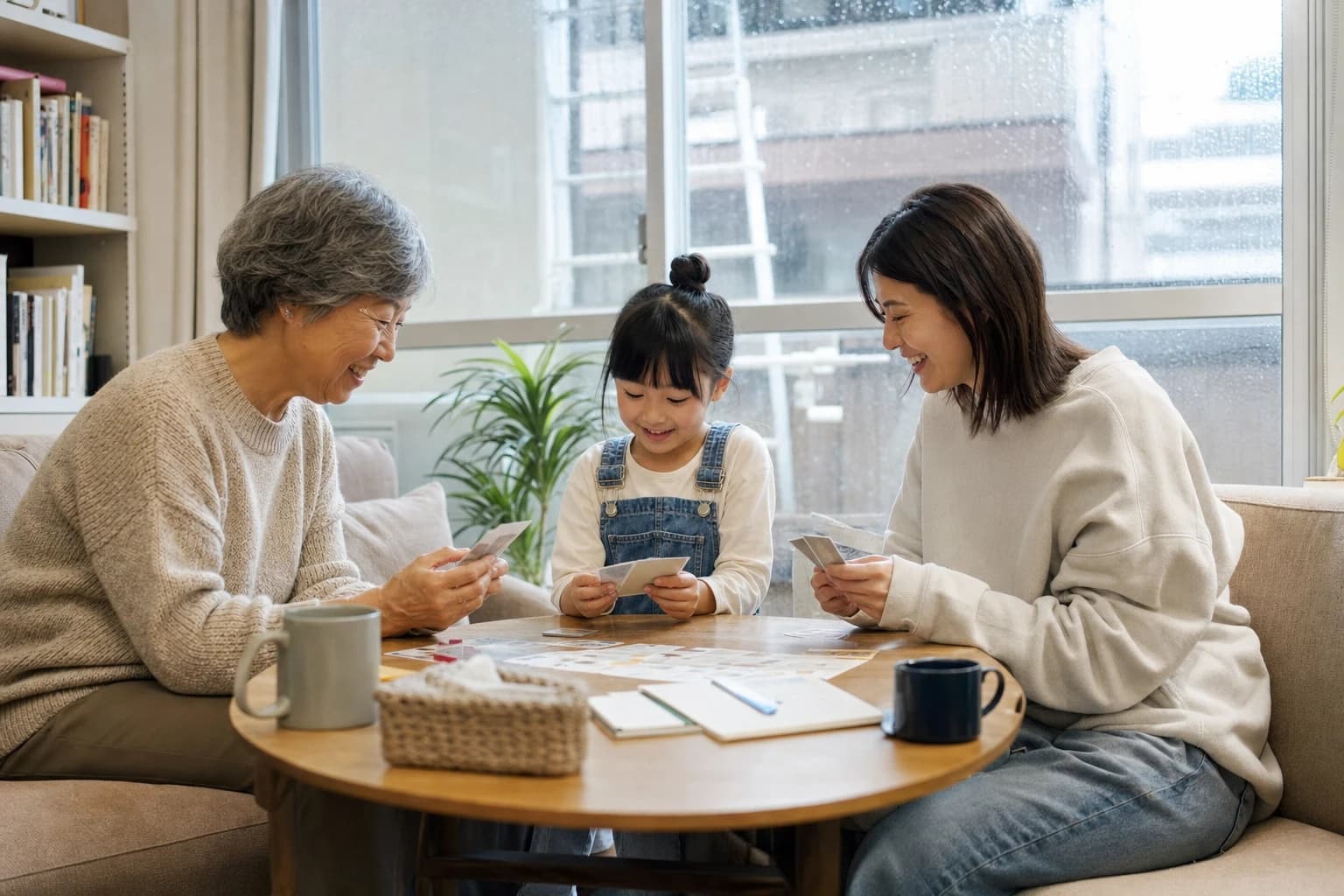
If you do not want to negotiate every game, choose the sequence before you start. This plan balances quiet thinking, creativity, and light movement without needing more than a small living room.
- Minutes 0 to 5: Room reset. Clear the coffee table, move fragile items, choose seating spots, and explain the no-running rule.
- Minutes 5 to 12: Category Chain. Start with a calm game so everyone joins without a noisy transition.
- Minutes 12 to 22: Mystery Bag Guess. Let each person identify 2 objects, or stop when all objects have been guessed.
- Minutes 22 to 32: Pillowcase Charades. Keep the actor on one pillow or rug square.
- Minutes 32 to 40: Sock Target Toss. Use seated underhand tosses and a close basket.
- Minutes 40 to 45: Build-a-Rule Story. End with a quieter game so the room does not stay in high-energy mode.
For families who want a longer structure, how to plan a 60-minute family game night for mixed ages can help you build a full evening without anyone getting bored.
Common mistakes that make indoor games harder
- Starting with the highest-energy game. If the first game is throwing or acting, it can be hard to bring the room back down. Begin quiet, then build.
- Using elimination rules with young children. Sitting out often leads to wandering, complaints, or side play. Use reset actions instead.
- Letting the play space grow. Mark a stage, line, or seat. Small boundaries make small-space games work.
- Choosing games that depend on reading speed. For mixed ages, read prompts aloud or use picture/object prompts.
- Ignoring noise between turns. Give waiting players jobs: judge, timer, clue collector, scorekeeper, or applause captain with silent jazz hands.
FAQ: rainy day family games for a small living room
What are the best rainy day family games for small living room spaces?
The best choices are games that keep players seated or standing in one marked spot. Category Chain, Mystery Bag Guess, Five-Clue Detective, One-Sheet Drawing Relay, and Seated Simon Says work especially well because they need little or no floor space.
How do I keep indoor games from turning into running games?
Set the boundary before the first round. Give each player a chair, cushion, pillow, or rug square. For acting games, make the rule “feet stay on the stage.” For toss games, require seated or underhand throws only.
What games work for toddlers and older kids together?
Use the same game with different difficulty. In Mystery Bag Guess, toddlers can name or point while older kids describe texture before guessing. In Category Chain, younger children can use any answer while older children must answer alphabetically or within 5 seconds.
What can we play if we need very quiet indoor games?
Try Category Chain, Five-Clue Detective, Grandparent Interview Game, Build-a-Rule Story, or Card Flip Predictions. These are quiet indoor games for mixed ages because they rely on thinking, listening, and conversation instead of movement.
Are sock toss games safe indoors?
They can be a low-risk option if you use soft rolled socks, clear fragile items, keep the target close, and require underhand throws. Avoid throwing toward windows, lamps, screens, pets, or people’s faces.
Conclusion
A rainy day does not require a big playroom, a closet full of supplies, or a messy craft project. The most reliable rainy-day family games for a small living room are simple, bounded, and easy to adapt: guessing games for quiet moments, seated word games for mixed ages, one-sheet drawing games for creativity, and soft sock tosses when kids need movement.
Choose one quiet game, one creative game, and one light-movement game. Set the room once, keep rounds short, and rotate before anyone gets restless. That small plan is usually enough to turn a cramped rainy afternoon into a manageable family game session.