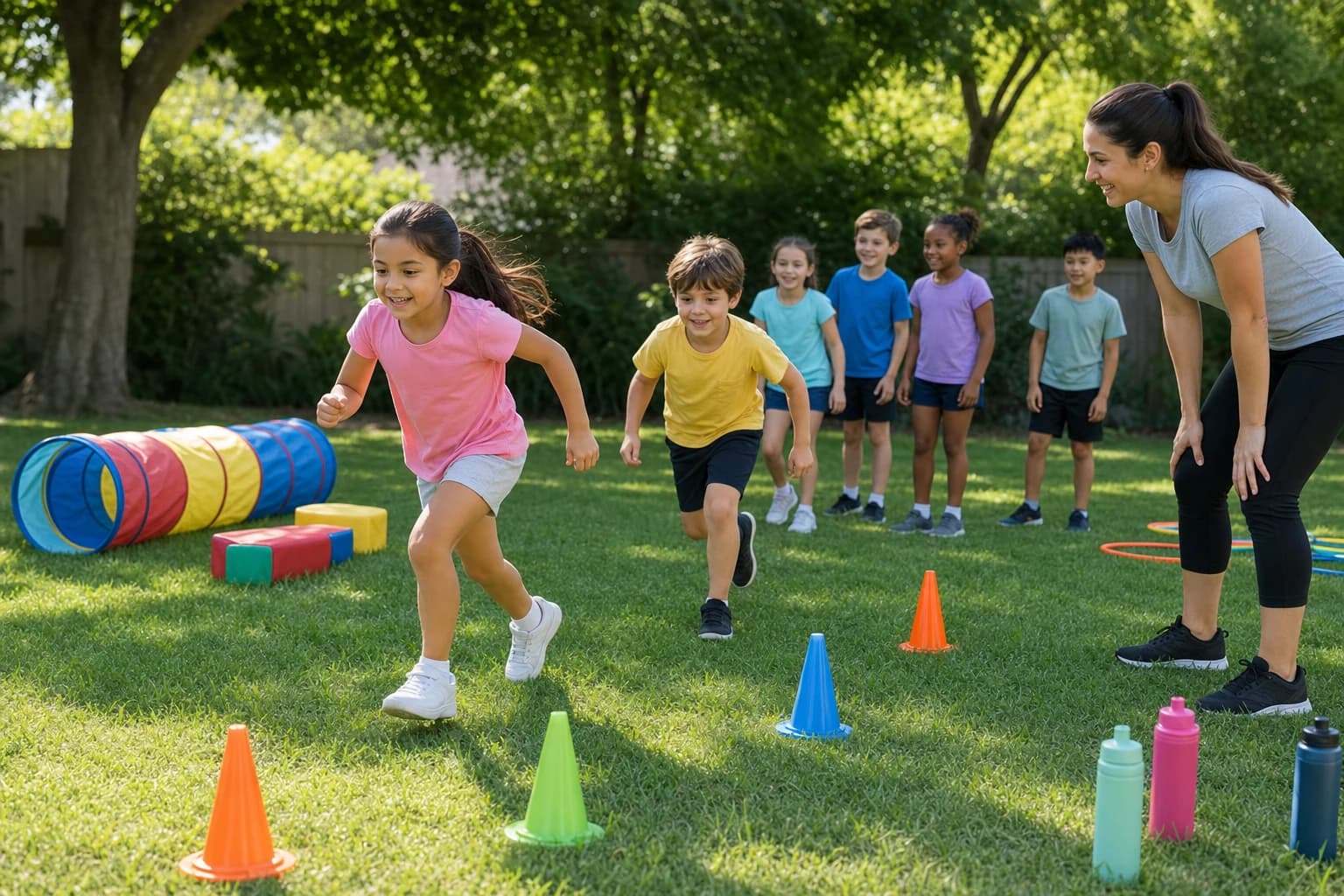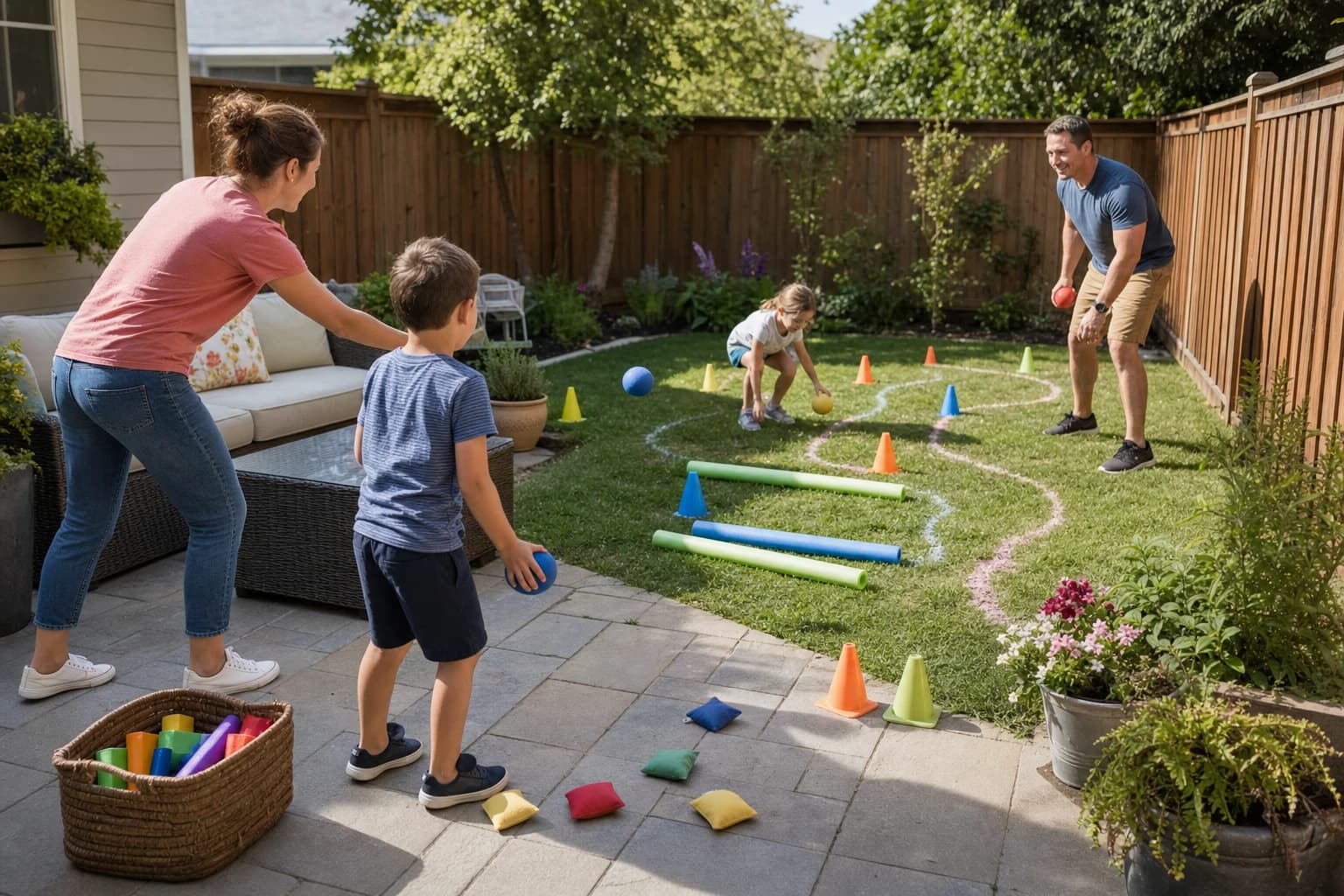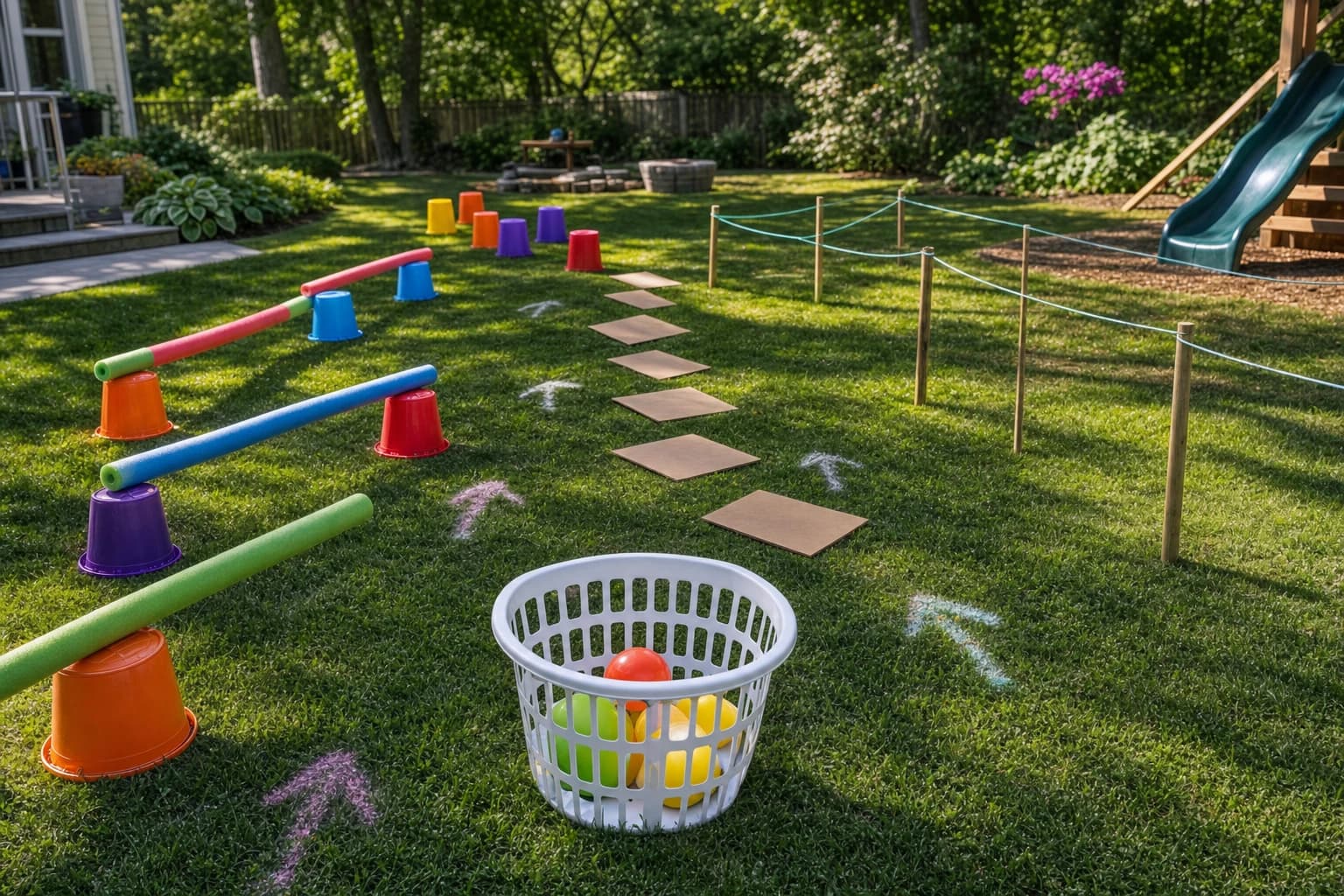
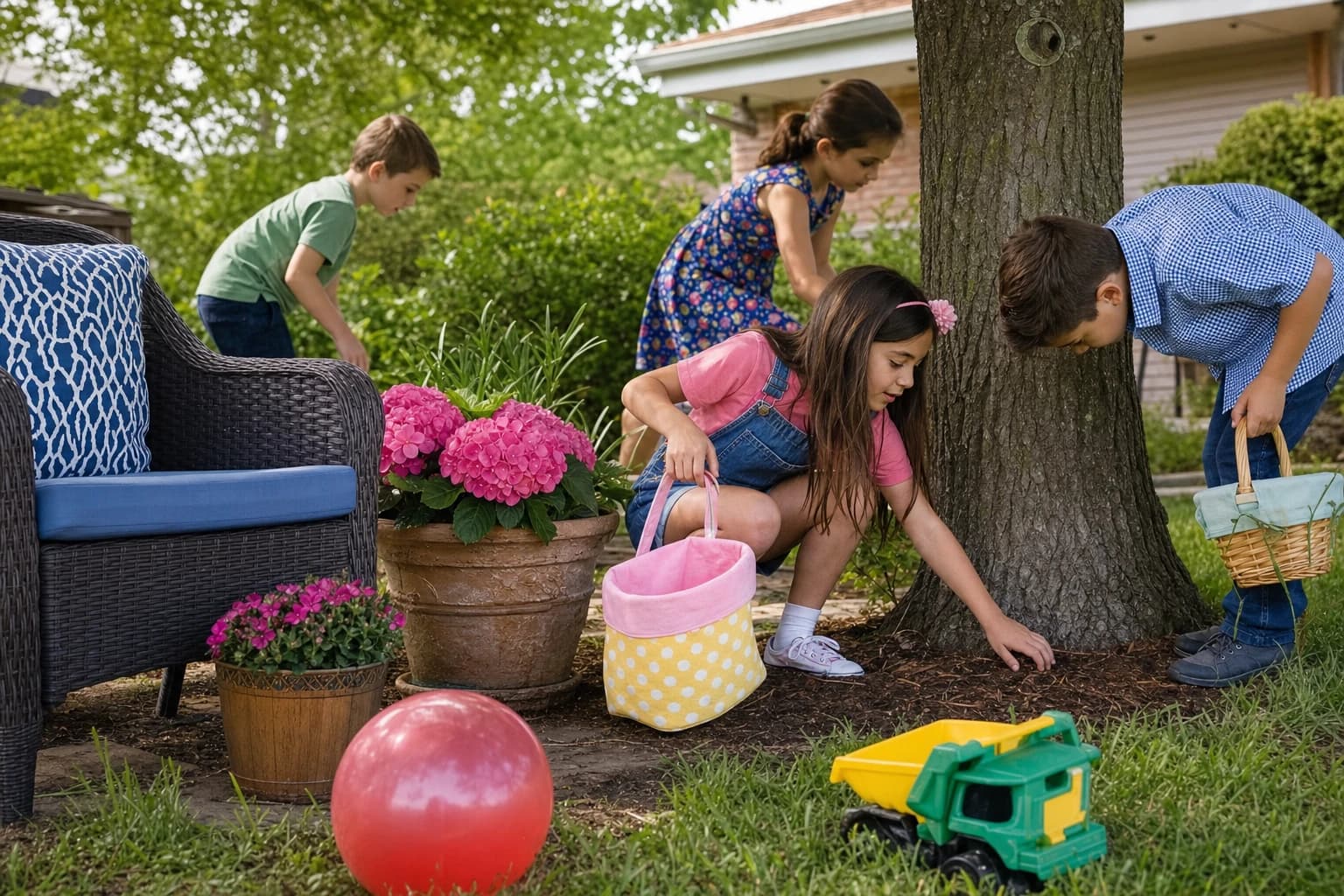
A backyard scavenger hunt for kids works best when it feels exciting to children but stays simple for the adult setting it up. The challenge is choosing clues that a 5-year-old can understand, keeping older kids interested, and hiding items in places that are safe, visible, and not too frustrating.
This guide walks through a complete setup for ages 5–10, including supplies, a realistic timeline, clue difficulty by age, safe hiding spots, small-yard and medium-yard layouts, team options, and ready-to-use outdoor scavenger hunt clues you can adapt in minutes.
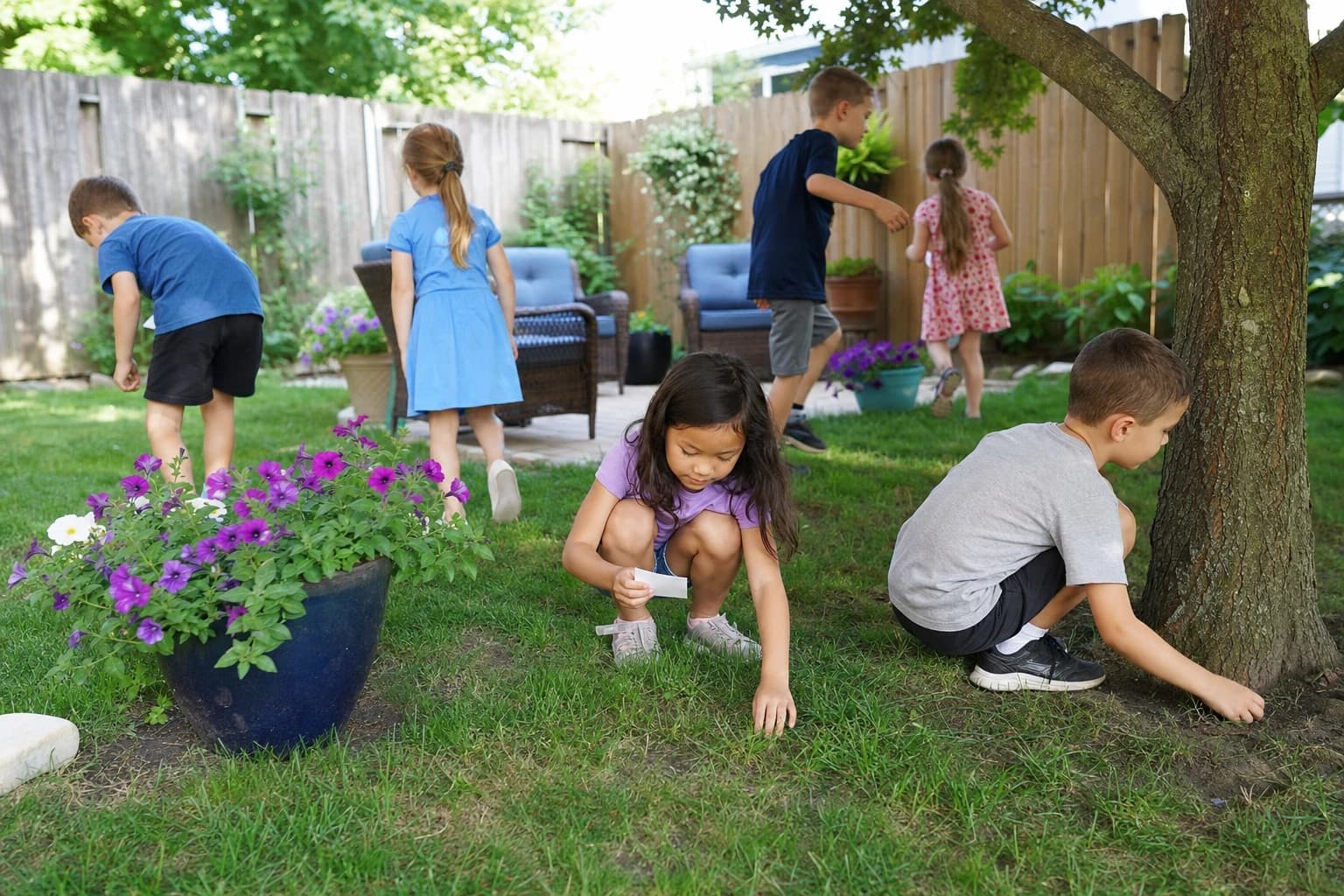
Quick Plan: The Easiest Backyard Scavenger Hunt Format
If you want the simplest version, use a 10-clue route where each clue leads to the next location. The final clue leads to a small prize, snack, sticker sheet, or shared activity. For kids ages 5–10, plan on 20–40 minutes of play, depending on the number of children and how much help younger players need.
A reliable structure is:
- Ages 5–6: 6–8 picture clues or object clues, with an adult reading each clue aloud.
- Ages 7–8: 8–10 short rhyming clues or simple riddles.
- Ages 9–10: 10–12 clues with a few word puzzles, codes, or two-step hints.
For safety, keep all clues within a defined play area and avoid hiding anything near tools, grills, standing water, thorny plants, driveways, or places where children must climb. The U.S. Consumer Product Safety Commission's Public Playground Safety Handbook is focused on playgrounds, but its broader safety principles are useful here too: supervise children, reduce fall risks, and keep play areas clear of hazards.
Supplies and Setup Time
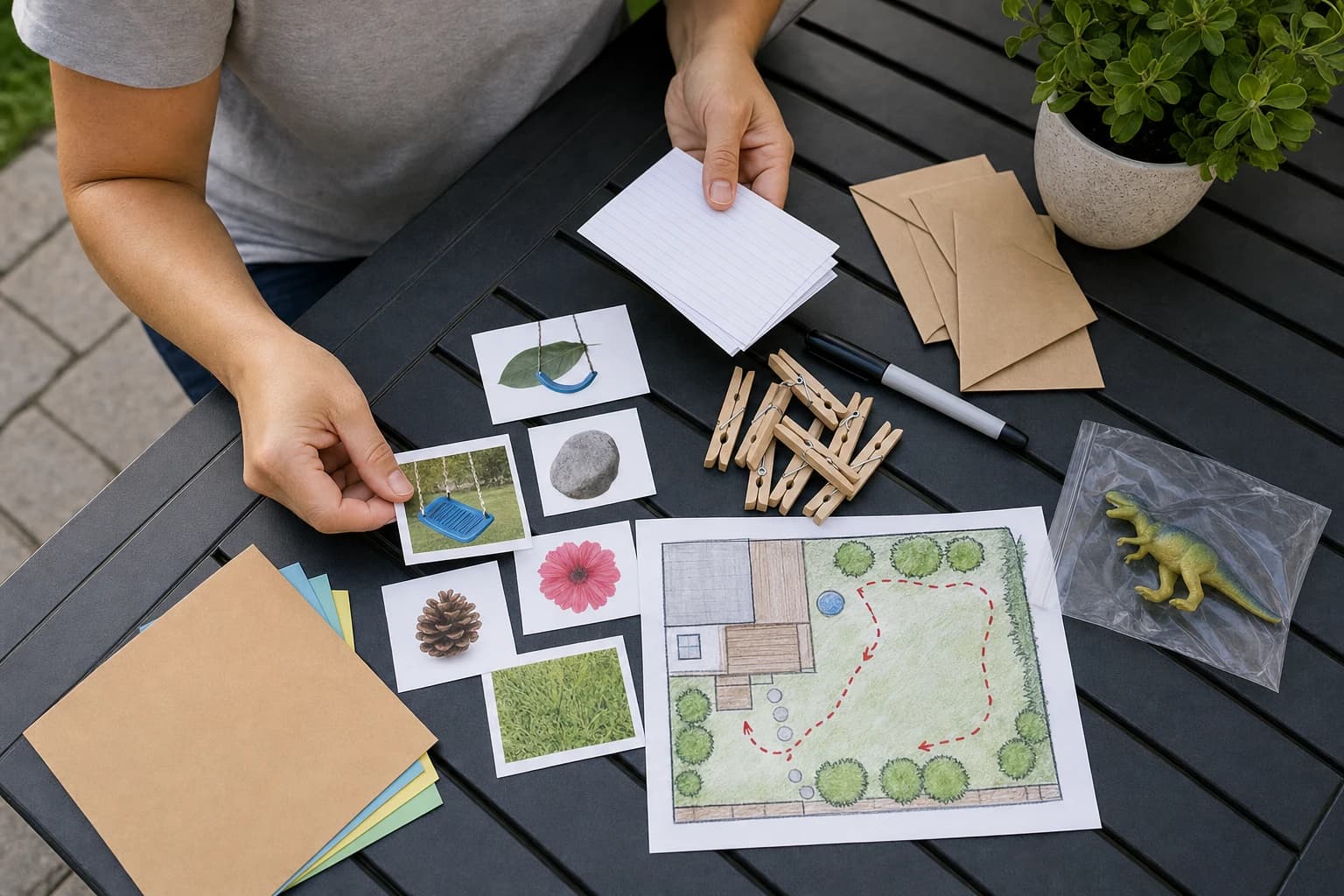
You do not need special equipment. Most backyard scavenger hunts can be prepared with paper, a marker, tape, and small items from around the house.
Materials
- 8–12 clue cards, index cards, or folded paper slips
- 1 pencil or marker for each team
- Small envelopes, clothespins, or painter's tape for securing clues
- Optional: picture cards for non-readers or early readers
- Optional: small prize, fruit snack, bookmark, bubbles, sidewalk chalk, or a certificate
- Optional: clipboard or paper bag for item-collection hunts
- Optional: phone timer if you want a time challenge for older kids
Setup timeline
| Task | Time needed | What to do |
|---|---|---|
| Choose hunt area | 5 minutes | Walk the yard and mark off any no-go zones before children arrive. |
| Pick format | 5 minutes | Choose clue-to-clue, item checklist, picture hunt, or team relay. |
| Write clues | 15–25 minutes | Use 6–12 clues based on the youngest child's ability. |
| Hide clues | 10–15 minutes | Place cards where they are reachable without climbing or moving heavy objects. |
| Explain rules | 3–5 minutes | Review boundaries, teamwork, and what to do if a clue is missing. |
For a birthday party or a larger playdate, prepare the cards the night before and hide them 15–30 minutes before the game starts. Wind, rain, sprinklers, and curious pets can scatter clues if they are placed too early.
Step-by-Step: How to Set Up the Hunt
1. Choose a safe backyard boundary
Start by deciding exactly where children may go. Say the boundary out loud and point to it: from the patio to the fence, from the big tree to the garden bed, or only on the grass and path. Younger kids often understand physical landmarks better than instructions like stay nearby.
Check for hazards before hiding anything. Move garden tools, cover or block access to hoses and cords, close sheds, and keep clues away from grills, compost bins, pools, ponds, streets, and parked cars. If the yard has a gate, make sure it is closed before play begins.
2. Pick the hunt style
There are three practical formats for backyard games for kids in this age range:
- Clue-to-clue hunt: Each clue tells players where to find the next clue. This feels like a mystery and works well for ages 7–10.
- Item checklist hunt: Kids search for safe items such as a leaf, smooth rock, feather, yellow flower, or something round. This is easiest for mixed ages.
- Picture-card hunt: Each card shows or names an object, such as hose, tree, chair, or flowerpot. This is best for ages 5–6 and early readers.
If you have a wide age range, combine formats. Give younger kids picture cards and let older kids read the clue aloud or solve the riddle.
3. Decide the number of clues
More clues are not always better. A scavenger hunt for ages 5 to 10 should end while children are still interested, not after everyone is tired or annoyed.
- 6 clues: Good for first-time players, ages 5–6, or a small yard.
- 8 clues: A balanced length for mixed ages.
- 10 clues: Good for ages 7–10 or a party activity.
- 12 clues: Best for older kids who enjoy puzzles and can stay focused.
For a group of more than six children, consider two teams with separate clue paths. This prevents a crowd from rushing one hiding spot and makes it easier for quieter kids to participate.
4. Write age-appropriate clues
The best outdoor scavenger hunt clues are specific enough to solve but not so obvious that the hunt ends in five minutes. For younger children, use concrete words. For older children, use riddles, rhymes, or simple codes.
| Age | Best clue type | Example |
|---|---|---|
| 5 | Picture or direct clue | Look by the red flowerpot. |
| 6 | Short sentence with a landmark | Your next clue is under the chair where people sit outside. |
| 7 | Simple rhyme | I am green and grow each day. Find me where the garden plants stay. |
| 8 | Riddle with one clear answer | I carry water like a long snake. Find me before the flowers wake. |
| 9–10 | Two-step clue or code | Count three stepping stones from the gate, then look low. |
For mixed ages, write the clue in two parts: a picture or easy hint at the top, and a harder riddle underneath. Younger children can spot the object while older kids solve the wording.
5. Hide clues in safe, reachable places
Good hiding spots are slightly tucked away but not dangerous. The goal is searching, not climbing, digging, or moving heavy objects.
Safe backyard hiding spots include:
- Under a patio chair cushion, if the chair is stable
- Clipped to a low tree branch at child height
- Behind a flowerpot that children do not need to lift
- Taped to the side of a fence post
- Inside an empty watering can placed on the ground
- Under a lightweight plastic bucket
- Beside a garden gnome or yard decoration
- On the back of a soccer goal or play tunnel
Avoid hiding clues inside mailboxes, trash cans, sheds, garages, grills, birdhouses, electrical boxes, animal areas, or anywhere a child might disturb wildlife. Also avoid burying clues unless you clearly mark a small digging bin with sand or soil that is meant for play.
6. Hide the final reward first
A common setup mistake is writing the first clue first. It is usually easier to work backward. Choose the final location, place the reward there, then write the clue that leads to it. After that, choose the previous hiding place and write the clue that leads forward.
Number the backs of the clue cards in order. Children should not see the numbers during the hunt, but the numbers help you check the route before the game starts. Walk the path once yourself and make sure no clue accidentally points to two possible locations.
7. Explain the rules before starting
Keep rules short. Children are more likely to follow three clear rules than a long list.
- Stay inside the boundary.
- Do not run near steps, patios, garden beds, or younger children.
- Bring each clue back to the group before moving on.
If you are using teams, add one more rule: everyone on the team must arrive before the next clue is opened. This keeps faster children from taking over the game.
Ready-to-Use Backyard Clue Examples
Here is a 10-clue route you can adapt to most small or medium yards. Change any location that does not fit your space.
- Start: Your first clue waits where people sit to rest outside. Hide at patio chair.
- I am not a snake, but I help water flowers. Hide near hose.
- Look for something that opens and closes to let people in. Hide near gate.
- I stand tall and wear leaves instead of a hat. Hide at tree.
- Find the place where outdoor toys take a break. Hide near toy bin.
- I am round, bouncy, and ready for a kick. Hide near ball.
- Look low where plants grow in a row. Hide near garden bed edge.
- I hold dirt but I am not the ground. Hide by flowerpot.
- Find the path that feet like to follow. Hide beside stepping stone or walkway.
- Your final surprise is where shade helps you cool down. Hide near umbrella, tree shade, or covered table.
For picture-based kids scavenger hunt ideas, draw or print small images of a leaf, chair, ball, tree, fence, flowerpot, rock, watering can, toy bucket, and picnic blanket. Hand children one picture at a time or give them a checklist to mark.
Small Yard and Medium Yard Layouts
A small yard can still make a good hunt if you use vertical variety at child height, such as chair backs, fence posts, pots, and toy bins. A medium yard gives you more movement, but it also needs clearer boundaries so kids do not spread too far out.
| Yard size | Recommended clues | Best format | Setup tip |
|---|---|---|---|
| Small patio or townhouse yard | 6–8 | Picture hunt or checklist | Use containers, cushions, and color clues so the route does not feel too short. |
| Typical fenced backyard | 8–10 | Clue-to-clue route | Place clues in a loop to prevent kids from crossing paths too often. |
| Medium yard with lawn and garden | 10–12 | Team route or puzzle hunt | Use zones: patio, tree area, garden edge, toy area, and final base. |
If you need more group activity ideas after the hunt, PLAYATME also has indoor birthday party games for kids ages 6–10 and indoor games for 8-year-olds with no equipment for days when the weather changes.
Team Options That Keep the Game Fair
Teams are helpful when you have four or more children, but the rules should prevent one fast reader from controlling everything. Try one of these formats:
- Buddy teams: Pair an older child with a younger child. The older child reads; the younger child gets first chance to spot the clue.
- Color teams: Make blue clues and green clues with similar difficulty. Each team follows only its color.
- Relay readers: A different child reads each clue. For non-readers, a different child holds the picture card.
- Cooperative hunt: Everyone solves the same route together, but each child must find at least one clue before the final reward.
For competitive groups, avoid a winner-takes-all prize. Use a shared finish, such as popsicles, bubbles, chalk art, or choosing the next game. This keeps the hunt playful instead of turning it into an argument over speed.

Item-Based and Nature-Based Variations
An item checklist is easier than a clue route because children can search in any order. It is also a good choice when you do not have time to hide cards.
Use items that children can collect without damaging plants or disturbing insects. A good rule is to collect only loose, safe objects or to point to living things instead of picking them.
Backyard item checklist
- Something smooth
- Something rough
- A leaf on the ground
- A small stick shorter than a pencil
- Something yellow
- Something round
- A rock that fits in your palm
- Something that makes a shadow
- A toy that rolls
- Something that smells nice, without picking it
For a no-collection version, give each child a checklist and let them point, draw, or take a parent-approved photo instead. This works well if your yard has delicate plants or if you want a low-mess activity before food.
Common Mistakes to Avoid
- Making the clues too hard: If kids need adult hints for every clue, the difficulty is too high. Adjust by adding a picture, a color, or a landmark.
- Hiding cards too well: A clue should be discoverable in 30–90 seconds once children reach the right area.
- Using unsafe hiding places: Do not use high branches, tool sheds, grills, trash areas, or places near water.
- Letting fast kids dominate: Add turn-taking rules so each child gets a job.
- Skipping a backup plan: Keep one copy of the clue list in your pocket in case wind, pets, or sprinklers move a card.
If the game ends faster than expected, extend it with a final challenge: build a leaf pattern, create a chalk treasure map, sort found items by color, or play a quick round of another outdoor game. If rain forces everyone inside, these quiet indoor games for preschoolers on rainy days can help younger siblings stay included.
FAQ
How long should a backyard scavenger hunt for kids last?
For ages 5–10, 20–40 minutes is a practical target. Use 6–8 clues for younger children and 10–12 clues for older children who enjoy puzzles.
What should I use as a prize?
Keep the prize small and shareable. Bubbles, sidewalk chalk, stickers, bookmarks, fruit snacks, or choosing the next game all work. The hunt itself should be the main activity.
Can 5-year-olds play without reading?
Yes. Use picture cards, color clues, or object matching. An adult or older child can read short clues aloud while the 5-year-old helps spot the location.
How do I make the hunt harder for 9- or 10-year-olds?
Add two-step clues, simple codes, map directions, counting tasks, or riddles with one clear answer. Avoid clues that require internet searches or private areas of the house.
What if I have a very small backyard?
Use a picture checklist or 6-clue route. Hide clues under cushions, behind pots, on fence posts, near toys, and beside safe yard objects. You can also add small tasks between clues, such as hop five times or find something blue.
Conclusion
A successful backyard scavenger hunt for kids does not need elaborate decorations or complicated puzzles. It needs clear boundaries, safe hiding spots, clues that match the children's ages, and a format that lets everyone participate. Start with 6–10 clues, use pictures for younger players, add riddles for older kids, and keep the route within easy adult supervision.
Once you have a basic route, you can reuse the same backyard layout with new themes: colors, nature, pirates, animals, sports, or birthday clues. That makes it one of the easiest backyard games for kids to repeat without starting from scratch every time.