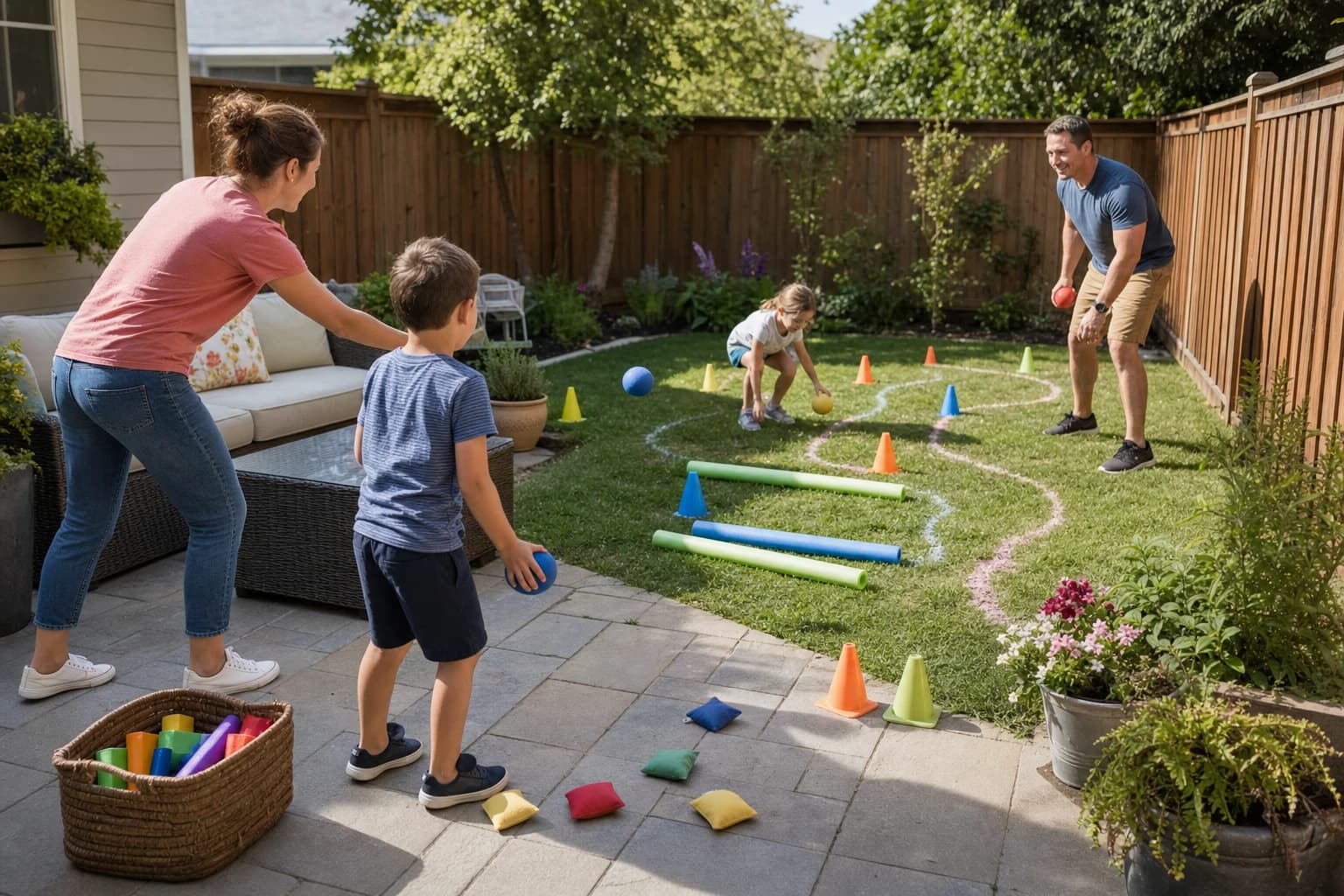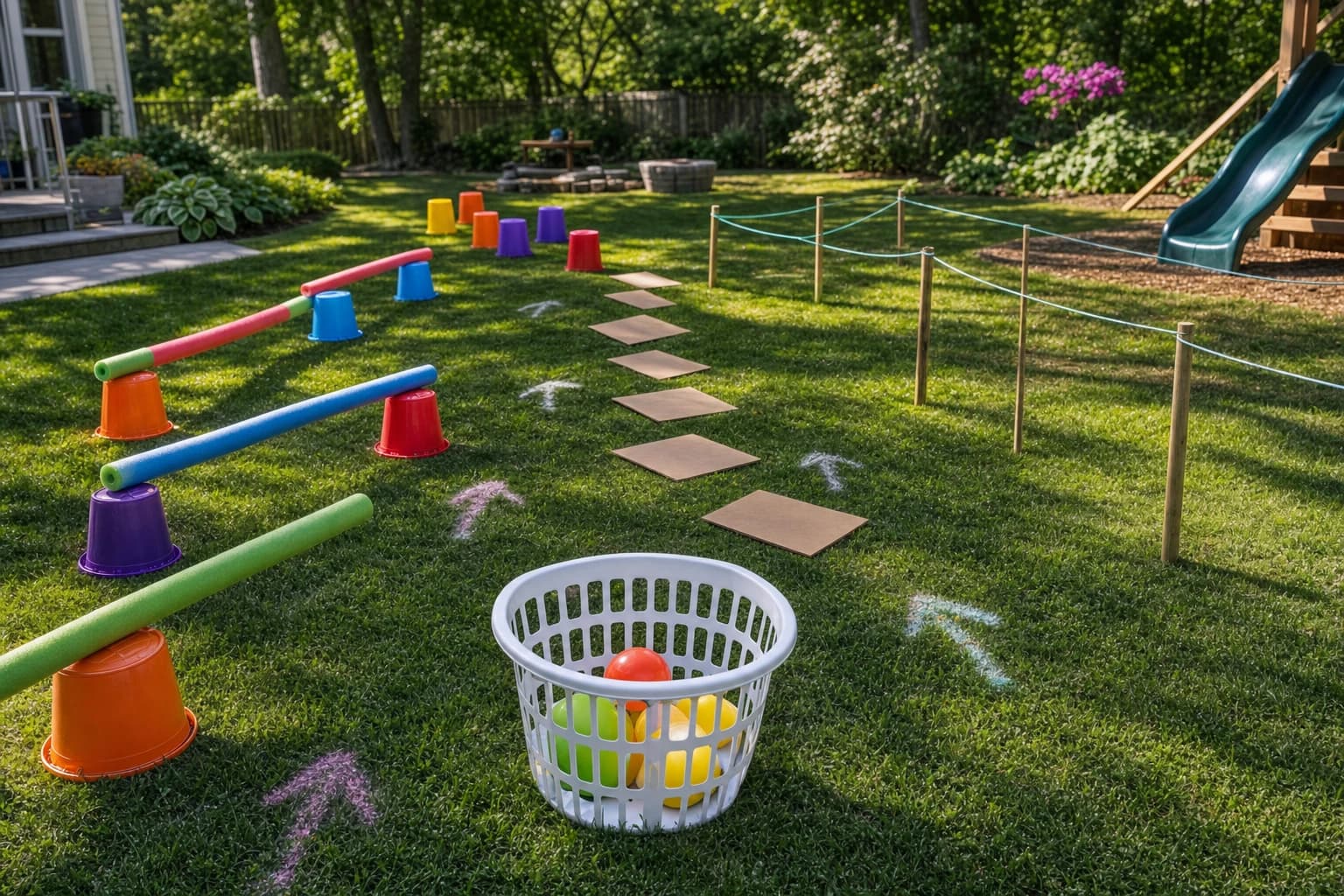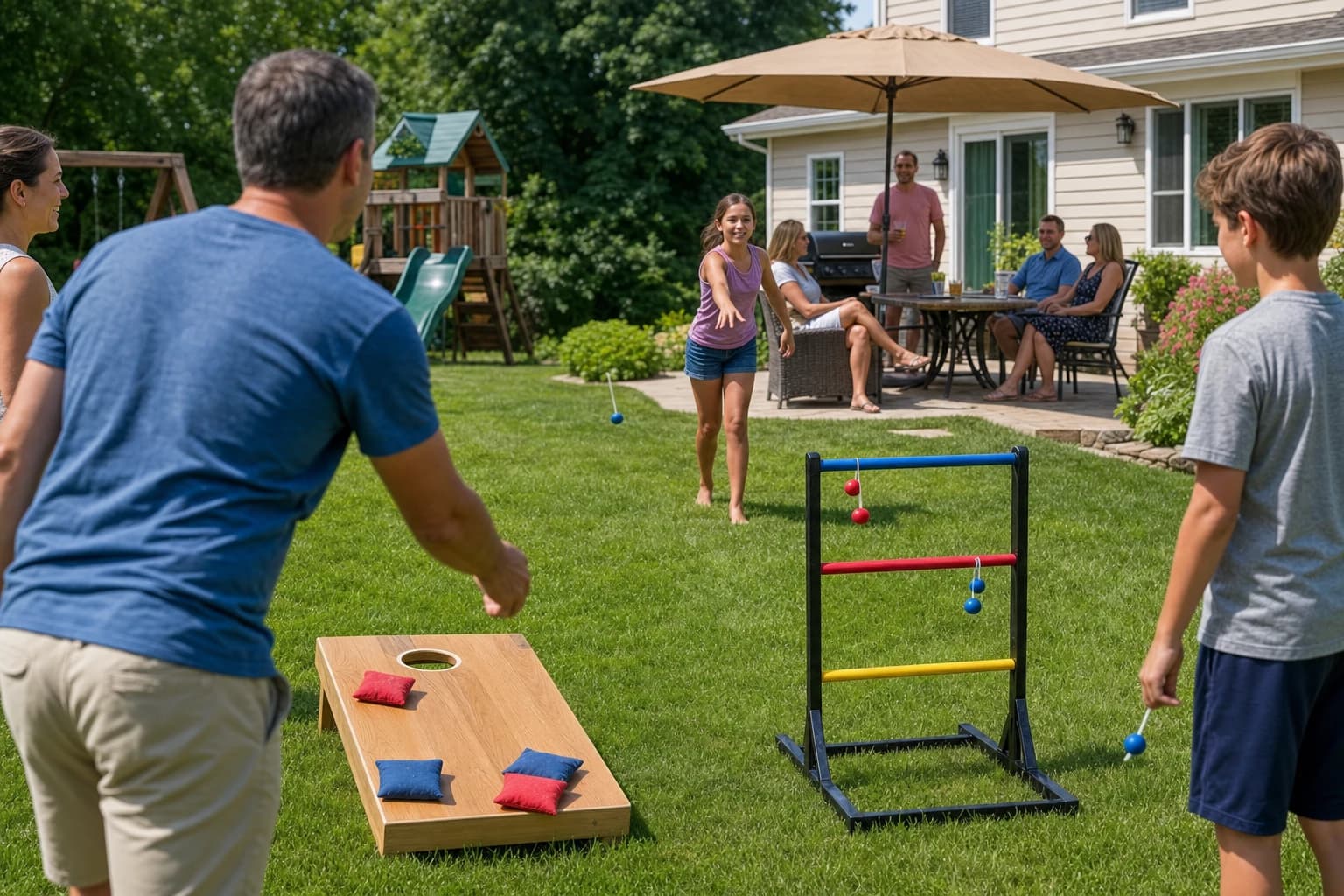
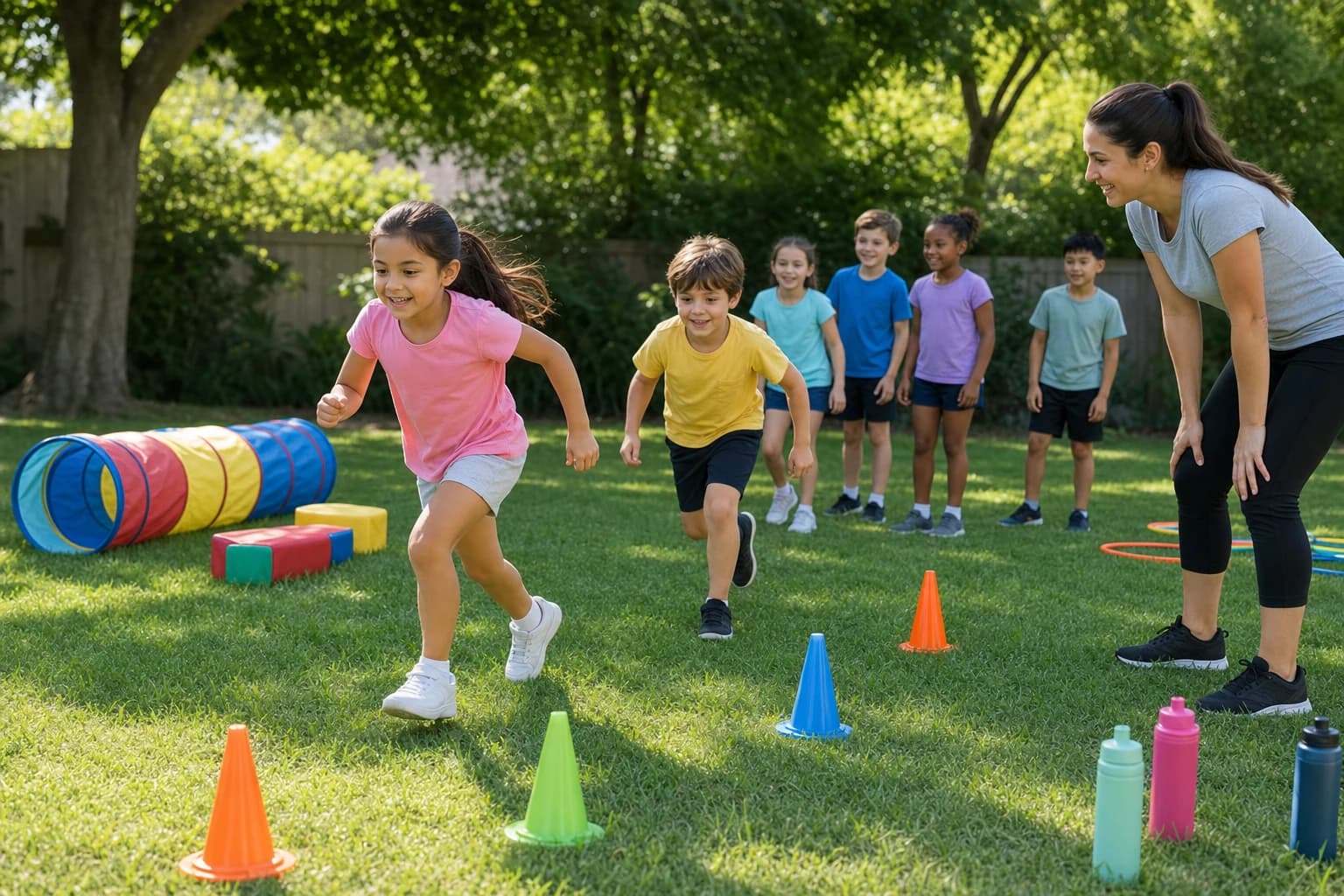
The most common mistakes planning outdoor games for kids are usually small: teams are uneven, the rules take too long to explain, the playing area is not clearly marked, or a game eliminates half the children in the first five minutes. The result is predictable: bored kids, arguments, safety worries, and adults trying to rescue a game that should have been simple.
This guide turns those planning problems into practical fixes. You will find ways to choose better games, set up safer boundaries, reduce waiting, handle weather changes, adapt for different ages, and keep every child involved longer.
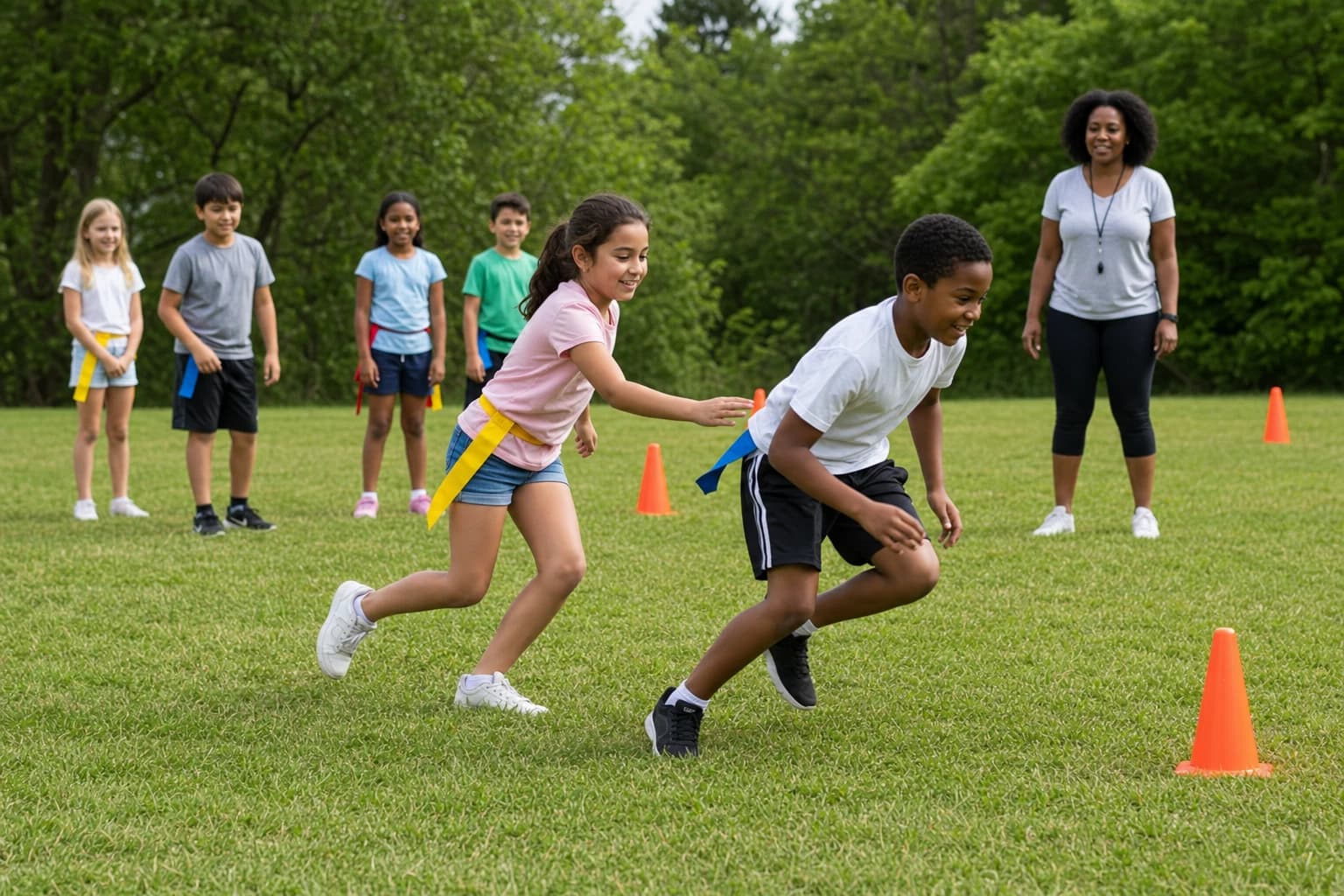
Quick answer: what makes outdoor games go wrong?
Outdoor games usually go wrong when the plan focuses only on the game idea and not on the conditions around it. A fun game on paper can fail if the yard is too small, the group is too mixed in age, the rules are confusing, or children spend more time waiting than playing.
A good outdoor game plan answers five questions before anyone starts running:
- Where can kids safely move? Mark clear edges, no-go zones, and a finish area.
- How many children are active at once? Avoid games where most of the group stands in line.
- Can younger and older kids both succeed? Adjust distances, roles, and rules.
- What happens if the weather changes? Have a shade, water, rain, or indoor backup plan.
- How does the game end? Use time limits or team challenges instead of early elimination.
If you are planning for a small space, the ideas in Outdoor Games for a 10-Person Kids Birthday Party in a Small Backyard pair well with the fixes below.
A simple planning kit for kids’ outdoor games
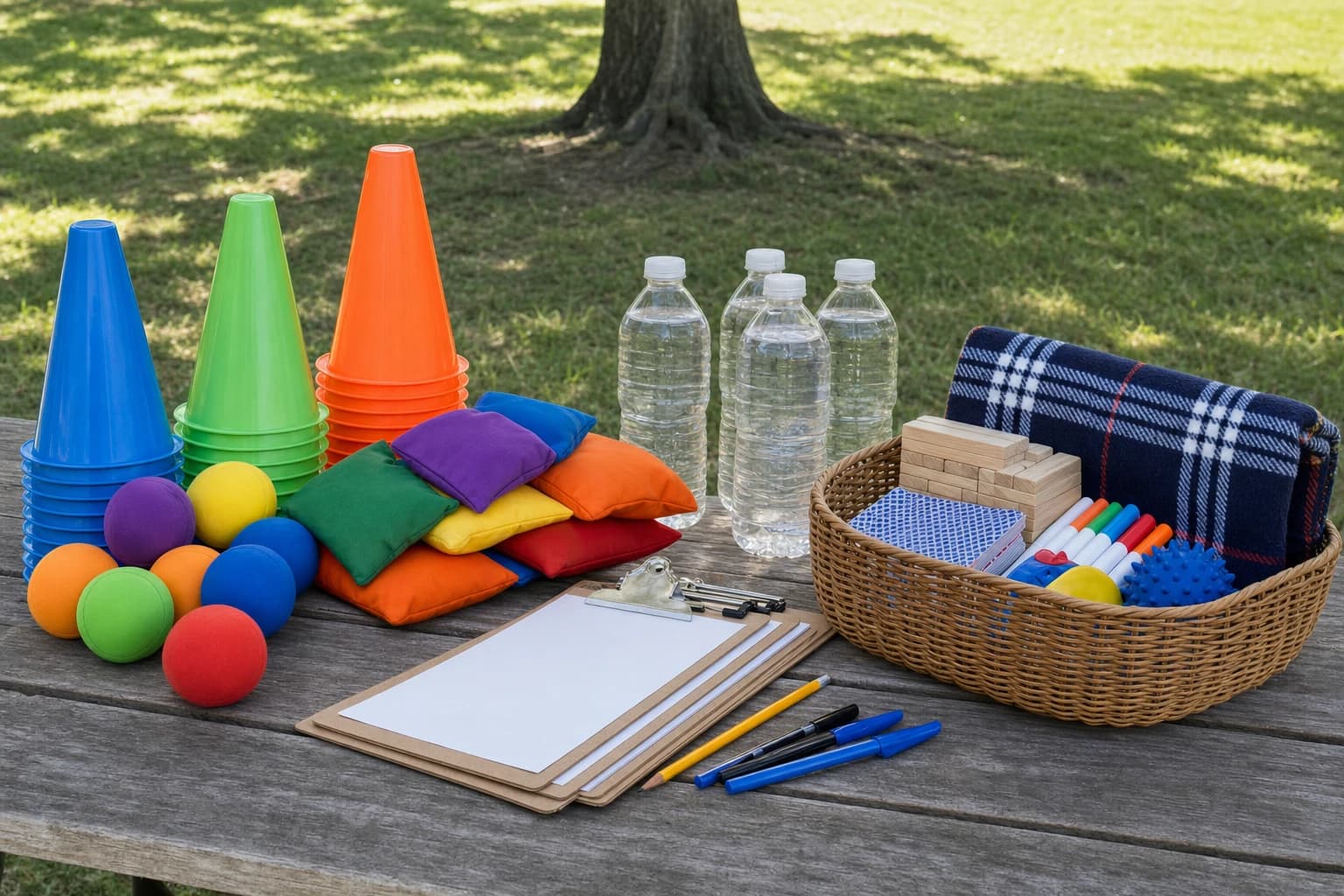
You do not need expensive equipment, but a few basic items make games easier to explain and safer to run.
- 8 to 12 cones, plastic cups, or beanbags for boundaries
- Painter’s tape or sidewalk chalk for start lines on pavement
- 1 stopwatch or phone timer
- 2 to 4 soft foam balls or beach balls, if throwing games are included
- Colored wristbands, bandanas, or stickers for quick team sorting
- Water station, shade spot, and a small first-aid kit
- Backup no-running game, such as a scavenger hunt or circle game
For a typical backyard or park gathering, plan for three short games instead of one long activity. Ten to fifteen minutes per game is enough for most children’s parties, especially when kids are excited and distracted.
Step-by-step: how to plan outdoor games that actually work
- Measure the play space before choosing the game. Walk the area and identify slopes, roots, pavement edges, garden beds, fences, and low branches. For fast running games, leave a buffer between the game boundary and hard obstacles. The U.S. Consumer Product Safety Commission’s Public Playground Safety Handbook is focused on playgrounds, but its larger point applies to organized play too: surfaces, spacing, and surrounding hazards matter.
- Choose games by movement level. Mix one high-energy game, one moderate game, and one calmer challenge. For example: relay race, scavenger hunt, then four corners. This prevents the whole event from becoming constant sprinting.
- Write the rules in three sentences. If you cannot explain the game quickly, simplify it. A good rule script is: “Your goal is to collect three beanbags. Stay inside the cones. If you get tagged, do five star jumps and rejoin.”
- Make teams after kids arrive. Do not rely on pre-planned teams if the group size might change. Sort by birthday month, shirt color, or random wristbands. Then adjust so each team has a mix of ages and abilities.
- Run a 60-second practice round. A practice round reveals confusion before the real game begins. Stop, clarify one rule, and restart.
- Use a timer instead of “last player standing.” A five-minute round keeps energy high and prevents eliminated children from drifting away.
- Rotate roles. In games with throwers, seekers, guards, or taggers, switch roles every round so the same children do not dominate or feel stuck.
Common backyard games mistakes and better fixes
| Mistake | What it looks like | Better fix |
|---|---|---|
| Uneven teams | One team has the fastest or oldest kids, so the other team gives up. | Use random teams first, then make one quiet adjustment. Split siblings or best friends if they create an obvious imbalance. |
| Too much waiting | Eight children stand in line while one child throws, jumps, or races. | Create parallel stations. Instead of one relay lane, set up two or three shorter lanes. |
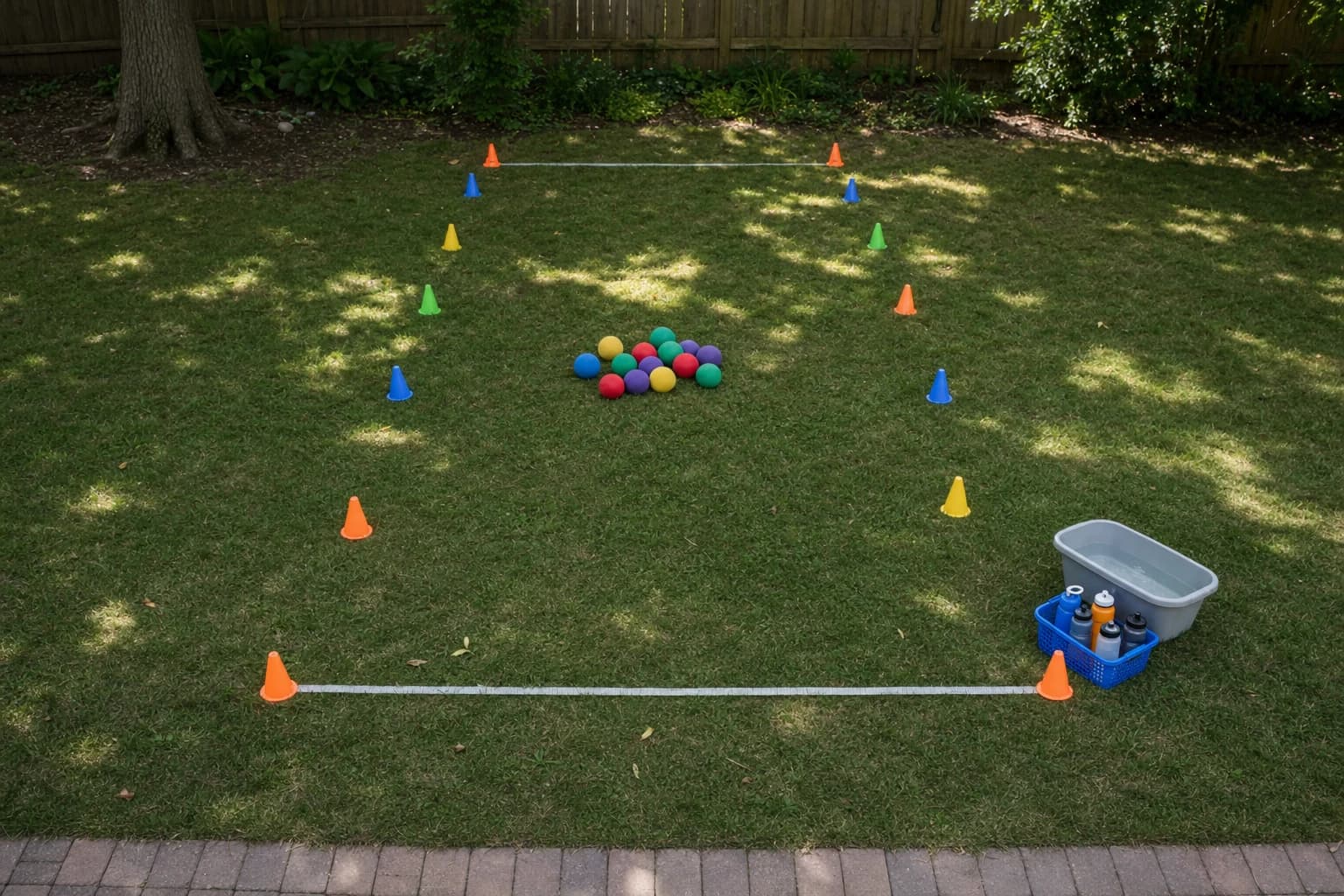
| Unsafe boundaries | Kids run toward driveways, steps, grills, flower beds, or parked cars. | Mark a smaller play zone with cones and name the out-of-bounds areas before the game starts. |
| Rules are too complicated | Children ask “Wait, what do I do?” after the game has started. | Keep one goal, one movement rule, and one restart rule. Demonstrate instead of lecturing. |
| Age mismatch | Younger kids cannot keep up; older kids get bored. | Give younger kids shorter distances or helper roles. Give older kids challenge rules, such as using their non-dominant hand. |
| Elimination happens early | Children who are “out” leave the game and start a side activity. | Use re-entry tasks: count to 10, do three jumping jacks, answer a riddle, or tag a teammate to return. |
Mistake 1: choosing a game before checking the space
A common backyard games mistake is picking a game because it sounds fun, then discovering the space is too narrow, too slippery, or full of obstacles. Tag, kickball, capture the flag, and relay races all need room to slow down safely. A small yard can still work, but the game must match the space.
For a tight backyard, choose games with short movement bursts: beanbag toss relays, color hunt, statue tag, obstacle walk, or a picture scavenger hunt. If you want a structured search game, How to Set Up a Backyard Scavenger Hunt for Kids Ages 5–10 is a good fit because it can be scaled to a small yard without requiring sprinting.
Safety check: Before play starts, remove loose hoses, garden tools, sports equipment, and small tripping hazards from the play zone. If something cannot be moved, mark it as out of bounds.
Mistake 2: making kids wait too long for turns
Long lines are one of the fastest ways to lose a group. Waiting is especially difficult for younger children, and it often leads to pushing, side conversations, or wandering into unsafe areas.
Fix this by designing games where at least half the children are active at any moment. If you have 12 kids, avoid one-at-a-time throwing games unless you create multiple targets. Set up three buckets instead of one. Use three jump ropes instead of one. Divide a relay into three small teams of four rather than two teams of six.
Another helpful rule: no turn should take longer than 20 seconds in a line-based game. If it does, shorten the course or add another station.
Mistake 3: letting elimination remove players too early
Classic elimination games can be exciting, but they are risky for children’s parties and school groups because the first children out often wait the longest. That is not a small problem; once kids are out, they may disengage, argue about calls, or start a separate game.
Use “temporary out” rules instead:
- Tag games: tagged players freeze until a teammate gives a high-five.
- Dodge-style games with soft balls: hit players move to a side task, such as tossing a beanbag into a bucket, then return.
- Relay mistakes: if a beanbag drops, the player picks it up and continues instead of restarting the whole team.
- Treasure games: if an item is stolen, the player returns to base for a new role rather than sitting out.
The goal is not to remove competition. The goal is to keep competition from turning into exclusion.
Mistake 4: ignoring age and size differences
Planning kids outdoor activities for mixed ages requires more than saying, “Everyone can play.” A 5-year-old and a 10-year-old may both enjoy the same theme, but they usually need different distances, jobs, or scoring chances.
Use flexible roles instead of identical tasks. In a capture game, younger children can guard a treasure zone, collect tokens, or act as “rescuers.” Older children can run longer routes, carry smaller objects, or follow extra movement rules such as hopping through a section. For more detail on mixed-age groups, see Common Mistakes to Avoid When Running Outdoor Games for Mixed-Age Groups.
A simple team balance method is to give each team one older child as a captain-helper, not a boss. Their job is to explain, encourage, and pass turns, not to control every decision.
Mistake 5: unclear rules and arguments about fairness
Many game arguments start because the adult explains the goal but skips the edge cases. Children need to know what counts, what does not count, and how to restart.
Before the first round, answer these out loud:
- What is the goal?
- Where are the boundaries?
- What happens if someone steps out?
- What kind of tagging or contact is allowed?
- How do players rejoin after a mistake?
- When does the round end?
For familiar sports-style games, clear rules matter even more. If you are using kickball, start with simple base-running and kicking rules instead of inventing them mid-game. You can adapt the basics from Kickball Rules for Kids: Recess, Picnic, and Backyard Games.
Mistake 6: having no weather plan
Weather does not have to cancel outdoor play, but it should change the plan. Heat, cold, rain, wind, and lightning all affect what games are sensible. For lightning safety, the National Weather Service uses the clear guidance: “When thunder roars, go indoors.” Do not try to finish one more round if thunder is heard.
For warm days, choose shorter rounds, add water breaks between games, and place the waiting area in shade. For windy days, avoid paper clues and lightweight targets unless they are clipped down. For wet grass, skip sprinting and sudden-stop games; use scavenger hunts, nature bingo, or team puzzle relays instead.
Good children outdoor party game tips include having a “Plan B” that does not feel like punishment. A covered porch, garage, classroom, or living room can host charades, circle games, or quiet team challenges if conditions change.
A practical 45-minute outdoor game plan
Here is a simple structure for a birthday party, family gathering, school club, or neighborhood playdate with 8 to 14 children.
- Minutes 0–5: arrival game. Use a no-wait activity such as bubbles, sidewalk chalk challenges, or free toss with soft balls.
- Minutes 5–15: warm-up team game. Play a short relay with three or four children per team.
- Minutes 15–20: water and rule reset. Move everyone to shade and explain the next game while they drink.
- Minutes 20–35: main game. Choose tag, scavenger hunt, kickball, or capture-the-flag style play with timed rounds.
- Minutes 35–45: calmer finish. End with a group challenge such as “build the tallest cone tower” or “find five nature colors.”
If you are planning an older kids’ party, Outdoor Birthday Party Games for Kids Ages 8–12 With Low-Cost Supplies has ideas that can be paired with this timing plan.
Quick checklist before the first game starts
- Boundaries are visible from a child’s eye level.
- Water and shade are easy to reach.
- Rules can be explained in under one minute.
- No game eliminates players permanently.
- Teams are balanced by age, size, and confidence level.
- There is a backup activity for rain, heat, or tired players.
- Adults know who is watching the play zone and who is handling supplies.
FAQ: planning safer, smoother outdoor games for kids
How many outdoor games should I plan for a kids’ party?
Plan three main games for a 60- to 90-minute party, plus one simple backup. It is better to repeat a successful game than to rush through too many activities.
What is the best way to make fair teams?
Start with random teams using colors, numbers, or wristbands, then adjust only obvious imbalances. Avoid letting the most confident children pick teams, because it can leave some kids feeling singled out.
How do I keep younger kids involved with older kids?
Use the same theme but change the task. Younger kids can run shorter distances, collect larger objects, or take helper roles, while older kids get added challenges.
Are elimination games always a bad idea?
No, but they need re-entry rules. Instead of sitting out until the round ends, a child can complete a quick task and return to play.
What should I do if the game becomes too rough?
Pause immediately, restate the contact rule, and restart with a slower version. For example, change running tag to walking tag or replace tagging with collecting tokens.
Conclusion
A successful outdoor game is not just a fun idea. It is a fun idea matched to the space, the weather, the group size, and the children’s ages. Most mistakes planning outdoor games for kids can be avoided with visible boundaries, short rule explanations, balanced teams, timed rounds, and re-entry rules that keep everyone included.
Before the next party or playdate, choose fewer games, prepare the space carefully, and keep a backup plan ready. Kids do not need a perfect event; they need clear, active, fair play that gives everyone a real chance to join in.