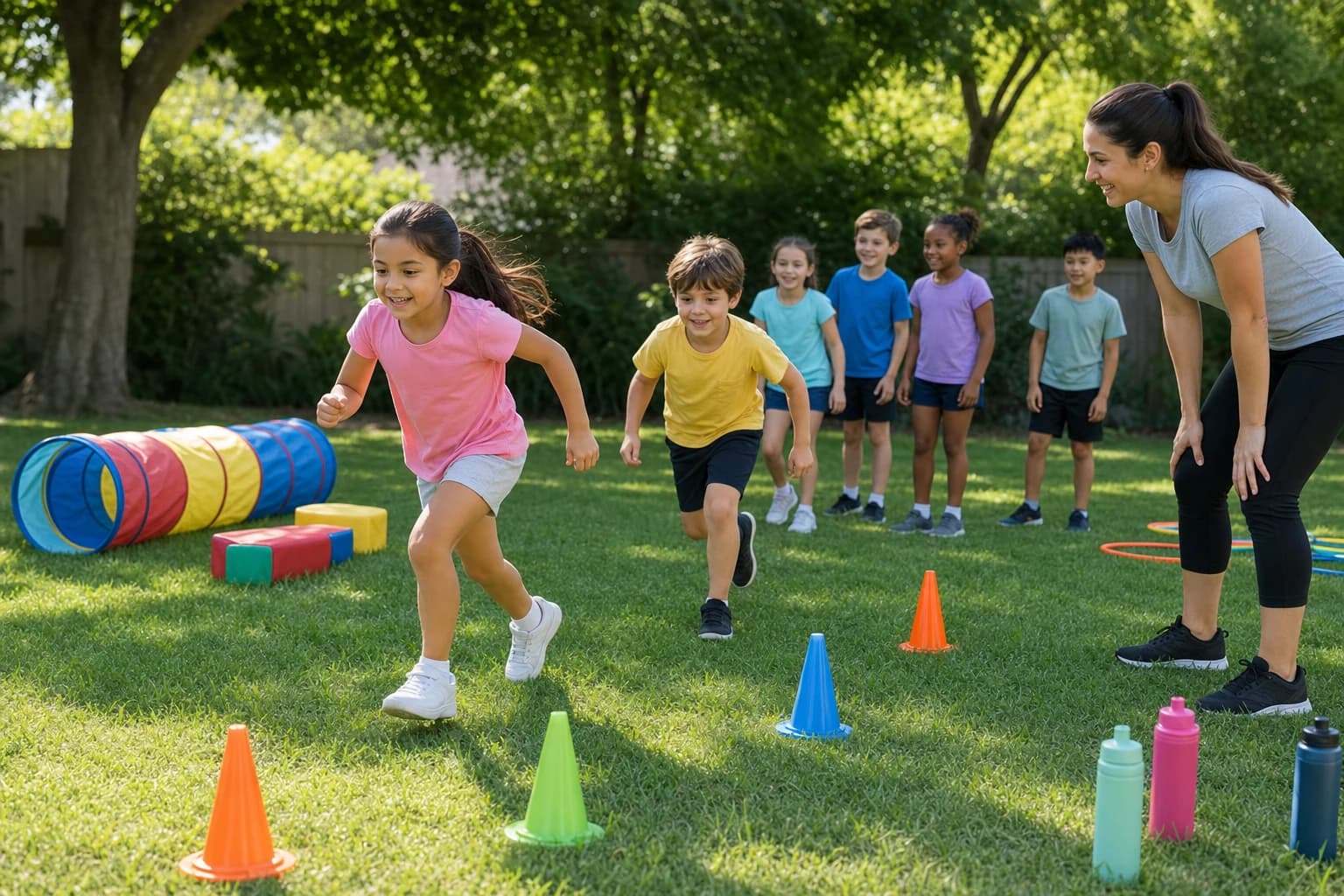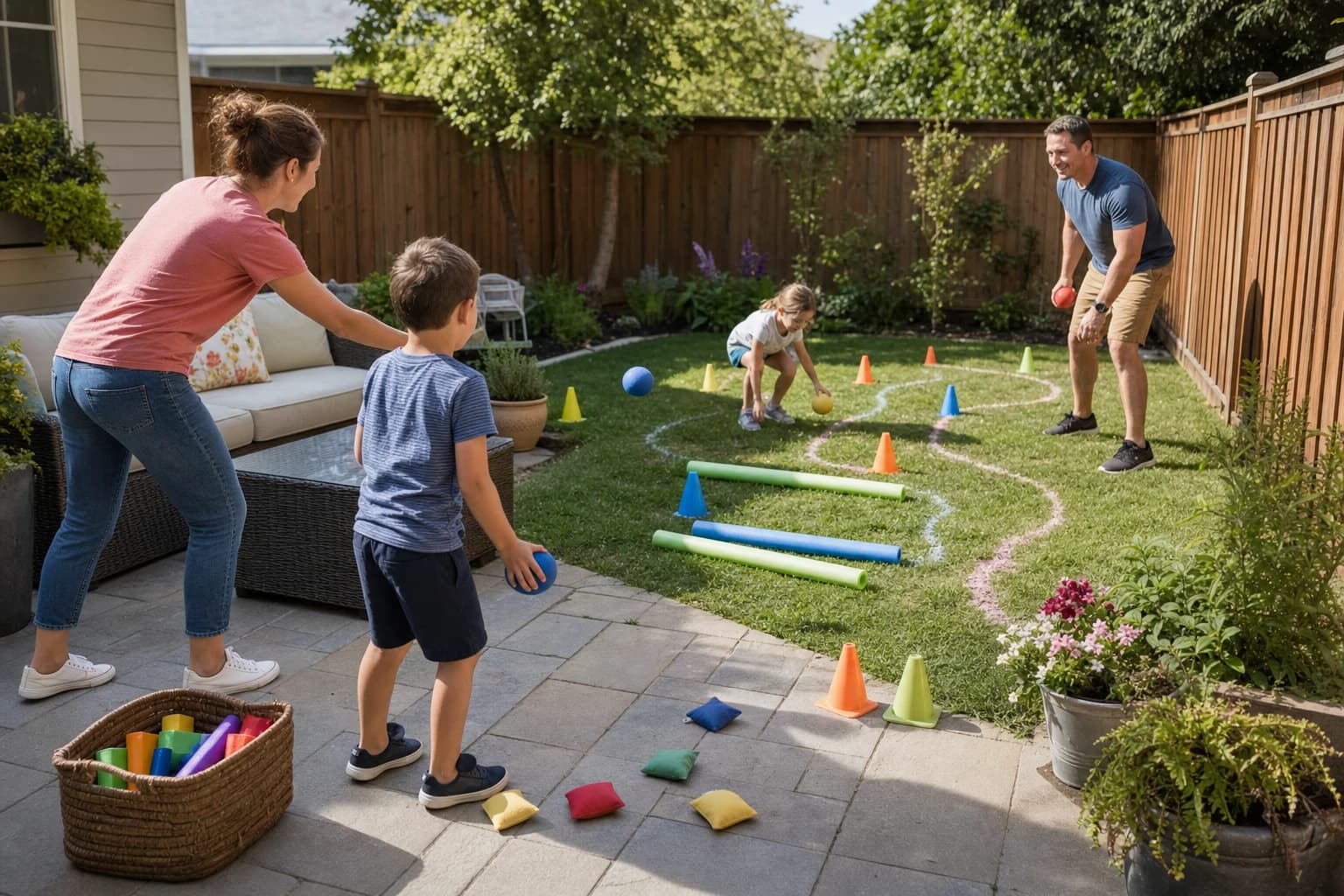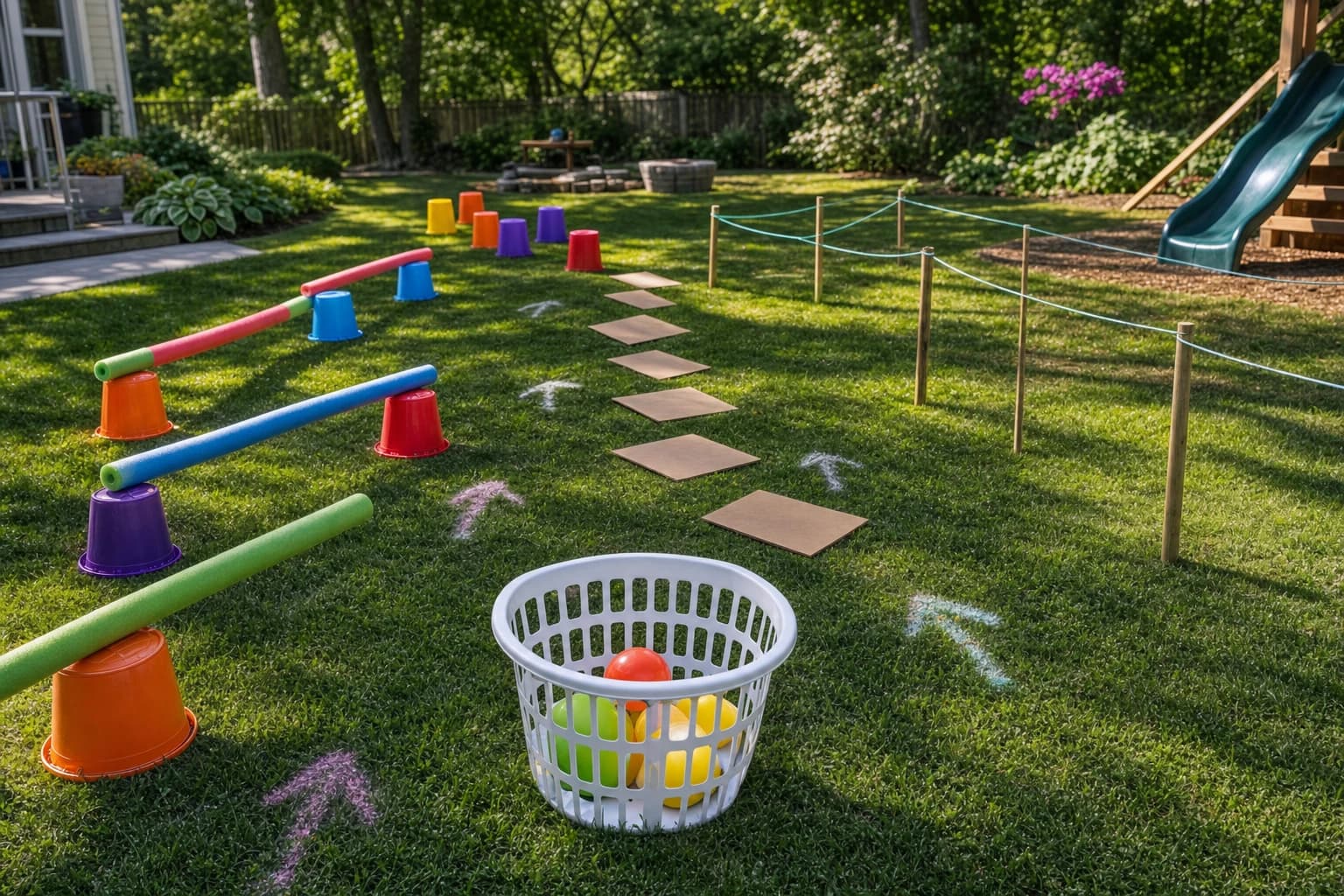
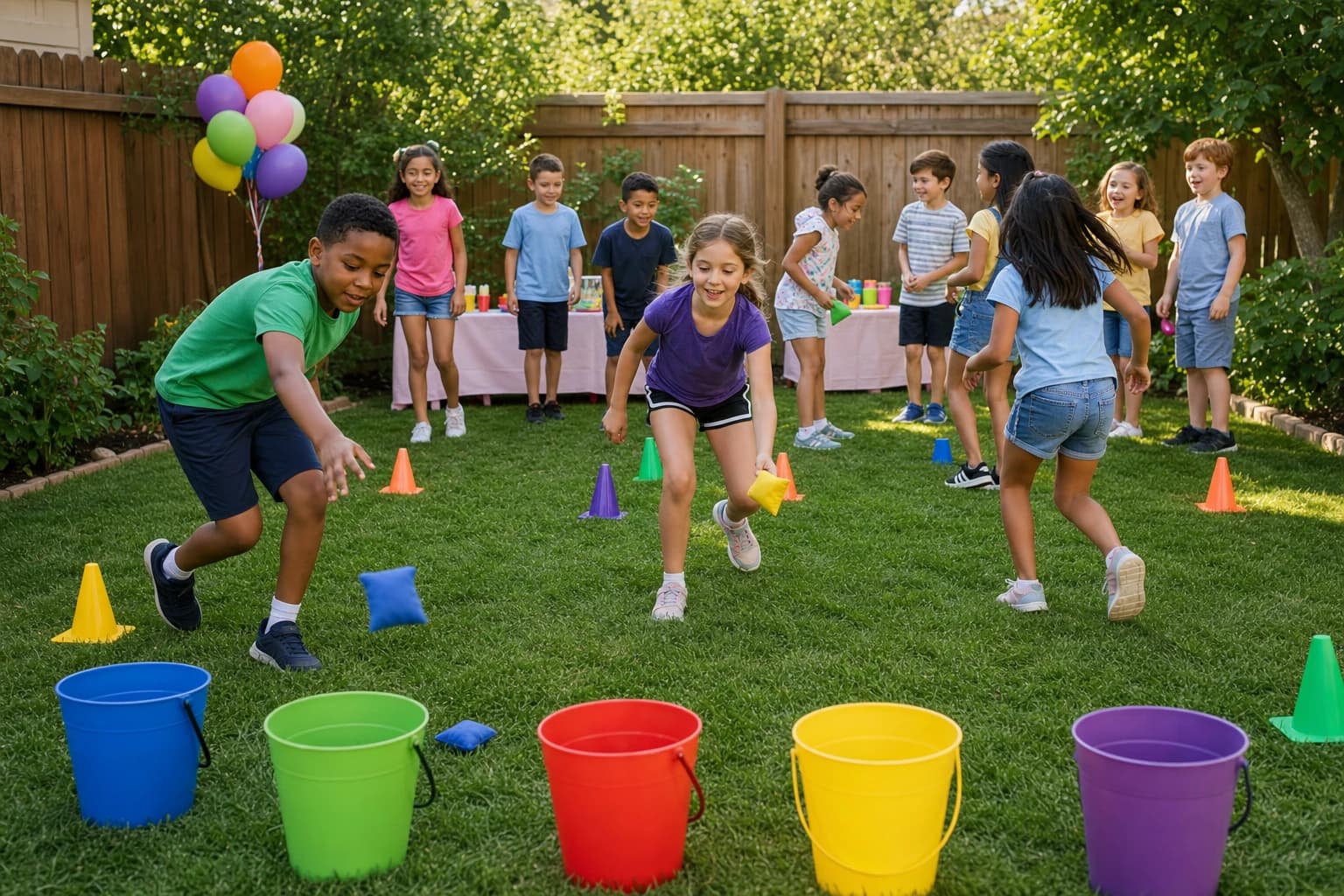
Planning outdoor games for 10 kids in a small backyard is a different job than planning field-day games. You need activities that do not require long running lanes, do not send balls over fences every two minutes, and do not leave half the children sitting out after the first round.
This guide focuses on birthday party games that work for about 10 children in a limited backyard space. Each idea includes the best age range, equipment, setup time, noise level, and a practical way to keep eliminated players involved. Most of the games use cheap supplies you may already have: cones, chalk, buckets, beanbags, pool noodles, paper clues, and a few soft balls.
Quick answer: the best backyard party format for 10 children
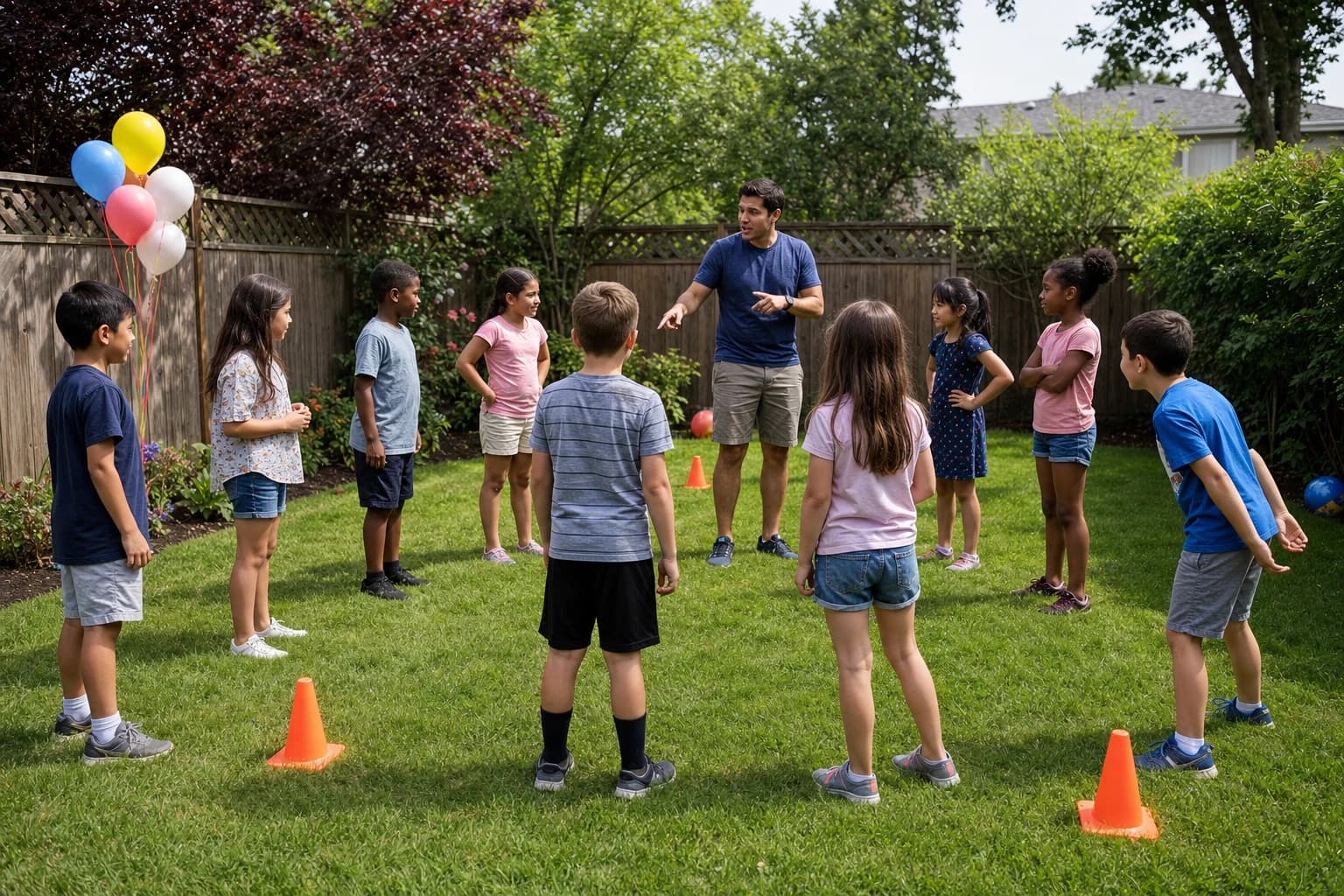
For a 10-person birthday party, the easiest format is to run games in short rounds of 6 to 10 minutes. Use two teams of five, five pairs, or one whole-group challenge. Avoid games where children sprint from one end of the yard to the other, especially if the yard has steps, garden beds, patio furniture, or a fence close to the play area.
If your yard has a clear space of about 15 by 20 feet, you can run most of the games below. If the yard is smaller, choose the station games, guessing games, scavenger hunt, and circle challenges. If you need quieter ideas because of neighbors or nap time, skip high-energy tag and use relay, toss, and puzzle-based games instead.
Simple supplies for 10 kids
- 10 plastic cups or small buckets
- 10 beanbags, rolled socks, or soft foam balls
- Sidewalk chalk or painter’s tape for boundaries
- 4 to 8 cones, plastic bottles, or pool noodles as markers
- Paper clue cards and a pencil
- 1 timer or phone stopwatch
- Optional: stickers, wristbands, or tokens for team points
Use soft equipment whenever possible. Before the party, clear wet leaves, hoses, sharp garden tools, low branches, and breakable planters from the play area. For hot weather, the CDC’s heat safety guidance recommends drinking water, taking breaks, and spending time in cooler areas during high heat.
Comparison table: small backyard party games for 10 kids
| Game | Best ages | Space needed | Equipment | Setup time | Noise level | How to keep everyone involved |
|---|---|---|---|---|---|---|
| Backyard Treasure Grid | 5–10 | Very small | Clues, tokens, chalk | 10 minutes | Low | Children solve in pairs; no one is out |
| Bucket Beanbag Relay | 5–12 | Small lane | Beanbags, buckets | 5 minutes | Medium | Missed tosses become retry turns, not elimination |
| Statue Switch | 4–9 | Small open area | Music optional | 2 minutes | Medium | Frozen players become judges or pose callers |
| Pool Noodle Pass | 6–12 | Circle space | Pool noodles, foam ball | 3 minutes | Medium | Whole group plays toward a shared score |
| Animal Corners | 4–8 | Four corners | Signs or chalk | 5 minutes | Medium | Out players roll the die or call the next animal |
| Sock Ball Target Course | 5–12 | Along fence or patio | Rolled socks, targets | 8 minutes | Low | Players rotate through stations |
| Mini Mission Scavenger Hunt | 5–10 | Whole yard | Clue cards | 15 minutes | Low | Pairs collect different clues at the same time |
| Shadow Tag Zone | 6–10 | Small sunny area | Chalk boundary | 2 minutes | Medium | Tagged players become safe-zone guards |
| Cup Stack Dash | 6–12 | Table or patio | Plastic cups | 3 minutes | Medium | Teams race against the clock together |
| Birthday Delivery Challenge | 5–11 | Short path | Tray, soft items | 5 minutes | Medium | Everyone has a role: runner, loader, checker, coach |
10 outdoor games for 10 players in a small backyard
1. Backyard Treasure Grid
This is a compact alternative to a running scavenger hunt. Draw a 4-by-4 grid on the patio with chalk, or place 16 paper squares on the grass. Hide 10 small tokens under cups, behind plant pots, or inside envelopes. Each pair gets one clue at a time, such as near something green or beside a place where people sit.
- Divide 10 children into five pairs.
- Give each pair a first clue and a small bag or cup for tokens.
- When a pair finds a token, they bring it to the host and receive the next clue.
- End after 8 minutes or when all tokens are found.
Best for: ages 5 to 10. Setup: 10 minutes. Noise: low. Elimination fix: no elimination. If one pair finishes early, make them clue helpers who can give one hint per minute.
If you like this format, a full themed version is covered in How to Set Up a Backyard Scavenger Hunt for Kids Ages 5–10.
2. Bucket Beanbag Relay
Set two buckets at one end of the yard and two throwing lines 6 to 8 feet away. Split the children into two teams of five. One player at a time tosses three beanbags or rolled socks into the team bucket. After three throws, the player runs or walks back and tags the next teammate.
Use a short throwing distance for younger children and increase it by 1 foot for older children who need a challenge. The goal is not to knock anyone out; the team tries to reach a total score, such as 20 successful tosses, before the timer ends.
Best for: ages 5 to 12. Equipment: 2 buckets and 6 beanbags. Setup: 5 minutes. Noise: medium. Elimination fix: missed tosses simply go back into the pile. Children waiting in line count points and cheer softly.
3. Statue Switch
Statue games work well in small backyard party games because movement is controlled. Play music for 20 to 30 seconds while children dance, walk like robots, hop in place, or move like animals. When the music stops, everyone freezes. Instead of removing players who wobble, give them a job.
- Pick one child as the first pose caller.
- The caller announces a theme: superhero, dinosaur, birthday cake, sleepy cat.
- Everyone moves until the music or timer stops.
- Anyone who moves after the stop becomes a judge, sound-effect maker, or next pose caller.
Best for: ages 4 to 9. Setup: 2 minutes. Noise: medium, depending on music. Elimination fix: children rotate into helper roles for one round, then rejoin.
4. Pool Noodle Pass
Give each child half a pool noodle or a short cardboard tube. The group stands in a loose circle. Place one foam ball or balloon in the circle and challenge the group to pass it around using only the noodles. They cannot hold the ball with their hands.
For a cooperative version, count how many successful passes the group can make in 2 minutes. For a team version, split into two circles of five and compare scores. Keep the ball soft and light so it does not hurt if it drops on feet.
Best for: ages 6 to 12. Equipment: 5 pool noodles cut in half and 1 foam ball. Setup: 3 minutes. Noise: medium. Elimination fix: if someone drops the ball, the team loses one point but the player stays in.
5. Animal Corners
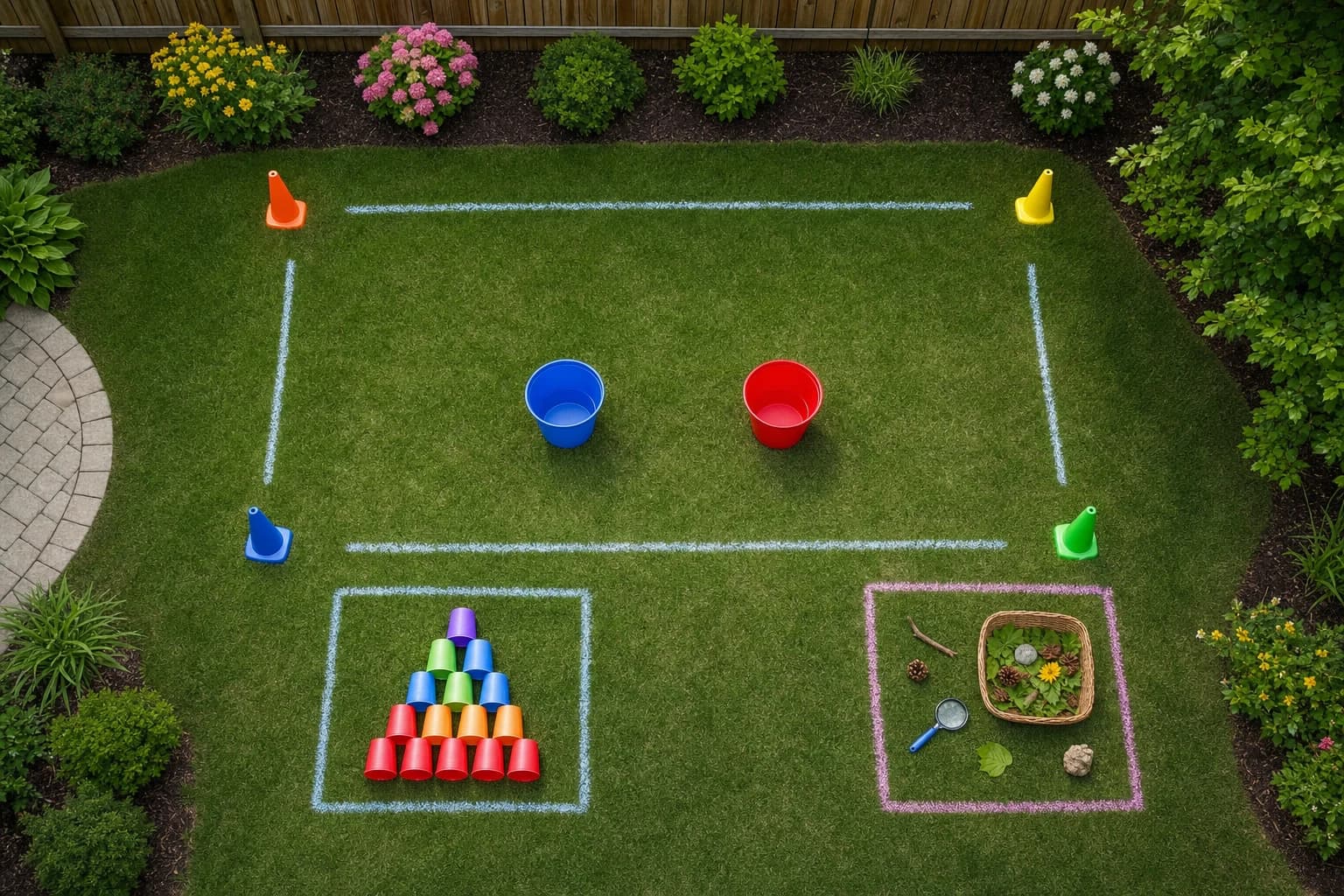
Mark four corners of the yard as four animals: lion, penguin, frog, and turtle. One child stands in the middle with eyes closed while the other children choose a corner. The middle player calls one animal. Everyone in that corner performs the animal movement to the center and back.
For a more active version, the called corner earns a point for completing the movement neatly. For a quieter version, children act out the animal silently and the middle player guesses which corner sounds or movements they heard.
Best for: ages 4 to 8. Equipment: four signs or chalk labels. Setup: 5 minutes. Noise: medium. Elimination fix: no one is out; called players do an action, earn a point, or become the next caller.
6. Sock Ball Target Course
This is a good game when you have a fence, wall, patio edge, or table you can use for targets. Set up five stations: a bucket toss, a cone knockdown, a chalk circle landing zone, a cup tower, and a low hanging hoop made from a hula hoop or rope circle. Children move through the course in pairs.
Give each pair two rolled socks. They get two tries at each station, then move on. Use a scorecard if the children enjoy points, or make it a challenge to complete all five stations as a group before the timer reaches 12 minutes.
Best for: ages 5 to 12. Setup: 8 minutes. Noise: low. Elimination fix: players rotate continuously. Early finishers reset fallen cups and return socks to the starting basket.
7. Mini Mission Scavenger Hunt
A mission hunt is better than a free-for-all hunt in a small yard because it prevents crowding. Instead of hiding 50 objects, prepare 10 cards with tasks: find something rough, spot something shaped like a circle, count three red items, or locate the birthday ribbon.
Pair the children and give each pair a different starting card. When they complete it, they report back for the next card. This keeps children moving but not sprinting. Add one silly group finale, such as everyone forming the shape of the birthday child’s age.
Best for: ages 5 to 10. Equipment: 10 mission cards. Setup: 15 minutes. Noise: low. Elimination fix: no elimination. Give stuck pairs a hint token they can use once.
8. Shadow Tag Zone
If the yard is sunny, draw a safe rectangular zone with chalk or mark it with cones. One player is the shadow tagger. Instead of touching another child, the tagger steps on a player’s shadow. This keeps contact low and works in a small area because children move carefully to protect their shadows.
Use 45-second rounds. When someone is tagged, they stand on the boundary and become a safe-zone guard who counts down from 10 if players crowd the edge. Rotate the tagger often so no one is stuck in the same role.
Best for: ages 6 to 10. Setup: 2 minutes. Noise: medium. Elimination fix: tagged players help manage the boundary, then rejoin next round. For more tag variations, see 10 No-Equipment Tag Games for Elementary School Recess.
9. Cup Stack Dash
Place two sets of 10 plastic cups on a patio table or flat ground. Split the children into two teams of five. Each team must build a pyramid with 4 cups on the bottom row, then 3, then 2, then 1. The first player places two cups, runs back, and tags the next player.
After the pyramid is built, the team must unstack it into one neat tower. If cups fall, the next player fixes them before continuing. This game gives high-energy children a challenge without needing a large yard.
Best for: ages 6 to 12. Equipment: 20 plastic cups. Setup: 3 minutes. Noise: medium. Elimination fix: everyone takes repeated turns until the tower is built and reset.
10. Birthday Delivery Challenge
Set up a short delivery path with four markers: pick-up, tunnel, turn, and drop-off. Each team carries soft birthday items, such as wrapped empty boxes, plush toys, or beanbags, on a tray. The goal is to deliver as many items as possible in 5 minutes without dropping them.
Make the roles specific: one child loads the tray, one carries, one unloads, one resets dropped items, and one counts deliveries. After each minute, rotate roles. This prevents the fastest child from dominating the whole game.
Best for: ages 5 to 11. Equipment: two trays and 10 soft items. Setup: 5 minutes. Noise: medium. Elimination fix: every child has a job, and dropped items are simply returned to pick-up.
How to run the party without chaos
The games matter, but the flow matters just as much. Ten excited children can make a small backyard feel crowded if everyone is waiting with nothing to do. A simple schedule helps.
- Start with a no-elimination warm-up for 8 minutes. Statue Switch or Animal Corners works well while guests arrive.
- Move to one team game for 10 minutes. Bucket Beanbag Relay or Cup Stack Dash gives the party energy early.
- Use a quieter middle activity for 12 minutes. Treasure Grid or Mini Mission Scavenger Hunt gives children a reset.
- Finish with a cooperative challenge for 8 minutes. Pool Noodle Pass or Birthday Delivery Challenge ends with group cheering instead of winners and losers.
- Keep a backup indoor plan. If rain arrives or the yard becomes too slippery, switch to simple no-running activities. You may find ideas in 25 Indoor Birthday Party Games for Kids Ages 6–10 With Simple Rules.
Tips for small-yard success
- Use visible boundaries. Chalk lines, cones, jump ropes, or painter’s tape help children understand where play begins and ends.
- Keep rounds short. A 6-minute game that ends while children still like it is better than a 20-minute game that drags.
- Give waiting children jobs. Scorekeeper, timer, equipment resetter, judge, clue helper, and cheer captain are useful roles.
- Avoid hard balls. Foam balls, balloons, rolled socks, and beanbags are better for fences, windows, and younger guests.
- Separate food from play. Put cake, drinks, and gift tables outside the running zone so children are not dodging chairs.
Common mistakes to avoid
The biggest mistake is choosing games designed for a school field. Traditional kickball, long relay races, and wide tag games can be fun, but they need room. If you do want to adapt kickball, use a foam ball, shorten the bases, and read child-friendly rules first, such as Kickball Rules for Kids: Recess, Picnic, and Backyard Games.
Another mistake is using strict elimination. In a small party, an eliminated child has nowhere interesting to go and may wander into the play area. If a game usually removes players, change the rule so they become helpers for one round and then return.
Finally, do not schedule every minute. Leave a 10-minute buffer for bathroom breaks, water, sunscreen reapplication when needed, cake timing, and children who want to repeat a favorite game.
FAQ: outdoor games for 10 kids in a small backyard
How much space do I need for 10 kids to play outside?
You can run many games in a clear area around 15 by 20 feet, especially toss games, circle games, clue hunts, and short relays. If your yard is smaller, avoid chasing games and use stations or pairs.
What are the best outdoor games for mixed ages?
Treasure Grid, Sock Ball Target Course, Animal Corners, and Birthday Delivery Challenge adapt well because younger children can stand closer, get easier clues, or take simpler roles while older children get harder tasks.
How do I stop eliminated players from getting bored?
Do not fully eliminate them. Give them a one-round job such as timer, boundary guard, clue helper, scorekeeper, cup resetter, or caller. Then bring them back into the next round.
What if the backyard has a patio and not much grass?
Choose games with chalk lines, cups, buckets, trays, and clues. Cup Stack Dash, Treasure Grid, Sock Ball Target Course, and Mini Mission Scavenger Hunt all work on a patio if the surface is dry and not slippery.
Should I choose competitive or cooperative games?
Use a mix. One or two team competitions are exciting, but cooperative games reduce arguments and help the party end calmly. For more non-elimination ideas, see 15 Cooperative Playground Games for Kids That Do Not Eliminate Players.
Conclusion
A small backyard can still handle a lively 10-child birthday party if the games are designed for short turns, clear boundaries, and shared participation. The safest choices are not always the quietest or slowest; they are the games where children know where to stand, what to do next, and how to rejoin if they make a mistake.
For most parties, pick four games: one warm-up, one team challenge, one clue or target activity, and one cooperative finale. Prepare the supplies before guests arrive, keep water breaks built into the schedule, and use helper roles so no child spends the party sitting out.