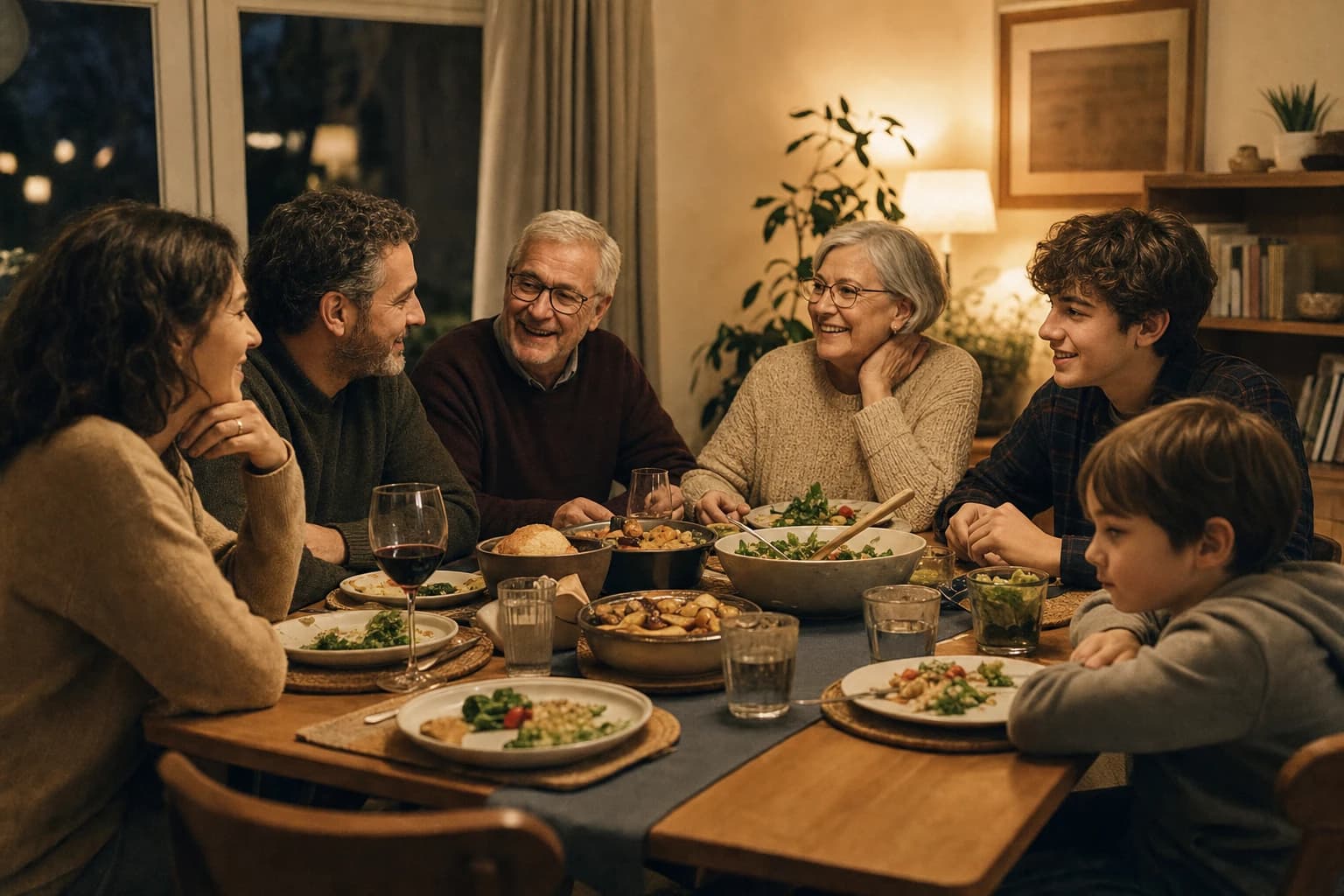
Some children want to be included at dinner but freeze when everyone turns to them. The goal is not to “fix” a shy child or force them to talk. The goal is to make the table feel predictable, kind, and easy to enter.
These family conversation games for shy kids are designed around emotional safety: no teasing, no surprise spotlight, no personal questions that feel too big, and always a respectful way to pass. They work as dinner table games for families because they need no supplies, do not interrupt the meal, and can include grandparents, teens, younger children, and adults without making anyone perform.
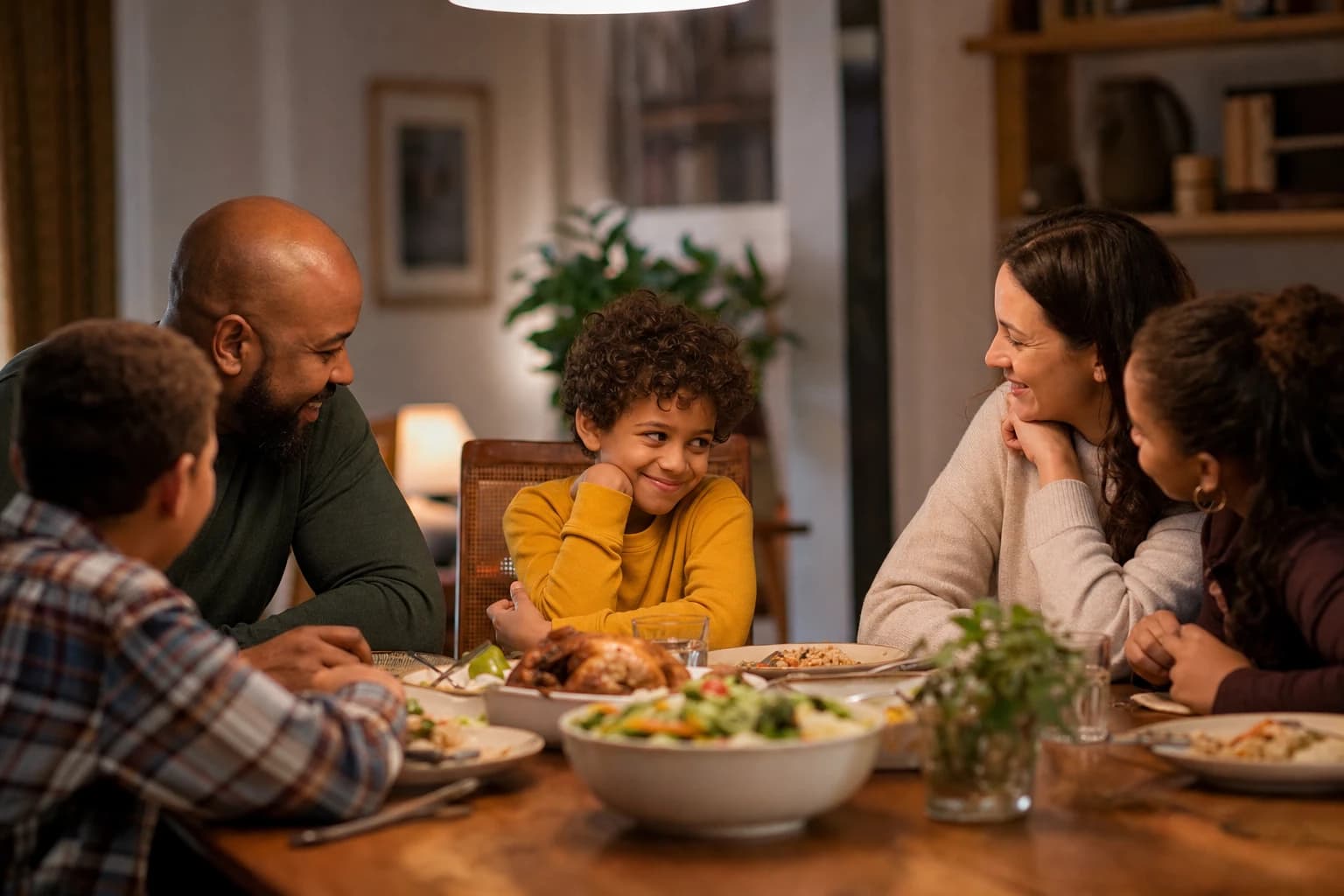
The simple rule: make participation predictable
Shy children often do better when they know what is coming. A game with clear rules can feel safer than an open-ended “So, how was your day?” because the child understands the size of the answer expected.
Keep turns short, make passing normal, and choose prompts that can be answered with one word, a gesture, or a tiny explanation. Harvard’s Center on the Developing Child describes the importance of responsive back-and-forth interaction in child development, often called “serve and return.” Dinner conversation can support that kind of interaction when adults respond warmly rather than interrogate or correct. You can read more from Harvard here: Serve and Return.
A helpful dinner game sounds like an invitation: “You can answer, point, or pass.” It does not sound like a test: “Come on, tell everyone.”
Before you play: the emotional safety rules
These rules matter more than the game itself. Say them out loud the first few times so everyone, especially enthusiastic adults and siblings, knows the tone.
- The pass rule: Anyone may say “pass” with no follow-up question. Do not ask “Why?”
- The small answer rule: One word counts. A nod, thumbs-up, or pointing to another person’s answer can count too.
- The no-correction rule: Do not fix grammar, pronunciation, memory, or opinion during the game.
- The no-teasing rule: Funny is fine; making someone the joke is not.
- The return-later rule: A child can answer after two other turns if they need time to think.
- The adult-models-first rule: Adults give short, imperfect answers first so children see the expected size.
Topics to avoid at the dinner table
For shy kids, the subject can matter as much as the format. Avoid prompts that put a child’s performance, friendships, body, grades, mistakes, fears, or private feelings on display. Also avoid “family debate” topics that adults may enjoy but children cannot easily leave, such as politics, money stress, discipline, or arguments from earlier in the day.
Safer topics include food preferences, imaginary choices, gentle memories, animals, weather, simple “would you rather” choices, and shared observations. If a prompt accidentally lands badly, simply say, “Let’s skip that one,” and move on without apology or analysis.
How to start in 10 minutes or less
You do not need cards, dice, a board, or an app. These are family games without supplies, which makes them easy to repeat on busy nights.
What you need
- Supplies: none
- Time: 5 to 12 minutes
- Best group size: 3 to 8 people at the table
- Difficulty: easy
- Optional: a visible kitchen timer set to 8 minutes if your family likes a clear ending
Step-by-step setup
- Choose one game only. Do not introduce five options at once. Pick a simple format and repeat it for several dinners.
- Announce the pass rule. Say, “Passing is part of the game. No one has to explain.”
- Start with adults. Let a calm adult answer first in one sentence. This lowers the pressure.
- Use a soft turn order. Go around the table, but allow “pass and come back.” Avoid pointing suddenly at the shy child.
- Stop while it is still pleasant. End after one round or about 10 minutes. A short successful game is better than a long tiring one.
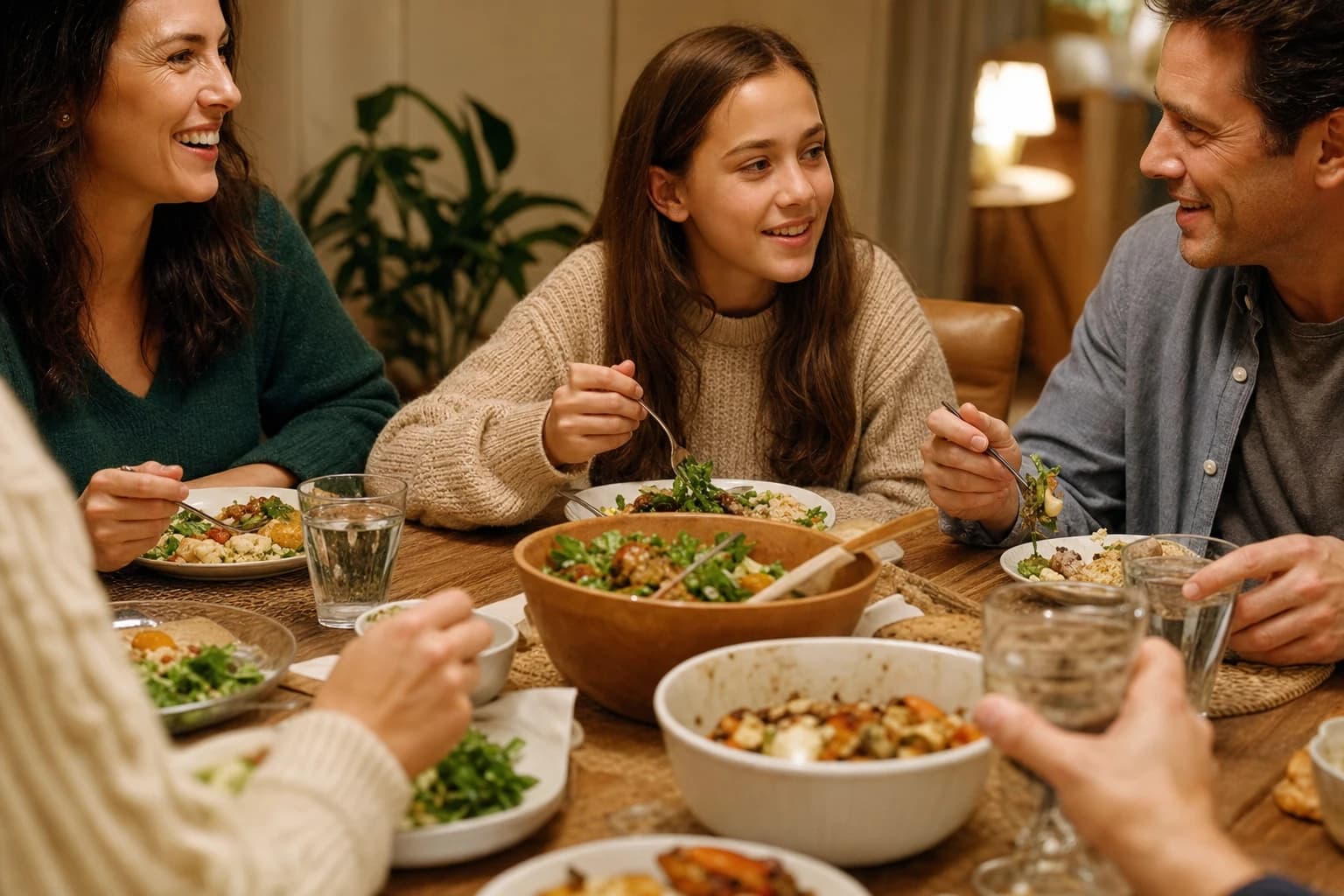
7 gentle family conversation games for shy kids
The games below are intentionally small. They are not icebreakers for a stage; they are dinner table tools for everyday connection.
1. Pass, Pick, or Add
One person names a light category, such as “breakfast foods,” “animals,” or “places to sit.” Each person may pass, pick one item, or add a detail to someone else’s answer.
Example: Adult: “Pancakes.” Teen: “Pass.” Younger child: “Dog.” Grandparent: “I’ll add to pancakes: blueberries.”
This game helps shy kids because they can participate by building on an answer instead of creating one from nothing.
2. This or That, No Reason Needed
Offer two choices: “Soup or sandwich?” “Moon or stars?” “Library or park?” Players can answer with one word. Reasons are optional, never required.
To keep it safe, avoid loaded pairs such as “Mom or Dad?” or “Best friend or sibling?” Stick to low-stakes choices. This is one of the easiest conversation games for kids and adults because every age can answer at the same level.
3. Two Good Options
Instead of “What was the best part of your day?” ask everyone to choose between two gentle positives: “Which was nicer today: something warm or something quiet?” or “Which would you want tomorrow: extra sunshine or extra music?”
Shy children who dislike daily reporting may find this easier because they do not have to reveal school details or social experiences.
4. The Tiny Story Chain
Each person adds exactly three words to a silly shared story. Three words are enough to be playful but not enough to feel like public speaking.
Example: “The sleepy turtle...” “found a purple...” “sandwich under Grandma’s...” “favorite blue chair.”
Allow anyone to say “skip” or repeat the last three words if they get stuck. Teens often enjoy making the story absurd, while younger children like hearing adults be silly.
5. Guess My Gentle Preference
One person silently chooses between two harmless preferences, such as “apple or banana.” Others guess. The chooser only has to say “yes” or “not this time.”
For a shy child, being the chooser can feel safer than explaining an opinion. If that is still too much, let them be a guesser only.
6. One-Word Weather Report
Everyone describes their current mood as weather: sunny, cloudy, windy, foggy, snowy, or stormy. No one has to explain the reason.
This can help families notice feelings without turning dinner into a counseling session. Keep responses neutral: “Thanks for telling us,” not “Why are you stormy?”
7. Compliment the Room, Not the Person
Direct compliments can embarrass shy children. Instead, invite comments about the shared environment: “Name one thing at the table that is useful, pretty, funny, or cozy.”
Answers might include “the big spoon,” “the warm bread,” or “Grandpa’s mug.” It trains noticing and gratitude without making a child the center of attention.
Which game should you choose tonight?
| Game | Best for | Pressure level | Good answer size |
|---|---|---|---|
| Pass, Pick, or Add | Kids who need choices | Very low | One word or copied idea |
| This or That | Mixed ages and busy meals | Very low | One word |
| Two Good Options | Children who dislike “How was school?” | Low | One short phrase |
| Tiny Story Chain | Silly families, teens, younger kids | Medium-low | Exactly three words |
| Guess My Gentle Preference | Grandparents and kids together | Low | Yes/no or one guess |
| Weather Report | Quiet emotional check-ins | Low if no follow-up | One weather word |
| Compliment the Room | Children embarrassed by praise | Very low | One object named |
Adaptations for different ages and personalities
For preschoolers and early elementary kids
Use concrete choices: cats or dogs, noodles or rice, red or blue. Let them point, whisper to a parent, or act out an answer. Keep turns moving quickly because waiting can be harder than talking.
For tweens and teens
Do not make the game sound babyish. Try “quick table question” instead of “conversation game.” Give teens permission to pass without commentary. They may participate more when they see adults respecting their boundaries.
For grandparents
Choose prompts that do not rely on fast hearing, quick recall, or current slang. “Name a food you liked as a child” is usually better than “Explain your most embarrassing school memory.” If grandparents enjoy longer stories, set a gentle limit: one minute per person, then invite follow-up after dinner.
For siblings who dominate
Give enthusiastic talkers a job: they can be the prompt chooser, timekeeper, or “pass protector” who reminds everyone that passing is allowed. This helps them contribute without taking every turn.
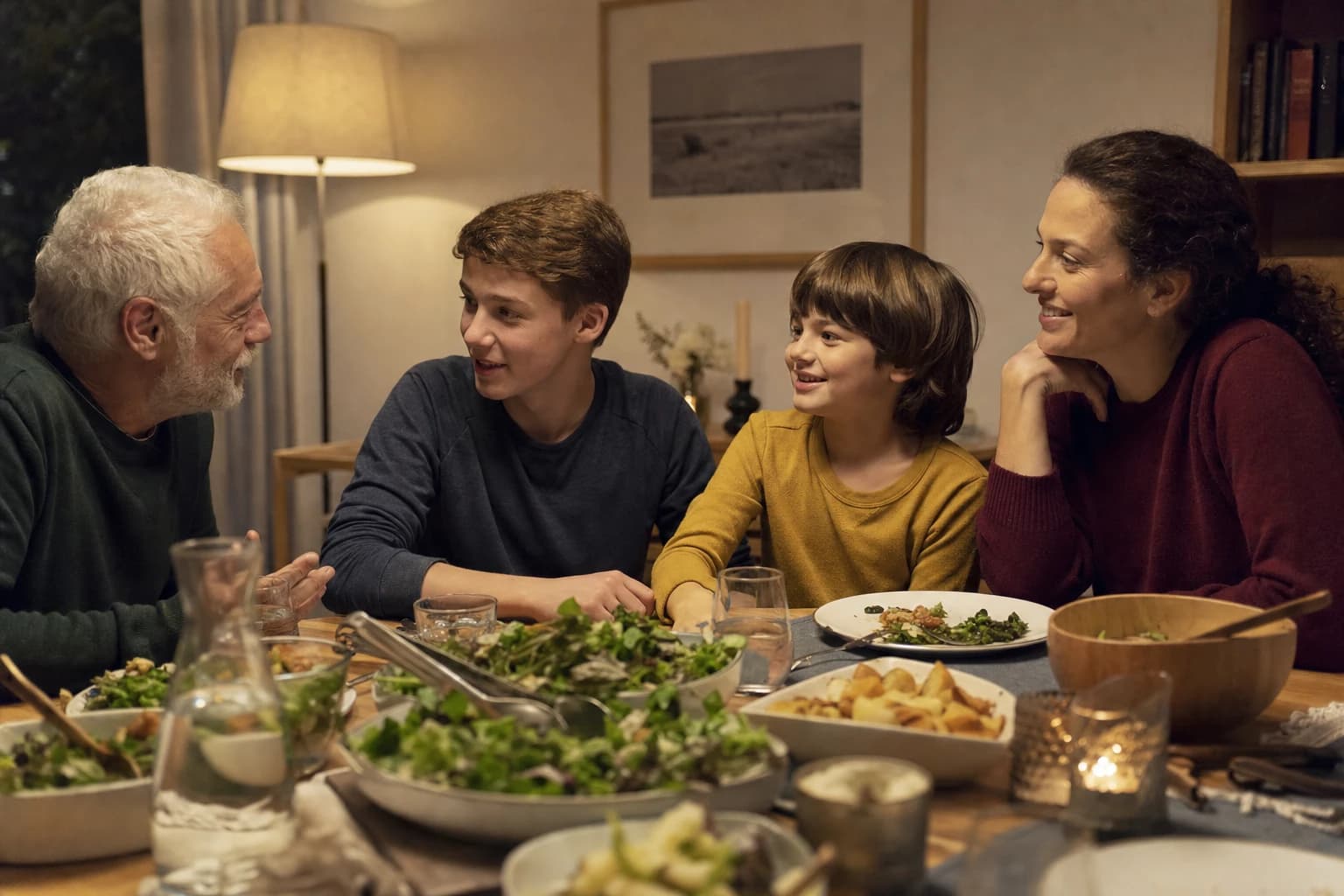
Common mistakes that make shy kids withdraw
- Praising too loudly: “See, you can talk!” may feel embarrassing. Try a small smile or “Thanks.”
- Turning answers into lessons: If a child says “pizza,” do not pivot into nutrition, manners, or spelling.
- Asking for more every time: “Tell us more” can feel like a trap. Let short answers stand.
- Using the game to investigate: Dinner games should not be a hidden way to find out who was mean at recess.
- Continuing after the child is done: Ending early builds trust for next time.
Make it part of a screen-free dinner rhythm
If your family is trying more screen free dinner games, keep the routine simple. Put phones away for the first 10 minutes of the meal, play one round, then let conversation continue naturally or stop. The game should not become another rule-heavy obligation.
For more no-supply ideas away from the table, see No-Equipment Family Games for Long Car Rides With Kids Ages 6 to 12. If you want a longer family activity later in the week, How to Plan a 60-Minute Family Game Night for Mixed Ages Without Anyone Getting Bored pairs well with these short dinner routines. Families who want more grandparent-friendly play can also explore Best Board Games for Grandparents and Kids to Play Together at Family Game Night.
A ready-to-use 5-night starter plan
- Night 1: This or That, three rounds only. No reasons.
- Night 2: Pass, Pick, or Add with food categories.
- Night 3: One-Word Weather Report, with no follow-up questions.
- Night 4: Tiny Story Chain, one story that goes around the table once.
- Night 5: Let each person vote by thumbs-up or thumbs-sideways on which game to repeat.
After five nights, keep only the games that made dinner calmer. A game that works for one family may not work for another, and that is fine.
FAQ
What if my shy child always passes?
Let them pass. Passing without consequences teaches that the table is safe. After several meals, you can offer very small participation options such as pointing, choosing between two words, or answering after another person.
Should parents require everyone to take a turn?
For shy kids, required turns can increase pressure. A better rule is that everyone is included in the turn order, but every person may pass. Inclusion and forced speaking are not the same thing.
How long should dinner conversation games last?
Start with 5 to 10 minutes or one round around the table. Stop before people get restless. Short, positive repetition usually works better than a long game that ends in frustration.
Can these games work with only one parent and one child?
Yes. Use alternating turns and let stuffed animals, pets, or imaginary characters “answer” sometimes for younger children. With teens, keep it casual and use one prompt rather than a formal game.
What if siblings tease the shy child’s answer?
Pause the game immediately and restate the rule: “Answers are not for teasing.” Do not make the shy child respond. Restart with an adult answer or end the game for that meal if the tone does not improve.
Conclusion
The best family conversation games for shy kids are gentle, brief, and predictable. They offer a way in without demanding a performance. Use pass rules, low-stakes topics, short turns, and warm adult modeling. When children learn that their small answers are respected, dinner can become a place where joining the conversation feels possible.