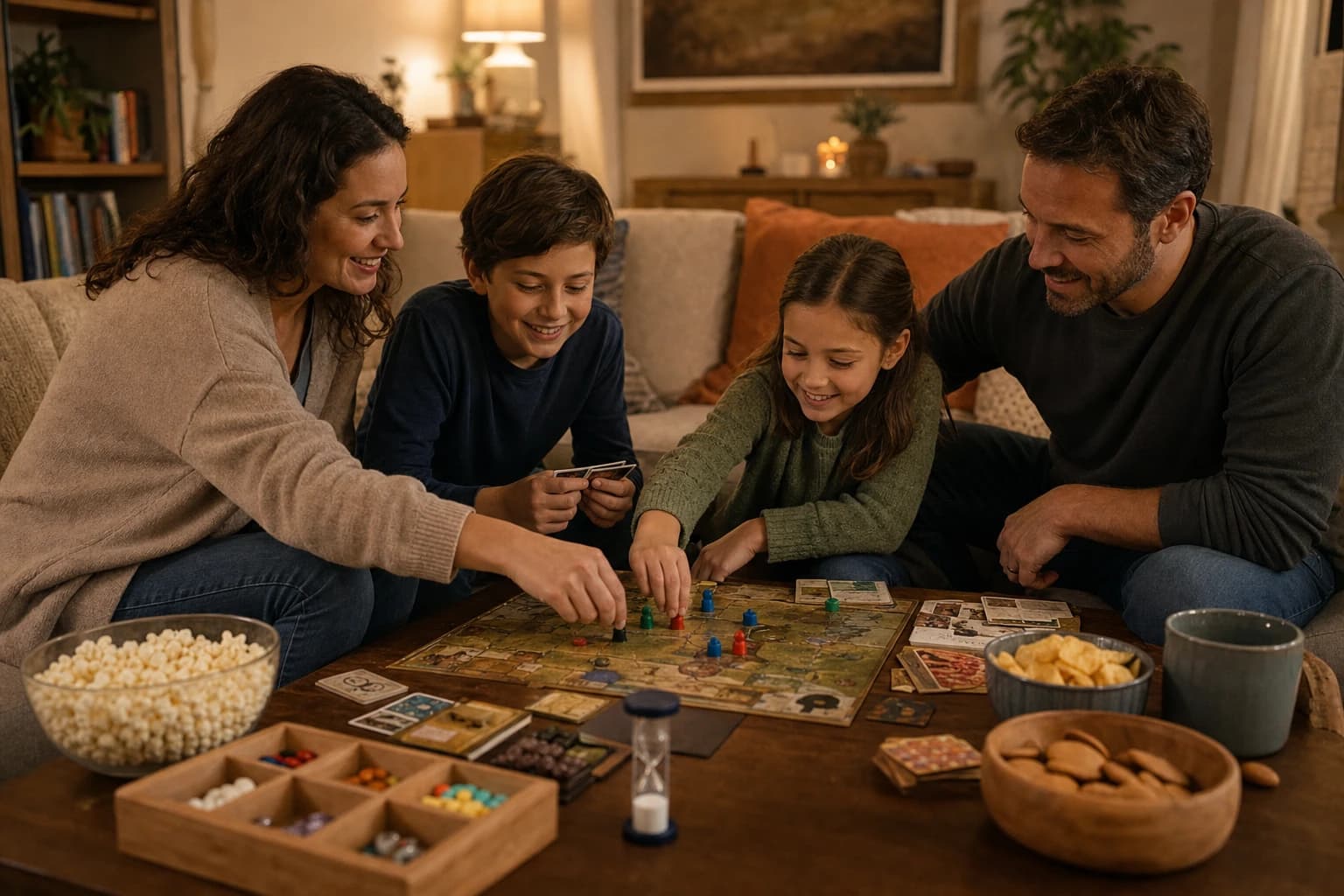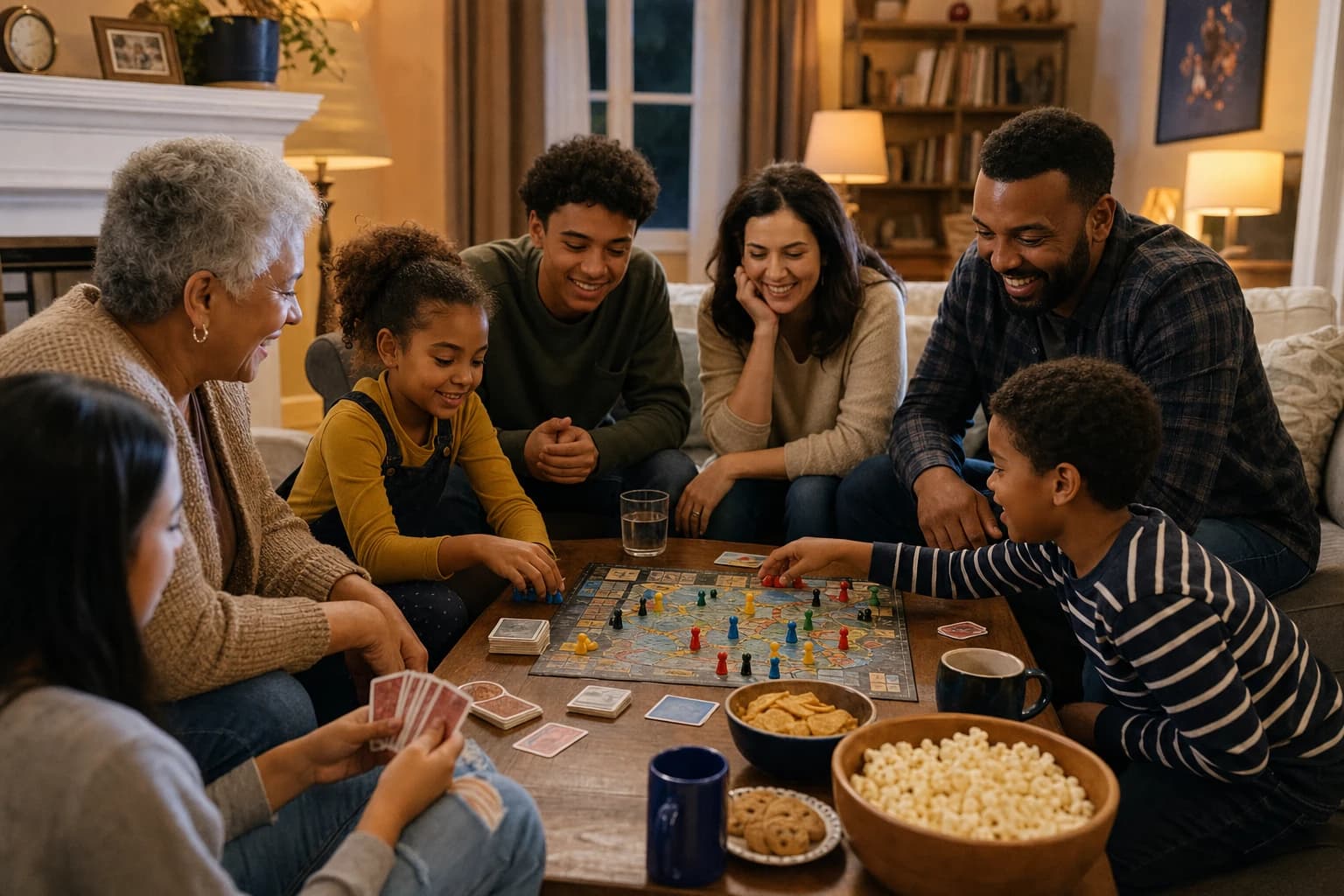
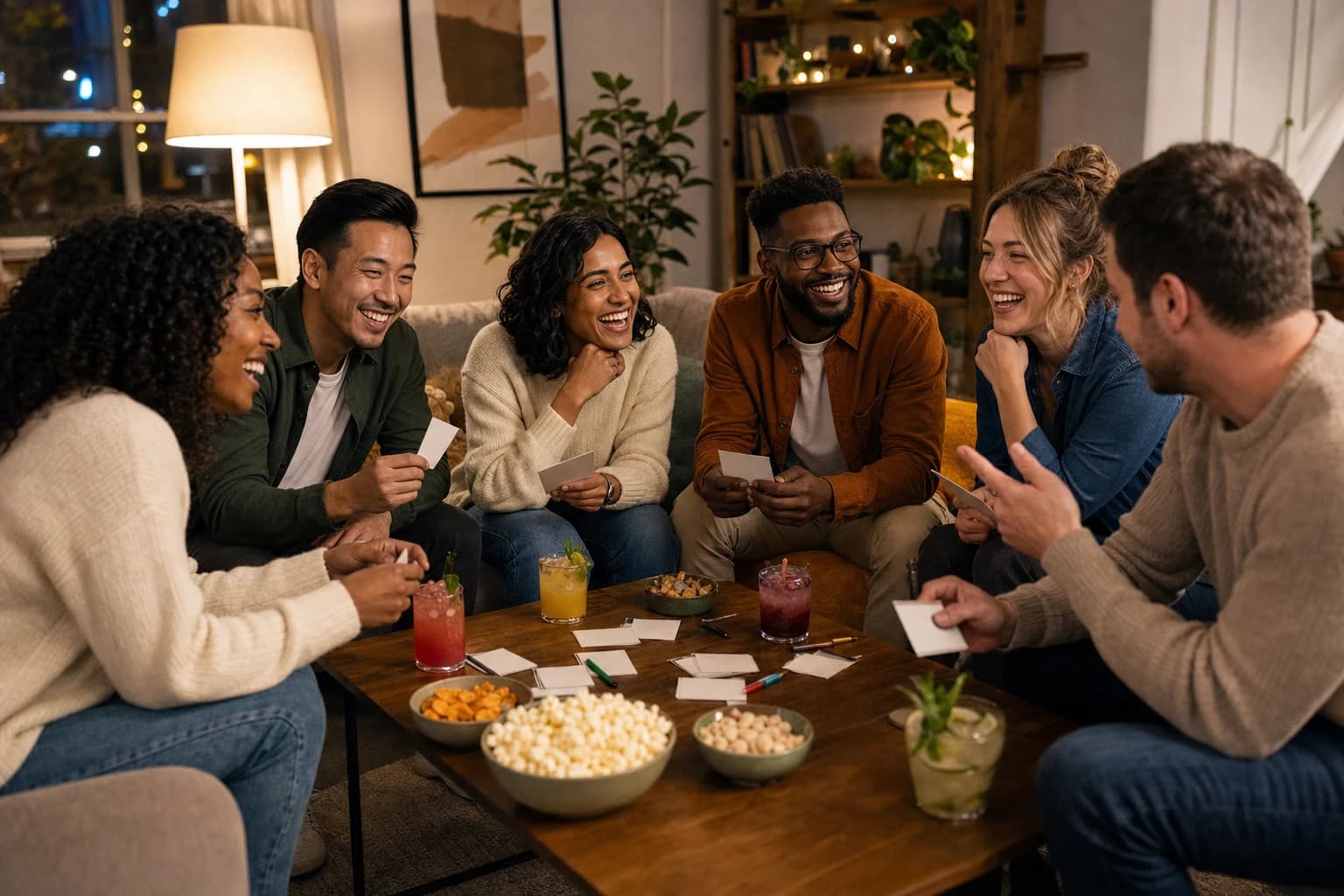
Hosting adults at home can feel trickier when you want the party to be social but not centered on alcohol. The best indoor party games for adults without alcohol give people something to do with their hands, a reason to talk, and an easy way to join in without being put on the spot.
This guide focuses on friendly games for 6–12 people: conversation games, creative team challenges, drawing and guessing games, and light competition that works in a living room or dining area. You will also find host notes for pacing, avoiding embarrassing prompts, adapting for mixed ages, and keeping the mood relaxed.
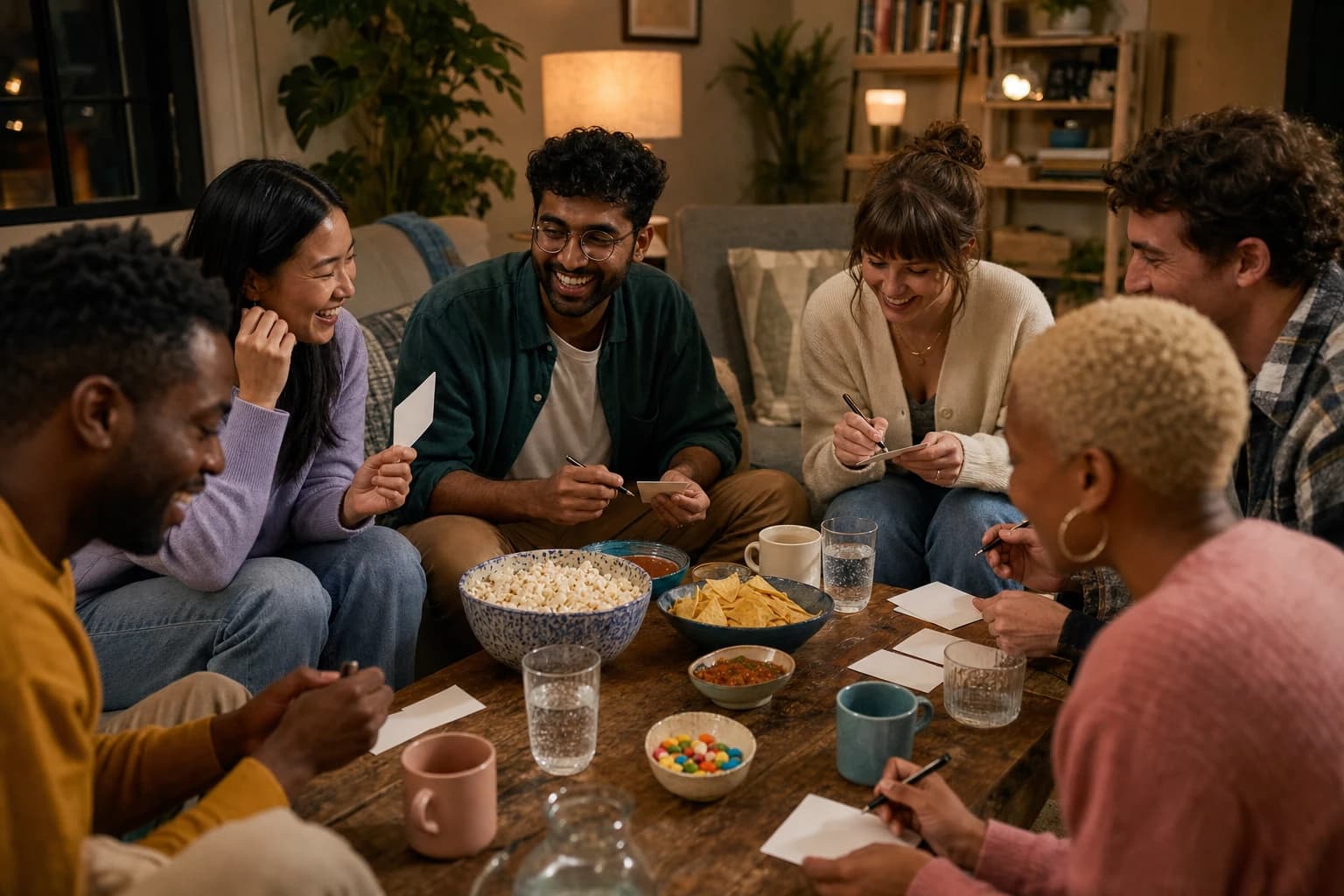
Quick answer: what makes a no-alcohol adult party game work?
A good alcohol-free party game does not need complicated props or pressure. It works because it creates a shared activity. For a group of 6–12 adults, choose games that meet four conditions:
- Easy to explain in under 2 minutes. People should be able to start before the room loses energy.
- Low embarrassment. Avoid prompts about dating history, income, politics, body image, private family issues, or anything that pressures people to disclose personal information.
- Everyone has a role. Team formats help quieter guests contribute without performing alone.
- Rounds are short. Five-to-eight-minute rounds let you switch activities before the game feels stale.
If your space is small, favor seated or mostly seated games. For more movement-free ideas, you may also like No-Equipment Party Games for Adults That Work in Small Apartments and Indoor Games for 10 People in a Small Room.
Basic setup: supplies, space, and timing
You do not need a bar setup, big prizes, or a dedicated game room. A coffee table, dining table, or circle of chairs is enough. The main job is to prepare the first game before guests arrive so the party has momentum.
Simple supplies for 6–12 people
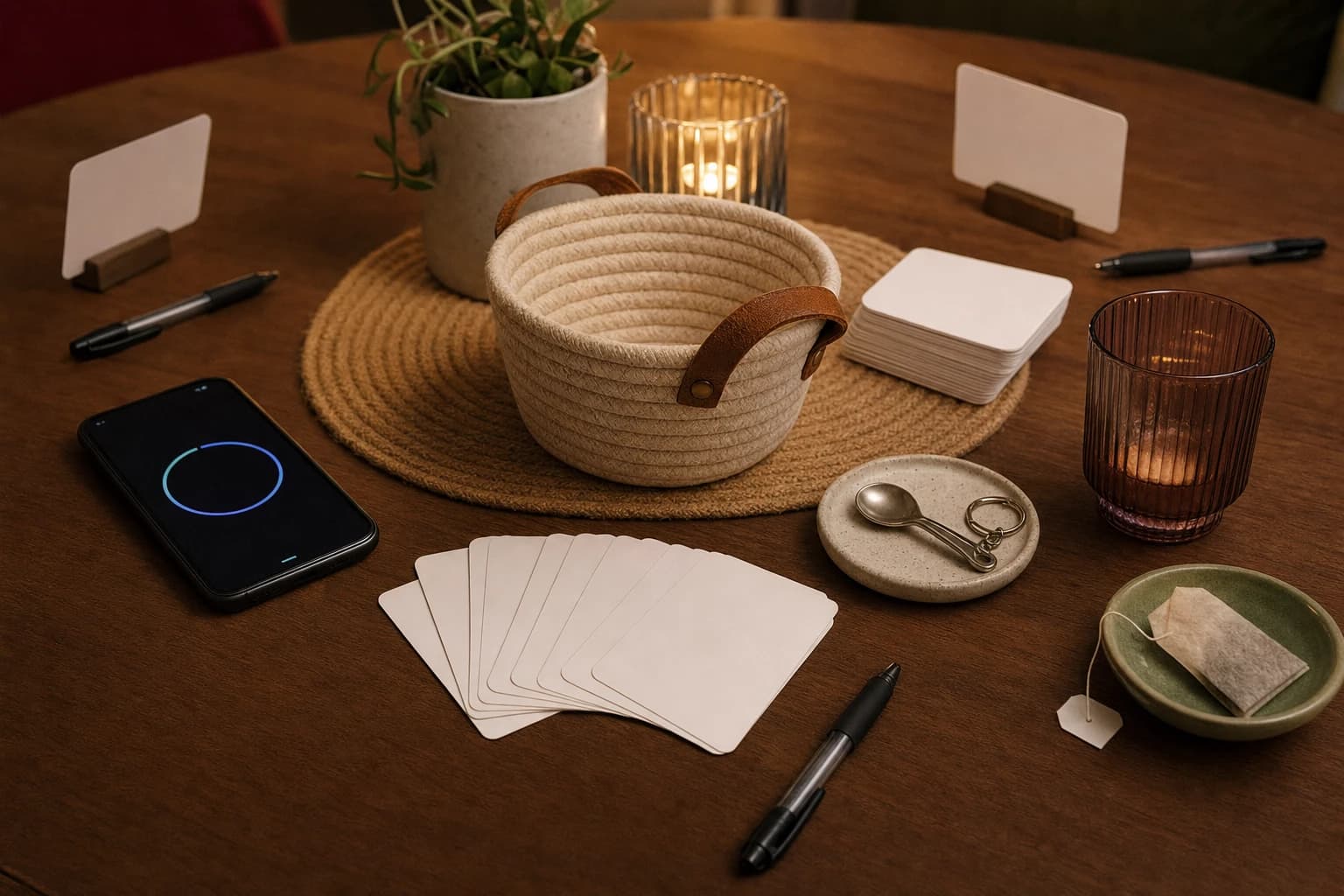
- 40–60 blank index cards or small paper slips
- 10 pens or pencils
- 1 timer or phone stopwatch
- 1 bowl, basket, or hat for drawing prompts
- Painter’s tape or sticky notes for scoreboards and labels
- Optional: small prizes such as tea bags, chocolate, stickers, bookmarks, or “choose the next song” privileges
Suggested party flow for a 2-hour gathering
- First 15 minutes: greet guests, offer drinks and snacks, and let people settle.
- Next 20 minutes: begin with a low-pressure conversation game.
- Next 30 minutes: play a team guessing or drawing game.
- Break for 10 minutes: refill snacks and let people chat naturally.
- Next 30 minutes: play a creative challenge or ranking game.
- Final 15 minutes: end with a short, funny game that does not require heavy thinking.
Host tip: introduce the party as alcohol-free without making it awkward
You can simply say, “I’m keeping tonight alcohol-free and game-focused, but there will be plenty of snacks and drinks.” Offer appealing non-alcoholic options such as sparkling water, lemonade, iced tea, coffee, cocoa, or mocktails. The goal is not to lecture; it is to make the plan feel normal and welcoming.
Game picker for different groups
Use this table to choose quickly based on your guests’ comfort level, available space, and the mood you want.
| Game | Best for | Players | Time | Movement | Comfort level |
|---|---|---|---|---|---|
| Two-Minute Common Ground | Starting conversation | 6–12 | 10–15 min | Seated | Very low pressure |
| Reverse Charades Teams | Quick laughs | 6–12 | 15–25 min | Light | Medium |
| Friendly Drawing Relay | Creative groups | 6–10 | 20 min | Seated | Low |
| Object Detective | Mixed ages and quieter guests | 6–12 | 15–20 min | Seated | Low |
| Consensus Countdown | Team discussion | 6–12 | 20–30 min | Seated | Low |
| Pitch the Ridiculous Product | Creative comedy | 6–12 | 20–25 min | Mostly seated | Medium |
| Category Sprint | Fast thinking | 6–12 | 10–15 min | Seated | Low |
| Room Bingo | Gentle mingling | 8–12 | 15–25 min | Light | Low |
8 friendly indoor games for adults without alcohol
1. Two-Minute Common Ground
Players: 6–12. Time: 10–15 minutes. Materials: paper and pens.
Divide guests into pairs. Each pair has 2 minutes to find three things they genuinely have in common, but they cannot use obvious answers such as “we both know the host” or “we both live in the same city.” After 2 minutes, rotate partners and repeat for three rounds.
At the end, each person shares one surprising commonality they found. Good examples include “we both learned piano as kids,” “we both dislike olives,” or “we both have a favorite mug.”
Host note: This is a strong opener because it gives people a reason to talk without asking deeply personal questions. If your group includes coworkers or relatives from different generations, keep the sample prompts hobby-based and neutral.
2. Reverse Charades Teams
Players: 6–12. Time: 15–25 minutes. Materials: prompt cards and timer.
Traditional charades puts one person on stage. Reverse charades flips the pressure: one person guesses while the rest of their team acts out the word together. Split into two teams. One guesser sits facing their team. The team has 60 seconds to act out as many prompt cards as possible without speaking.
Use friendly prompts such as “making pancakes,” “looking for lost keys,” “walking a tiny dog,” “airport security,” “folding a fitted sheet,” or “trying not to sneeze.” Each correct answer earns 1 point.
Host note: Remove prompts that require touching, crawling on the floor, or imitating a specific person in the room. Keep it silly, not humiliating.
3. Friendly Drawing Relay
Players: 6–10 works best. Time: 20 minutes. Materials: paper, pens, and prompt cards.
Create two teams. Each team gets a stack of blank paper and one pen. The first player draws a prompt for 20 seconds, then passes the same paper to the next teammate, who continues the drawing for another 20 seconds. After four turns, the final teammate guesses the prompt.
Use concrete prompts: “haunted toaster,” “cat in a business meeting,” “a birthday cake in the rain,” “a penguin at the airport,” or “a robot doing laundry.” Award 2 points for a correct guess and 1 point for a close guess if the room agrees.
Variation: For a calmer version, remove the timer and allow each person 45 seconds. This helps guests who dislike speed games.
4. Object Detective
Players: 6–12. Time: 15–20 minutes. Materials: 8–12 household objects in a bag.
Place familiar objects in a bag: a spoon, keychain, sock, tea bag, remote control, lemon, measuring tape, coaster, or small toy. One player reaches into the bag without looking, feels an object for 10 seconds, and describes it without naming it. Their team has 30 seconds to guess.
For example, the describer might say, “It is flat, round, and protects a table from a drink,” instead of “coaster.” Each correct guess earns 1 point.
Host note: This game works well for mixed ages because it rewards clear description rather than trivia knowledge. Avoid fragile, sharp, messy, or valuable objects.
5. Consensus Countdown
Players: 6–12. Time: 20–30 minutes. Materials: paper and pens.
Divide into teams of 3–4. Read a ranking question and give each team 3 minutes to agree on a top-five list. The question should be light and debatable, such as “Top five foods for a picnic,” “Top five things to bring on a long train ride,” or “Top five fictional jobs that would be exhausting.”
Teams reveal their lists one item at a time. Award 1 point for each answer that appears on at least one other team’s list. This scoring rewards shared instincts rather than arguing for a single “correct” answer.
Host note: Avoid rankings that involve real people in the room, body traits, attractiveness, personal success, religion, or politics. The fun should come from negotiation, not conflict.
6. Pitch the Ridiculous Product
Players: 6–12. Time: 20–25 minutes. Materials: two bowls of cards.
Prepare one bowl of everyday objects and one bowl of strange features. Object cards might say “umbrella,” “toothbrush,” “backpack,” “lamp,” or “slippers.” Feature cards might say “sings when ignored,” “only works on Tuesdays,” “glows when someone lies,” or “has a dramatic backstory.”
Teams draw one card from each bowl and get 4 minutes to create a 45-second sales pitch. Example: “A backpack that sings when ignored.” After each pitch, the room votes for “most useful,” “funniest,” or “most likely to appear in a late-night advertisement.”
Host note: Let people present as a team. One person can speak, another can demonstrate, and another can hold a quick sketch. This prevents the game from becoming a solo performance contest.
7. Category Sprint
Players: 6–12. Time: 10–15 minutes. Materials: timer.
Choose a category and a letter. Players go around the circle naming an answer that fits both. For “foods that start with B,” answers could include bread, beans, bananas, bagels, and brownies. A player has 5 seconds to answer. If they repeat an answer or cannot think of one, their team loses that round.
Use categories that are broad enough for adults with different backgrounds: foods, animals, cities, household items, movie genres, things in a kitchen, or activities people do on weekends.
Variation: For a non-elimination version, give each team 1 point for every valid answer in 60 seconds. This keeps everyone involved and is better for friendly gatherings.
8. Room Bingo
Players: 8–12. Time: 15–25 minutes. Materials: bingo cards and pens.
Make 5-by-5 bingo cards with simple discovery prompts. Examples include “has visited a national park,” “can name three types of pasta,” “likes rainy days,” “has kept a plant alive for over a year,” or “knows how to sew a button.” Guests mingle and find people who match each square. Each person can sign only one square per card.
The first person to complete a row, column, or diagonal calls bingo. Then ask them to share two squares they enjoyed learning about.
Host note: Keep prompts positive and optional. Do not use prompts about medical history, finances, relationship status, weight, family planning, or anything that could make someone feel exposed.
How to write safe, fun prompts that do not embarrass guests
The easiest way to ruin a good no-alcohol party game is to use prompts that are too personal. Adults may enjoy clever questions, but not everyone wants to disclose private stories in a room full of acquaintances.
Use this simple filter before writing cards:
- Can someone answer without revealing private information? If not, rewrite it.
- Would it still be okay if a coworker, parent, or new friend heard the answer? If not, skip it.
- Is the joke aimed at a situation rather than a person? Choose situation-based humor.
- Can shy guests contribute quietly? Team-based prompts are safer than solo dares.
Good prompt categories include food opinions, travel preferences, fictional scenarios, household objects, music moods, invented products, animal behavior, and “would you rather” questions with harmless choices. For family gatherings that include kids, teens, and adults together, Christmas Party Games for Families With Kids, Teens, and Adults Together has useful mixed-age ideas even outside the holidays.
Accessibility and comfort check
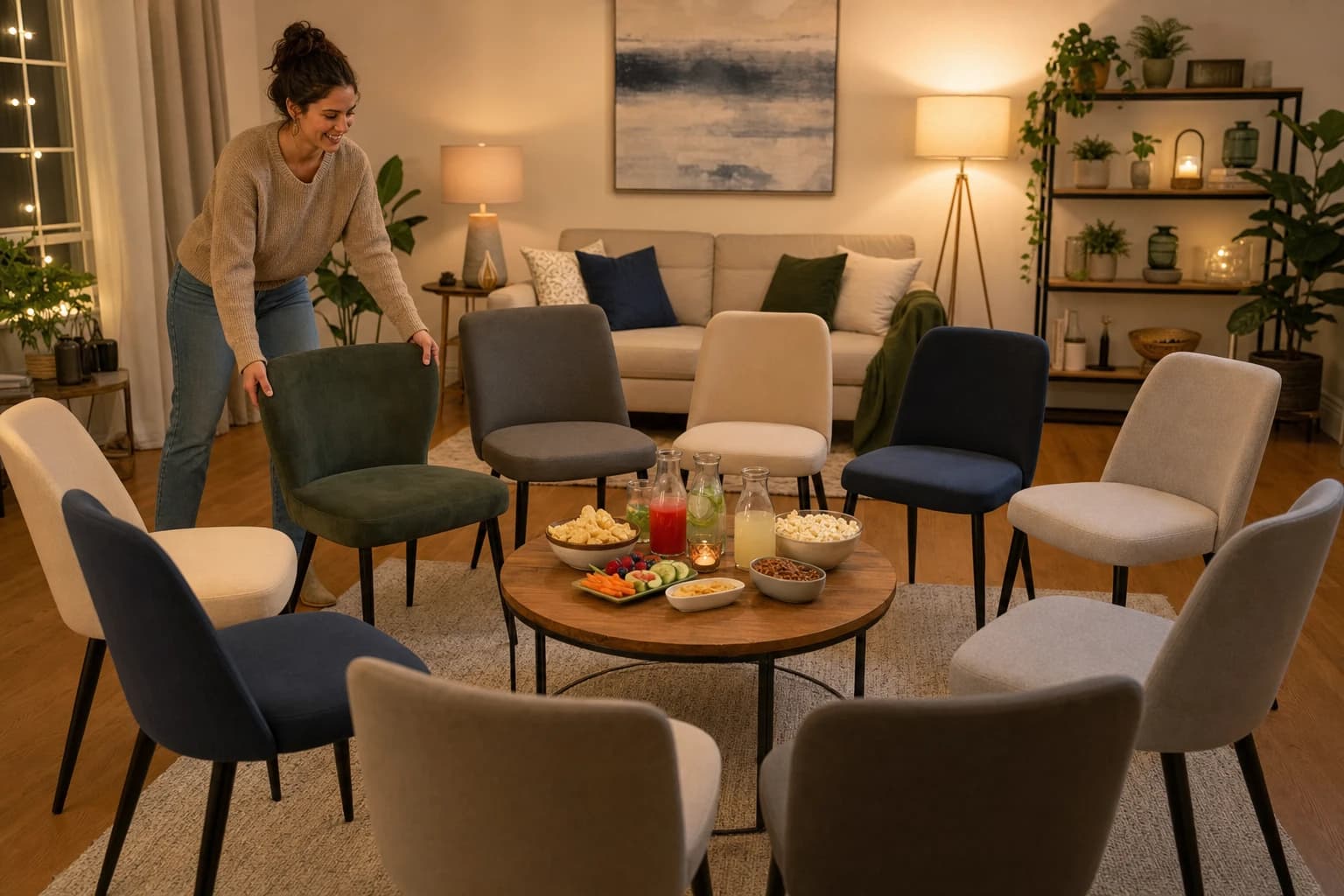
Before you plan movement-heavy games, look at your room layout. Keep clear paths between seating areas and avoid games that require people to run, kneel, or squeeze behind furniture. The U.S. Department of Justice’s ADA Standards include 36 inches as a common minimum width for accessible routes in many contexts, which is a useful reference point when arranging furniture for guests who use mobility aids or need steadier footing. See the official 2010 ADA Standards for Accessible Design for the underlying accessibility standard.
Host pacing: how to keep the night moving
A friendly game night should have energy, but it should not feel like a forced team-building workshop. The host’s pacing matters as much as the game choice.
- Start with the easiest game. Do not open with acting or performance. Begin with Common Ground, Room Bingo, or Object Detective.
- Explain only the first round. People learn faster by playing. Give the rule, show one example, and start.
- Use a visible timer. Short rounds prevent overthinking and keep competitive guests from dominating.
- Change games after 25 minutes. Even a good game can drag if it has no endpoint.
- Let people sit out without drama. Say, “You can be a judge, scorekeeper, or snack captain this round.”
If your guest list unexpectedly grows beyond 12, switch to team formats or browse Large Group Party Games for 20 to 50 People That Keep Everyone Playing for no-elimination structures that scale better.
Adaptations for mixed ages, introverts, and close friends
Not every adult party has the same social tone. A game that works for longtime friends may feel too bold for neighbors, coworkers, or relatives meeting for the first time. Adjust the format rather than forcing one style on everyone.
- For introverts: choose team guessing, drawing, or written-answer games. Avoid “everyone watches one person” formats until the group warms up.
- For mixed ages: use everyday prompts instead of pop culture references from one generation. “Things in a kitchen” is fairer than “1990s sitcom characters.”
- For close friends: add custom inside-joke prompts, but keep them kind. A good test is whether the person being referenced would laugh too.
- For competitive guests: use rotating teams and small prizes. This keeps one strong team from controlling the whole night.
- For very quiet groups: start with written answers. Reading a card aloud is often easier than improvising.
Sample alcohol-free drink station
To make the no-alcohol plan feel intentional, set up a small drink station with 3 choices: one sparkling option, one still option, and one warm option. For example: sparkling water with citrus slices, iced tea, and hot cocoa or coffee. Labeling drinks helps guests serve themselves and keeps you free to host the games.
FAQ: indoor party games for adults without alcohol
What are the best no alcohol party games for adults who do not know each other well?
Start with Two-Minute Common Ground, Object Detective, or Room Bingo. These games create conversation without asking guests to reveal anything too personal or perform in front of the whole room.
How many games should I plan for a 2-hour adult party?
Plan three main games and one backup. Most groups do well with one opener, one team game, one creative challenge, and a short final game if there is extra time.
How do I keep indoor games for friends at home from becoming awkward?
Avoid dares, personal confessions, ranking people in the room, or prompts about sensitive topics. Use team formats, short rounds, and fictional or everyday prompts instead.
Can these group games for adults indoors work without buying anything?
Yes. Most of the games in this guide use paper, pens, a timer, and household objects. If you do not have index cards, cut regular paper into slips.
What if one guest does not want to play?
Give them a low-pressure role such as scorekeeper, judge, timer, photographer, playlist manager, or snack helper. Avoid calling attention to their choice.
Are these family friendly adult party games indoors?
Yes, if you keep the prompts clean and neutral. For mixed-age groups, remove adult-only references, private questions, and jokes that depend on embarrassment.
Conclusion: keep it simple, social, and kind
Alcohol-free adult parties work best when the games create connection rather than pressure. For 6–12 people at home, choose short rounds, team formats, friendly prompts, and activities that leave room for conversation. A few pens, paper slips, a timer, and a thoughtful host plan are enough.
If you prepare two easy openers, one creative team game, and one backup, you will have a party that feels relaxed, inclusive, and genuinely fun—without needing alcohol to carry the evening.