A living room mini bowling alley should be fun, quick to set up, and easy to remove without leaving scratches, dents, tape residue, or scuff marks. The main trick is not the pins; it is choosing a lane surface and ball that protect the floor while still letting the game feel like bowling.
This guide shows how to build a floor safe indoor bowling setup at home using household items or low-cost supplies. You will find lane material options, pin spacing, small-apartment layouts, scoring variations by age, and practical fixes for common problems like sliding mats and wobbly pins.
The Short Version: What Makes an Indoor Bowling Setup Floor-Safe?
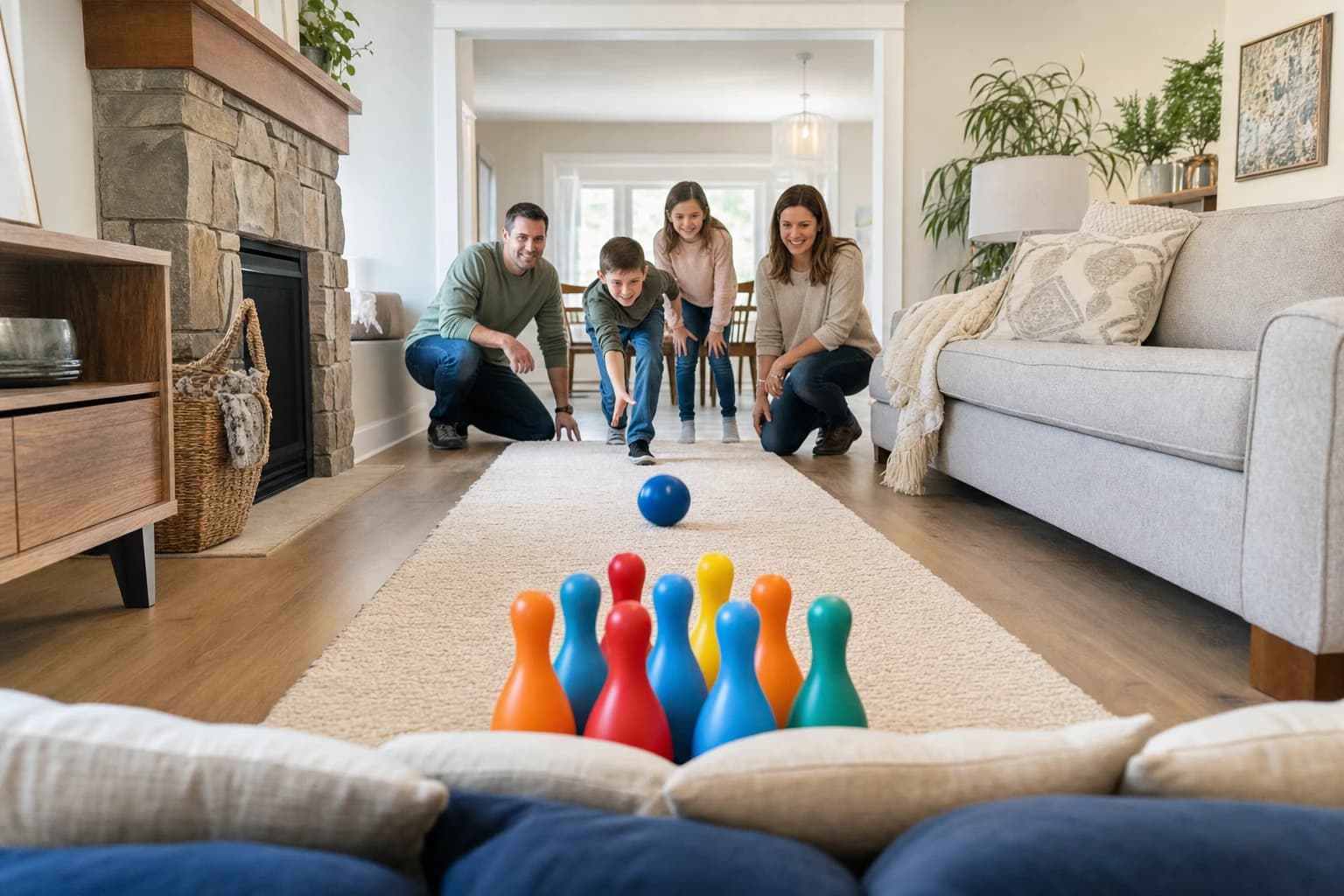
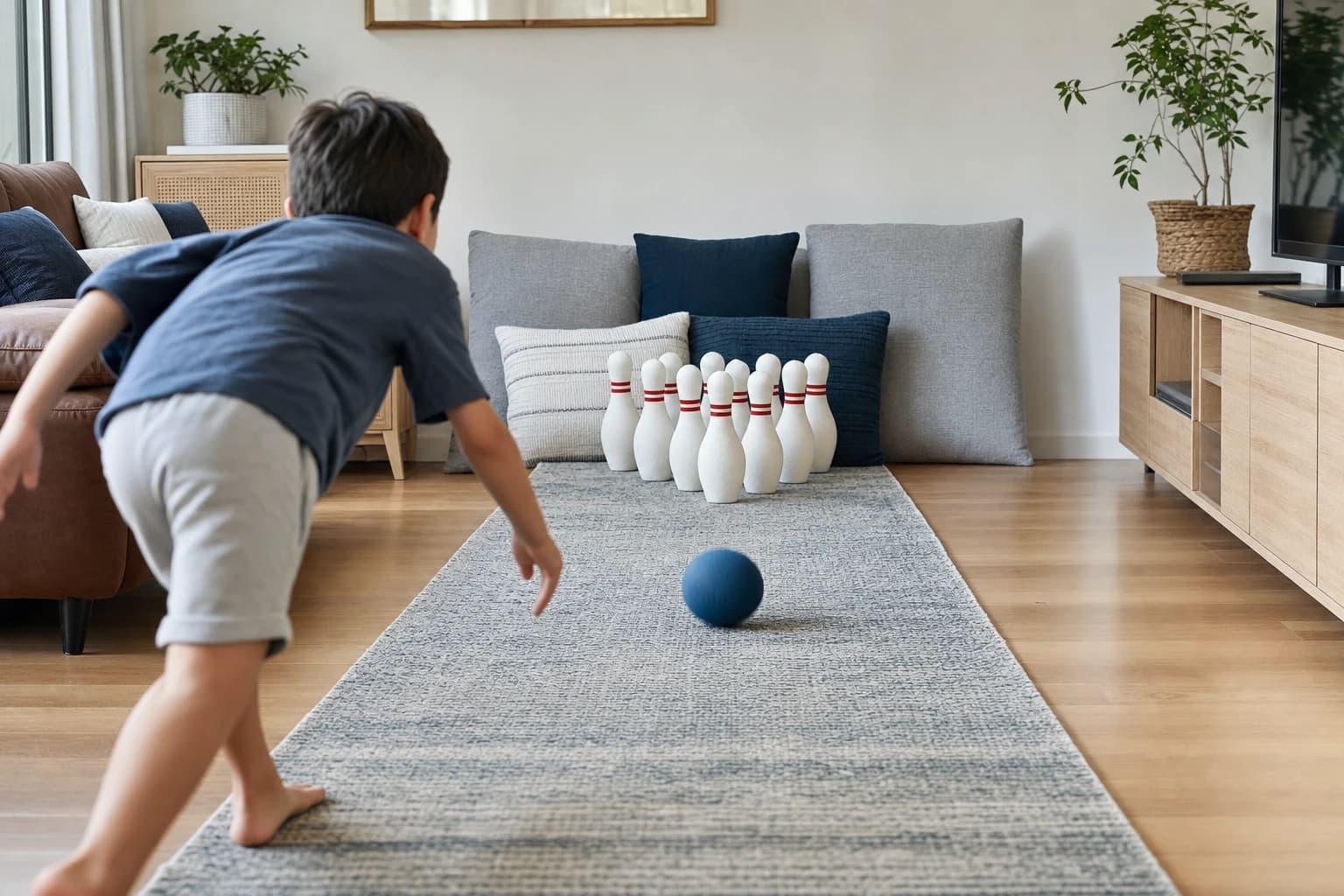
A good living room mini bowling alley has four floor-safe parts: a soft or cushioned lane, lightweight pins, a ball that cannot dent the floor, and a clear stopping zone behind the pins. If any one of those is missing, the game can quickly turn into sliding furniture, noisy crashes, or marks on hardwood and laminate.
For most homes, the safest setup is a flat rug runner or yoga mat as the lane, empty plastic bottles or foam pins, and a soft rubber playground ball, foam ball, or rolled pair of socks for young children. Avoid heavy regulation bowling balls, hard baseballs, golf balls, metal cans, and glass bottles indoors.
Real bowling uses a standardized lane and ten-pin arrangement. The United States Bowling Congress publishes official bowling rules and equipment information at Bowl.com rules, but a home version should be treated as a casual game, not an official miniature replica. The goal is controlled rolling, safe spacing, and easy cleanup.
Best Floor-Safe Lane Materials
The lane material matters because the ball rolls across it repeatedly. It should be flat enough for a straight roll, grippy enough not to slide under a child’s feet, and gentle enough for the floor underneath.
| Lane material | Best for | Floor safety notes | Bowling feel |
|---|---|---|---|
| Low-pile rug runner | Hardwood, laminate, tile, apartments | Use a non-slip rug pad underneath if it moves. Avoid rubber backing that may discolor some floors if left down for long periods. | Slower roll, good control for kids |
| Yoga mat or exercise mat | Short lanes and young children | Cushioned and quiet. Wipe the underside first so grit does not scratch the floor. | Slow, straight, forgiving |
| Interlocking foam floor tiles | Playrooms and larger living rooms | Good impact protection. Check that edges lie flat to prevent tripping. | Soft roll, easy to widen |
| Felt-backed vinyl tablecloth | Temporary party lane on carpet | Use felt side down. Do not tape it to finished floors unless the tape is floor-safe and tested first. | Smoother roll than fabric |
| Flattened cardboard sheets | One-day DIY bowling game for kids | Place on top of carpet or a rug, not directly on glossy floors where it may slide. | Uneven but fun for homemade games |
Materials for a Basic Living Room Mini Bowling Alley
This version takes about 15 to 25 minutes to set up. It works well for one to six players and can be adjusted for toddlers, school-age children, teens, or adults.
- Lane: One rug runner, yoga mat, or strip of foam tiles, ideally 6 to 10 feet long and at least 24 inches wide.
- Non-slip layer: Rug pad, shelf liner, or foam gripper mat if the lane slides.
- Pins: Six or ten empty plastic bottles, foam bowling pins, paper towel tubes, or plastic cups.
- Ball: One foam ball, soft rubber ball, plush ball, or rolled socks. A diameter of 4 to 7 inches is usually comfortable for indoor play.
- Pin markers: Painter’s tape on the lane material, sticky notes, paper circles, or removable labels. Avoid sticking tape directly to delicate floors.
- Backstop: Couch cushions, a laundry basket, a pillow wall, or a cardboard box behind the pins.
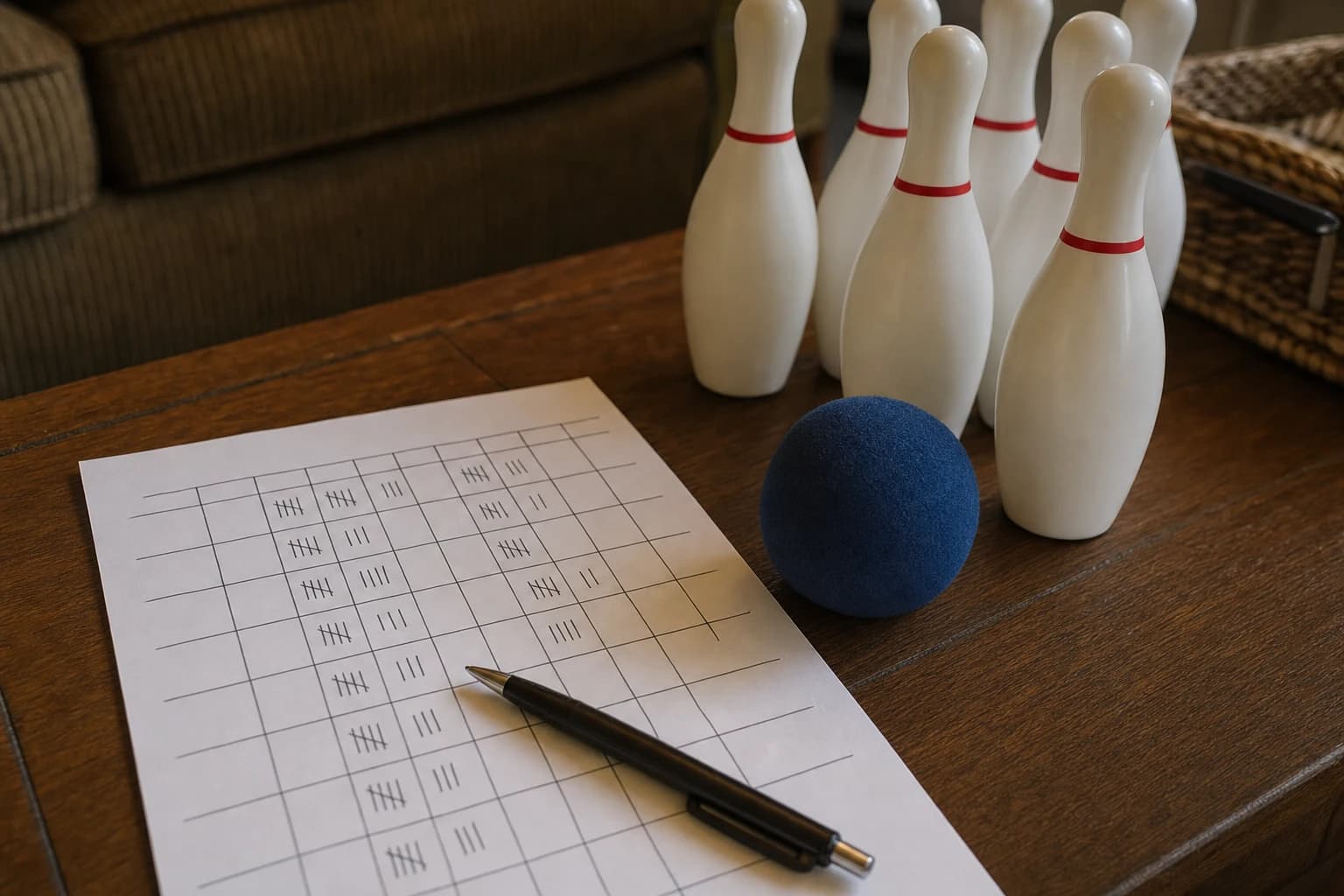
- Score sheet: Paper, whiteboard, or a notes app.
If you are planning several indoor activities, pair this setup with other no-running options such as rainy-day family games for a small living room or indoor games for 10 people in a small room.
Step-by-Step Setup
- Choose the safest lane direction. Aim the lane toward a wall, couch, or open corner, not toward a television, glass cabinet, plant stand, pet bowl, or doorway. Leave at least 2 feet behind the pins for the ball to stop.
- Clear the floor completely. Pick up small toys, cords, shoes, and floor cushions. A small hard object under a rug runner can scratch the finish when people step on it.
- Lay down the lane. Place the rug, mat, or foam tiles in a straight line. For younger children, 5 to 6 feet is enough. For older kids and adults, 8 to 12 feet feels more challenging.
- Stop the lane from sliding. If the lane shifts when someone walks on it, add a non-slip rug pad underneath. Do not rely on regular packing tape. It can leave residue and may pull finish from some floors.
- Mark the foul line. Put a strip of painter’s tape across the lane material or place a folded towel at the start. The player’s toes should stay behind this line.
- Set pin spots. Use six pins for quick games or ten pins for a more classic triangle. Mark each spot so resetting is fast.
- Add a backstop. Put a cushion, laundry basket, or cardboard box 12 to 24 inches behind the pins. This protects walls and keeps the ball from rolling under furniture.
- Test one gentle roll. Roll the ball slowly from the foul line. If the ball bounces, the lane is too uneven. If the pins fly too far, use lighter rolling force, a softer ball, or a better backstop.
Pin Spacing for Six-Pin and Ten-Pin Games
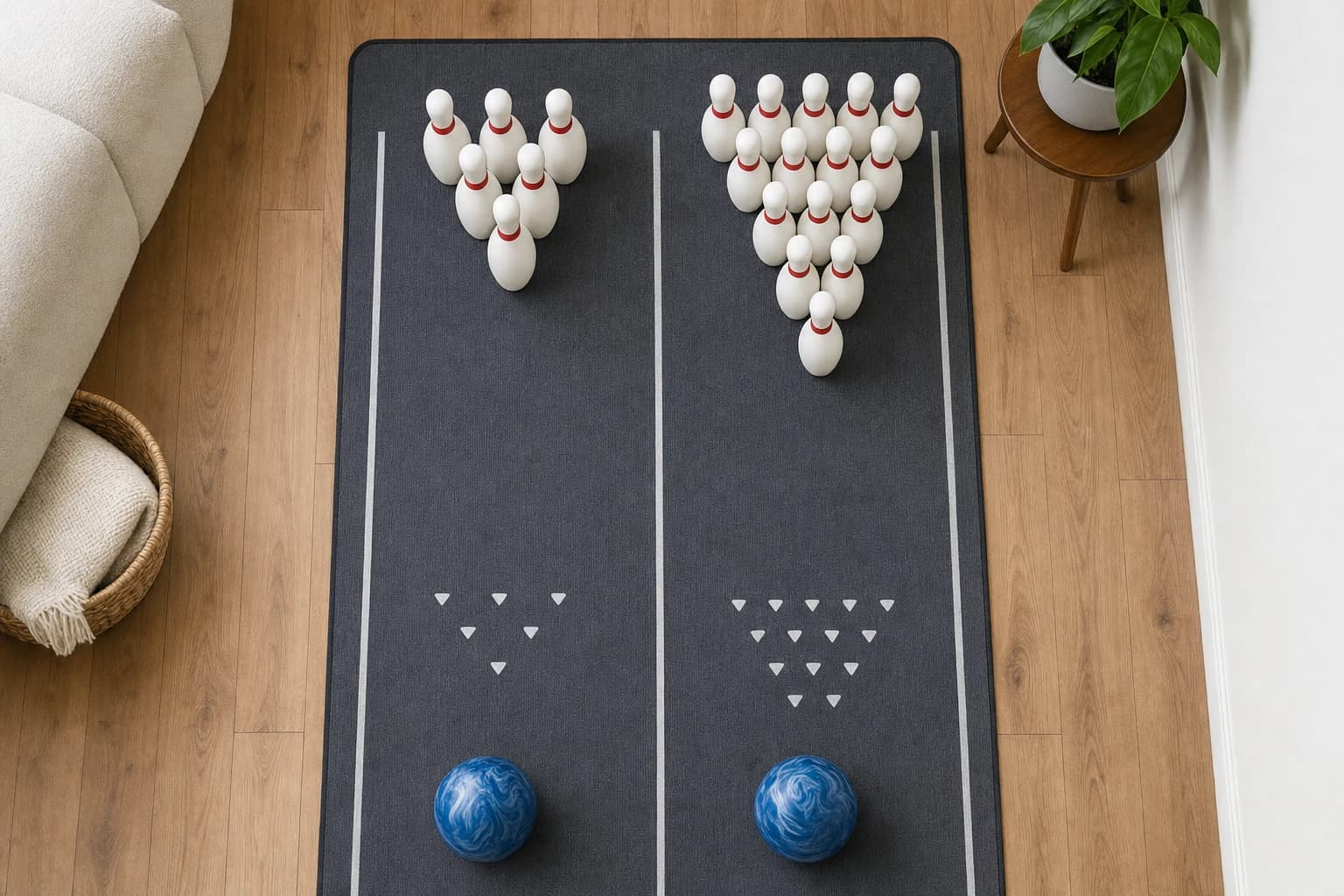
You do not need exact regulation measurements. You need consistent spacing that fits your lane width and keeps the pins from being impossible to hit. A 24-inch-wide lane works best with six pins. A 30- to 36-inch-wide lane gives ten pins more room.
Six-pin triangle for small rooms
Use this layout for toddlers, small apartments, or quick party rounds. Put one pin in front, two in the middle row, and three in the back row. Space pins about 5 to 7 inches apart from center to center if using plastic bottles or foam pins. For plastic cups, 4 to 5 inches is enough.
A six-pin game is easier to reset and less frustrating for young children because a light ball can still knock down several pins.
Ten-pin triangle for older kids and adults
Use four rows: one pin in front, then two, then three, then four in the back row. On a home lane, place pins about 5 to 6 inches apart if your pins are bottles or foam pins. Keep the back row at least 6 inches in front of the backstop so pins have room to fall without rebounding into the lane.
If the ball is very soft, reduce spacing. If players are knocking down all pins too easily, increase spacing or lengthen the lane by 1 to 2 feet.
Apartment Setup vs. Larger Living Room Setup
The best indoor bowling setup at home depends on how much space you have and how much noise your household can tolerate. A narrow apartment hallway may work better than the center of a room, but only if there are no doors opening into the lane.
| Space | Recommended lane | Pin count | Best ball | Special adjustment |
|---|---|---|---|---|
| Small apartment living room | 5 to 7 feet, yoga mat or rug runner | 6 pins | Foam ball or rolled socks | Use a pillow backstop and quiet pins such as cups or foam pins. |
| Hallway | 6 to 10 feet, narrow rug runner | 6 pins | Soft rubber ball | Keep doors closed and remove floor mats that bunch up. |
| Large living room | 8 to 12 feet, foam tiles or long runner | 10 pins | Foam or lightweight rubber ball | Add a wider backstop and a waiting area away from the lane. |
| Carpeted room | Flattened cardboard or vinyl tablecloth over carpet | 6 or 10 pins | Slightly firmer foam ball | Use heavier empty bottles with a small amount of dry rice if pins fall too easily. |
Floor Protection Mistakes to Avoid
- Do not roll heavy balls on hard floors. Even a small hard ball can dent wood, chip tile, or damage baseboards if thrown instead of rolled.
- Do not tape directly to finished floors without testing. Painter’s tape is gentler than many tapes, but finishes vary. Put markers on the lane material whenever possible.
- Do not use glass pins. Glass bottles are unsafe indoors, especially with children or pets nearby.
- Do not leave rubber-backed mats in place for days. Some flooring manufacturers warn that certain rubber backings can discolor or react with floor finishes. Use the lane for play, then store it.
- Do not let players run and slide. Bowling should be a roll-from-the-line game. If children start taking running approaches, shorten the lane and switch to a seated or kneeling roll.
Scoring Variations by Age
Traditional bowling scoring can be confusing for younger players. A home bowling game works better when the scoring matches the age group and attention span.
Ages 3 to 5: Count the pins
Give each player two rolls per turn. Count how many pins fall total. No spares, no strikes, and no penalties. Play five turns instead of ten frames so the game stays short. If a child knocks down zero pins, let them move the foul line 1 foot closer on the next turn.
Ages 6 to 8: Beat your own score
Each player gets two rolls per frame for five frames. Add the pins knocked down, but focus on improving a personal score rather than eliminating players. This is a good format for a DIY bowling game for kids at birthday parties because it reduces arguments.
Ages 9 to 12: Simple strike bonus
Use ten pins and five or ten frames. A strike is worth 10 points plus a 2-point bonus. A spare is worth 10 points plus a 1-point bonus. This gives older kids the fun of bowling terms without needing full official scoring.
Teens and adults: Challenge cards
Keep simple scoring, then add challenge cards: roll with the non-dominant hand, roll from a seated position, use the six-pin layout, or aim for only the back row. For adult gatherings where you want low-pressure games, you may also like indoor party games for adults without alcohol.
Home Bowling Game Ideas to Keep It Fresh
Once the basic lane is working, small rule changes can make the same setup feel new. These variations are useful for winter breaks, rainy afternoons, and living room parties.
- Color pin bonus: Wrap one pin with colored paper. If a player knocks it down, they get 2 bonus points.
- Quiet bowling: Use rolled socks and plastic cups. This is best for apartments or late afternoon play.
- Math bowling: Write numbers on pins and add only the numbers knocked down. For more learning-based indoor activities, see educational indoor classroom games for grades 3–5.
- Team relay without running: Players bowl, reset pins, and tag the next person by handing over the ball. Make walking mandatory.
- Target bowling: Instead of knocking down all pins, call a target row before each roll.
- Obstacle lane: Place two soft blocks along the sides of the lane to create a narrow channel. Keep obstacles low and outside the walking path.
Quick Checklist Before You Start
- The lane is flat, dry, and not sliding.
- The ball is soft or lightweight enough for indoor use.
- Pins are plastic, foam, paper, or another non-breakable material.
- There is a cushion, box, or laundry basket behind the pins.
- Players know to roll, not throw.
- Pets, toddlers not playing, and fragile items are away from the lane.
- The scoring method is simple enough for the youngest player.
FAQ
Can I make a living room mini bowling alley on hardwood floors?
Yes, but do not roll directly on the hardwood. Use a rug runner, yoga mat, or foam tiles, and make sure the underside is clean. Dirt trapped under a mat can scratch when people step on it.
What is the safest ball for indoor bowling with kids?
A foam ball, plush ball, or rolled pair of socks is safest for young children. Older kids can use a lightweight soft rubber ball if the lane has a backstop and the rules require rolling instead of throwing.
How many pins should I use in a small apartment?
Six pins are usually better than ten in a small apartment. They need less width, reset faster, and make less noise when they fall.
How do I stop plastic bottle pins from falling over too easily?
Add a small amount of dry rice, dry beans, or sand to each bottle, then close the cap tightly. Start with a little weight; if the pins become too heavy, a soft ball may not knock them down.
Can I use painter’s tape for lane lines?
Use painter’s tape on the rug, mat, cardboard, or foam lane when possible. If you want to apply it directly to flooring, test a small hidden spot first and remove it soon after the game.
What if my living room is too small for a straight lane?
Use a seated bowling version. Place the foul line 3 to 5 feet from the pins and have players roll from a seated or kneeling position. This keeps the game controlled and still feels like bowling for young children.
Conclusion
A floor-safe living room mini bowling alley does not need special equipment. Start with a cushioned lane, lightweight pins, a soft ball, and a reliable backstop. Then adjust the lane length, pin count, and scoring to fit your space and players’ ages.
The best setup is the one that resets quickly and protects the room. In a small apartment, use six pins, a short yoga-mat lane, and quiet materials. In a larger living room, stretch the lane, add ten pins, and try simple challenge rules. With a few careful choices, indoor bowling can become a low-mess, no-running game that works for family nights, rainy days, and kids’ parties.