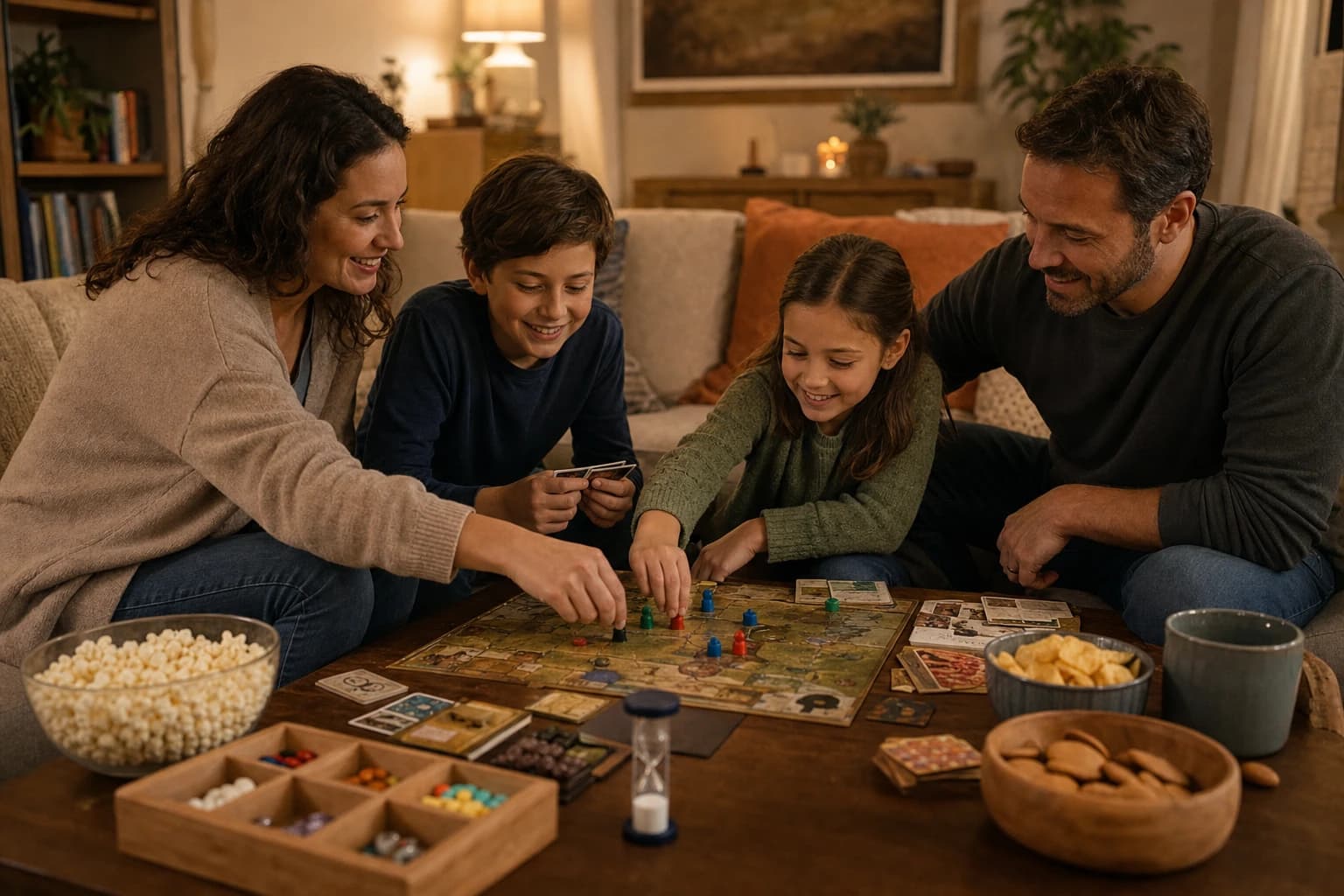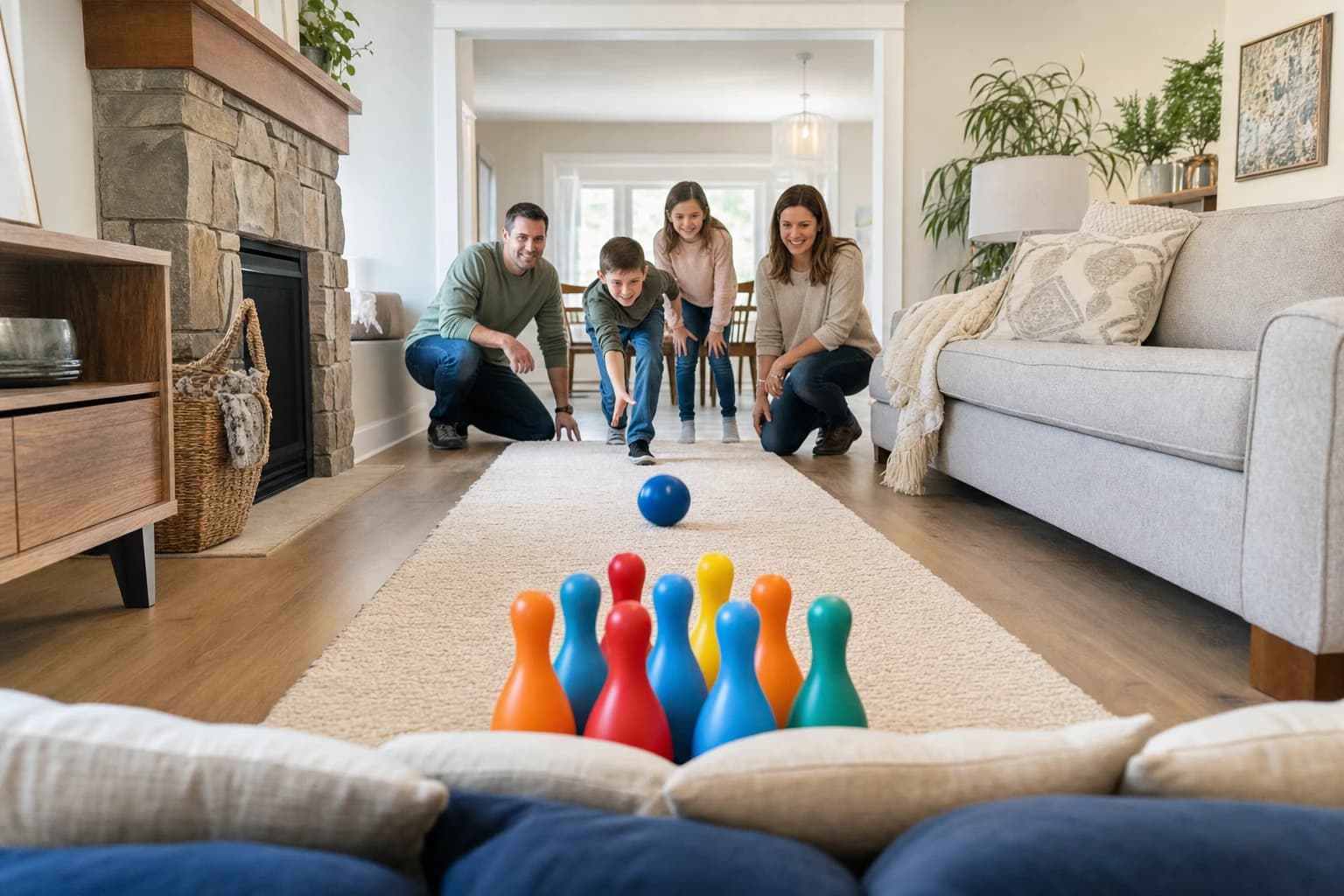
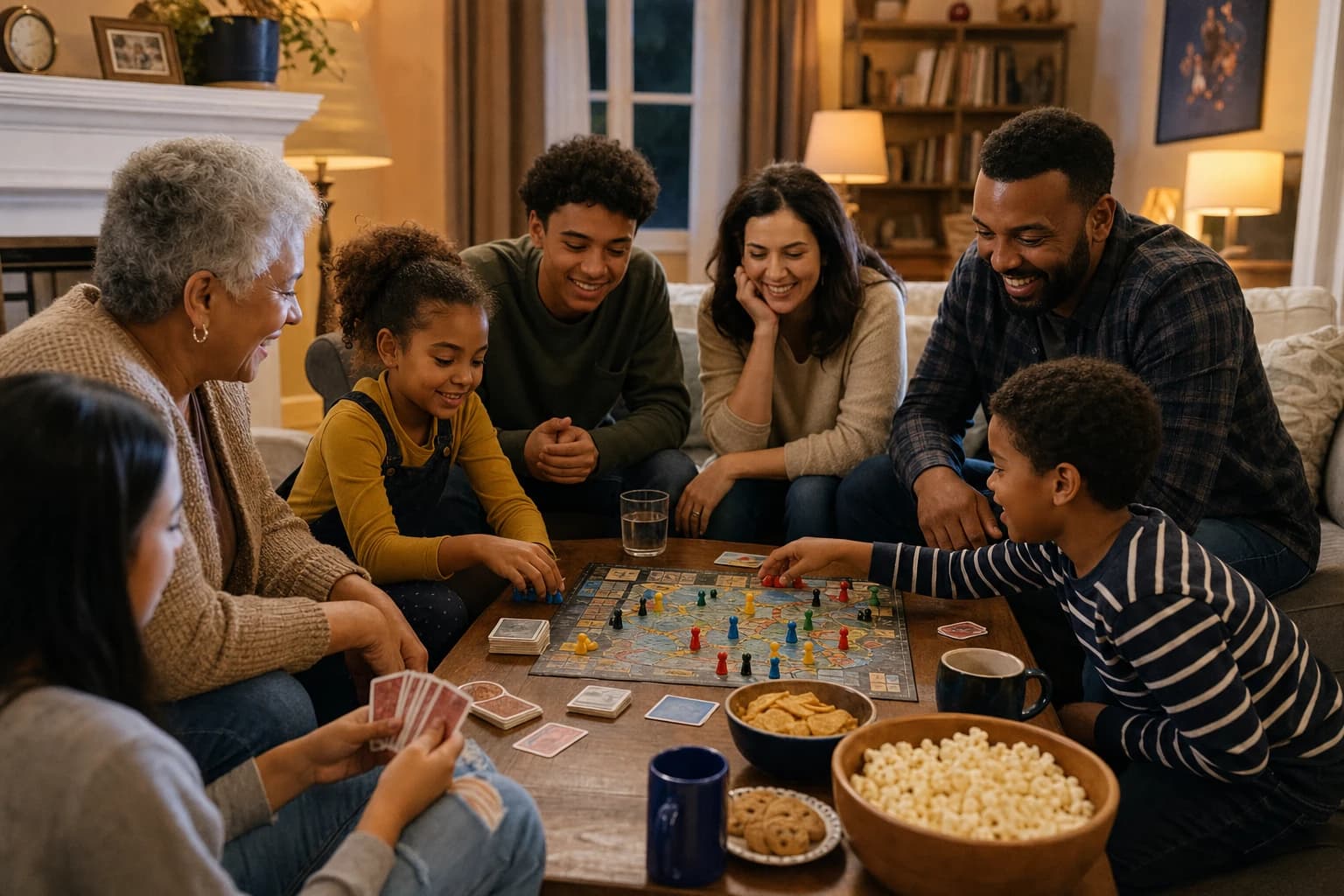
A family indoor game night with mixed ages can go from fun to frustrating if the youngest players wait too long, teens feel forced into childish games, or grandparents cannot comfortably follow fast, noisy rules. The fix is not a bigger game collection. It is a simple structure: short rounds, balanced teams, clear scoring, and backup options for different attention spans.
This guide gives you a ready-to-use two-hour plan for a family indoor game night mixed ages can actually enjoy together. It includes setup steps, rotation rules, team balancing tips, low-conflict scoring, and indoor game night ideas for families with kids, teens, adults, and older relatives.
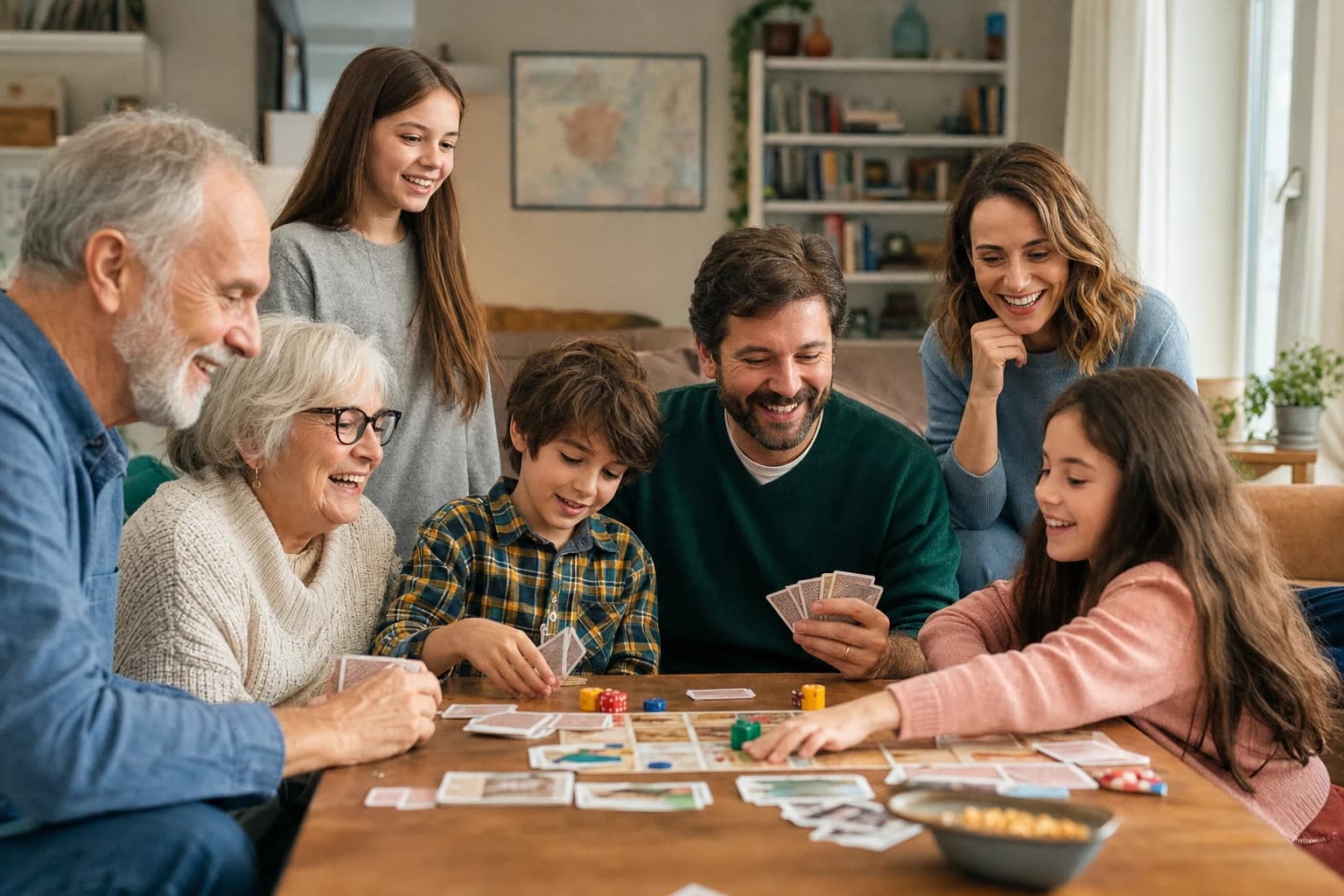
The simple answer: use short rotations, not one long game
The easiest format for games for mixed age groups at home is a rotation night. Instead of choosing one board game and hoping everyone likes it, set up several mini-games that last 8 to 15 minutes each. Players rotate through them in teams, then come back together for a final group game.
This works because different ages enjoy different kinds of challenge. A six-year-old may want movement and quick results. A teenager may enjoy strategy or speed. A grandparent may prefer conversation, memory, or wordplay. A rotation gives everyone at least one game that feels made for them.
At-a-glance plan
- Total time: 2 hours
- Best group size: 6 to 14 players
- Space needed: one table plus one open floor area, or two small tables
- Difficulty: easy to moderate, depending on how many stations you set up
- Best ages: school-age children through grandparents; adapt supplies if toddlers are present
What to prepare before family game night
You do not need expensive equipment. The key is choosing supplies that support several kinds of play: guessing, building, word games, memory, and light movement.
Materials and supplies
- Timer or phone alarm
- Index cards or small paper slips
- Pens or pencils
- Score sheet and clipboard
- Painter’s tape for floor lines or targets
- Plastic cups, paper plates, or soft balls
- A deck of cards or a family-friendly card game
- One simple board game or tile game, if you want a table station
- Small prizes such as stickers, choosing dessert, or picking the next movie; avoid winner-takes-all prizes
If children under 3 are nearby, remove small pieces, coins, marbles, dice, and any parts that could be a choking hazard. The U.S. Consumer Product Safety Commission advises following toy age labels and keeping small parts away from children under 3; see its toy safety guidance at CPSC.gov.
A ready-to-use 2-hour family game night schedule
This family game night schedule is built around energy levels. It starts with an easy warm-up, moves into rotations while everyone is alert, adds a snack reset, and ends with a cooperative finale so the night does not finish in an argument over points.
| Time | Activity | Purpose | Host note |
|---|---|---|---|
| 0:00–0:10 | Welcome, teams, and rules | Set expectations before play starts | Explain the scoring system once, then post it where everyone can see it. |
| 0:10–0:25 | Icebreaker round | Get everyone laughing quickly | Use a game with no elimination and no long turns. |
| 0:25–1:10 | Three 15-minute stations | Offer variety for different ages | Rotate teams every 15 minutes, even if a game is unfinished. |
| 1:10–1:25 | Snack and reset | Prevent fatigue and restlessness | Let players trade roles or adjust teams now. |
| 1:25–1:50 | Choose-your-challenge round | Give older kids and adults some agency | Teams pick one of two games: calm table game or active room game. |
| 1:50–2:00 | Cooperative finale and closing | End together, not with one person upset | Use a shared target, such as beating a group score. |
If you only have one hour, use the shorter structure in How to Plan a 60-Minute Family Game Night for Mixed Ages Without Anyone Getting Bored. For bigger teams and more party-style energy, see Team Party Games for Family Game Night With Mixed Ages.
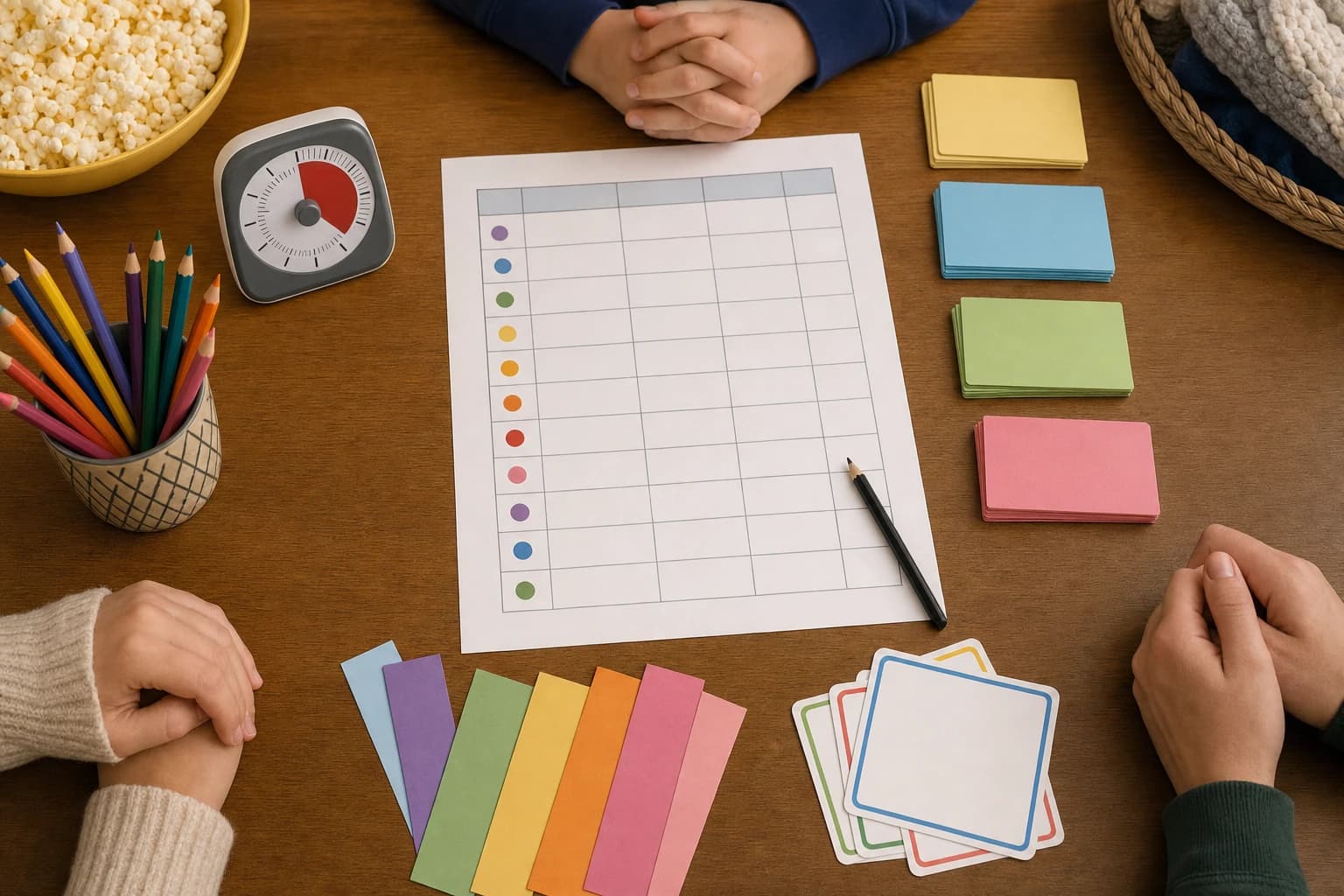
Step-by-step setup for a smooth mixed-age game night
- Choose three game types, not three similar games. Pick one thinking game, one creative or guessing game, and one light movement game. For example: Word Relay, Mystery Object, and Cup Target Toss.
- Set a 15-minute limit per station. Mixed-age groups usually do better with short rounds than with open-ended play. Stop when the timer ends, even if a team wants one more turn. This keeps the night fair.
- Make teams of two to four players. Pair younger children with a teen or adult who can read cards, keep track of turns, or help with fine motor tasks. Avoid putting all older players on one team.
- Give every team a role card. Roles reduce arguments. Use simple labels: Reader, Timer Watcher, Score Caller, Materials Helper. Rotate roles after the snack break.
- Explain rules in under two minutes. If a game needs more explanation than that, simplify it. Demonstrate one sample turn instead of reading a long rule list.
- Use visible scoring. Write points on a large sheet. If the group is sensitive to competition, track team stars or completed challenges instead of ranking first to last.
- Build in one reset point. The snack break is not just for food. It is when you can rebalance teams, switch a noisy game for a quiet one, or let a tired child become the scorekeeper.
Team balancing rules that prevent the usual arguments
Mixed ages can feel unfair if one team has the fastest teen, the most competitive adult, or the only fluent reader. Balance teams by ability, not just by age.
Use the anchor system
Put one “anchor” on each team. An anchor is someone who can explain rules calmly, read cards when needed, and help younger players without taking over. Anchors are often adults or older teens, but a patient 12-year-old can be an excellent anchor.
Split similar strengths
If two players are very fast, very strategic, or very competitive, put them on different teams. If two children are very young and need help, do not place them together unless the game is fully cooperative.
Use helper points
Award one point when a player helps a teammate understand a rule, takes a fair turn, or encourages another team. This keeps older players from dominating and gives younger players a way to contribute beyond winning.
Host rule: the best team is not the team with the strongest player. It is the team where every player gets a real turn.
Low-conflict scoring that works for all ages
Traditional scoring can create problems when ages and abilities vary widely. A low-conflict system rewards participation, teamwork, and improvement without pretending that skill does not matter.
Use a 3-point round system
- 1 point for completing the round
- 1 point for teamwork or fair play
- 1 point for the round result, such as most correct guesses or closest target
This means a younger team can still earn points even if it does not win the skill-based part. It also gives competitive players a real goal without making the whole night feel harsh.
Avoid these scoring traps
- No elimination. Players who are out early become bored and disruptive.
- No public “last place” label. Say “current scores” instead of ranking everyone.
- No huge point swings. A final round worth 20 points can make earlier play feel pointless.
- No prizes only for winners. Let the winning team choose the closing game, pick a song, or choose snack order instead.
Indoor game night ideas for families with mixed ages
These indoor party games for all ages use simple supplies and short rules. Choose three to five, depending on your group size.
1. Mystery Object Questions
Best for: ages 5 and up. Time: 10 minutes. Place a safe household object in a bag. Teams ask yes-or-no questions to identify it. Younger children can ask simple questions, while older players practice deduction. Limit each team to 10 questions.
2. Cup Target Toss
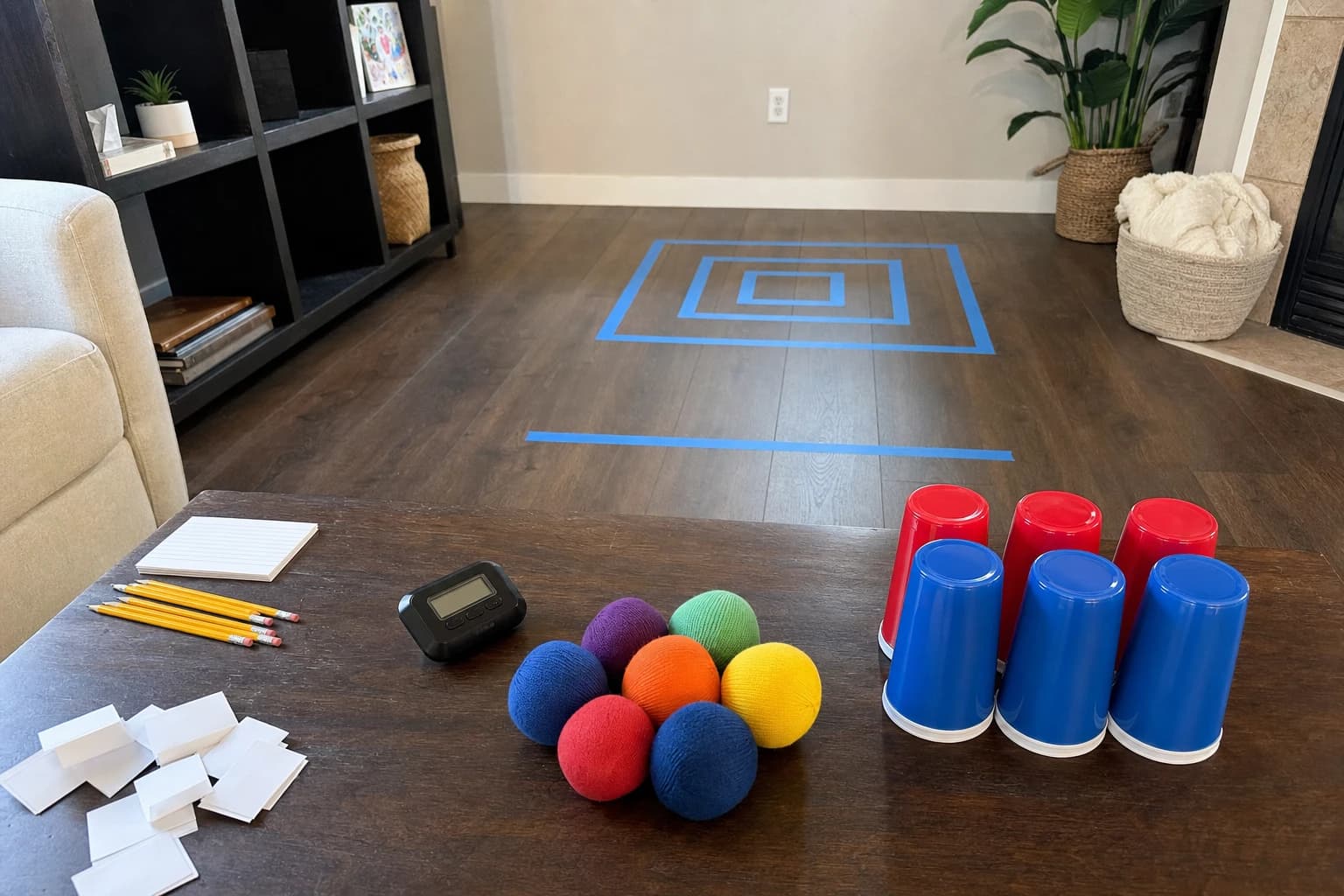
Best for: ages 4 and up. Time: 8 to 12 minutes. Tape a line on the floor and place five cups at different distances. Players toss soft balls or rolled socks. Give closer cups 1 point and farther cups 2 points. Let younger children stand 2 feet closer.
3. Draw It, Pass It
Best for: ages 7 and up. Time: 12 minutes. One player draws a simple phrase, passes it to the next player, who writes what they think it is, then the next draws that phrase. Compare the first prompt and final guess. Score for laughs and completion rather than accuracy.
4. Word Relay
Best for: ages 8 and up, or younger children with a helper. Time: 10 minutes. Pick a category such as animals, foods, or places. Each player must say a word that starts with the last letter of the previous word: apple, elephant, tomato. Allow one helper hint per child per round.
5. Grandparent Interview Bingo
Best for: all ages. Time: 15 minutes. Make bingo cards with prompts such as “has owned a pet,” “played a sport,” “can name an old TV show,” or “knows a family recipe.” Players ask relatives questions to fill squares. This is calmer and works well after an active round.
6. Silent Line-Up Challenge
Best for: ages 6 and up. Time: 5 to 8 minutes. Teams line up by birthday month, height, or first-name alphabetical order without talking. Younger players can use gestures. This is a quick reset if the room gets too loud.
For small spaces, Indoor Games for 10 People in a Small Room has more no-running options. If preschoolers are part of the night, you may also want quieter backup ideas from Quiet Indoor Games for Preschoolers on Rainy Days.
Backup games for different attention spans
Even a good plan needs a backup. Choose the problem you see in the room, then switch to a game that solves it.
| If the group is... | Use this backup | How to play |
|---|---|---|
| Too loud or overstimulated | Silent Sort | Teams silently sort cards, buttons, or paper slips by color, size, or category. |
| Getting bored | 60-Second Challenge | Each team tries a quick task, such as stacking cups or naming 10 animals. |
| Arguing over rules | Co-op Countdown | The whole group tries to complete 20 correct answers or 10 tosses before time runs out. |
| Too tired for movement | Table Talk Cards | Players answer light prompts, then guess who gave which answer. |
| Waiting for food or late guests | Quick Icebreaker | Use a 5-minute game from 5- to 15-Minute Indoor Icebreaker Games. |
Common mistakes to avoid
- Starting with the most complicated game. Begin with something everyone can learn in one turn.
- Letting adults control every decision. Give children and teens small choices, such as which station to visit first or which category to use.
- Ignoring accessibility and comfort. Some grandparents may prefer seated games, larger print cards, or fewer timed rounds. Offer options without making it a big announcement.
- Forgetting transition time. Moving between games, explaining rules, and washing hands for snacks all take time. Build those minutes into the schedule.
- Making every game competitive. Add at least one cooperative round so the night ends with the family working together.
Host tips for a calmer night
- Use a visible timer so the host is not the “bad guy” ending each round.
- Keep snacks simple and not too messy: popcorn, sliced fruit, crackers, or small sandwiches.
- Put fragile decorations and breakable lamps away before active games start.
- Use painter’s tape instead of permanent marks for floor targets.
- Have one quiet corner with coloring pages, cards, or books for anyone who needs a break.
FAQ: Family indoor game night mixed ages
What is the best length for a mixed-age family game night?
Two hours is enough for several short games, a snack break, and a closing activity. For younger children, keep individual games to 8 to 15 minutes so they are not waiting too long between turns.
How do you include grandparents without making games too slow?
Choose at least one seated game, use larger writing when possible, and avoid every round being speed-based. Pair grandparents with younger players for interview, memory, word, or guessing games where conversation is part of the fun.
What should teens do if the games feel too easy?
Give teens responsibility without turning them into babysitters. They can be team anchors, clue writers, score callers, or challenge designers. You can also add advanced rules for older players, such as fewer hints or a longer tossing distance.
How do you stop arguments about rules?
Write the rules before the round starts, demonstrate one example turn, and use the timer as the final authority. If a rule dispute lasts more than one minute, switch to the simplest interpretation and move on.
What if one child keeps losing?
Use scoring that rewards completion, teamwork, and effort, not only winning. You can also rotate roles so the child has a chance to be the timer, helper, or category chooser during the next round.
Conclusion: make the structure do the work
A successful family indoor game night for mixed ages does not depend on finding one perfect game. It depends on a format that respects different attention spans, reading levels, mobility, and competitiveness. Use short rotations, balanced teams, simple rules, and low-conflict scoring. Keep a few backup games ready, and end with a cooperative challenge so everyone leaves the room on the same side.
Once you have run this two-hour structure once, save the schedule and swap in new stations next time. That way, family game night feels familiar enough to run smoothly but fresh enough that children, teens, parents, and grandparents all have a reason to join in.