
Quick answer: choose the icebreaker by time, noise, and comfort level
When a kids’ club, classroom session, family party, or camp day starts with a room full of children who do not all know each other, you need an activity that works before attention drifts. The best 5 to 15 minute indoor icebreaker games for kids are easy to explain, safe in a small space, and flexible enough for shy players, energetic players, and mixed-age groups.
This guide ranks quick indoor icebreakers for children by group size, age range, talking level, movement level, and setup time. Each game includes a simple leader script, clear steps, and inclusive variations so you can use it in a classroom, living room, community room, or club meeting without over-planning.

Before you start: simple safety and setup checks
For indoor group games, plan for the room you actually have, not the room you wish you had. Move bags and chairs away from walking paths, set a clear boundary, and choose seated or low-movement options if the floor is crowded. If you include movement, keep it walking-only unless you are in a gym or open hall.
Short movement breaks can help children refocus during the day. The U.S. Centers for Disease Control and Prevention notes that classroom physical activity can be built into the school day in short bursts, as long as it is planned safely and appropriately for the setting. You can read more from the CDC at Classroom Physical Activity.
Helpful materials
- Timer or phone stopwatch
- Soft ball, beanbag, or rolled-up pair of socks for passing games
- Sticky notes or small slips of paper
- Pencils or markers
- Optional name tags for children who are still learning names
Most of the games below need no special equipment. If you often work with small rooms, you may also like these no-running indoor games for 10 people in a small room.
At-a-glance ranking of the best short indoor icebreakers
Use this table when you only have a few minutes to pick. “Talking level” means how much verbal sharing the game requires; “movement level” means how much children need to move around the room.
| Game | Best time | Ideal group size | Age range | Talking level | Movement level | Setup time |
|---|---|---|---|---|---|---|
| Pass the Name Pulse | 5 minutes | 6–20 | 5–11 | Low | Low | 30 seconds |
| Two Corners, One Choice | 5–8 minutes | 8–30 | 6–12 | Low | Medium | 1 minute |
| Find Someone Who: Mini Round | 8–12 minutes | 10–28 | 7–13 | Medium | Medium | 3 minutes |
| Mystery Object Introductions | 7–10 minutes | 5–16 | 6–12 | Medium | Low | 2 minutes |
| Silent Line-Up | 5–10 minutes | 8–25 | 7–14 | Silent | Medium | 30 seconds |
| Would You Rather Walk | 7–12 minutes | 8–35 | 5–13 | Low | Medium | 1 minute |
| Partner Portrait Without Drawing Skill | 10–15 minutes | 6–24 | 8–14 | Medium | Low | 3 minutes |
| Memory Chain Names | 8–15 minutes | 5–15 | 7–12 | High | Low | 30 seconds |
| Common Ground Circles | 10–15 minutes | 10–30 | 8–14 | Medium | Medium | 2 minutes |
1. Pass the Name Pulse
Best for: a first meeting, younger children, or a group that needs a calm start. Children sit or stand in a circle and pass a soft object while saying names.
Leader script: “We are going to pass this soft ball around the circle. When it comes to you, say your first name and one thing you like that starts with the same sound if you can. If you want to pass, you can say only your name.”
- Ask everyone to sit or stand in a circle.
- Start with the ball and say, “I’m Maya, and I like mangoes.”
- Pass the ball clockwise. Each child says a name and optional like.
- For a second round, ask the group to pass the ball a little faster while still using calm voices.
Inclusive variation: Let children point to a name tag instead of speaking. A buddy or adult can read the name for a child who prefers not to talk. Skip alliteration for younger children; “name plus favorite snack” is easier.
Why it works: It gives every child one predictable turn, which is less intimidating than open sharing. It also helps leaders learn names without turning the first five minutes into a lecture.
2. Two Corners, One Choice
Best for: quick energy in a classroom, youth room, or family gathering with cousins who do not know each other well.
Leader script: “I will give two choices. If you like the first choice, walk to this side. If you like the second choice, walk to that side. There is no wrong answer, and you may stand in the middle if both fit.”
- Mark two sides of the room as Choice A and Choice B.
- Call out simple pairs: cats or dogs, drawing or building, pizza or tacos, beach or mountains, morning or night.
- After each choice, invite one or two volunteers to share why they picked their side.
- Keep the pace quick: 5 to 7 prompts is enough.
Inclusive variation: Children can vote by raising one finger or two fingers instead of moving. This helps in crowded rooms and supports children who do not want to be visually singled out.
For more classroom-friendly ideas that combine play with learning, see educational indoor classroom games for grades 3–5.
3. Find Someone Who: Mini Round
Best for: groups that can read simple prompts and handle gentle mingling. This is a shorter, calmer version of the classic “find someone who” format.
Leader script: “You will have six minutes to find people who match these clues. Ask politely, write their name, and move on. You only need four names, not every box.”
- Give each child a half-sheet with 6 prompts, or write them on the board.
- Use easy prompts such as: has a pet, likes soccer, has read a funny book, enjoys spicy food, can whistle, has a birthday in summer.
- Set a 6-minute timer.
- Ask children to walk, not run, and use inside voices.
- End by asking, “What is one surprising thing you learned?”
Inclusive variation: Pair shy children with a friendly partner so they can ask questions together. For non-readers, use picture prompts or let an adult read the list aloud.
Good limit: Do not use personal prompts about family structure, money, religion, weight, or health. Keep the clues light and optional.
4. Mystery Object Introductions
Best for: quieter groups, libraries, small clubs, and mixed-age family gatherings.
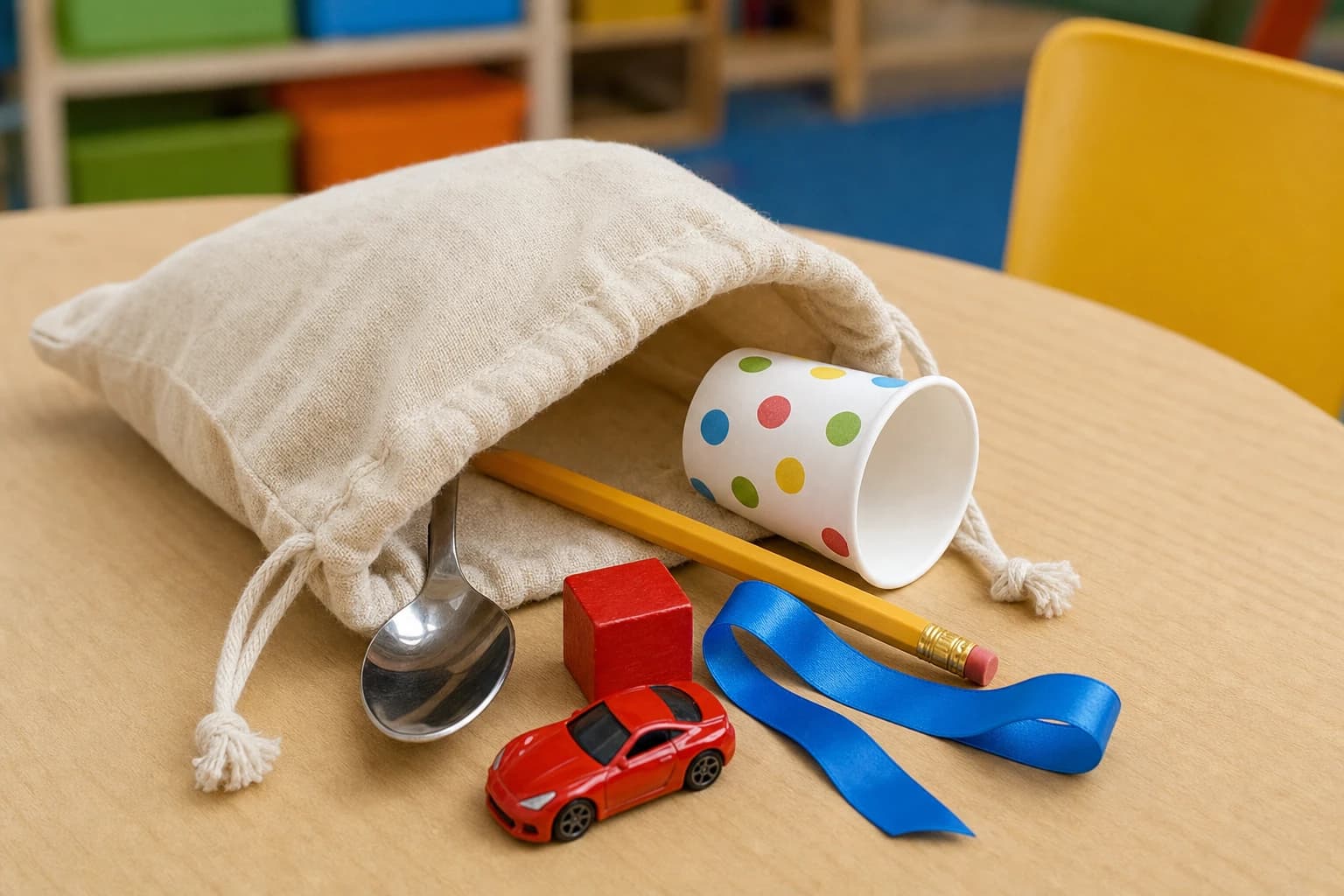
Leader script: “Choose one object from the bag without looking. Tell us your name and one way this object could connect to you. You can be serious or silly.”
- Place 8 to 12 safe household objects in a bag: spoon, toy car, pencil, sock, keychain, ribbon, small block, paper cup.
- Each child draws one item.
- The child says a name and a connection: “I’m Leo. I got a spoon, and I like soup.”
- Return the item to the bag or keep it out so each object is used once.
Inclusive variation: Offer a choice of two objects if a child feels stuck. They can also say, “This object reminds me of…” instead of sharing something personal.
5. Silent Line-Up
Best for: groups that need teamwork without more noise. This is one of the most useful short group games indoors because it resets the room while still feeling playful.
Leader script: “Your challenge is to line up in order without talking. You can use hand signals, pointing, and facial expressions. If you need help, raise your hand and I will give a clue.”
- Choose an order that is safe to share: birth month, first-name alphabetical order, shoe color from light to dark, or number of letters in first name.
- Set a 3-minute timer.
- Let children arrange themselves silently.
- Check the order together and celebrate close attempts.
Inclusive variation: Allow whispering for younger children or children who find silence frustrating. For children with mobility needs, let the group hold numbered cards while staying seated and rearrange the cards instead of bodies.
6. Would You Rather Walk
Best for: large groups, birthday parties, and family gathering icebreaker games where children want to move but you cannot run.
Leader script: “I will read a ‘would you rather’ question. Walk to the side that matches your answer. If you are not sure, stand in the middle. After each round, turn to someone near you and say one sentence about your choice.”
- Create two sides of the room and one middle zone.
- Use low-stakes prompts: fly like a bird or swim like a fish; build a fort or bake cookies; visit space or visit the deep ocean.
- After each move, give 20 seconds for partner talk.
- Run 6 to 8 prompts and stop before the energy gets too high.
Inclusive variation: Children can hold up A, B, or “both” cards while seated. For shy players, make the partner sentence optional.
7. Partner Portrait Without Drawing Skill
Best for: older elementary children, preteens, and club groups that need a 10 to 15 minute opener.
Leader script: “You and a partner will interview each other for two minutes each. Then you will make a fun portrait using symbols, not realistic drawing. A soccer ball, book, star, pizza slice, or music note can all be part of a portrait.”
- Pair children. Give each child paper and a pencil.
- Partner A asks Partner B three questions: favorite activity, favorite food, and one thing they want to learn.
- Switch after two minutes.
- Give three minutes for symbol portraits.
- Invite volunteers to introduce their partner using the portrait.
Inclusive variation: Let children make a word cloud instead of a drawing. If a child dislikes being the focus, the pair can show the portrait only to the leader.
8. Memory Chain Names
Best for: small groups where learning names is the main goal. Avoid this one with very large groups because waiting becomes stressful.
Leader script: “We will build a name chain. Each person says the names before them and then adds their own. If someone forgets, the group can help kindly.”
- Stand or sit in a circle of 5 to 15 players.
- The first child says a name.
- The second child repeats the first name and adds their own.
- Continue around the circle.
- Let the final player ask for help at any point.
Inclusive variation: Use name tags and allow children to look. The goal is connection, not a memory test. You can also divide into groups of 6 if the room has more than 15 children.
9. Common Ground Circles
Best for: older kids who can move thoughtfully and listen to prompts.
Leader script: “When I read a statement that is true for you, step into the circle. Look around, notice who shares that thing, then step back out. You never have to step in if you prefer not to.”
- Mark a loose center circle using carpet space or a safe open area.
- Read light statements: I like rainy days; I enjoy building things; I have tried a new food this month; I like board games; I have helped cook a meal.
- Pause for two seconds after each statement.
- Invite one optional share after every few prompts.
Inclusive variation: Use hand raises instead of stepping in. Avoid statements that reveal sensitive information. This activity works well before a family game night; for longer intergenerational play, see board games for grandparents and kids to play together.
How to introduce any icebreaker in under 30 seconds
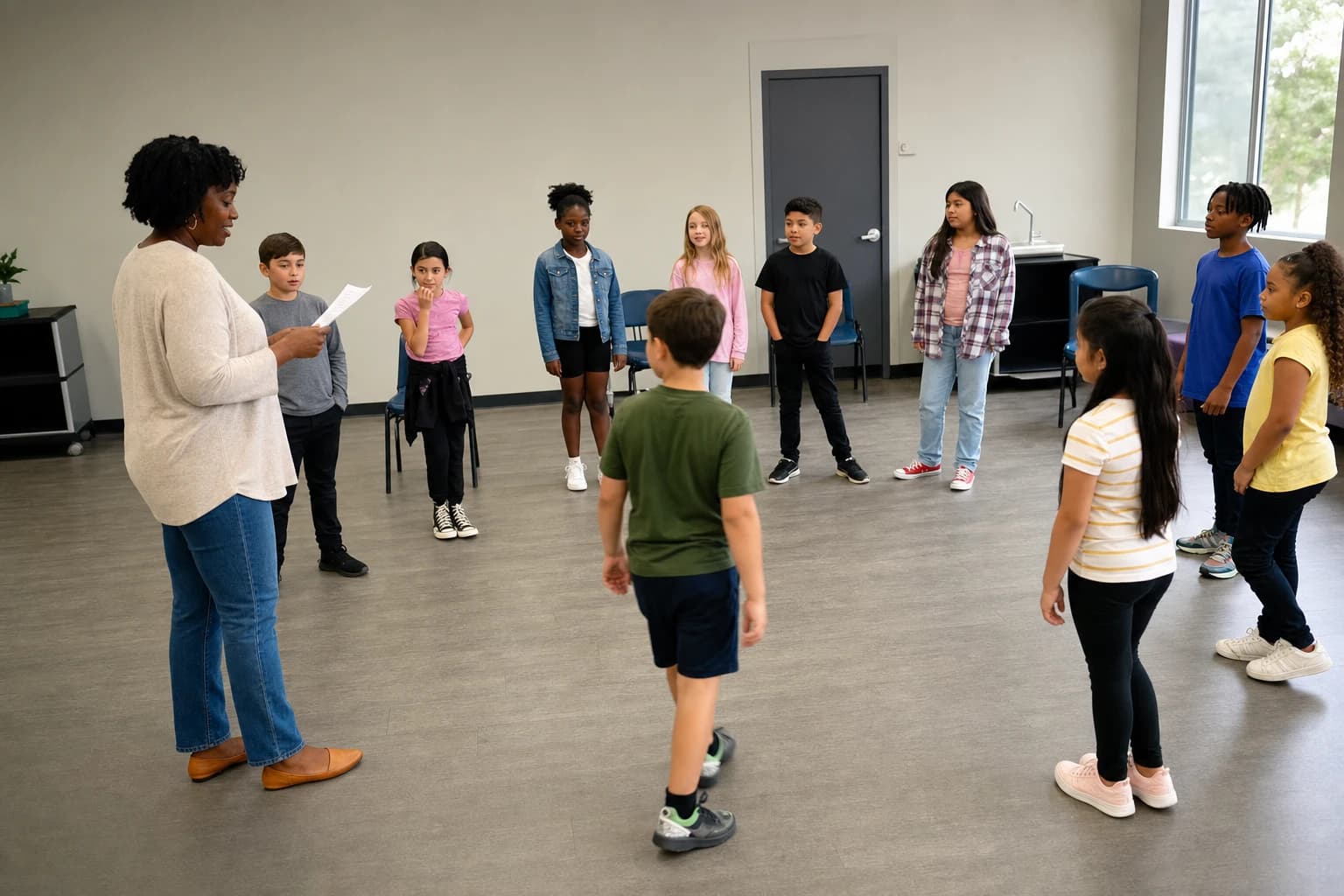
A short, confident explanation prevents confusion. Use this four-part pattern:
- Name the goal: “This helps us learn names and find things in common.”
- Give the rule: “Walk, do not run. You may pass if you do not want to answer.”
- Model one turn: Show exactly what a child should say or do.
- Set the time limit: “We will play for seven minutes, then sit back down.”
Try saying: “This is a quick warm-up, not a test. You can always pass, use a quiet voice, or answer with a gesture.”
Common mistakes to avoid
- Starting with deeply personal questions. Children do not need to reveal family details, fears, grades, or private experiences to connect.
- Letting movement turn into chasing. Indoor icebreakers should use walking, pointing, passing, or standing zones unless you are in a gym.
- Making shy children perform first. Ask for volunteers before calling on anyone. Offer a pass option from the start.
- Choosing a game that is too long. Stop while the energy is still positive. A 7-minute game that ends cleanly is better than a 15-minute game that loses focus.
- Ignoring age differences. Younger children need concrete choices and visible examples. Older children usually prefer prompts that do not feel babyish.
If your group includes many younger children, these quiet indoor games for preschoolers may be a better fit than interview-style icebreakers.
FAQ: short indoor icebreakers for kids
What is the best 5-minute icebreaker for a classroom?
Pass the Name Pulse is usually the easiest 5-minute classroom icebreaker because it has one clear turn-taking rule, uses low movement, and helps everyone hear names.
How do I include a child who does not want to talk?
Build in a pass option before the game starts. Let the child point, hold up a card, use a partner, or simply say their name. Avoid framing quiet participation as a problem.
What icebreaker works for a large indoor group?
Two Corners, One Choice and Would You Rather Walk work well for larger groups because many children can answer at the same time. Use clear room boundaries and require walking only.
Are icebreakers appropriate for family gatherings?
Yes, if the questions are light and optional. Food preferences, hobbies, favorite seasons, and silly choices usually work better than personal questions.
How many icebreakers should I run before the main activity?
One is usually enough. Choose a 5 to 10 minute game, then move into the main activity while attention is still high.
Conclusion: keep it short, safe, and optional
The most useful 5 to 15 minute indoor icebreaker games for kids do not need complicated props or long explanations. Pick a game that matches your room size, age range, and noise limit. Use a simple script, model one turn, and make passing acceptable.
For a calm group, start with Pass the Name Pulse or Mystery Object Introductions. For a restless group, use Two Corners, Would You Rather Walk, or Silent Line-Up. For older children who need a deeper connection, try Partner Portraits or Common Ground Circles. The goal is not to force instant friendship; it is to make the room feel a little safer, warmer, and easier to join.