A math review day can get noisy fast if students are moving without a clear purpose. A well-planned scavenger hunt solves that problem: students travel to task cards, solve problems, record answers, and use each answer to find the next stop. This guide explains how to run a classroom math scavenger hunt for 3rd grade, 4th grade, and 5th grade without turning your room into chaos.
You will find a reusable planning structure, sample clue types, grouping advice, pacing tips, and ways to adapt the same format for multiplication, fractions, geometry, measurement, word problems, and end-of-unit review.
What a Classroom Math Scavenger Hunt Is
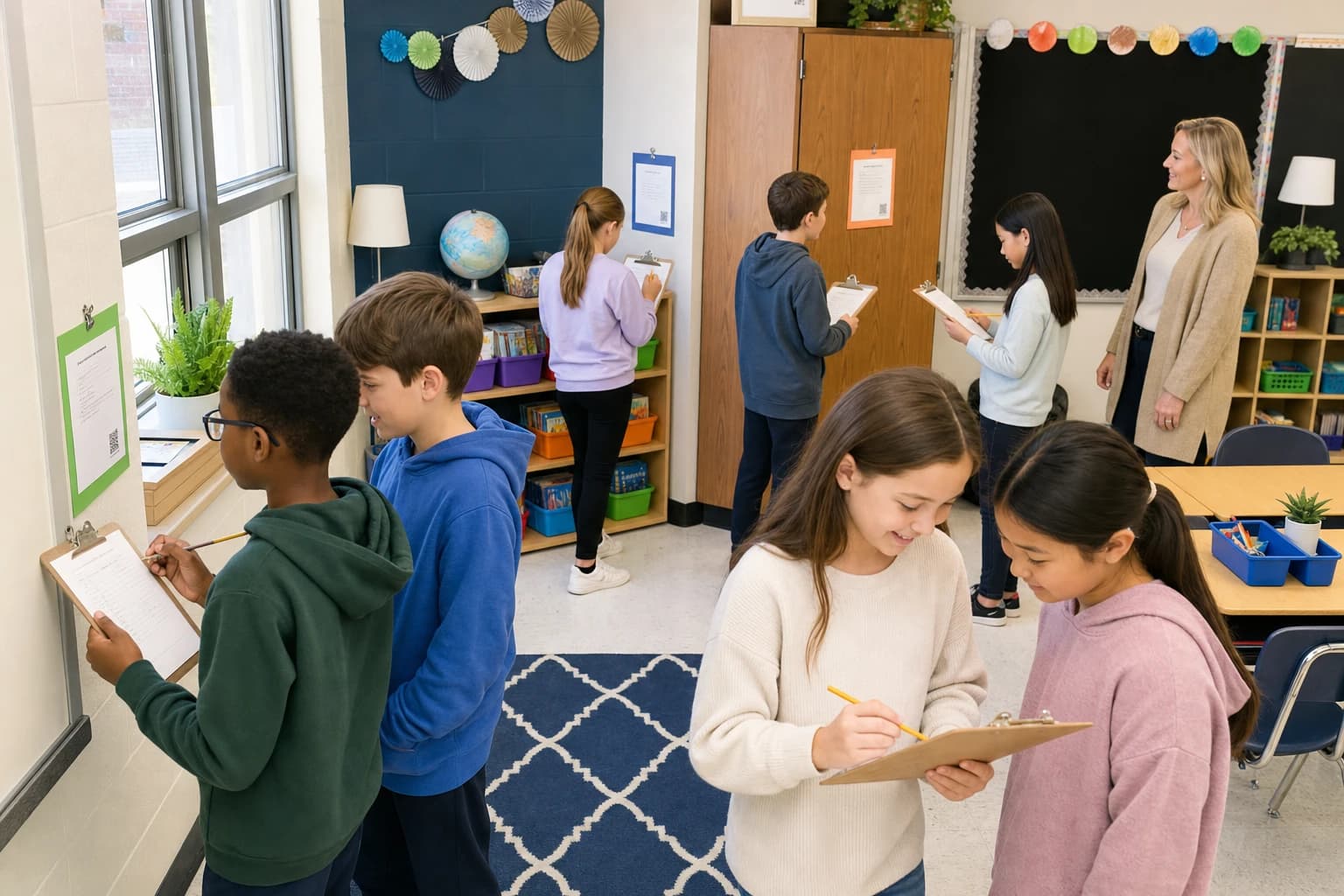
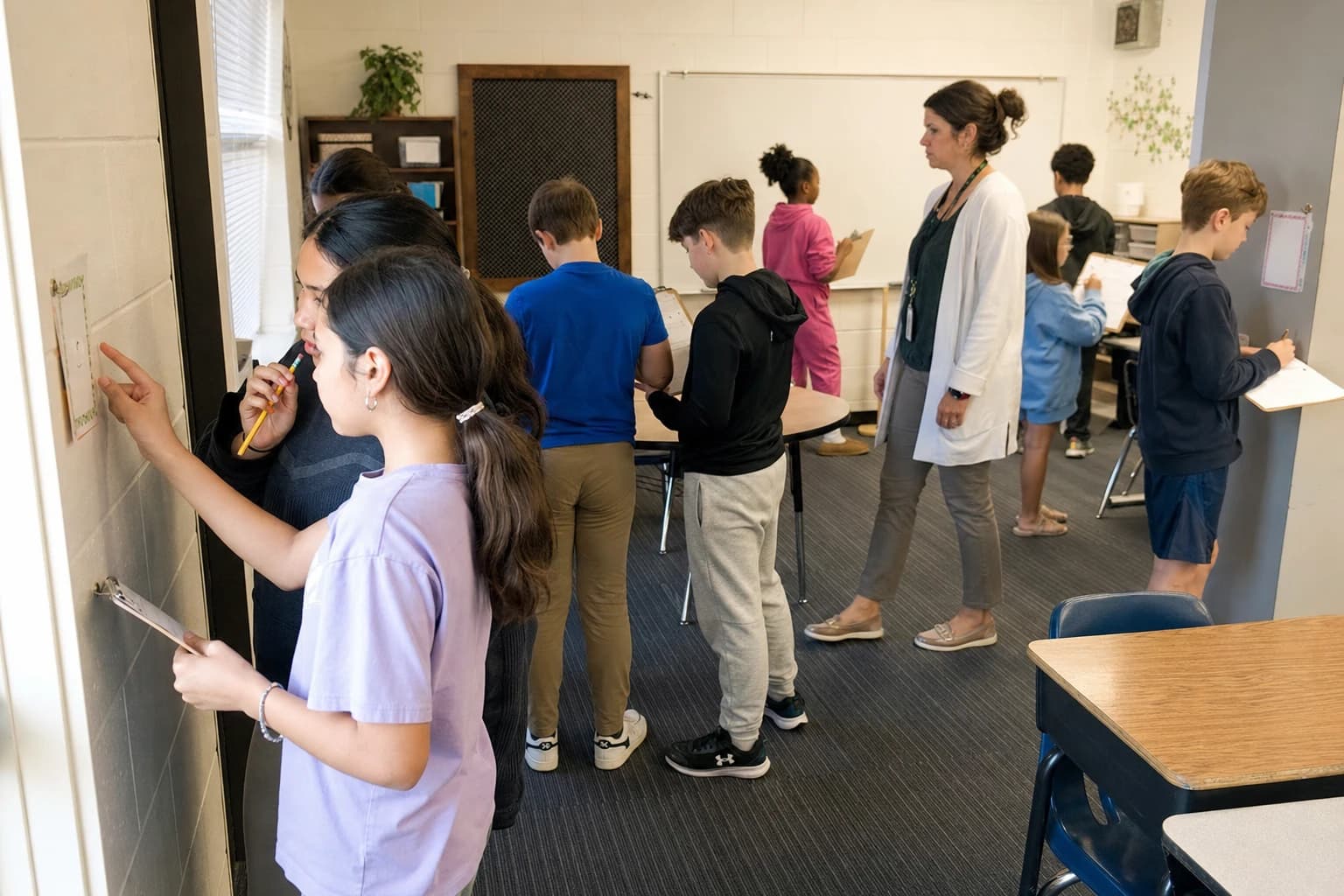
A classroom math scavenger hunt is an active review game where students move around the room to solve math clues. Instead of completing a worksheet at a desk, students search for numbered or coded cards, solve each problem, and follow directions to their next clue.
The format is flexible. One class might solve multiplication facts hidden under desks. Another might answer fraction comparison problems posted around the walls. A 5th grade class might solve decimal word problems and use each answer to unlock the next station.
The learning goal matters more than the theme. The hunt should review a specific set of math skills and give students repeated practice with immediate structure. If you want the activity to connect to grade-level expectations, align your problems with your district curriculum or a public standards reference such as the Common Core State Standards for Mathematics, where applicable.
Best Skills to Review With This Format
A math scavenger hunt classroom activity works best for skills that can be solved in one to four minutes. Long multi-step investigations can be valuable, but they slow down the hunt and create traffic jams. Choose problems that are meaningful, focused, and easy to check.
- 3rd grade: multiplication and division facts, area with unit squares, perimeter, rounding, elapsed time, simple fractions, one-step word problems.
- 4th grade: multi-digit addition and subtraction, multiplication by one-digit numbers, division with remainders, equivalent fractions, angle measurement, place value, multi-step word problems.
- 5th grade: decimal operations, fraction addition and subtraction, volume, coordinate planes, powers of ten, order of operations, fraction and decimal word problems.
If your class includes a wide range of readiness levels, build the hunt around one target skill and vary the numbers. For example, all students can work on multiplication strategies, but some cards may use basic facts while others include two-digit by one-digit problems.
Materials and Setup
You do not need elaborate props. The best scavenger hunts are easy to print, easy to reset, and easy to reuse.
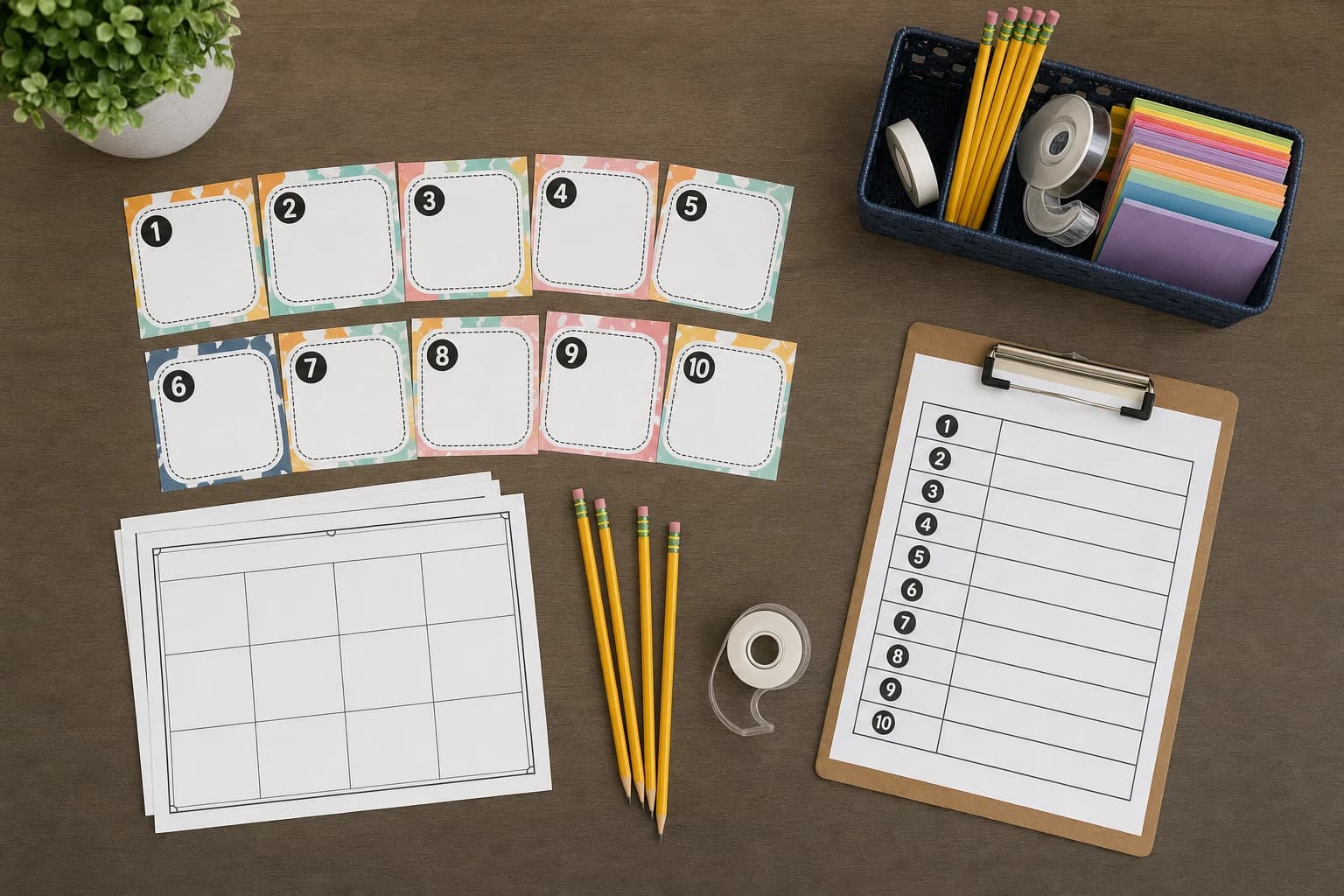
- 12 to 16 math task cards for a 30 to 45 minute activity
- One recording sheet per student or pair
- Answer key for the teacher
- Tape, magnets, or sticky tack for posting cards
- Pencils and clipboards, folders, or hard surfaces for writing
- Timer or projected countdown
- Optional: colored cards, envelopes, QR-free clue codes, or small reward slips
For a standard upper elementary class, 12 cards is enough for a first attempt. Use 16 cards only if your students already understand the routine or if you plan to run the hunt across two sessions.
A Simple Planning Template
Use this structure when designing any elementary math review game in scavenger hunt form.
- Choose one main review goal. For example: comparing fractions with unlike denominators.
- Write 12 problems. Keep each answer short enough to record clearly.
- Assign each card a letter, number, or symbol. This helps students track where they have been.
- Create a recording sheet. Include spaces for card code, work, and final answer.
- Decide the movement path. Students can rotate in order, choose any card, or follow answer-based clues.
- Plan your check system. Will students check at the end, after every four cards, or with a partner?
Three Scavenger Hunt Formats That Work in Grades 3 to 5
There is no single correct way to run the hunt. Choose the format that fits your classroom space, student independence, and time limit.
| Format | How It Works | Best For | Teacher Tip |
|---|---|---|---|
| Open search | Cards are posted around the room. Students solve them in any order. | First-time hunts, mixed groups, short review sessions | Require students to record the card code so you know which problems they solved. |
| Loop hunt | Each answer directs students to the next card. Everyone starts at a different card. | Practicing accuracy and persistence | Test the loop before class. One wrong clue can break the whole activity. |
| Team challenge | Teams collect completed answers and check in after a set number of cards. | Cooperative review and longer math blocks | Assign roles so one student does not take over all the solving. |
If you are new to this format, start with the open search. It is easier to manage because students do not get stuck if one answer is incorrect. Once they know the routine, try a loop hunt for more puzzle-like energy.
Step-by-Step: How to Run the Hunt
1. Pick the skill and difficulty level
Start with one clear learning target. A hunt called “math review” can become too broad, especially for students who need structure. A better target is “solve one-step and two-step multiplication word problems” or “add and subtract fractions with unlike denominators.”
For a 30 minute activity, choose problems students can solve mostly independently. Save brand-new skills for direct instruction, not the hunt.
2. Write 12 to 16 task cards
Each card should include one problem, enough space visually to read it from nearby, and a clear code such as A, B, C or 1, 2, 3. If students will copy the problem, keep wording short. If they will only write their work and answer, the card can include a short word problem.
Example 4th grade card: “Card G: A garden has 6 rows with 24 plants in each row. How many plants are there in all?”
Example 5th grade card: “Card L: Find the volume of a rectangular prism with length 8 cm, width 3 cm, and height 5 cm.”
3. Create an answer recording sheet
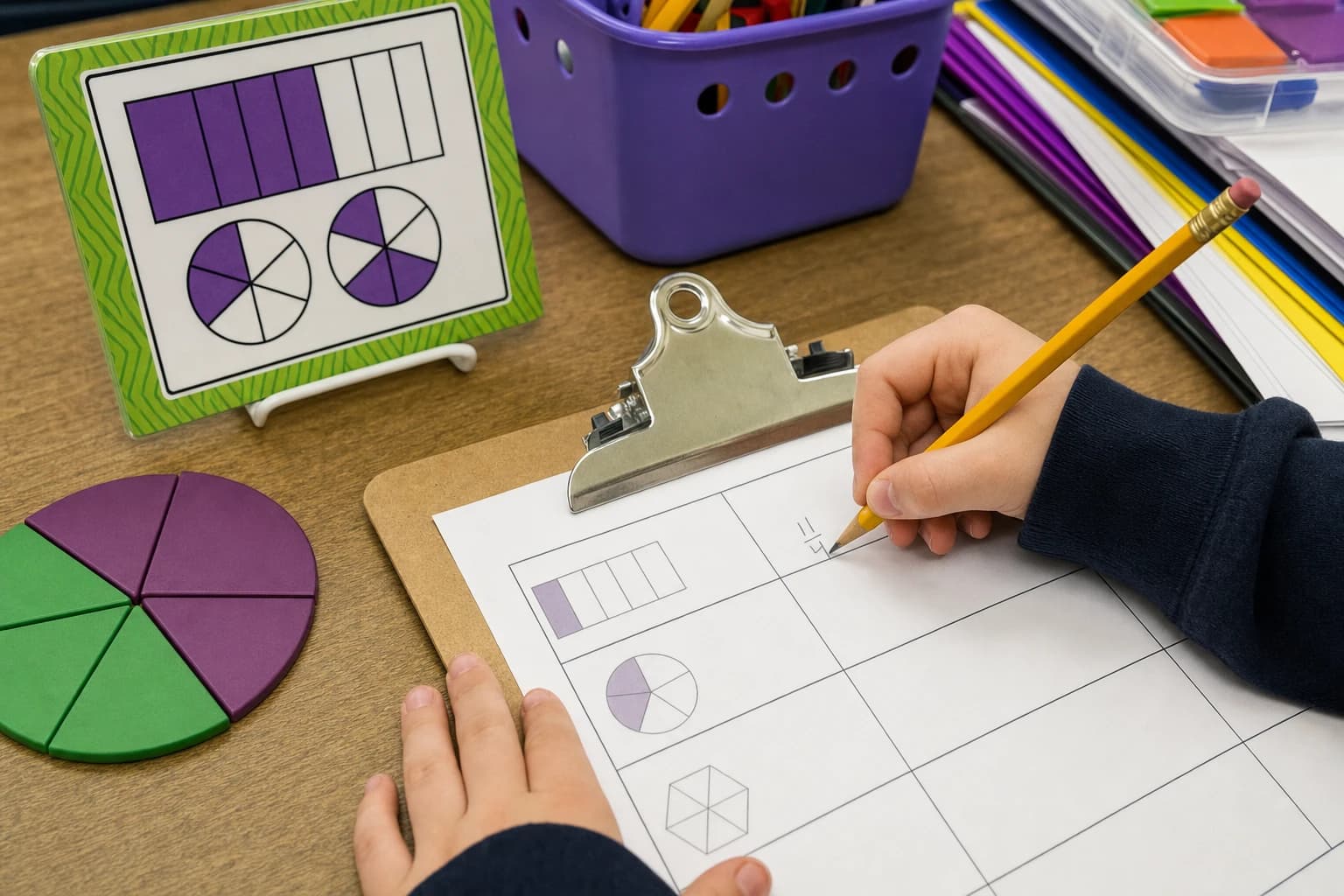
The recording sheet prevents wandering. Give students a table with three columns: card code, math work, and answer. For upper elementary students, require visible work on at least the problems that involve multi-step reasoning.
You can also add a reflection box at the bottom: “Which problem was most challenging?” or “Write one strategy your group used.” This turns the game back into evidence of learning.
4. Place cards with traffic flow in mind
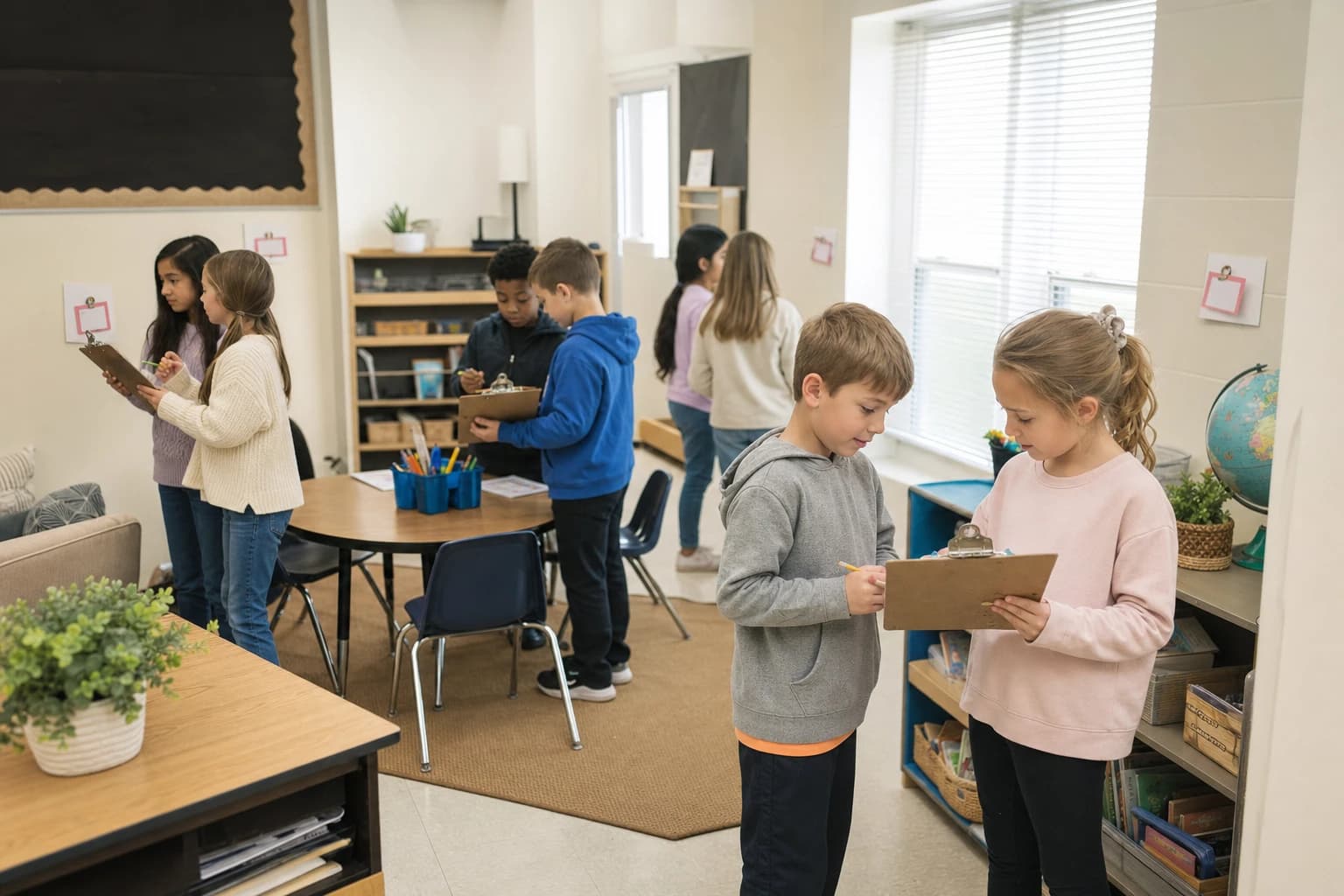
Post cards around the classroom at different heights and locations, but avoid spots where students will crowd the doorway, teacher desk, sink, or pencil sharpener. Place two or three cards near open floor areas and a few near student desks.
If space is tight, post cards on folders or clipboards and place them at table groups. For more small-space movement ideas, see 25 No-Equipment Classroom Games for 2nd to 5th Grade Transitions.
5. Explain the rules in under three minutes
Give short, specific directions. Students need to know where to move, how loud to be, how to record answers, and what to do when stuck.
“You will work with your partner. Start at your assigned card, solve it, show your work on the recording sheet, then move to any open card. Walk only. Use a math voice. If a card is crowded, choose another. After four cards, check in with me.”
Demonstrate one card quickly. Do not solve the whole problem for them; model how to record the card code and where to write work.
6. Start students at different locations
To prevent a crowd at Card 1, assign starting cards. For 24 students in pairs, you can use 12 cards and place one pair at each card. For groups of three, use at least 8 cards so movement stays spread out.
7. Use checkpoints instead of constant correction
Rather than checking every answer immediately, build in checkpoints. For example, students must show you four completed cards before continuing. This lets you catch repeated errors without stopping the whole game every minute.
If you prefer peer checking, post an answer bank near your desk after the first 15 minutes. Students can compare answers, but they should still show work. Do not post the answer key too early if accuracy is the main goal.
8. Debrief for five minutes
The debrief is where the learning gets clearer. Choose two or three problems that revealed common mistakes and solve them together. Ask students to explain the strategy, not just the answer.
Good closing prompts include: “What clue told you to multiply?” “Where did the fraction comparison become tricky?” and “How did your group decide whether an answer made sense?”
Sample Clue Types You Can Reuse
Changing the clue style keeps the activity fresh without requiring a full redesign every time.
- Answer match: Students solve a problem and find another card with the matching answer printed in a corner.
- Map clue: The answer tells students where to go, such as “If your answer is 36, go to the window card.”
- Multiple-choice path: Each answer choice sends students to a different next card. This works well for error analysis.
- Code word: Each correct answer gives a letter. At the end, students unscramble a math vocabulary word.
- Estimate first: Students estimate, solve exactly, and explain whether the answer is reasonable.
- Find the mistake: A card shows a solved problem with an error. Students identify and correct it.
For more practice-based activities that do not rely on worksheets, you may also like Educational Indoor Classroom Games for Grades 3–5.
Grouping Tips for 3rd, 4th, and 5th Grade
Pairs are usually the easiest grouping choice. They allow discussion without creating a crowd around each card. Groups of three can work if roles are clear. Groups of four often become too large unless the task is complex.
Try these roles when students need more structure:
- Reader: Reads the card exactly as written.
- Solver: Leads the first attempt at the math.
- Checker: verifies the answer and asks, “Does it make sense?”
- Recorder: Writes the group’s work neatly.
In pairs, combine roles: one student reads and records while the other solves and checks, then they switch at the next card.
Avoid making the hunt a speed contest. Timed races can encourage guessing, skipped work, and frustration for students who process slowly. If you want a challenge element, reward completeness, mathematical explanation, or teamwork instead.
Classroom Management Advice That Prevents Problems
Set movement rules before the first card. Use “walk, whisper, work” or another short phrase students can remember. If the noise rises, pause the timer and reset expectations instead of trying to talk over the room.
- Use a maximum of two students or one group per card. If a card is occupied, students must choose another station.
- Create a help routine. Students should reread, try a strategy, ask a partner, and then ask the teacher.
- Keep pencils moving with clipboards. If you do not have clipboards, students can use folders, notebooks, or hardcover books as writing surfaces.
- Mark finished cards. Students can check off card codes on their recording sheet to avoid repeats.
- Have an early finisher task. Ask students to write their own scavenger hunt card for the same skill.
If you need a calmer follow-up after an active math block, a seated game from How to Play Four Corners in the Classroom can help shift the energy while still keeping students engaged.
Common Mistakes to Avoid
- Too many cards: A 24-card hunt sounds exciting, but it can overwhelm students and make checking difficult. Start with 12.
- Problems that are too long: If every card has a dense word problem, movement stops. Mix short computation, visual models, and a few word problems.
- No recording system: Students need a clear sheet that proves what they solved and how.
- Unclear answer format: Decide whether answers need units, simplified fractions, labels, or full sentences.
- All groups starting at the same card: This creates crowding immediately. Assign different starting points.
Easy Variations for Different Needs
To support students who need more time, reduce the required number of cards. For example, everyone completes eight cards, and optional challenge cards are available for students who finish early. This keeps the same activity structure while adjusting workload.
For students ready for enrichment, add “explain your strategy” cards, error-analysis cards, or problems with more than one possible solution. In a geometry hunt, for example, students might find two different rectangles with the same area but different perimeters.
You can also run a quiet version. Place cards at table groups instead of around the room and have students rotate every four minutes. This keeps the scavenger hunt feel while reducing movement.
FAQ: Classroom Math Scavenger Hunts
How long should a classroom math scavenger hunt take?
Plan 30 to 45 minutes for upper elementary students. That includes directions, movement, solving time, and a short debrief. A first hunt may need extra time because students are learning the routine.
How many task cards should I use?
Use 12 cards for your first hunt. Once students understand expectations, you can increase to 16 cards or add optional challenge cards for early finishers.
Should students work alone or in groups?
Pairs usually work best for 3rd to 5th grade. Students can talk through strategies, but the group is still small enough for both partners to participate.
Can I use a math scavenger hunt for test review?
Yes, as long as the problems match skills students have already learned. Keep the hunt focused and use the debrief to correct misunderstandings before the assessment.
What if students just copy answers from other groups?
Require work on the recording sheet, circulate during the hunt, and use checkpoints after every four cards. You can also give groups different starting cards or slightly different number sets.
How do I make the activity less chaotic?
Limit the number of students at each card, assign starting locations, use a visible timer, and teach a clear rule for crowded stations: if someone is there, move to another open card.
Conclusion
A classroom math scavenger hunt for 3rd grade, 4th grade, and 5th grade does not need elaborate decorations or complicated clues. It needs a focused math goal, clear task cards, a recording sheet, sensible movement rules, and a short debrief that brings students back to the learning.
Start small with 12 cards and pairs, then adjust the format as your class becomes more independent. Once the structure is in place, you can reuse it for almost any upper elementary math topic, from multiplication facts to fractions, geometry, decimals, and word problems.