A classroom vocabulary scavenger hunt is a fast way to review word meanings without turning the lesson into a worksheet. The challenge is keeping it structured: students need enough movement to stay engaged, but not so much that the room becomes noisy or chaotic.
This guide gives you a complete 20-minute setup for a vocabulary review game using paper clues, index cards, sticky notes, or a projected word list. You will find a minute-by-minute plan, printable-style clue examples, grade-level adjustments, management tips, and ways to reuse the same format for spelling, science terms, and foreign language practice.
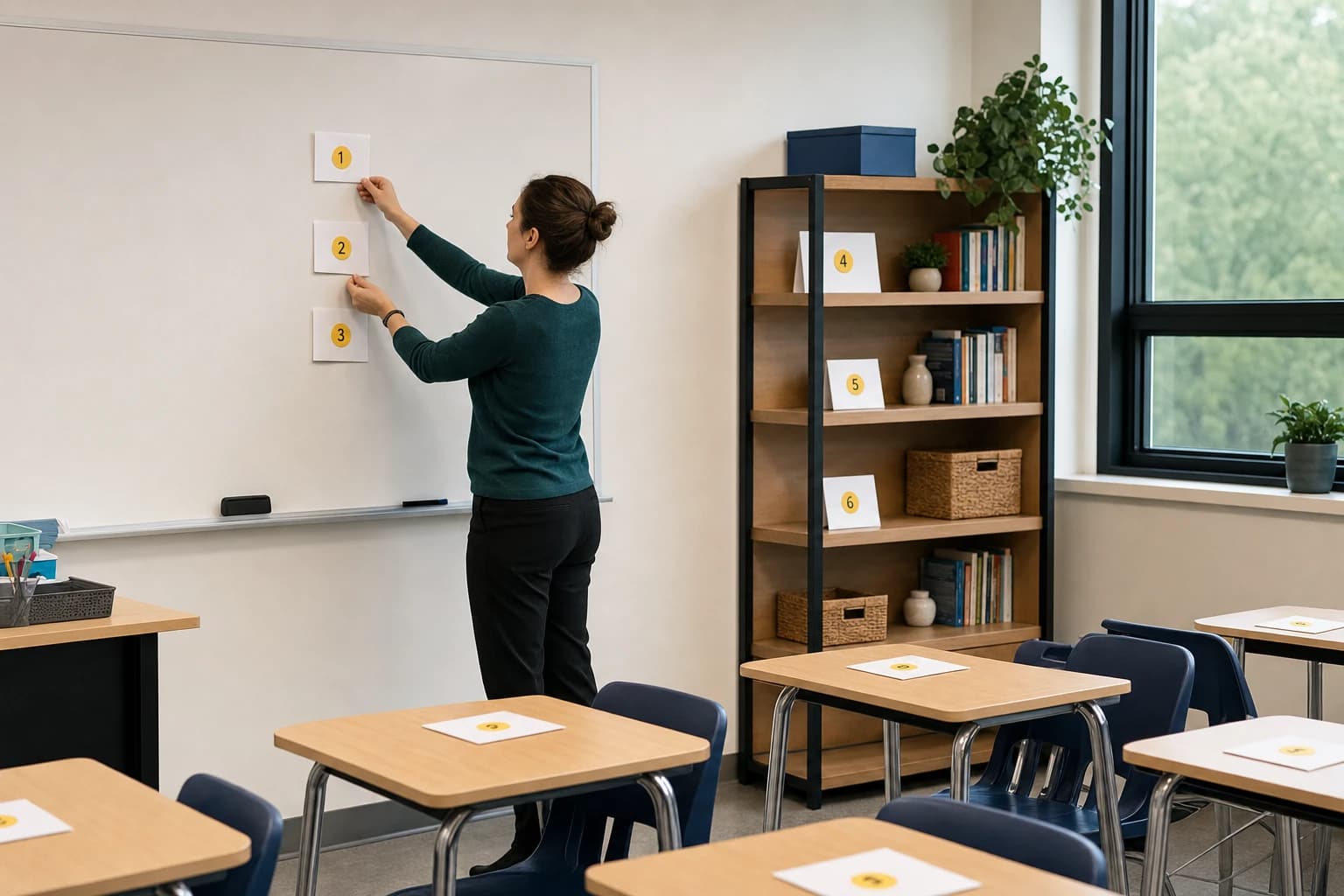
Quick Overview: The 20-Minute Format
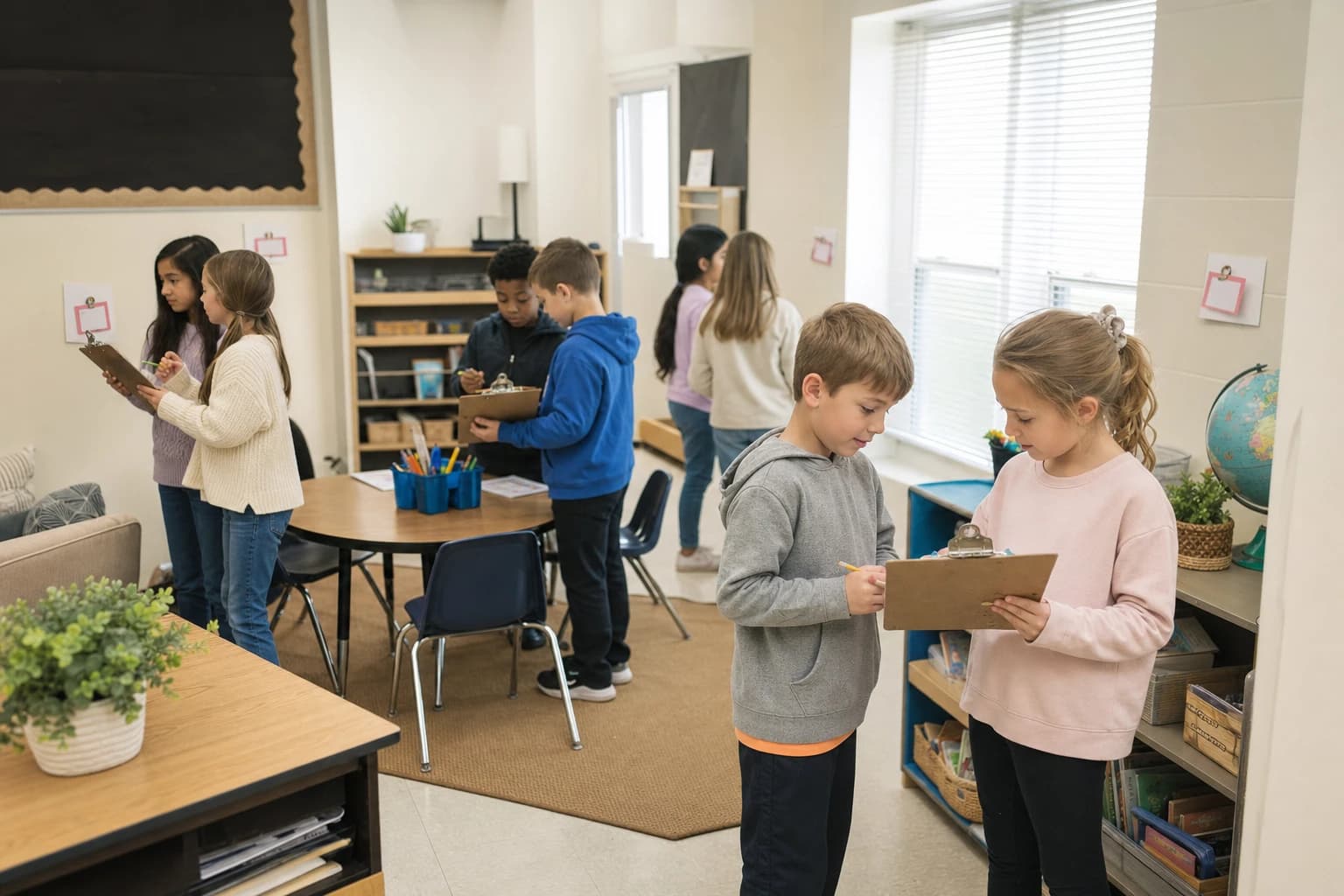
The basic idea is simple: students move around the room to find vocabulary clue cards, match each clue to the correct word, and record an answer before time runs out. The activity works well for ELA review activities because it combines movement, reading, context clues, and quick recall.
Vocabulary knowledge is a regular part of English language instruction. The Common Core College and Career Readiness Anchor Standards for Language include vocabulary acquisition and use, including determining meanings of words and phrases in context. You can view the standards directly from the official Common Core site at thecorestandards.org. A scavenger hunt does not replace explicit instruction, but it is a practical review format after students have already encountered the words.
Best use case
Use this activity after teaching 8 to 12 vocabulary words from a story, unit, spelling list, science chapter, or language lesson. It is strongest as a review or formative check, not as the first introduction to unfamiliar terms.
Materials You Need
You do not need expensive supplies. Prepare the cards before class if possible. If you are short on time, write the clues by hand on index cards or sticky notes.
- 8 to 12 vocabulary words for one round. Ten words is the easiest number for a 20-minute class activity.
- 10 clue cards, one clue per card. Use half-sheets of paper, index cards, or sticky notes.
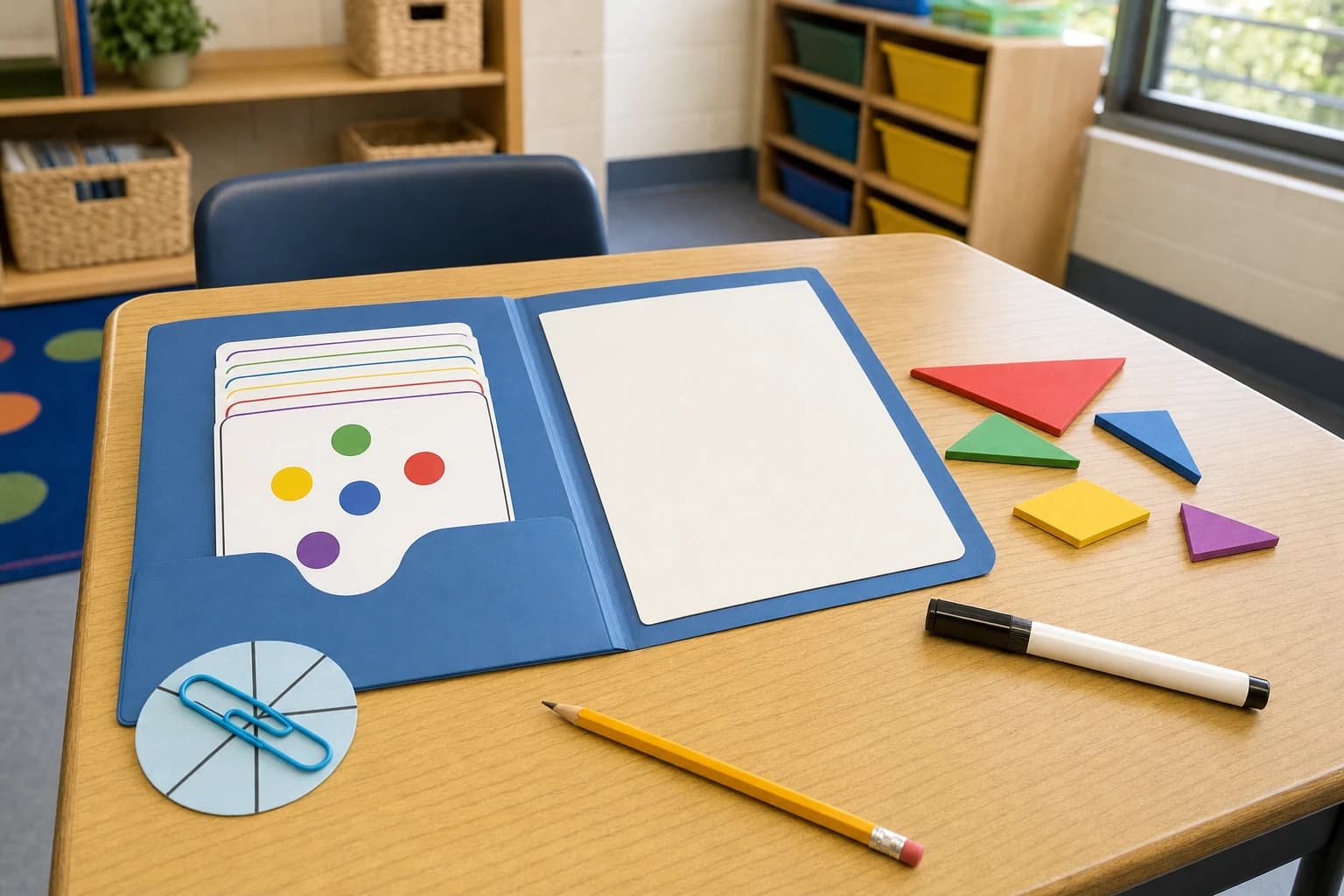
- 1 recording sheet per student or pair with spaces numbered 1 through 10.
- Tape or magnets for posting clue cards around the classroom.
- Timer visible to students, if available.
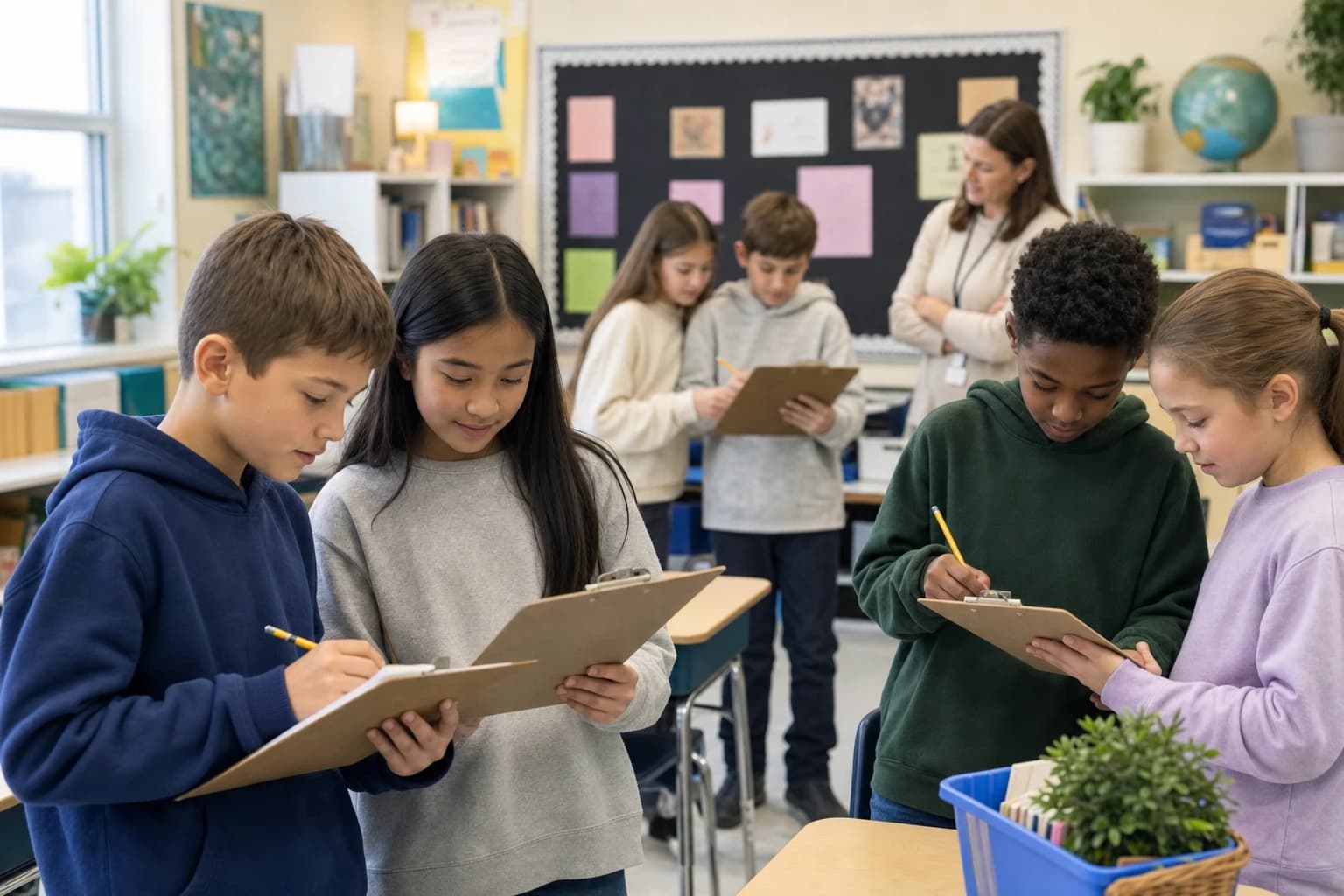
- Pencils and clipboards, notebooks, or folders for writing while standing.
If you often run indoor class games, a small supply bin can help. For low-cost items that support activities like this, see Best Affordable Classroom Game Supplies for Indoor Recess.
Before Class: Build the Clue Cards
A good clue card should make students think without forcing them to guess randomly. Each card should include the card number and one clue. Do not put the answer word on the same card. Keep the wording short enough that students can read it quickly while standing.
Here is a simple structure:
Card 4: This word means to look at two things and tell how they are alike and different.
Students would write compare on line 4 of their recording sheet.
Printable-style clue examples
Use the examples below as models. Replace the words with your own class list.
| Card | Clue | Answer word |
|---|---|---|
| 1 | This word means very tired after a lot of work or activity. | exhausted |
| 2 | This word means to make something clear by giving details or examples. | explain |
| 3 | This word describes a character who is brave even when something is difficult. | courageous |
| 4 | This word means the lesson or message in a story. | theme |
| 5 | This word means to guess using clues and what you already know. | infer |
| 6 | This word means the opposite or different point of view. | contrast |
| 7 | This word means a problem or struggle in a story. | conflict |
| 8 | This word means to change or become different over time. | evolve |
| 9 | This word means careful, exact, and correct. | precise |
| 10 | This word means to support an answer with proof from the text. | justify |
For younger students, use shorter definitions and add a picture clue if needed. For older students, use context sentences instead of direct definitions.
Step-by-Step: Run the Hunt in 20 Minutes
This plan is designed for a standard classroom where students can safely walk around desks. If your room is crowded, use pairs, stations, or a seated version explained later.
- Minute 0 to 2: Explain the goal. Tell students they will find numbered clue cards, decide which vocabulary word matches each clue, and write the answer on the same numbered line. Show one sample card and one sample recording line.
- Minute 2 to 3: Review the movement rules. Use clear limits: walking feet, quiet voices, no moving cards, and no crowding a station. If more than two students are waiting at a card, they must move to another card and return later.
- Minute 3 to 4: Form pairs or small groups. Pairs are usually best. Groups of three can work if students have assigned jobs: reader, recorder, and checker. Individual play is possible for older students or smaller classes.
- Minute 4 to 5: Hand out recording sheets. Students write their names and scan the vocabulary word bank if you are using one. For a harder version, remove the word bank.
- Minute 5 to 14: Hunt time. Students circulate and answer as many cards as possible. Keep the timer visible. Give a calm halfway reminder at minute 9 or 10: You should have at least five answers by now.
- Minute 14 to 17: Pair check. Students return to seats and compare answers with their partner. They may mark any answer they are unsure about with a question mark instead of changing it silently.
- Minute 17 to 20: Review answers. Read each clue number and ask for the matching word. For quick assessment, have students hold up fingers for confidence: 1 means unsure, 2 means somewhat sure, 3 means confident.
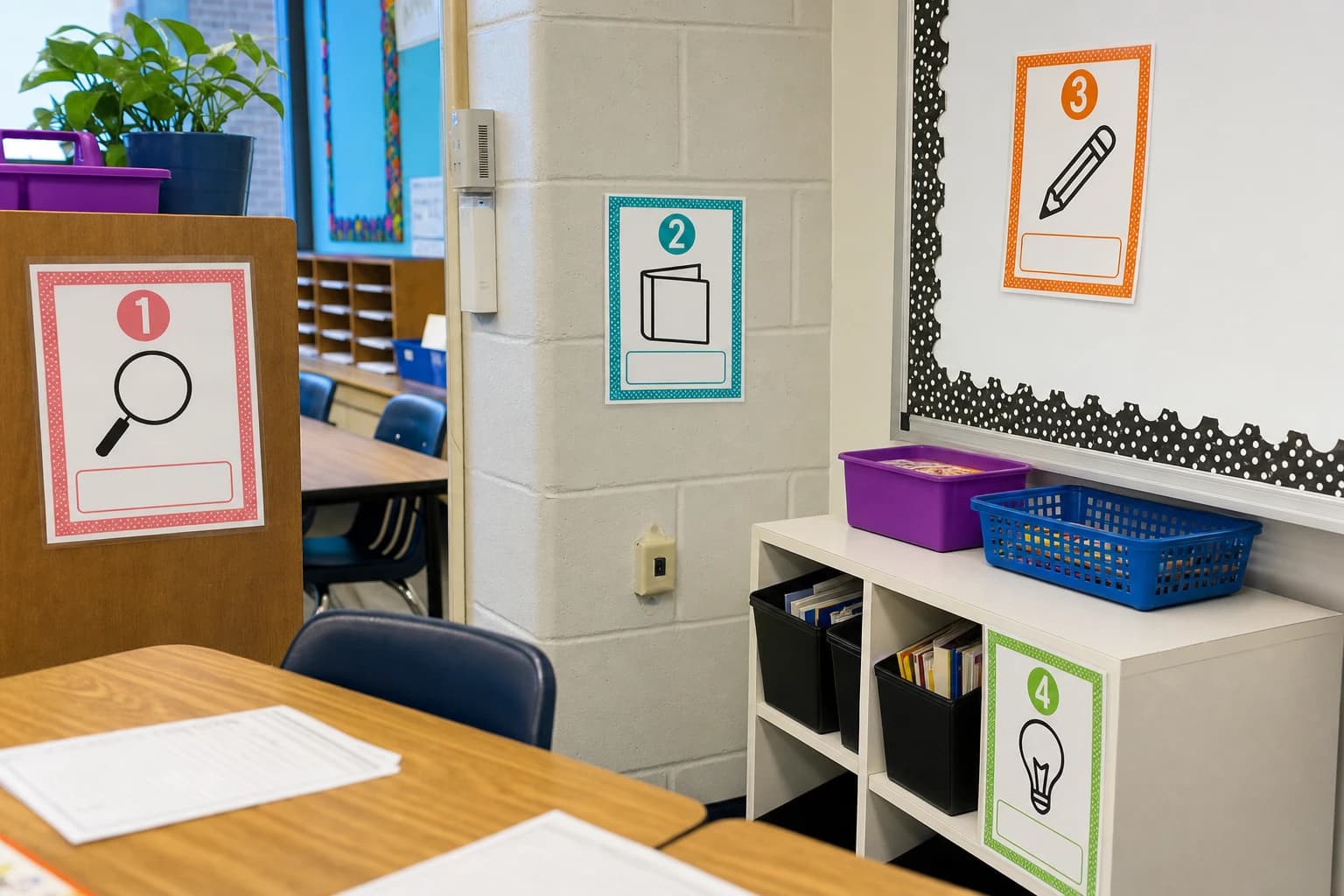
Recording Sheet Template
You can copy this format onto paper or display it for students to recreate in notebooks. A half-sheet works well if you want to save paper.
| Line | My answer | Confidence check |
|---|---|---|
| 1 | 1 2 3 | |
| 2 | 1 2 3 | |
| 3 | 1 2 3 | |
| 4 | 1 2 3 | |
| 5 | 1 2 3 | |
| 6 | 1 2 3 | |
| 7 | 1 2 3 | |
| 8 | 1 2 3 | |
| 9 | 1 2 3 | |
| 10 | 1 2 3 |
The confidence column is optional, but it gives you useful information. If many students mark 1 or 2 for the same word, that word needs another example or mini-lesson.
Classroom Management Tips That Keep It Calm
The difference between a successful classroom vocabulary scavenger hunt and a noisy one is usually the setup. Movement needs boundaries. Students should know where to go, how to act, and what to do when a card is crowded.
- Post cards above desk height. Cards on walls, whiteboards, cabinets, and the side of a bookshelf are easier to see than cards hidden under objects.
- Do not make students search for hidden cards. For classroom learning, the challenge should be vocabulary thinking, not crawling behind furniture.
- Use scattered numbering. Place Card 1, Card 2, and Card 3 in different areas so the whole class does not start in the same corner.
- Assign starting zones. Send one group to the door area, one to the reading corner, one to the whiteboard, and one to the back wall.
- Set a two-person limit per card. If a station is crowded, students must skip it and come back.
- Make the voice level explicit. Try the phrase: Partners may whisper; the room should not sound like recess.
- Have an early finisher task. Students who finish can write one original sentence using three of the vocabulary words.
If your class needs more low-movement options, you may also like 18 Quiet Classroom Games for Early Finishers in Kindergarten to 2nd Grade or 25 No-Equipment Classroom Games for 2nd to 5th Grade Transitions.
Difficulty Variations by Grade Level
The same vocabulary review game can work from early elementary through middle school if you change the type of clue, the number of words, and the amount of support.
| Grade band | Recommended words | Best clue type | Helpful support |
|---|---|---|---|
| K to 2 | 6 to 8 | Picture plus simple definition | Word bank with pictures, partner reading, large print cards |
| 3 to 5 | 8 to 10 | Definition, synonym, antonym, or short sentence | Word bank, example sentence on review day, paired work |
| 6 to 8 | 10 to 12 | Context sentence, root clue, or figurative meaning | No word bank for a challenge, or a word bank with distractors |
| 9 and up | 10 to 14 | Context, connotation, academic usage, or discipline-specific clue | Require a justification phrase or evidence from the clue |
Make it easier
- Use fewer cards.
- Provide a word bank in alphabetical order.
- Read the clues aloud before the hunt starts.
- Use matching cards at desks instead of movement around the room.
Make it harder
- Add two extra words to the word bank that are not answers.
- Use context clues instead of direct definitions.
- Require students to write a sentence using the word after they identify it.
- Remove the word bank and let students recall the terms from memory.
Adapt the Game for Other Subjects
Once you have the routine, the same structure works beyond ELA vocabulary. The key is matching the clue style to the subject goal.
Spelling review
Post clues that lead to spelling words, but require students to spell the answer correctly. For example: This word means a place where books are kept and has three syllables. Students write library. During review, ask students to circle the tricky part of each word.
Science terms
Use concept clues instead of dictionary definitions. For example: This process is how plants use sunlight, water, and carbon dioxide to make food. The answer is photosynthesis. Science scavenger hunts work best when students have already seen diagrams or notes from the unit.
Social studies vocabulary
Use event, person, or concept clues. For example: This word means a person who moves to a new country to live there. The answer is immigrant. Encourage students to connect the word to the unit text or map activity.
Foreign language vocabulary
Use picture cards, target-language clues, or translation prompts depending on student level. Beginners might match a picture of an apple to la manzana. More advanced students can read a simple sentence in the target language and infer the word.
Common Mistakes to Avoid
A scavenger hunt can lose its learning value if it becomes too focused on speed or hiding. Avoid these common issues:
- Too many cards. Twenty cards sounds exciting, but it is too much for a 20-minute review. Start with 10.
- Clues that are too vague. If several words could fit, students are guessing instead of using vocabulary knowledge.
- No review at the end. The closing discussion is where misconceptions surface. Keep at least three minutes for answer checking.
- Overly competitive scoring. Speed can motivate some students, but it can also lead to rushing. Consider scoring for accuracy first.
- Hidden cards in unsafe spots. Keep all cards visible and reachable. Students should not climb, crawl, or move furniture.
Optional Scoring Ideas
If you want a light scoring system, use one point for each correct answer and one bonus point for a complete original sentence using any vocabulary word. Avoid making the activity only about finishing first. A team that finishes in six minutes but misses four words has not reviewed as well as a team that works carefully.
Fast Variations for Different Classroom Needs
- Silent hunt: Students work independently and may not talk until the pair-check phase. This is useful when the class needs a calmer activity.
- Desk station hunt: Put one clue card on each group of desks. Students rotate every 60 seconds instead of freely circulating.
- Gallery walk version: Each clue includes a short passage or sentence. Students must underline the context clue that helped them answer.
- Team relay version: One student from each team visits a card, returns, and explains the clue to the recorder. Use this only if your room has enough space.
- Digital display version: Show one clue at a time on a projector and let pairs discuss for 30 seconds. This removes movement but keeps the puzzle format.
For a movement-based activity in another subject, see How to Run a Classroom Math Scavenger Hunt for 3rd to 5th Grade.
FAQ: Classroom Vocabulary Scavenger Hunt
How many vocabulary words should I use?
For a 20-minute activity, use 8 to 12 words. Ten words is a good starting point because it leaves time for directions, movement, partner checking, and a quick class review.
Should students work alone or with partners?
Partners are usually the best choice because students can discuss meanings and help each other read clues. For assessment, use individual recording sheets even if students move with a partner.
Can I use this with kindergarten or first grade?
Yes, but simplify the activity. Use 6 picture-based cards, read the clues aloud, and have students circle or match the answer instead of writing every word independently.
What if my classroom is too small for students to walk around?
Use a desk station version. Place clue cards at table groups and rotate the cards every minute, or project one clue at a time and have students record answers from their seats.
Is a word bank necessary?
Not always. A word bank helps younger students and makes the game more focused. For older students, remove the word bank or include two distractor words to increase the challenge.
How do I know if the activity worked?
Check which words students missed and look at their confidence ratings. If several students miss the same word or mark low confidence, reteach it with examples before moving on.
Conclusion
A classroom vocabulary scavenger hunt works because it turns review into an active, purposeful routine. Keep the setup simple: 10 clue cards, a numbered recording sheet, clear movement rules, and a short answer review. Once students understand the format, you can reuse it for spelling, science, social studies, and foreign language vocabulary with only small changes.
The best version is not the flashiest one. It is the one where students read carefully, talk about word meaning, and leave with a clearer understanding of the vocabulary they need for the next lesson.