Choosing between two classic circle games sounds simple until you have 18 excited preschoolers, a small gym, and one adult trying to keep everyone safe and included. Duck Duck Goose vs Drop the Handkerchief is not just a question of which game is more familiar. The better choice depends on your children’s ages, the space, how much running is appropriate, and whether the group can wait, watch, and follow a quiet cue.
This guide compares both games for preschool and kindergarten settings. You will find the basic rules, a side-by-side table, safety and supervision notes, low-speed variations, and practical recommendations for classrooms, playgrounds, camps, and family gatherings.
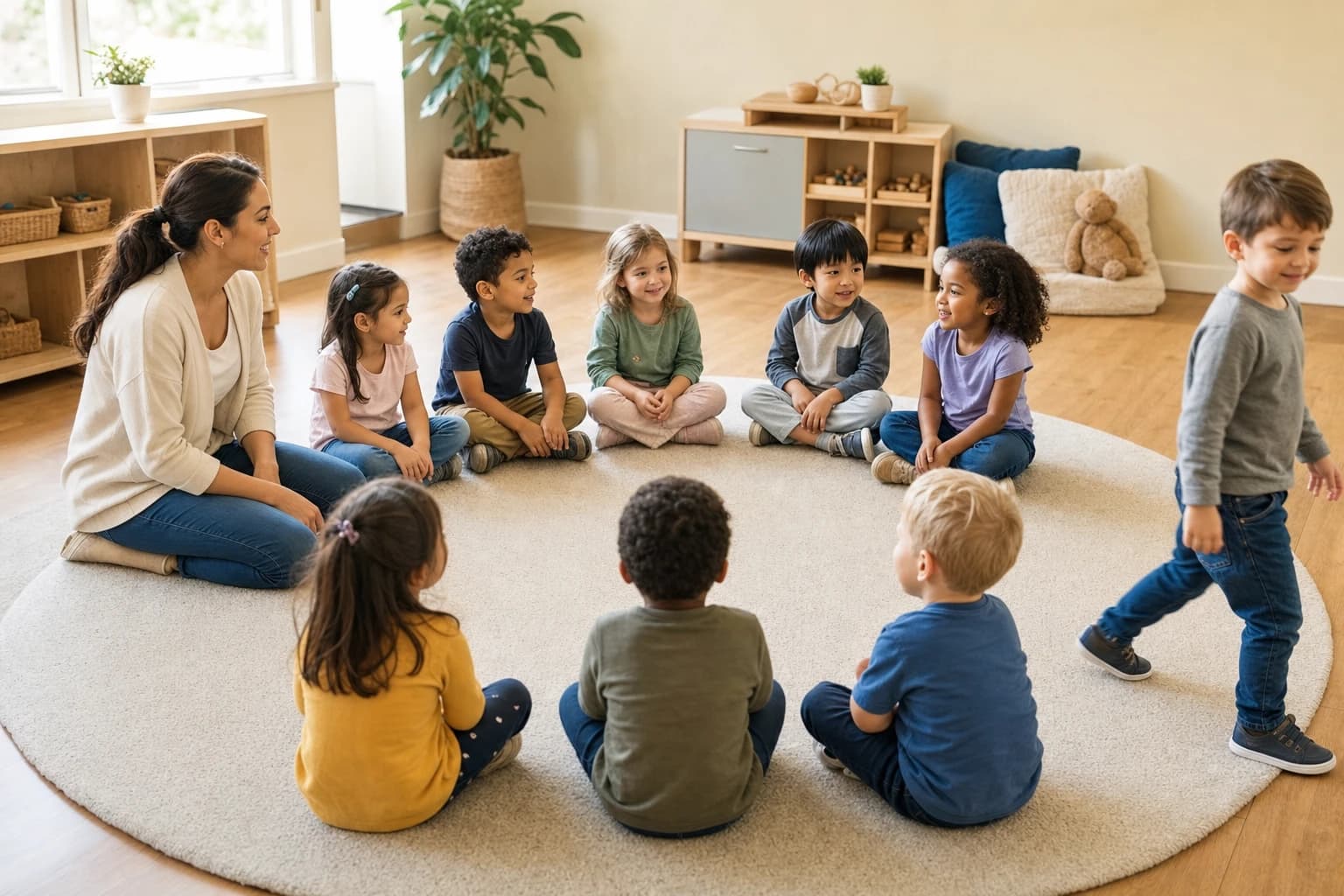
Quick answer: which game is better?
For most preschool circle games, Duck Duck Goose is usually the easier starting choice because the rules are direct: tap, listen for goose, get up, and chase. It works well with 3- and 4-year-olds when the adult uses gentle taps, a walking pace, and short rounds.
For many kindergarten circle games, Drop the Handkerchief can be the stronger choice because it adds observation and self-control. Children must notice the dropped item, respond without being loudly called, and keep watching even when they are not picked. That makes it excellent for slightly older children who can handle a quieter cue.
If safety is the top concern, neither game should be played as a full-speed race in a crowded room. Both can be adapted into walking, skipping, tiptoe, or no-tag versions. If the space is small, choose a seated or walking version of Drop the Handkerchief, or use a quieter indoor game instead, such as Quiet Indoor Games for Preschoolers on Rainy Days.
Best choice by setting
- Best for brand-new preschool groups: Duck Duck Goose, using walk-only rules.
- Best for kindergarten listening and attention: Drop the Handkerchief.
- Best for small indoor spaces: Drop the Handkerchief with walking, or a no-running classroom game.
- Best when children are very energetic: Duck Duck Goose outdoors with clear boundaries and close supervision.
- Best for fairness and rotating turns: Either game, but only if the adult manages who gets picked.
What each game teaches young children
Both games are more than simple chase games. They help children practice taking turns, recognizing social cues, stopping and starting movement, and staying with a group routine. These are useful skills for preschool and kindergarten, especially during circle time, recess, and short activity breaks.
Active play also has a place in early childhood routines. The Centers for Disease Control and Prevention notes that children ages 3 to 5 should be physically active throughout the day for growth and development. Circle games can contribute to that goal when the pace, space, and rules are appropriate for the children.
The difference is in the type of attention each game requires. Duck Duck Goose uses a loud, obvious cue. Drop the Handkerchief uses a hidden or quiet cue. That one difference changes the difficulty level, the kind of supervision needed, and how fair the game feels to children who are still learning to wait for a turn.
Duck Duck Goose rules
Traditional Duck Duck Goose rules vary by region, but the common version is simple enough for young children to understand after one demonstration.
Materials and setup
- Players: 6 to 20 children works best. Fewer than 6 can feel repetitive; more than 20 can create long waits.
- Equipment: None.
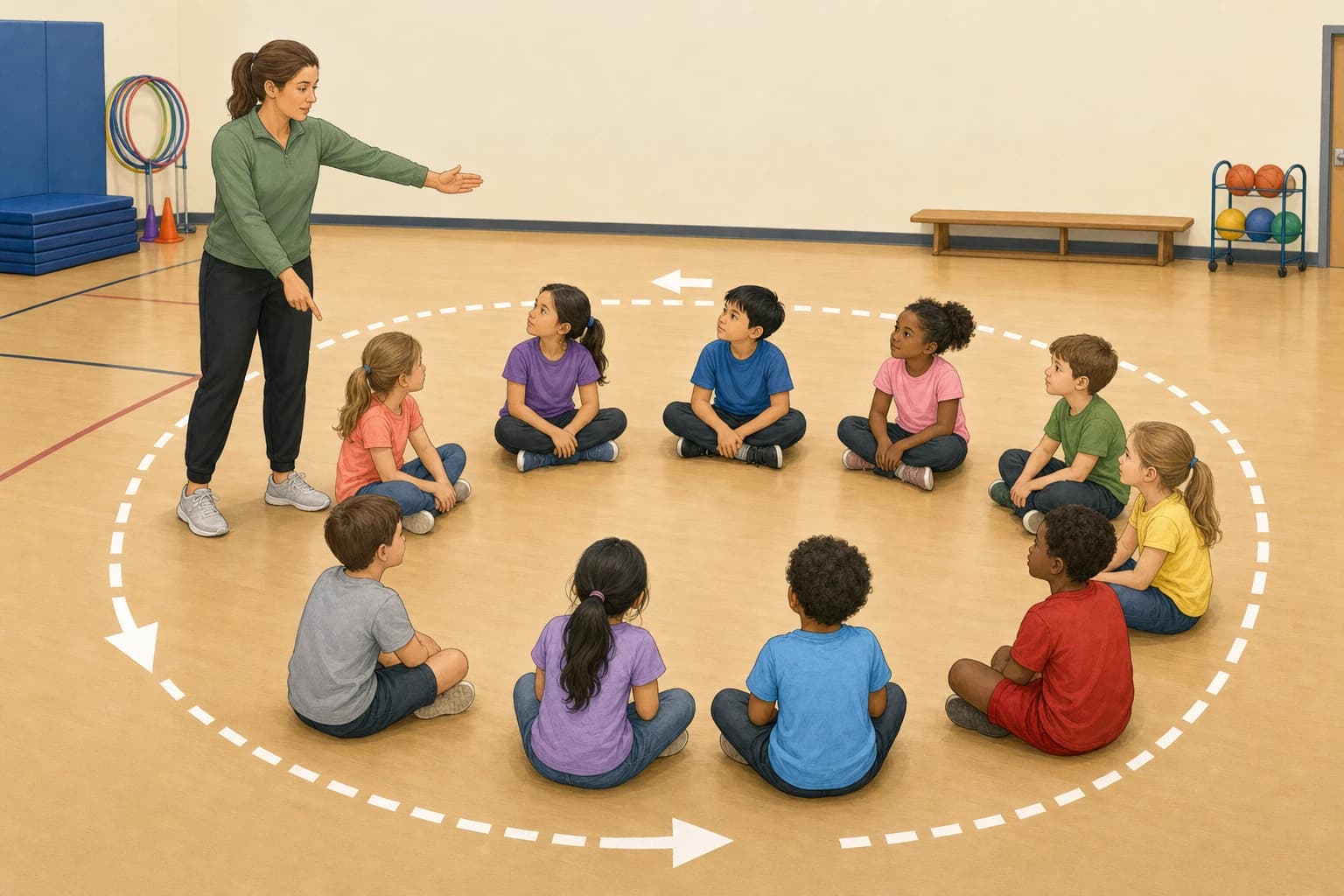
- Space: A clear circle with a safe path around the outside. For 12 seated children, plan for a clear area about 16 feet across if possible. For 20 children, about 22 feet across is more comfortable.
- Time: 5 to 10 minutes for preschool; 10 to 15 minutes for kindergarten.
- Difficulty: Easy.
How to play Duck Duck Goose
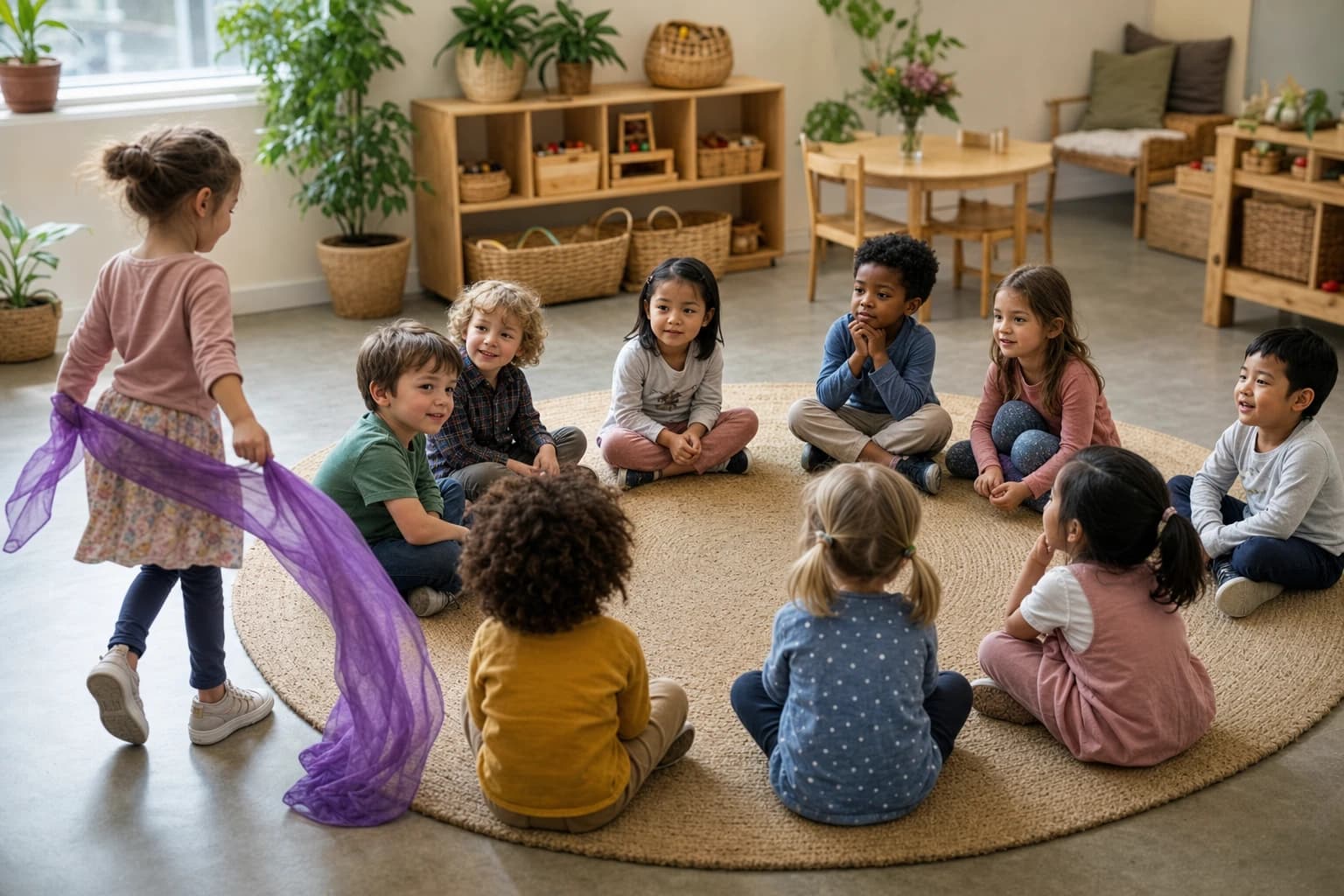
- Have children sit in a circle with enough space that knees, hands, and shoes are not touching.
- Choose one child to be the picker.
- The picker walks around the outside of the circle, gently tapping or pointing to each child and saying duck.
- At one chosen child, the picker says goose.
- The goose stands up and follows the picker around the circle.
- The picker tries to return to the empty seat before the goose reaches them.
- If the picker sits down first, the goose becomes the new picker. If the goose tags the picker before the seat is filled, the picker may go again or move to the center for one round, depending on your house rules.
For preschool and kindergarten, it is often better to avoid a penalty seat in the middle. The middle can feel embarrassing for sensitive children, and it leaves one child inactive. A kinder rule is: if you are tagged, smile, try again once, then choose someone who has not had a turn.
Why Duck Duck Goose works well
Duck Duck Goose is easy to explain because the cue is spoken aloud. Children do not need to infer what happened; they hear goose and know it is time to move. The game also creates quick excitement without any equipment. For a teacher, camp counselor, or parent, that makes it useful when you need a fast outdoor activity.
The challenge is that the same excitement can become too much. Some children tap too hard, sprint too close to the seated group, or repeatedly choose a best friend. Younger preschoolers may also pop up before they are chosen because the anticipation is intense.
Drop the Handkerchief game rules
Drop the Handkerchief game rules are also traditional and may be known by different names. The key feature is that the chosen child receives a dropped item instead of hearing a loud call.
Materials and setup
- Players: 8 to 20 children is ideal. The game is less interesting with very small groups.
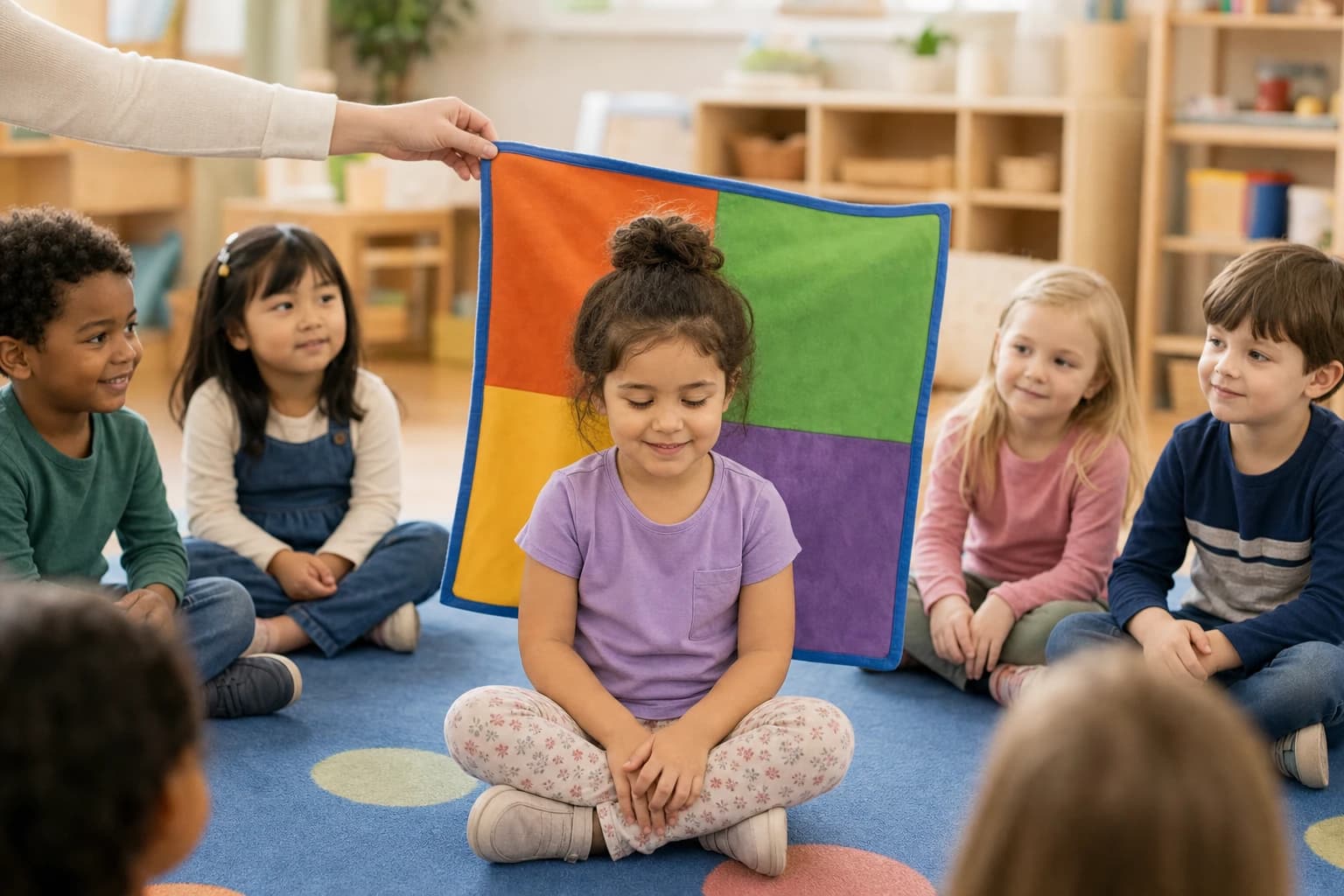
- Equipment: One soft handkerchief, scarf, beanbag, fabric square, or clean bandana. Avoid hard objects.
- Space: A seated circle with a clear walking or running lane around it.
- Time: 8 to 15 minutes.
- Difficulty: Easy to moderate, depending on age.
How to play Drop the Handkerchief
- Have children sit in a circle facing inward.
- Choose one child to carry the handkerchief around the outside of the circle.
- The carrier walks around the circle while the seated children look forward or gently watch with their eyes.
- The carrier quietly drops the handkerchief behind one seated child.
- The seated child notices the handkerchief, picks it up, and follows the carrier around the circle.
- The carrier tries to return to the empty spot before being tagged.
- The child holding the handkerchief becomes the next carrier.
Some versions say that if the seated child does not notice the handkerchief after one full lap, the carrier may tap them or call attention to it. For young children, this is usually better than letting a child feel tricked or laughed at. Keep the tone light: You found it late, and now you get the next turn.
Why Drop the Handkerchief works well
Drop the Handkerchief is a good bridge between a simple chase game and a listening or attention game. It asks children to stay alert without shouting or constant adult reminders. It also reduces the hard head-tapping problem that can happen in Duck Duck Goose, because the cue is an object placed on the floor behind the child.
The trade-off is that some preschoolers may not understand what happened. A child may sit still with the handkerchief behind them while other children call out. That is not a failure; it is a sign that the group may need a slower demonstration, a larger object, or a different game.
Duck Duck Goose vs Drop the Handkerchief: side-by-side comparison
| Criteria | Duck Duck Goose | Drop the Handkerchief | Better choice |
|---|---|---|---|
| Age fit | Very accessible for ages 3 to 6 with simple wording. | Best for older preschoolers and kindergarteners who can notice a quiet cue. | Duck Duck Goose for younger preschool; Drop the Handkerchief for kindergarten. |
| Space needed | Needs a clear outside lane because children often accelerate quickly after goose is called. | Can be played at a slower walking pace and often feels easier to control indoors. | Drop the Handkerchief in tighter spaces. |
| Running intensity | Usually higher because the cue is dramatic and immediate. | Moderate; the dropper may walk longer before the chase starts. | Drop the Handkerchief for lower intensity. |
| Supervision level | Adult must watch tapping, speed, seat gaps, and repeated picking. | Adult must watch for missed cues, calling out, and safe object placement. | Tie, but supervision focus is different. |
| Fairness | Children may choose friends repeatedly unless turns are guided. | Same risk, though the object makes turn tracking easier for some adults. | Tie with adult-managed turns. |
| Attention span | Good for short bursts; children know immediately when something happens. | Better for practicing sustained attention and watching quietly. | Drop the Handkerchief for attention practice. |
| Emotional comfort | Some children dislike being tapped on the head or chased suddenly. | Some children dislike not noticing the handkerchief and feeling watched. | Depends on the child; offer variations. |
| Equipment | No equipment needed. | Needs one soft item. | Duck Duck Goose for no-equipment situations. |
| Indoor suitability | Works only if you enforce walking or have a large room. | Works better as a quiet, walking circle game. | Drop the Handkerchief. |
| Ease of teaching | Fastest to teach with a 30-second demonstration. | Needs a clear demonstration of dropping, noticing, and picking up. | Duck Duck Goose. |
Safety and supervision: what adults should decide before play
The most important safety decision is not which game to choose. It is whether the rules match the space and group. A full-speed chase around a tight circle can cause trips, collisions, and stepped-on fingers. A walking version in the same space may be perfectly manageable.
Use these ground rules for both games
- Set the speed before starting: Say walk, march, tiptoe, or skip. Do not say no running and then accept running during the exciting part.
- Keep hands gentle: In Duck Duck Goose, use two fingers on the shoulder or point without touching. Avoid head taps.
- Make the lane visible: Tell children the path is outside the circle, not through the middle.
- Space the seated children: Leave enough room that a runner does not step on hands, coats, or shoes.
- Stop before the game frays: End after 5 to 10 minutes for preschool, before waiting children become restless.
- Use a soft object: For Drop the Handkerchief, a fabric square is better than a toy, ball, or plastic item.
Supervision also means noticing social patterns. If the same confident children are picked every time, the game becomes less fun for quiet children. If a child is anxious about being chased, offer a helper role, such as holding the scarf basket, counting turns, or demonstrating the walking path with an adult.
Fairness: how to prevent the same children from being chosen
Classic circle games can look fair because everyone sits in the same circle, but young children do not automatically distribute turns evenly. They often choose a close friend, a sibling, or the child who chose them last. That is normal, but it can leave some children waiting the entire game.
Use one of these simple systems when fairness matters:
- Three-before-repeat rule: A child may not choose someone who has already had a turn until three new children have been chosen.
- Sticker or card tracker: Give each child a small card in front of them. Turn the card over after their turn. The picker chooses from face-up cards only.
- Adult whisper choice: The adult quietly suggests two children who have not had turns, and the picker chooses one.
- Half-circle rule: The picker must choose someone on the opposite half of the circle. This reduces choosing only nearby friends.
- Team goal: The group tries to give everyone one turn before the song, timer, or recess bell ends.
For preschoolers, avoid making fairness sound like a scolding. A useful phrase is: Our game goal is to help new people get turns. That keeps the focus on the group routine, not on blaming a child for choosing a friend.
Low-speed variations for safer preschool and kindergarten play
If you like the idea of these games but not the speed, adapt the movement. Low-speed rules are not watered-down versions; for young children, they often produce a better game because children can think and move at the same time.
1. Walk-Walk-Goose
Play Duck Duck Goose exactly as usual, but everyone walks heel-to-toe around the circle. If either child runs, pause and restart the chase from the goose spot. This works well indoors and with mixed ages.
2. Animal movement Duck Duck Goose
Before each round, name a movement: penguin walk, bear crawl, crab walk, slow bunny hops, or giant steps. Choose movements that fit the floor surface and children’s abilities. Avoid crab walks on rough pavement or crowded carpet because hands can be stepped on.
3. Drop the Beanbag
Use a soft beanbag instead of a handkerchief. The object is easier for younger children to feel behind them and less likely to slide away. The rule can be: pick up the beanbag, stand up, and walk after the dropper.
4. No-tag version
Remove tagging completely. The goal is simply for the first child to reach the empty seat before the second child returns with the object. This lowers anxiety for children who dislike being chased or touched.
5. Teacher-paced version
The adult narrates the pace: walking, walking, freeze, walking, drop. This is useful at the beginning of the school year when children are still learning how to move safely as a group.
6. Cooperative full-circle challenge
Instead of one child winning a chase, the class tries to complete one full round where every child gets chosen once. This version pairs well with other non-elimination activities, such as Cooperative Playground Games for Kids That Do Not Eliminate Players.
When Duck Duck Goose is the better choice
Choose Duck Duck Goose when you need a fast, no-equipment activity and the group is still learning basic circle-game routines. It is especially useful outdoors on grass or a soft play surface where there is room to move.
It also works well when children need a clear verbal cue. A child who struggles to notice a hidden handkerchief may still succeed when they hear goose. For very young preschoolers, that directness matters. You can reduce intensity by saying in advance: In our class, goose means fast walking, not running.
Duck Duck Goose is also easier for substitutes, volunteers, and family gatherings because many adults already know the structure. If you need a game with almost no explanation, it is the simpler option.
When Drop the Handkerchief is the better choice
Choose Drop the Handkerchief when the group is ready for a quieter challenge. Kindergarteners often enjoy the suspense of noticing the object, and teachers can use the game to practice watching, waiting, and responding appropriately.
It is also a better fit when you want less touching. Because the cue is an object, children do not need to tap heads or shoulders around the circle. That can be more comfortable for children who are sensitive to touch or who need clearer personal-space boundaries.
Drop the Handkerchief can be useful indoors if you enforce walking. For a classroom with limited open floor, you may still be better off choosing a no-running activity from 20 Indoor PE Games for Elementary Students in a Small Gym or Classroom, but the walking version can work in a multipurpose room or cleared carpet area.
Common mistakes to avoid
Letting the pace creep upward
Many adults start with walking rules but allow the chase to become a sprint. Young children notice that immediately. If speed matters, stop the round and reset in a calm voice. Consistency is safer than repeated reminders.
Using elimination rules
Elimination may seem traditional in some playground games, but it is rarely helpful for preschool or kindergarten circle games. Eliminated children become spectators, and spectators often become restless. Keep everyone in the circle.
Playing too long
These games are exciting but repetitive. For preschool, 5 minutes can be enough. For kindergarten, 10 minutes may be plenty unless the group is deeply engaged. End while children still want one more round.
Ignoring children who do not want to be chased
Some children enjoy the chase; others freeze or become upset. A child should not be forced into the runner role to prove bravery. Offer choices: walk with a partner, be the dropper only, use the no-tag version, or take a helper role.
Choosing the wrong surface
Wet grass, loose gravel, cluttered carpet, and slick floors are poor choices for chase games. If the surface is questionable, switch to walking only or choose a stationary circle game.
Practical recommendations by age
Ages 3 to 4
Start with Duck Duck Goose, but remove running and hard tapping. Use shoulder pointing, gentle words, and very short rounds. If trying Drop the Handkerchief, use a large bright scarf and demonstrate three times: walk, drop, notice, pick up, walk.
Ages 4 to 5
Both games can work. Duck Duck Goose is better when the group needs a lively outdoor break. Drop the Handkerchief is better when you want children to practice attention and patience. Use a turn tracker so the same children are not always chosen.
Kindergarten
Drop the Handkerchief often becomes the more interesting game because children understand the suspense. Add variations such as silent dropping, animal walks, or the cooperative full-circle challenge. Duck Duck Goose still works well as a quick recess game, especially when time is short.
A simple decision checklist
- If you have no equipment, choose Duck Duck Goose.
- If children dislike tapping or touching, choose Drop the Handkerchief.
- If the group is younger than 4, start with Duck Duck Goose.
- If you want to practice quiet attention, choose Drop the Handkerchief.
- If the space is small, use a walking-only version or choose a different indoor game.
- If fairness is a concern, use a turn tracker with either game.
FAQ
Is Duck Duck Goose safe for preschool?
It can be, if the adult controls the speed, uses gentle shoulder taps or no-touch pointing, and provides a clear lane around the circle. For indoor preschool play, a walking version is usually better than a running version.
What is the main difference between Duck Duck Goose and Drop the Handkerchief?
Duck Duck Goose uses a spoken cue: the picker says goose. Drop the Handkerchief uses a quiet object cue: the child must notice a handkerchief or soft item behind them. That makes Drop the Handkerchief a little more demanding for attention.
How many children do you need for these circle games?
Both games work best with at least 6 children. A group of 8 to 20 is usually more engaging because the circle feels full without making children wait too long between turns.
Can these games be played indoors?
Yes, but only with enough open space and a walking rule. If children cannot move around the circle without stepping over hands, shoes, furniture, or backpacks, choose a no-running indoor game instead.
How do you make Duck Duck Goose fair?
Use a simple turn system. For example, turn over a card after each child has been chosen, or ask pickers to choose only from children who have not had a turn yet. Young children often need adult help to make turns fair.
What can I use instead of a handkerchief?
Use a soft scarf, fabric square, clean bandana, or small beanbag. Choose something visible, washable, and soft enough that it will not hurt if dropped near a child’s feet.
Conclusion: the better game depends on the job
In the choice of Duck Duck Goose vs Drop the Handkerchief, there is no single winner for every preschool or kindergarten group. Duck Duck Goose is simpler, faster to teach, and better when children need an obvious verbal cue. Drop the Handkerchief is quieter, more attention-based, and often better for kindergarten or small indoor spaces when played at walking speed.
The best approach is to treat both as flexible circle games, not fixed playground scripts. Set the speed, remove harsh penalties, rotate turns fairly, and stop before the group gets too wound up. With those adjustments, both games can be useful, active, and enjoyable for young children.