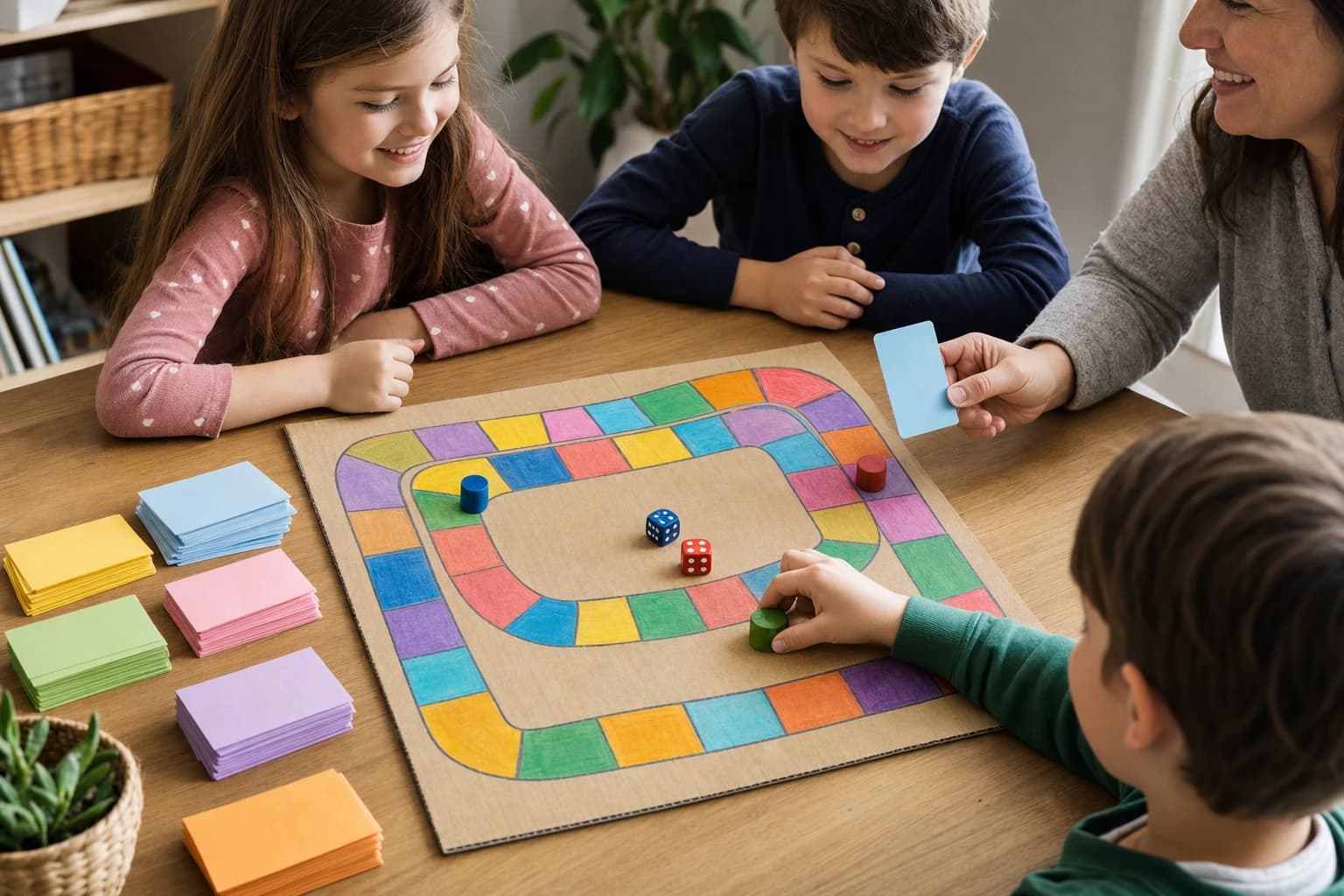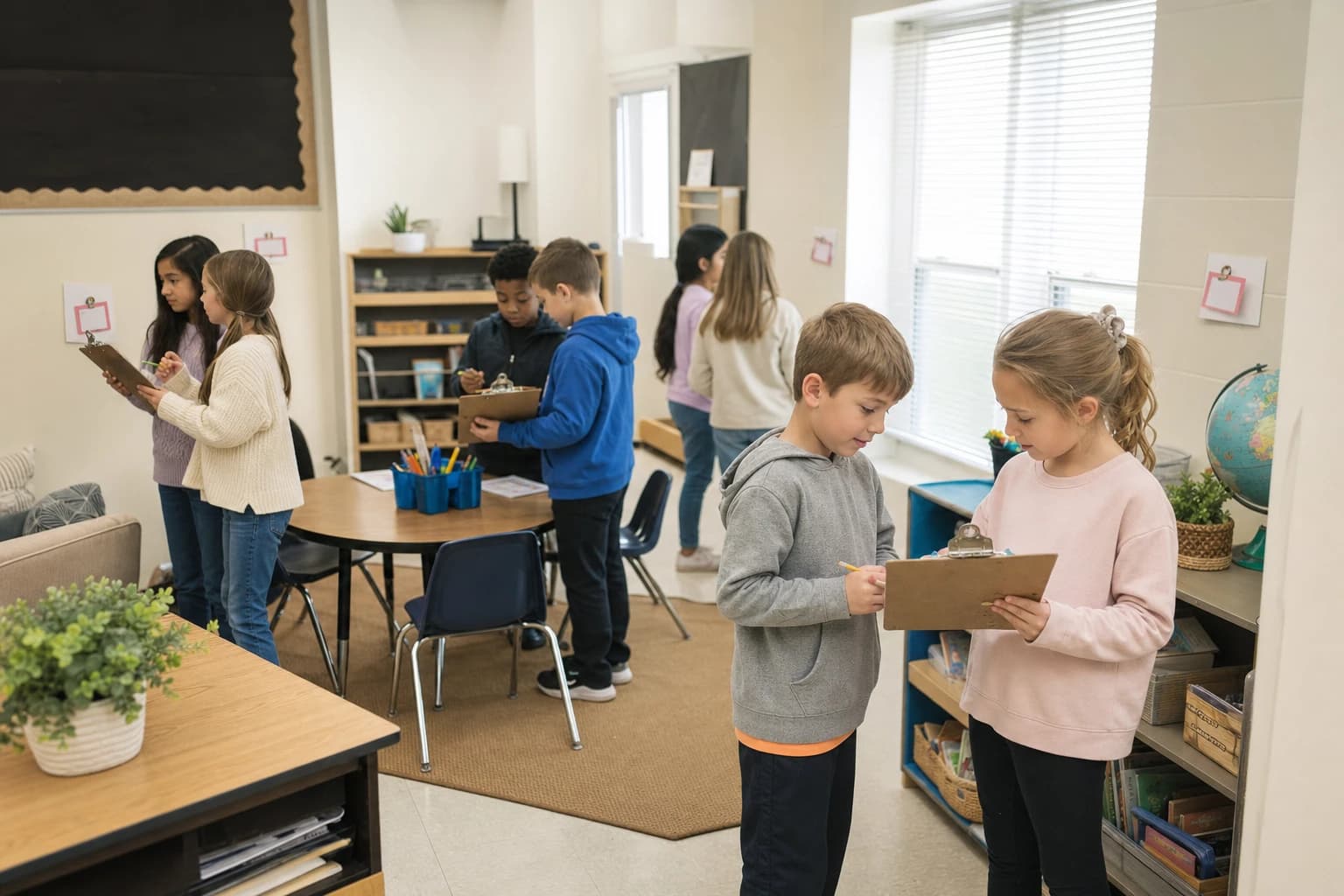
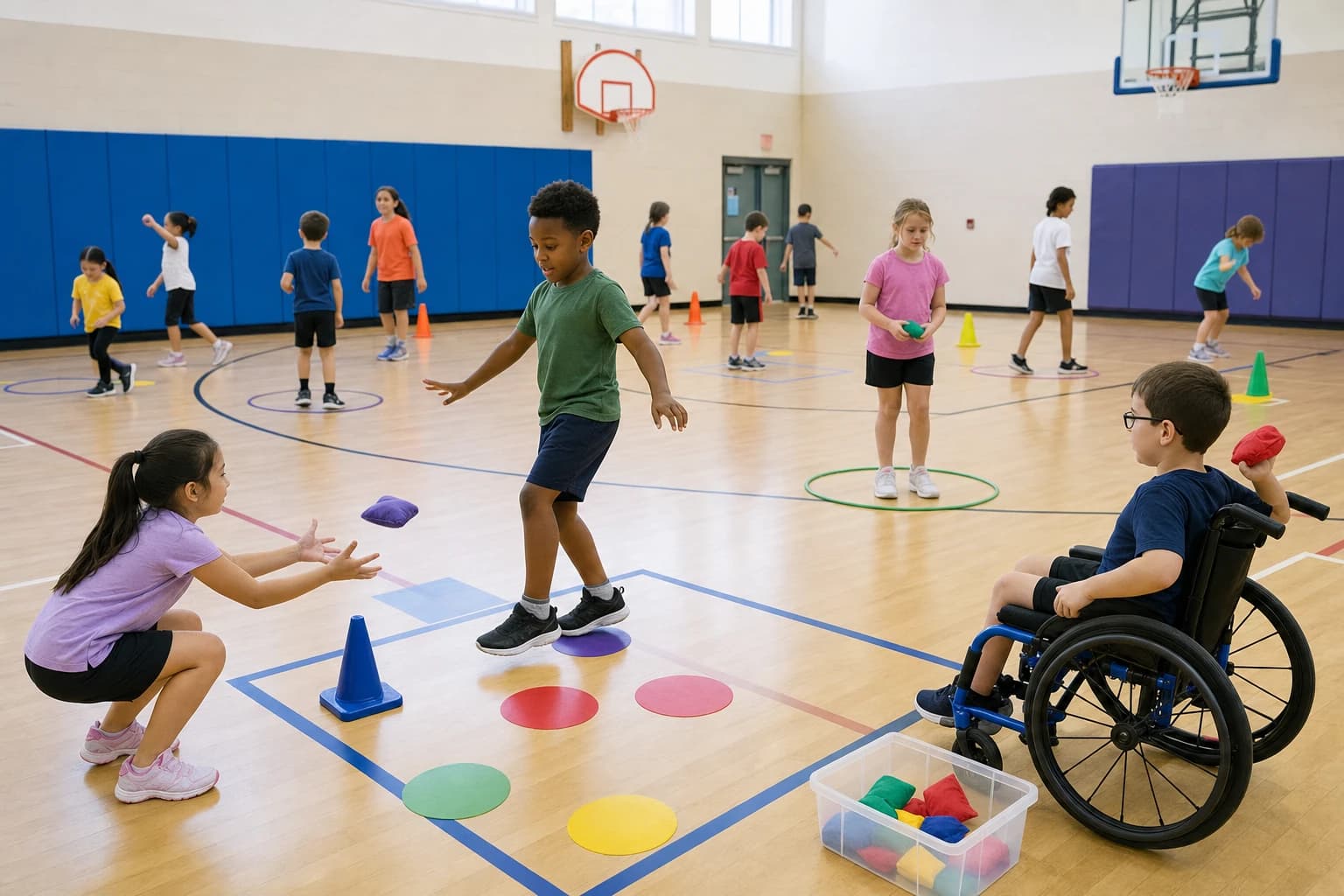
Rainy days, testing schedules, assemblies, and shared facilities can leave elementary teachers with a PE problem: students need movement, but the available space is a classroom, hallway, or small gym section. These indoor PE games for elementary students in small spaces are designed for low collision risk, clear boundaries, simple equipment, and quick transitions.
The activities below avoid full-speed chasing and long-distance running. Most can be played with cones, tape, beanbags, paper, cards, or no equipment at all. Each game includes setup notes, how to play, and adaptations for students who need seated, lower-impact, or different mobility options.
Before You Start: Small-Space PE Safety Rules That Actually Help
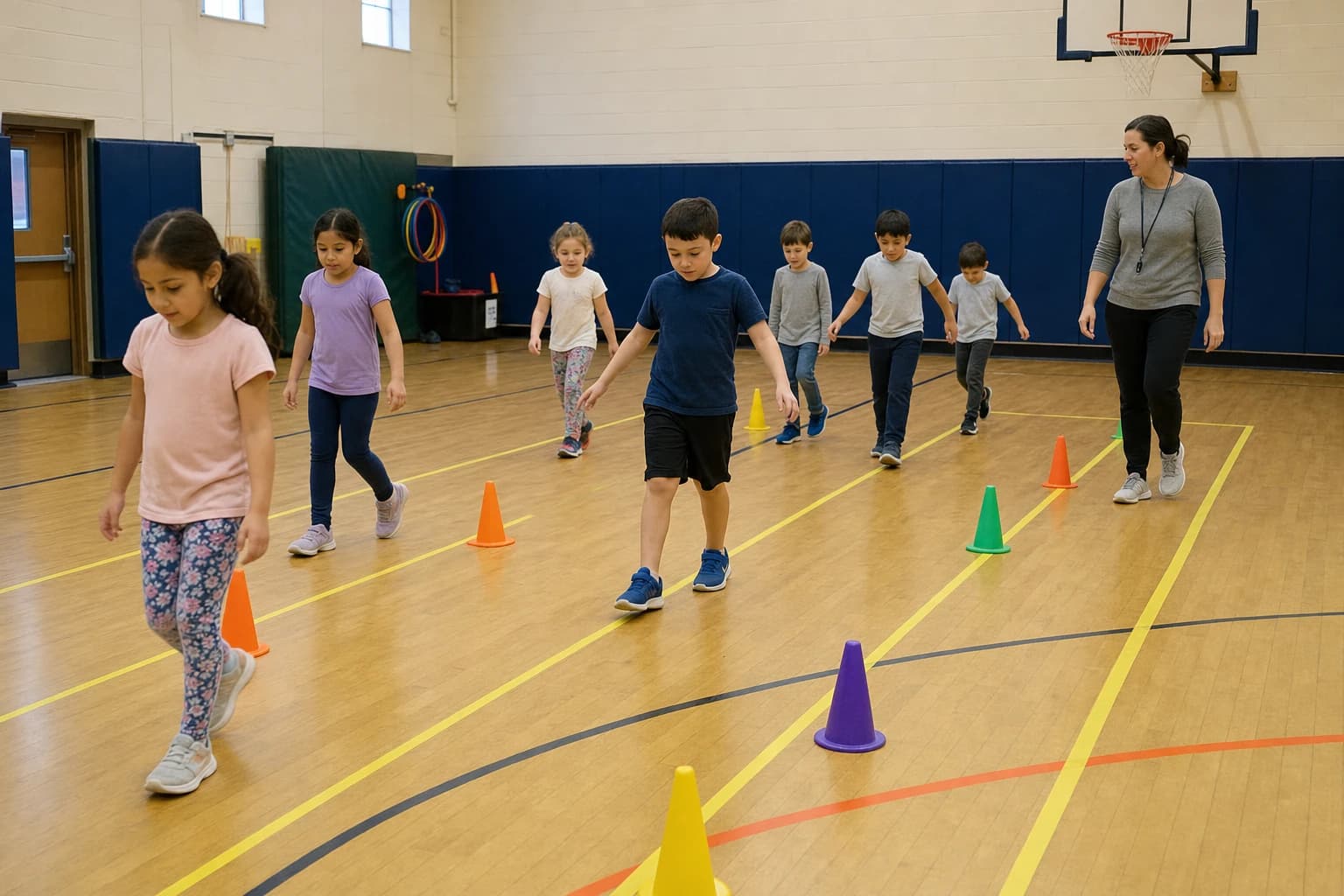
Small-space PE works best when the rules are simple enough to repeat in ten seconds. The goal is not to remove energy from the lesson; it is to aim that energy so students can move without crashing into desks, walls, or each other.
For context, the U.S. Centers for Disease Control and Prevention says children and adolescents ages 6 to 17 should get 60 minutes or more of moderate-to-vigorous physical activity daily. School movement breaks and PE lessons can support that larger goal, but indoor games should still match the room, the floor, and the needs of the class. See the CDC guidance at Physical Activity Guidelines for School-Aged Children and Adolescents.
Use these five rules for every activity
- Walking feet unless the teacher names a running zone. In a classroom, make every game walking-only.
- Arms stay in personal space. A useful cue is airplane wings folded in unless the movement card says otherwise.
- No tagging bodies in tight spaces. Use cones, spots, cards, or shadows instead of hand tags.
- One-way traffic when possible. Circles, lanes, and out-and-back paths reduce head-on collisions.
- Freeze signal first, explanation second. Use a whistle, clap pattern, raised hand, or music stop so everyone stops before directions change.
Simple Materials for Indoor PE Games
You do not need a full equipment closet. A small classroom kit can run most of the games in this article.
- Painter’s tape or floor spots for boundaries
- 10 to 20 cones, plastic cups, or paper markers
- Beanbags, soft foam balls, or crumpled paper balls
- Index cards for movement prompts
- One timer or stopwatch
- Optional: hoops, scarves, balloons, pool noodles, or music
If you have no equipment, start with the no-equipment options such as Mirror Movers, Freeze Shapes, Line Switch, and Rock-Paper-Scissors Fitness. For more no-equipment ideas by age, see Indoor Games for 8-Year-Olds With No Equipment.
Quick Planner: Pick the Right Game for Your Room
| Game | Best space | Equipment | Collision-control idea |
|---|---|---|---|
| Line Switch | Classroom or small gym | Tape or spots | Students move to assigned lines only |
| Mirror Movers | Anywhere | None | Partners stay on their own spots |
| Beanbag Balance Relay | Small gym | Beanbags | Walking pace and single-file lanes |
| Hoop Islands | Gym or cleared room | Hoops or tape circles | One island per small group |
| Clean Your Room | Gym or classroom with desks moved | Paper balls | Throw only below shoulder height |
| Chair Aerobics Leader | Classroom | Chairs | Everyone remains seated or behind chairs |
20 Indoor PE Games for Elementary Students in Small Spaces
1. Line Switch
Setup: Put three to five tape lines or rows of floor spots across the room. Assign each student a starting line.
How to play: Call out a category such as wearing blue, has a pet, likes apples, or birthday in winter. Students who match the category walk to a different open spot on another line. Add movement prompts such as tiptoe, heel-walk, side-step, or slow march.
Adaptation: Students with limited mobility can point to a new line, roll to a nearby spot, or swap cards with a partner instead of crossing the room.
2. Mirror Movers
Setup: Pair students and give each pair two floor spots about six feet apart if the room allows. In a classroom, partners can face each other from behind desks.
How to play: One student leads slow movements for 30 seconds while the partner mirrors them. Use controlled actions: arm circles, knee lifts, shoulder rolls, balance poses, slow squats, or toe taps. Switch leaders.
Why it works: It builds body awareness without travel. It is also easy to lower the volume because students focus on one partner.
3. Corner Colors
Setup: Label four corners or wall areas with colors, numbers, animals, or PE vocabulary words.
How to play: Students start in the center or at individual spots. Call a prompt: move to red like a robot, blue with tiny steps, or number 3 with a balance freeze. Students walk to that area and freeze on arrival.
Safety note: In a very small room, divide the class into two groups. One group moves while the other group performs a spot exercise.
4. Fitness Bingo
Setup: Make a 3-by-3 bingo card with movements: 10 toe taps, 8 wall push-ups, 15-second balance, 10 marches, 5 slow squats, 10 arm reaches, 10 calf raises, 10 shadow punches, and 5 sit-to-stands.
How to play: Students complete squares at their own spots. Instead of racing, set a three-minute timer and challenge students to complete any row with good form.
Adaptation: Offer seated versions for every square, such as seated marches, seated reaches, ankle circles, and chair push-ups only if approved for the space and student.
5. Beanbag Balance Relay
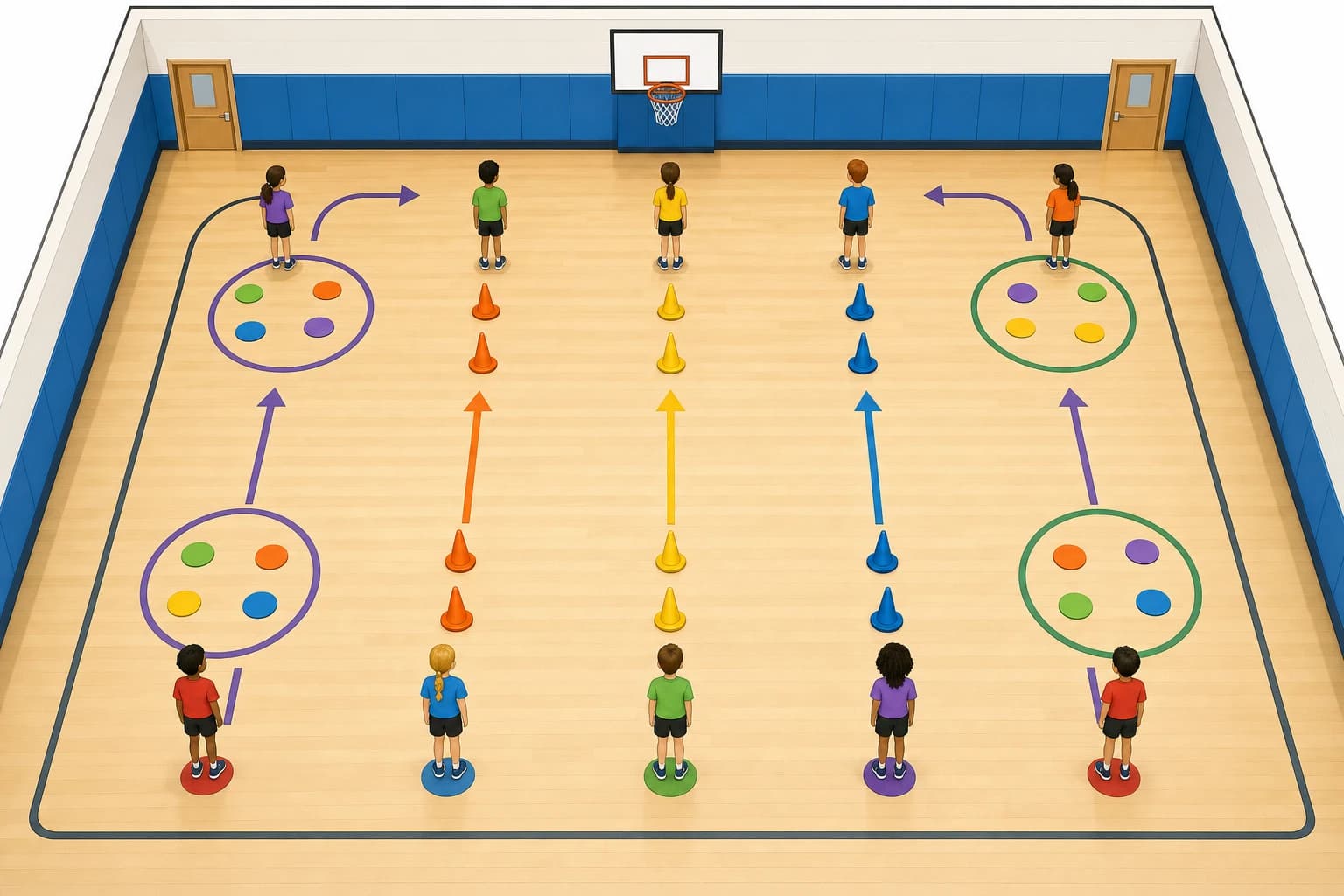
Setup: Create lanes using cones or tape. Groups of four to six stand in single-file lines.
How to play: The first student places a beanbag on the head, shoulder, forearm, or back of the hand and walks to a cone and back. If it drops, the student stops, replaces it, and continues. Then the next player goes.
Keep it calm: Score by team completion or best teamwork, not fastest time. Speed turns this into a collision game.
6. Hoop Islands
Setup: Place hoops or tape circles around the space. Put two to four students at each island.
How to play: Call a movement students perform around their own island: step around, lunge to the edge, toe-tap inside and outside, or pass a beanbag around the circle. When you say island change, students walk to a nearby open island.
Adaptation: Let students stay at one island and change the task instead of changing location.
7. Rock-Paper-Scissors Fitness
Setup: Students stand on spots or behind chairs. Pair them with a nearby partner.
How to play: Partners play rock-paper-scissors. The winner chooses one exercise from a posted list; both students complete it. Examples: 10 marches, 5 star reaches, 8 toe taps, or a 10-second balance. Rotate partners only if there is enough space.
Variation: For grades 3 to 5, add math: the winner rolls two dice, adds them, and both students do that number of repetitions.
8. Silent Speed Stack
Setup: Give each small group six plastic cups on a desk, mat, or floor spot.
How to play: Students take turns building a 3-2-1 pyramid, unstacking it, and passing the cups to the next person. The challenge is quiet, controlled hands rather than speed. Add a movement between turns, such as five shoulder taps or ten marches.
Best for: Classrooms where jumping is not appropriate but students still need coordination practice.
9. Noodle Tap Targets
Setup: Place paper targets, cones, or floor spots around the room. Give students a short foam noodle section or use a rolled paper tube.
How to play: Students move through a lane and gently tap only the targets named by the teacher: blue cones, number cards, odd numbers, or letters in a spelling word.
Important rule: Noodles never tap people, walls, lights, or furniture. If that rule is hard to maintain, switch to finger pointing or beanbag placing.
10. Pass the Pattern
Setup: Students stand or sit in circles of five to eight. Each group has one soft ball, beanbag, or scarf.
How to play: The group creates a passing pattern: across, right, right, across, left. Once they learn it, add a second object or a movement before each pass. For example, clap twice, pass across.
Why it works: It trains attention, rhythm, and cooperation while everyone stays in a defined space.
11. Yoga Pose Trail
Setup: Place 8 to 12 pose cards around the room. Use simple poses such as mountain, star, chair, tree with toe down, and tabletop if the floor is appropriate.
How to play: Students travel in small groups from card to card, holding each pose for 10 to 20 seconds. Keep traffic one-way.
Adaptation: Provide chair-based pose cards: seated mountain, seated twist, seated star arms, and seated ankle stretch.
12. Number Call Movement
Setup: Put number cards 1 to 12 on the wall or floor. Assign each number a movement.
How to play: Call a number sentence such as 3 + 4 or 10 - 6. Students solve it and perform the matching movement. Number 7 might mean seven reaches; number 4 might mean four slow squats.
Classroom link: This overlaps well with learning games. For more academic movement ideas, see Educational Indoor Classroom Games for Grades 3–5.
13. Clean Your Room
Setup: Divide the room with a center tape line. Give each side the same number of crumpled paper balls or soft foam balls.
How to play: On the signal, students toss objects to the other side below shoulder height. After 45 seconds, freeze and count. The side with fewer items on the floor gets a point, or skip scoring and reset together.
Safety note: No aiming at faces, no overhand throws, and no crossing the center line.
14. Scooterless Curling
Setup: Make target circles with tape or hoops. Students use beanbags or soft discs.
How to play: From behind a line, students slide a beanbag toward the target. Teammates may give strategy but do not run after the bag until the teacher says retrieve. Use three slides per team per round.
Best surface: Smooth gym floors work best. On carpet, use paper plates under beanbags.
15. Freeze Shapes
Setup: Students spread out on spots. No equipment required.
How to play: Call a shape, letter, number, or object: triangle, tall tree, lowercase t, bridge, or clock hand. Students have five seconds to make the shape with their bodies and freeze. Invite a few students to explain their choices.
Variation: In pairs, students create partner shapes without lifting, pulling, or leaning body weight on each other.
16. Over-Under Relay
Setup: Teams line up with three to six students. Each team has a ball or beanbag.
How to play: The first student passes the object over the head, the next passes under the legs or around the side, alternating down the line. The last student walks to the front and the pattern continues.
Adaptation: Seated teams can pass over shoulders, under knees if comfortable, or around the chair side.
17. Chair Aerobics Leader
Setup: Students sit or stand behind chairs with enough space for arms to move safely.
How to play: Choose a leader for 20 seconds. The leader performs safe, repeatable moves: seated marches, toe taps, arm reaches, shoulder rolls, or gentle punches to the front. Everyone follows. Rotate leaders.
Use when: This is one of the best classroom movement games when desks cannot be moved.
18. Maze Walk
Setup: Create a simple path with cones, tape, or paper arrows. Include turns, stop signs, and balance spots.
How to play: Students enter the maze one at a time every five to eight seconds. At each marker they complete a task: pause, balance, turn, step over a line, or high-five the air.
Keep it safe: The rule is no passing. If students catch up, they freeze at the nearest marker.
19. Balloon Keep-Up Zones
Setup: Give each pair or small group a defined square. Use balloons only if allowed by school policy and if latex allergy concerns have been considered; foam balls or scarves are alternatives.
How to play: Students keep the balloon in the air using hands, elbows, or a specific body part. Add challenges: three taps each before passing, count consecutive taps, or keep it above waist height.
Adaptation: Seated players can use a scarf, beach ball, or balloon from a chair circle.
20. Cooperative Mission Cards
Setup: Write missions on cards and place one card at each station. Examples: complete 40 total marches as a team, hold four different balance poses, pass a beanbag around the circle twice without dropping, or create a silent movement pattern.
How to play: Groups rotate every two minutes. The goal is to complete as many missions as possible with good teamwork and safe movement.
Why students like it: It feels like a challenge without eliminating anyone. It also lets you mix fitness, coordination, and communication in one short lesson.
Easy Lesson Plans Using These Games
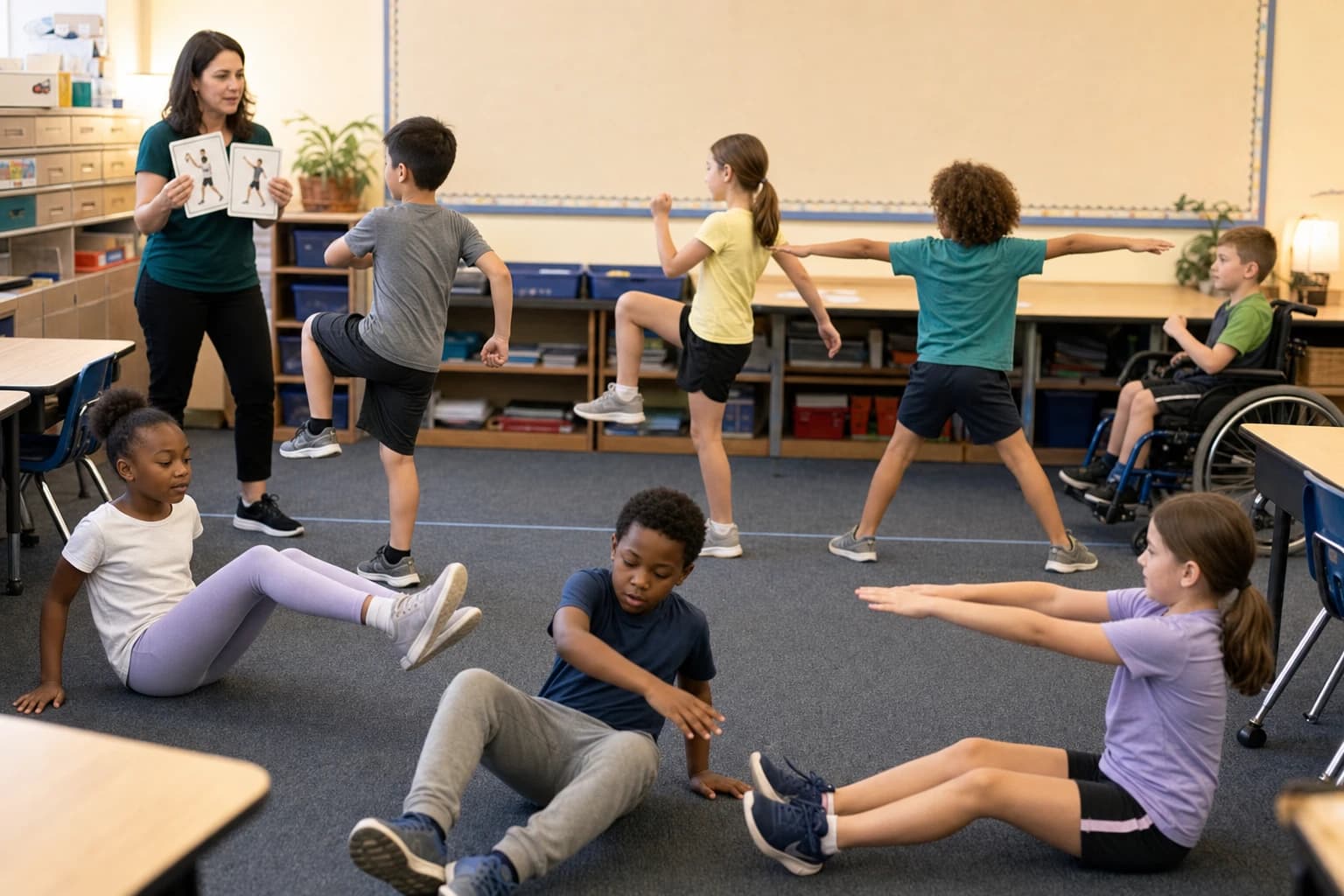
Here are three quick ways to combine the games into a full indoor PE block or a classroom movement session.
15-minute classroom movement break
- 2 minutes: Freeze signal practice and personal-space check.
- 4 minutes: Chair Aerobics Leader.
- 5 minutes: Number Call Movement with math facts or vocabulary.
- 3 minutes: Mirror Movers.
- 1 minute: Calm breathing, seated stretch, or silent reset.
30-minute small gym lesson
- 5 minutes: Line Switch warm-up.
- 12 minutes: Four stations: Beanbag Balance Relay, Scooterless Curling, Pass the Pattern, and Hoop Islands.
- 8 minutes: Cooperative Mission Cards.
- 5 minutes: Cooldown with Freeze Shapes and reflection.
Rainy-day class reward without chaos
- 5 minutes: Rock-Paper-Scissors Fitness.
- 10 minutes: Clean Your Room with low throws only.
- 5 minutes: Silent Speed Stack.
- 3 minutes: Students vote for the calmest teamwork group or best safety example.
If you need more no-running small-room ideas for mixed groups, Indoor Games for 10 People in a Small Room has additional options that can be adapted for school settings.
Adaptations for Different Mobility Levels
A good indoor PE game should have more than one way to participate. Instead of making a separate activity for one student, build choices into the directions for everyone.
- Offer movement levels: seated, standing low-impact, and traveling. For example, marches can be seated marches, standing marches, or marching to a spot.
- Use roles that still include movement: scorekeeper who performs a chair movement after each point, timer who leads the reset stretch, or card caller who demonstrates from a seated position.
- Reduce distance, not challenge: a student can complete a shorter lane with a harder balance task or a precision target.
- Use equipment alternatives: scarves move slower than balls, beanbags are easier to control than balloons, and larger targets reduce frustration.
- Avoid public callouts: present choices to the whole class so adaptations feel normal, not singled out.
Common Mistakes to Avoid in Small-Space PE
- Starting with too much speed. Teach the game at walking pace first. Add tempo only after students prove they can stop quickly.
- Using elimination games. Eliminated students become spectators in a crowded room. Use reset points, team totals, or personal challenges instead.
- Ignoring furniture corners. If desks stay in place, keep movement behind chairs or in lanes, not between sharp corners.
- Giving long directions while students hold equipment. Put equipment on the floor first, explain second, start third.
- Copying outdoor tag indoors. Save fast chasing games for bigger spaces. If you want tag ideas for recess, use outdoor-friendly rules like those in No-Equipment Tag Games for Elementary School Recess.
FAQ: Indoor PE Games for Small Spaces
What are the safest indoor PE games for a classroom?
Spot-based games are usually easiest to manage in classrooms. Try Mirror Movers, Chair Aerobics Leader, Fitness Bingo, Freeze Shapes, or Number Call Movement. These keep students in personal space and do not require running.
How many students can play these games at once?
Most games work with a full elementary class if you divide students into small groups of four to six and use stations. In a crowded classroom, choose seated or spot-based games instead of games with room-wide travel.
What equipment is best for small space PE games?
Beanbags, floor spots, cones, tape, scarves, paper balls, and index cards are the most useful. They are easy to control and do not bounce far, which helps reduce collisions and distractions.
Can indoor gym games for kids include competition?
Yes, but keep the competition cooperative or skill-based. Use team totals, personal bests, mission cards, or accuracy challenges instead of races where students sprint across a small space.
How do I calm students down after indoor PE?
Plan the cooldown before the game starts. Use two minutes of slow movements such as seated breathing, shoulder rolls, quiet stretching, or Freeze Shapes with silent poses. A predictable ending helps students return to classwork.
Conclusion
Small spaces do not have to mean worksheets, movies, or chaotic free play. The best indoor PE games for elementary students use clear boundaries, low-speed movement, soft equipment, and simple rules that students can follow quickly. Start with spot-based games in classrooms, use lanes and stations in small gyms, and offer seated or lower-impact choices as part of the normal routine. With a small kit and a few reliable formats, rainy-day PE can still be active, inclusive, and manageable.