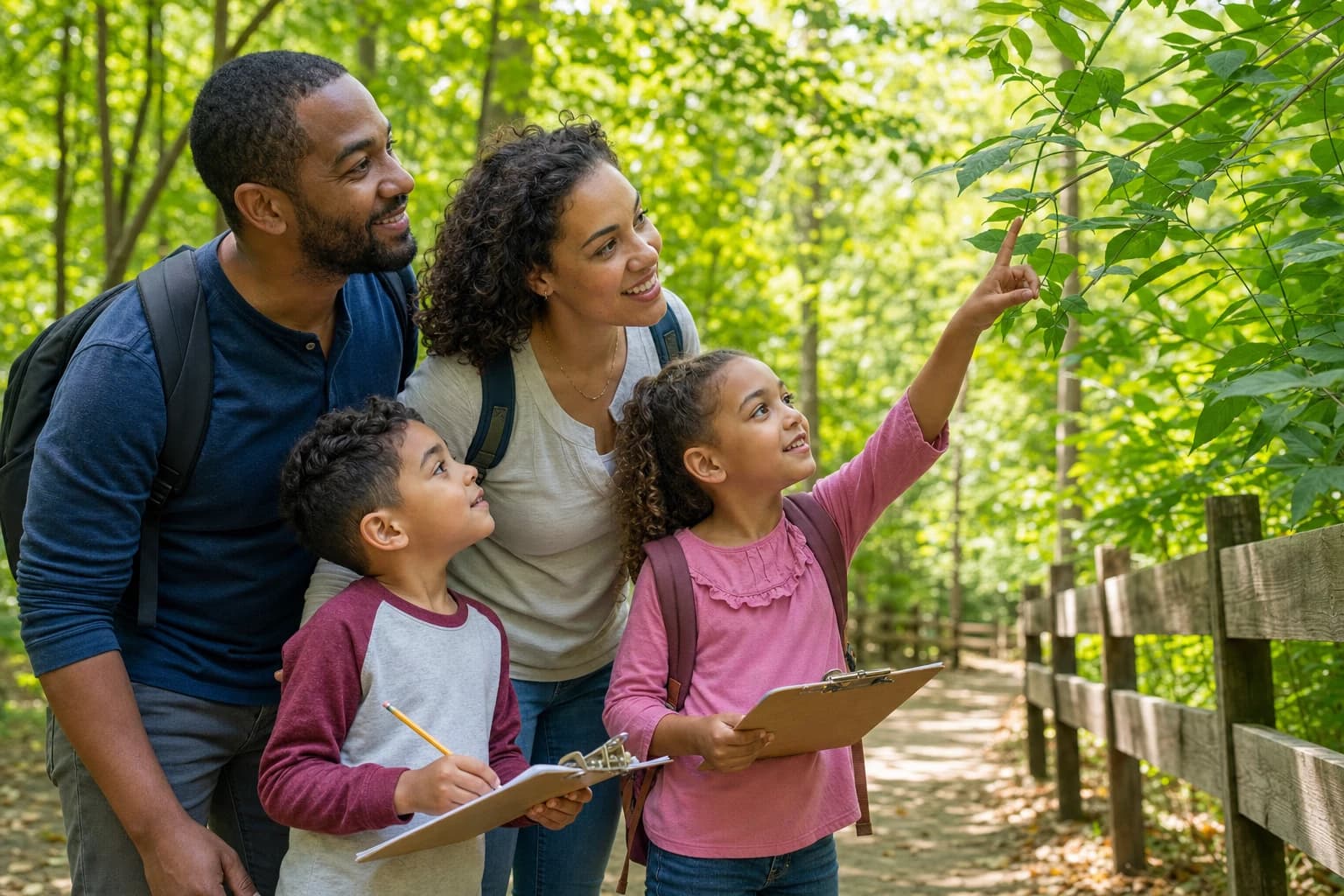
A nature scavenger hunt in a park should feel exciting, not chaotic. The goal is to get kids noticing bark patterns, bird calls, leaf shapes, shadows, and tiny details without picking plants, chasing wildlife, or wandering outside the play area.
This guide shows you how to choose a safe route, write look-only clues, organize teams, set boundaries, and adapt the hunt for preschoolers, older kids, and mixed-age families. It also includes a printable-style checklist and sample prompts you can copy for your next park scavenger hunt for kids.
Quick Overview: What Makes a Park Nature Hunt Safe?
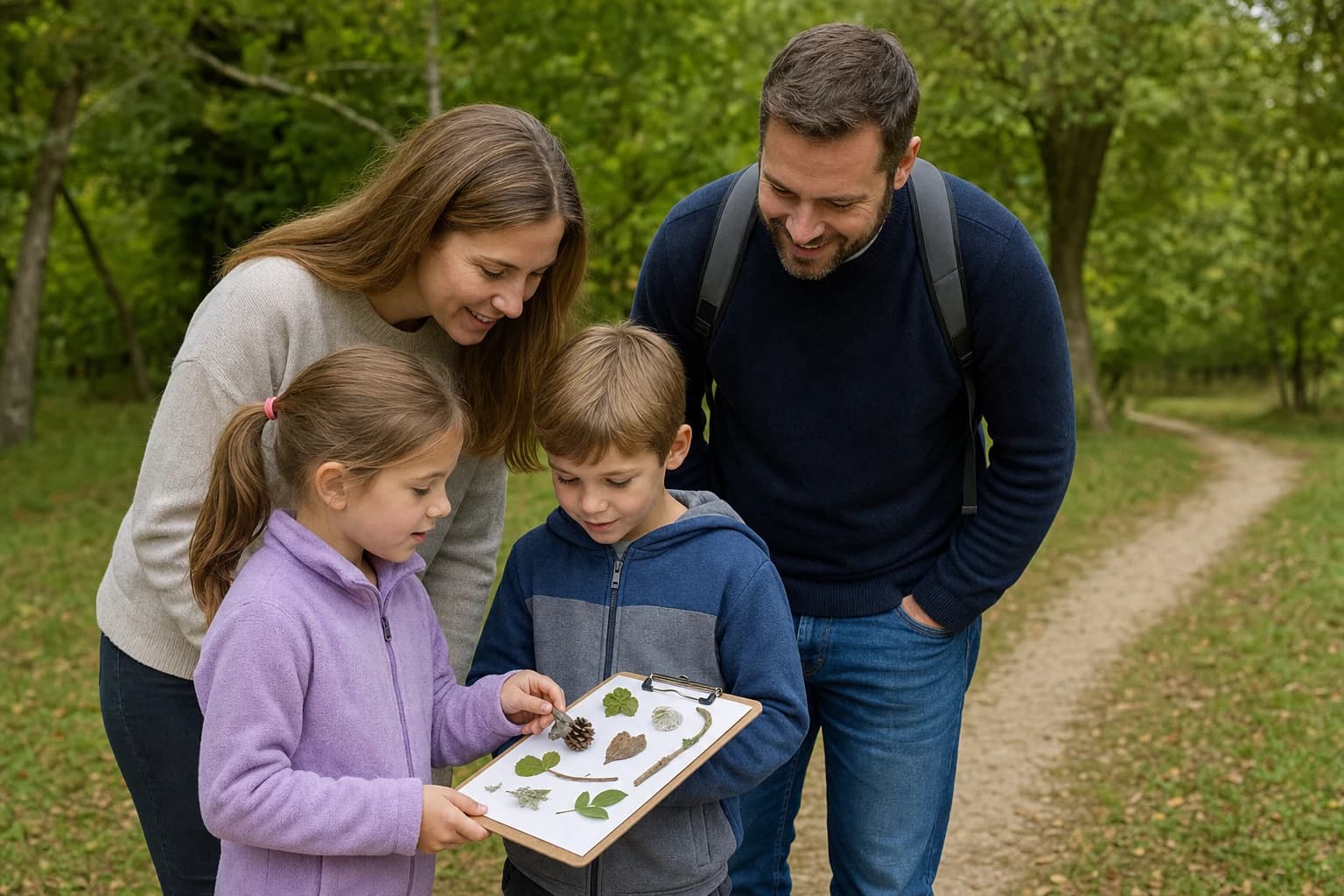
A safe nature scavenger hunt is not a race to grab objects from the ground. It is an observation game. Children search for colors, textures, sounds, shapes, and signs of wildlife while staying on an agreed route and leaving natural items where they found them.
That look-only approach matters. Many parks ask visitors not to remove plants, rocks, pinecones, feathers, or other natural materials. Even when an item looks loose, it can be part of an animal’s shelter, food source, or habitat. The National Park Service explains the Leave No Trace principle of leaving what you find, including natural objects and cultural items, so others can enjoy them too: NPS Leave No Trace Seven Principles.
For a small group, plan on a 30- to 60-minute activity. Preschoolers usually do best with 20 to 30 minutes, while older kids can handle a longer loop with riddles or photo challenges. Keep the route short enough that the last clue still feels fun.
Materials You Need
- Scavenger hunt list: One per child, pair, or team. Use 8 to 12 prompts for young children and 15 to 20 prompts for older kids.
- Clipboard or sturdy cardboard: One per team helps keep papers from blowing away.
- Pencil or washable marker: Avoid tiny crayons that snap or disappear in grass.
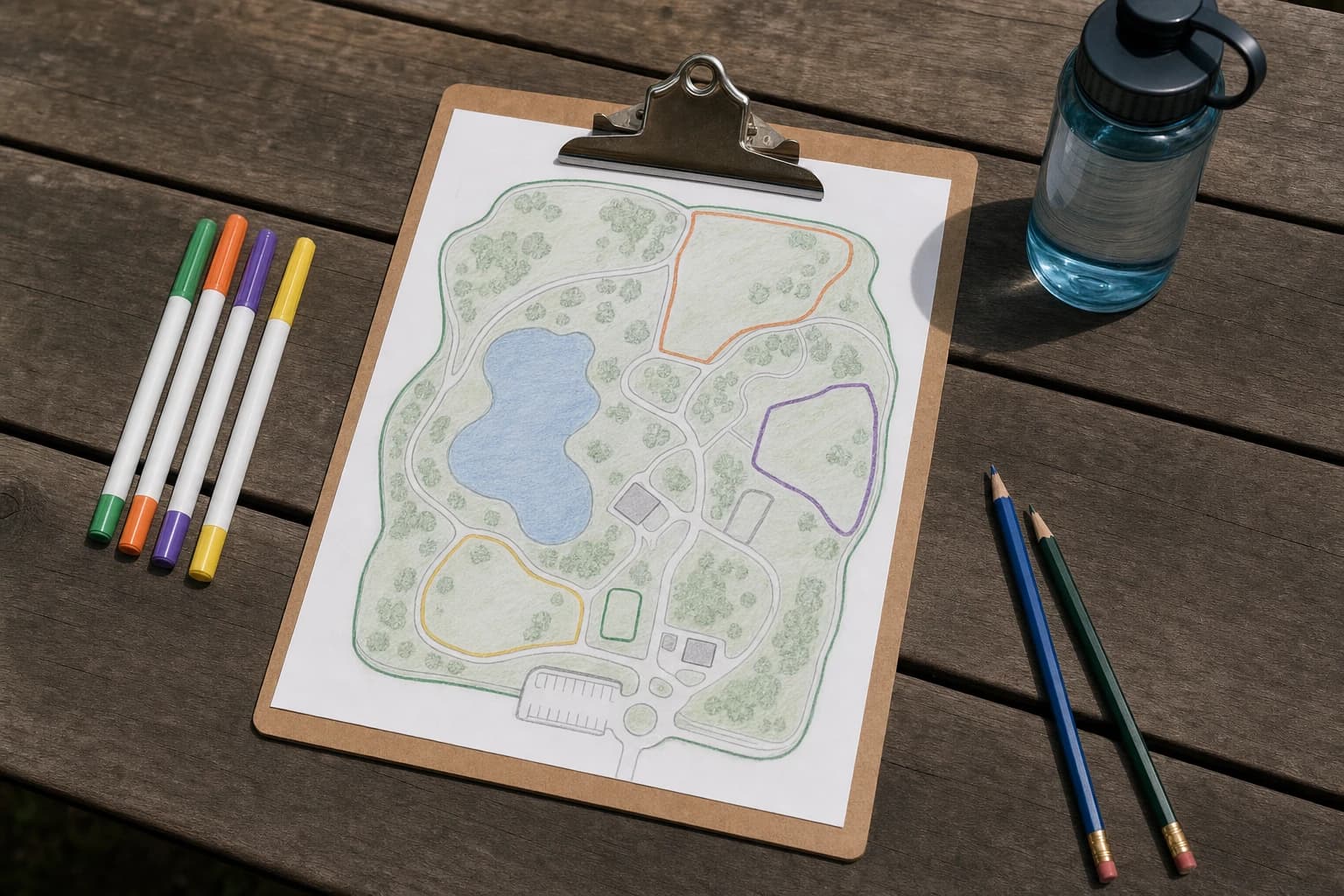
- Simple map: Mark the start, finish, bathrooms, water fountain, and boundaries.
- Phone or watch: Use it for time checks, not as the main activity unless you are doing a photo hunt.
- Water and weather gear: Bring water, sun hats, jackets, or layers as needed for the day.
- Optional: Small stickers, stamps, or a group snack for the finish instead of competitive prizes.
Before You Start: Park Rules and Safety Checks
Check the park’s posted rules before you build your list. Some parks prohibit off-trail walking, collecting natural objects, feeding animals, drones, or large organized gatherings without a permit. If you are planning a school, camp, or community event, contact the park office in advance.
Do a quick walk-through on the day of the hunt. Look for muddy slopes, broken glass, poison ivy or other irritating plants in your region, standing water, busy bike paths, water edges, and areas where children could disappear from view. If a section feels hard to supervise, remove it from the route.
For tick-prone areas, the CDC recommends using EPA-registered insect repellent as directed and checking clothing and skin after being outdoors. You can review the guidance at CDC tick prevention. Adapt this advice to your local conditions and the ages in your group.
Step-by-Step: How to Plan the Hunt
- Choose a simple route. Pick a loop or out-and-back path where adults can see the group most of the time. For a casual family hunt, a route around a playground, picnic area, garden edge, or short nature trail works well. Avoid routes that cross parking lots or unfenced water edges.
- Set clear boundaries. Use fixed landmarks children can recognize: “Stay between the red picnic shelter, the big oak tree, the playground fence, and the paved path.” Do not use vague boundaries like “not too far.” For older kids, show the boundary on a map and have them repeat it back.
- Decide the group format. For preschoolers, keep one adult with every small group. For elementary-age children, pairs or teams of 3 to 5 keep the game social without making it hard to participate. Mixed-age families often work best as teams, with one reader and one younger child who gets to mark the list.
- Write look-only prompts. Ask players to find, point to, sketch, describe, or photograph items instead of collecting them. For example, “Find a leaf with a smooth edge” is safer than “Bring back a leaf.”
- Add a time limit and check-in point. For a 45-minute hunt, try 5 minutes for rules, 30 minutes for searching, and 10 minutes for sharing discoveries. If your route is larger, require a check-in halfway through.
- Explain the safety rules out loud. Keep the rules short: stay with your team, stay inside the boundaries, do not pick or eat anything, do not touch wildlife, and come back when called.
- End with sharing, not scoring only. Ask each team to share one surprising find, one sound they noticed, and one thing they left undisturbed. This reinforces observation and care for the park.
Look-Only Nature Hunt Ideas You Can Use
The safest nature hunt ideas focus on noticing. You can mix easy visual prompts with listening, movement, and comparison challenges. Here are ready-to-use examples:
Easy prompts for younger kids
- Find something green.
- Point to a tree taller than an adult.
- Find a leaf shaped like a heart, hand, oval, or triangle.
- Listen for one bird sound.
- Find a shadow that looks interesting.
- Spot a bug without touching it.
- Find something rough, but touch only if an adult says it is okay.
- Find a flower and name its color without picking it.
Better prompts for older kids
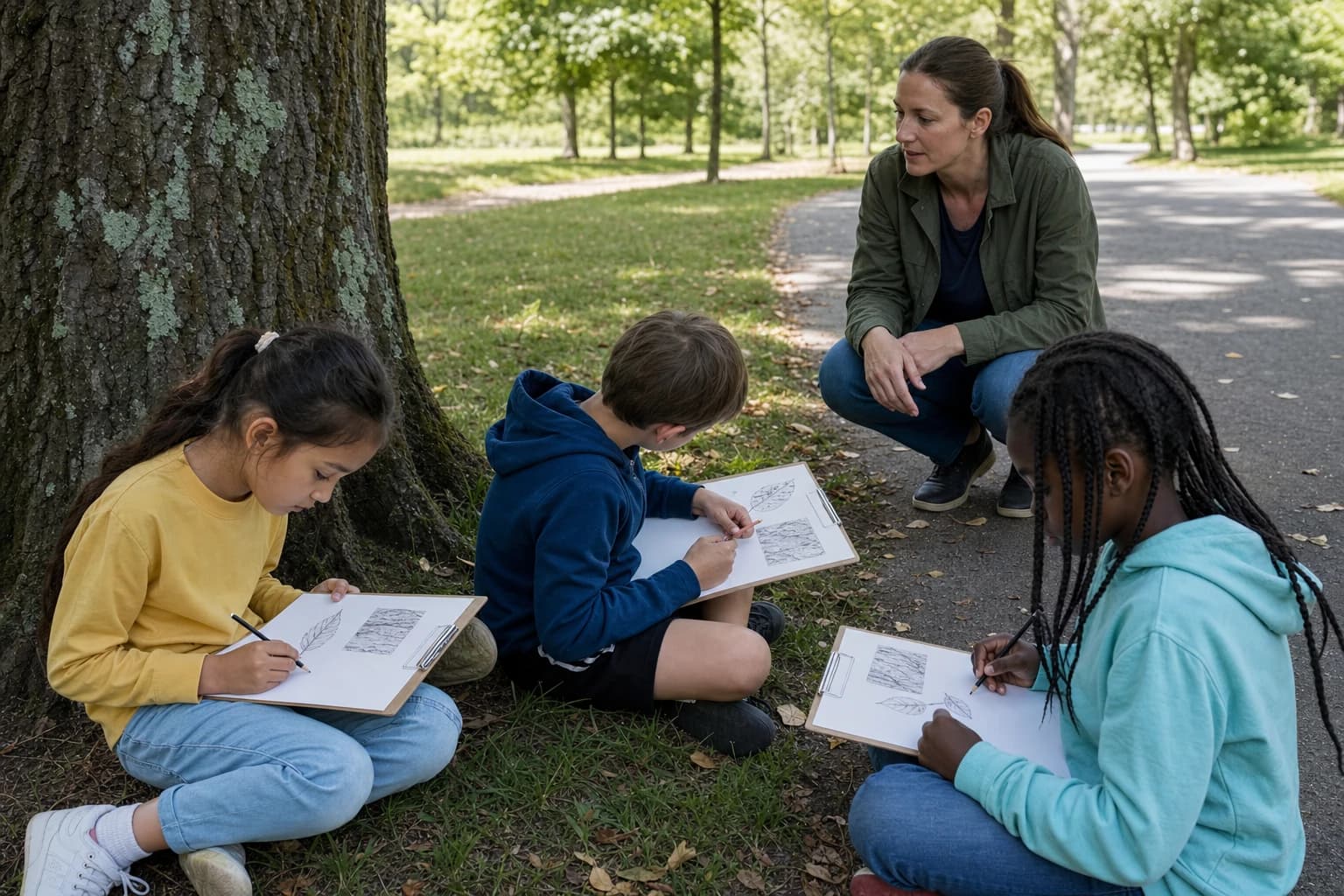
- Find three different bark textures and sketch them.
- Look for evidence that an animal has been nearby, such as a track, nest, hole, feather, or chewed leaf. Do not touch it.
- Find two leaves with different edge shapes.
- Identify one place where water might flow after rain.
- Find a plant growing in shade and a plant growing in sun. Compare them.
- Record three natural sounds and one human-made sound.
- Take a photo of a natural pattern, such as spirals, stripes, spots, or branching.
- Find one sign that people help care for the park, such as a trail marker, trash bin, bridge, or planted garden bed.
Prompts that protect plants and wildlife
- Use “point to,” “draw,” “count,” “listen for,” “photograph,” and “describe.”
- Avoid “collect,” “pull,” “dig,” “break,” or “bring back.”
- Do not include prompts that require touching mushrooms, berries, animal nests, feathers, insects, or unknown plants.
- Replace “find a bird feather” with “find a sign of a bird.”
- Replace “collect five leaves” with “find five different leaf shapes.”
If your kids enjoy search games, you can also adapt ideas from How to Set Up a Backyard Scavenger Hunt for Kids Ages 5–10 for a smaller home or picnic-area version.
Age-by-Age Adaptations
| Group | Best length | Team setup | Prompt style | Helpful adjustment |
|---|---|---|---|---|
| Preschoolers | 20 to 30 minutes | One adult-led group or pairs with adults | Colors, shapes, sounds, big landmarks | Use pictures on the list and stop before attention fades. |
| Ages 5 to 7 | 30 to 40 minutes | Pairs or teams of 3 | Simple clues, counting, matching | Let kids mark boxes with stickers or stamps. |
| Ages 8 to 12 | 40 to 60 minutes | Teams of 3 to 5 | Riddles, sketches, photo proof, comparisons | Add a bonus challenge for careful observation, not speed. |
| Families with mixed ages | 30 to 50 minutes | Family teams | A mix of easy and advanced prompts | Give younger kids the job of spotting colors and older kids the job of reading clues. |
How to Organize Teams Without Turning It Into Chaos
Teams work best when everyone has a job. Otherwise, one confident child may take over while quieter children drift along. Assign simple roles and rotate them halfway through the hunt:
- Navigator: Keeps the team inside the boundary and watches the map.
- Reader: Reads the next prompt out loud.
- Marker: Checks off completed prompts.
- Observer: Gets the first chance to point out details.
- Timekeeper: Watches for the return time if the children are old enough.
If you want to keep the mood cooperative, avoid giving a prize only to the fastest team. Safer award ideas include “sharpest observation,” “best teamwork,” “quietest wildlife watching,” or “most interesting sketch.” For a more active park day after the hunt, consider pairing it with a structured running game such as Capture the Flag Rules for Parks, Camps, and School Fields or simple movement activities from 10 No-Equipment Tag Games for Elementary School Recess.
Safety Checklist for Adults
Use this checklist before and during the hunt. It is especially useful for birthday parties, class outings, camp groups, and extended-family gatherings.
- Walk the route before the children begin.
- Confirm bathroom, water, and meeting locations.
- Check the weather and cancel or shorten the hunt for thunder, extreme heat, poor air quality, or unsafe wind.
- Point out off-limits areas, including parking lots, water edges, dense brush, maintenance zones, and private property.
- Set a return signal, such as a whistle, hand bell, or clear call.
- Keep younger children within sight at all times.
- Remind everyone not to eat berries, leaves, seeds, or mushrooms.
- Tell children to watch where they step instead of running with eyes on the paper.
- Bring basic supplies such as water, tissues, hand sanitizer, and any personal items your group needs.
- Have a plan for a child who gets tired, upset, or overstimulated.
Make the Hunt More Interesting Without Making It Riskier
Once the basic version is working, add variety through the prompts rather than by expanding the boundary. Try one of these formats:
- Color hunt: Find natural examples of green, brown, yellow, gray, white, and one surprise color.
- Texture hunt: Look for rough bark, smooth stone, soft moss from a distance, bumpy seed pods, and rippled water.
- Sound hunt: Stand quietly for one minute and list every sound heard.
- Photo hunt: Older kids photograph patterns, shadows, and signs of seasons. Set a rule that people outside your group should not be photographed without permission.
- Seasonal hunt: In spring, look for buds and puddles. In summer, look for shade patterns and pollinators from a distance. In fall, look for leaf colors. In winter, look for evergreen plants, tracks, and ice only from safe paths.
Common Mistakes to Avoid
Making the list too long. A giant list turns a relaxed outdoor nature game into a clipboard chore. Choose fewer prompts and leave time for children to talk about what they found.
Using collection-based clues. “Bring me a pinecone” sounds harmless, but it encourages children to remove natural items and may conflict with park rules. Use “find and point to a pinecone” instead.
Letting teams spread too far apart. A wide search area is harder to supervise and increases the chance of children crossing paths with bikes, dogs, water, or parking lots. A smaller boundary usually creates a better game.
Overemphasizing speed. Racing can lead to tripping, pushing, and missed details. If you keep score, award points for thoughtful observations, teamwork, and staying within the rules.
Forgetting accessibility. Choose paved or firm paths when you have strollers, wheelchairs, or children who tire easily. Prompts such as sounds, clouds, tree shapes, colors, and shadows can work well without leaving an accessible route.
Sample 45-Minute Park Scavenger Hunt Plan
Here is a simple schedule you can use for a family picnic, class outing, or birthday activity:
- Minutes 0 to 5: Gather at the meeting point, explain boundaries, review the look-only rule, and assign teams.
- Minutes 5 to 10: Do one practice prompt together, such as “find something with a rough texture.”
- Minutes 10 to 35: Teams complete the hunt. Adults circulate and keep children inside the route.
- Minutes 35 to 40: Return to the meeting point, drink water, and check that everyone is present.
- Minutes 40 to 45: Share favorite discoveries and thank the group for leaving nature undisturbed.
If the weather changes or the group is losing focus, shorten the search period and end with a quick sharing circle. A successful hunt does not require finishing every item.
FAQ
Can kids collect leaves, rocks, or pinecones during a park scavenger hunt?
Only if the park rules clearly allow it. A safer default is a look-only hunt where children point, sketch, count, describe, or photograph natural items without removing them.
How many items should be on a nature scavenger hunt list?
Use 8 to 12 prompts for preschoolers and early elementary children. Older kids can handle 15 to 20 prompts if the route is clear and the game is not rushed.
What is the best team size for a park scavenger hunt for kids?
Teams of 3 to 5 usually work well for school-age children. Preschoolers need closer adult support, so keep them in very small groups or together with one adult leading.
How do you keep kids from running too far ahead?
Set visible boundaries, require teams to stay together, use a return signal, and design prompts that reward slow looking instead of speed. Adults should position themselves where paths split or visibility drops.
What if the park is busy?
Choose a smaller area away from playground entrances, parking lots, sports fields, and bike paths. Use quieter prompts like clouds, sounds, tree bark, and shadows so the hunt does not interfere with other visitors.
Conclusion
A safe nature scavenger hunt in a park starts with thoughtful limits: a simple route, clear boundaries, adult supervision, and prompts that let children observe without disturbing plants or wildlife. Keep the list age-appropriate, explain the rules before anyone starts, and reward curiosity more than speed.
When the hunt ends with children noticing details they usually walk past, it has done its job. They get an outdoor game, the park stays protected, and everyone leaves with a better sense of how to explore nature respectfully.