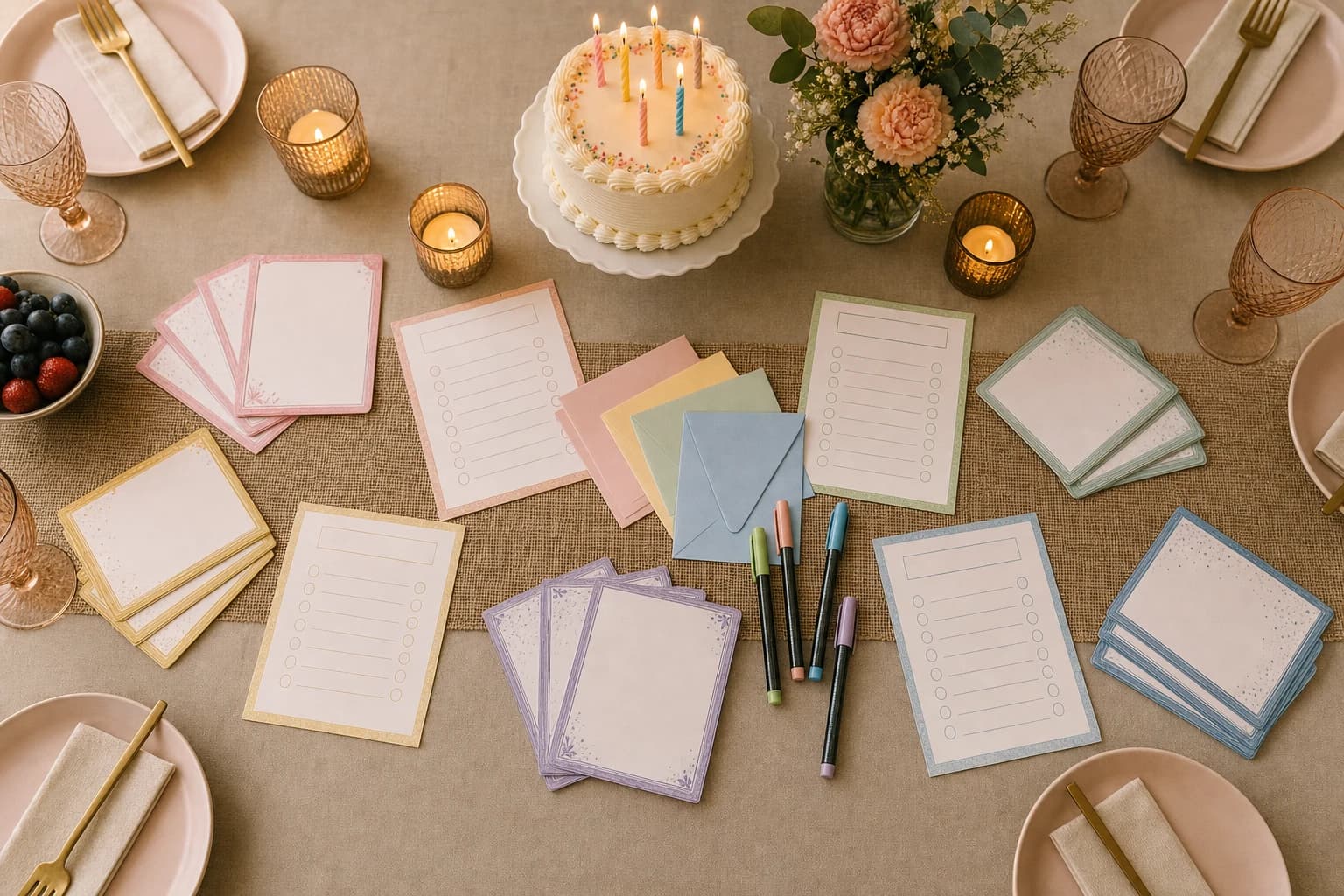
Class parties can get chaotic fast when the game needs too many materials, too much space, or too many directions. The best classroom party games for elementary students are simple to explain, quick to reset, and flexible enough to work around desks, carpet squares, backpacks, and excited children.
This guide focuses on school party games that need minimal supplies: paper, pencils, a few cups, index cards, or no materials at all. Each game includes a noise-level rating, setup and cleanup time, classroom management notes, and adaptations for desks, carpet areas, or small classrooms.
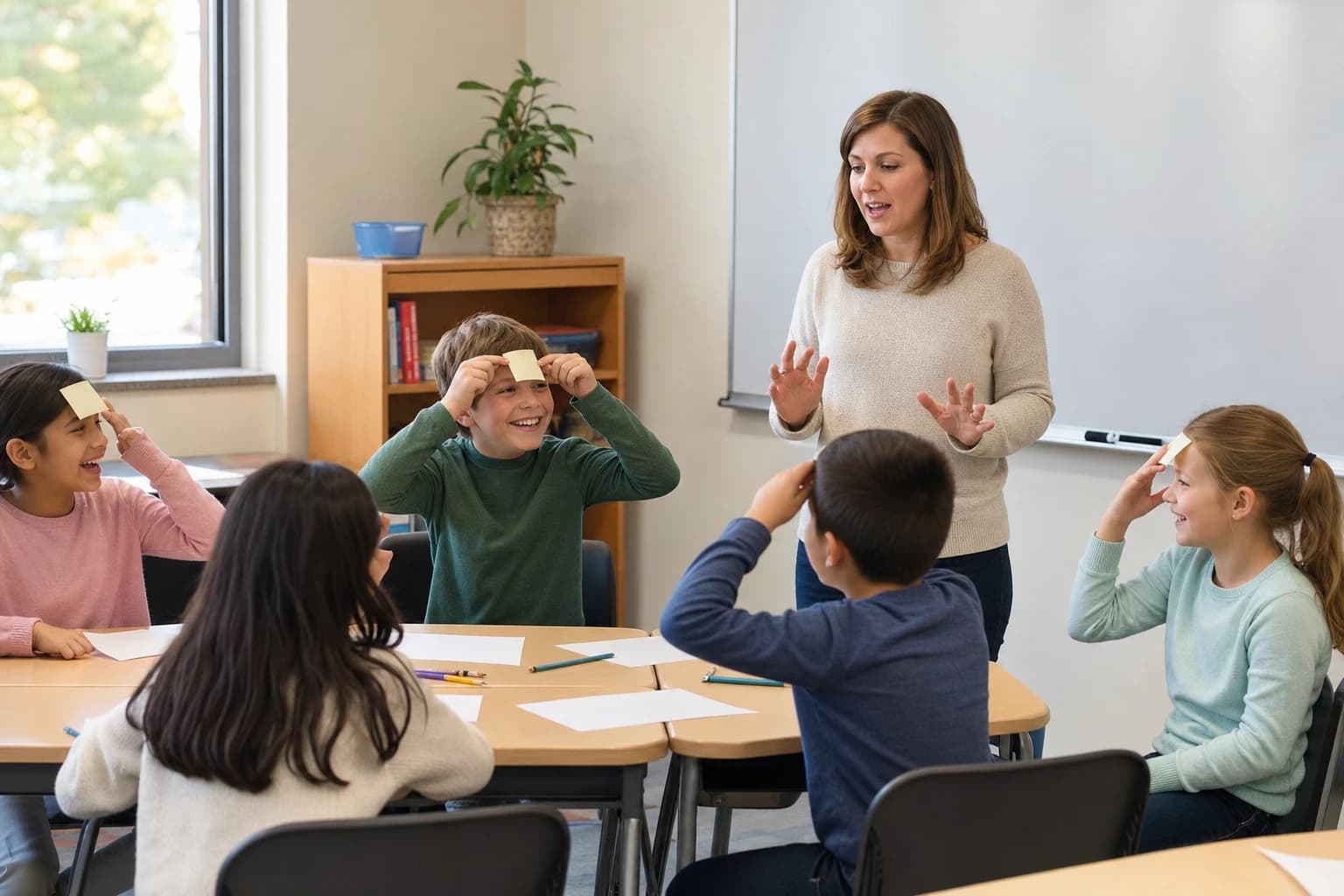
Quick Game-Picking Guide for a Classroom Party
Before choosing games, decide three things: how loud the room may get, whether students can move around, and how many minutes you need to fill. A 20-minute party block may only need two games plus snack time. A 45-minute party usually works better with three short games and one calm activity at the end.
For movement games, keep walkways clear and adjust the rules so students do not run. If you want more movement-based options for tight spaces, you may also like 20 Indoor PE Games for Elementary Students in a Small Gym or Classroom.
For general safety and activity planning, the CDC notes that children benefit from regular physical activity, but classroom games should still be matched to the space, supervision, and school rules. See the CDC’s children’s physical activity guidance here: CDC physical activity guidelines for children.
Minimal Supplies to Keep Ready
You do not need a party bin full of props. A small folder or tote with the following items can support most elementary classroom games:
- Plain paper or scrap paper: 20 to 30 sheets
- Index cards or sticky notes: 30 to 50 cards
- Pencils or crayons: one per student
- A timer: classroom clock, phone timer, or projected timer
- Painter’s tape or masking tape: for temporary labels only if allowed
- Ten lightweight plastic cups: optional for stacking games
- A small basket or container: for collecting cards or paper slips
If volunteers are bringing supplies, ask for simple items in exact amounts. “Please bring 30 index cards and 10 plastic cups” is easier than “bring party supplies,” and it prevents duplicates or clutter.
Best Classroom Party Games at a Glance
| Game | Best For | Supplies | Setup | Cleanup | Noise Level |
|---|---|---|---|---|---|
| Four Corners Questions | Grades 2–5 | 4 corner labels | 2 minutes | 1 minute | Medium |
| Pass the Clap | K–5 | None | 0 minutes | 0 minutes | Low |
| Desk Bingo | Grades 2–5 | Paper, pencils | 5 minutes | 2 minutes | Medium |
| Silent Line-Up Challenge | Grades 1–5 | None | 0 minutes | 0 minutes | Low |
| Memory Tray | K–5 | 10 classroom objects | 3 minutes | 2 minutes | Low |
| Mystery Word Charades | Grades 2–5 | Word cards | 5 minutes | 1 minute | Medium |
| Paper Snowball Share | Grades 2–5 | Paper, pencils | 4 minutes | 3 minutes | Medium |
| Cup Stack Teams | Grades 1–5 | 10 cups per station | 3 minutes | 2 minutes | Medium |
| Would You Rather Sides | K–5 | Question list | 1 minute | 0 minutes | Medium |
| Story Circle | K–5 | Optional prompt card | 1 minute | 0 minutes | Low |
How to Run These Games Without Losing the Room
A classroom party feels different from a normal lesson, so students often need the rules stated more clearly than usual. Keep the structure short and predictable.
- Choose a party signal. Use one attention signal for the whole party, such as “hands on head” or a clap pattern. Practice it once before the first game.
- Set the movement boundary. Say exactly where students may stand: “You may move between the carpet and the back counter, but not behind the teacher desk.”
- Explain the win condition last. First explain where bodies go and what materials are used. Then explain how the round ends.
- Use short rounds. Most classroom party rounds work best at 2 to 5 minutes. End while students still want more.
- Reset before the next game. Have students freeze, return materials, sit, and then hear the next set of directions.
Useful rule of thumb: if a game takes longer to explain than to play, simplify it or save it for a smaller group.
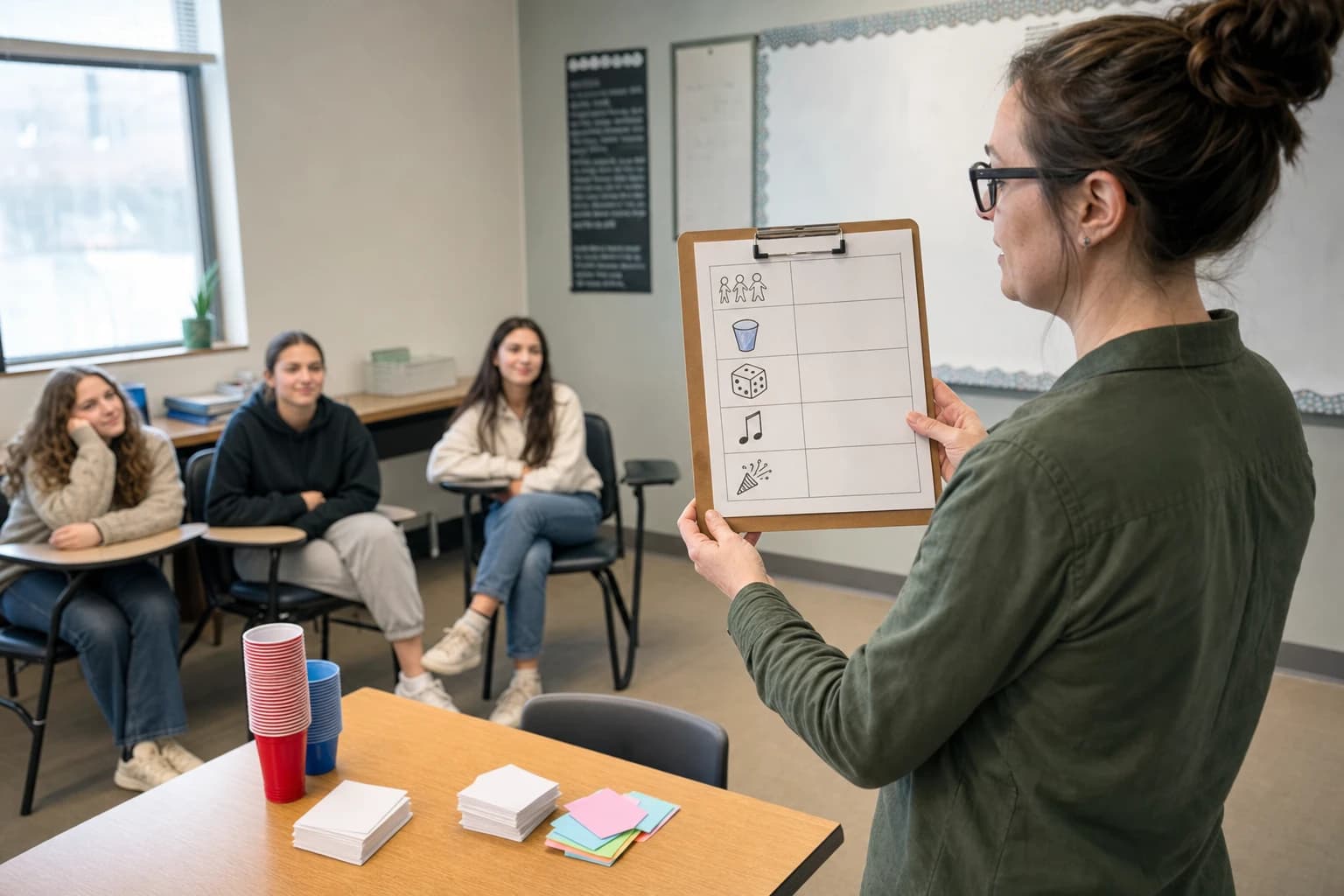
Classroom Party Games With Minimal Supplies
1. Four Corners Questions
Best for: Grades 2–5. Supplies: four corner labels or verbal corner names. Setup: 2 minutes. Cleanup: 1 minute. Noise level: Medium.
Label the room corners A, B, C, and D. Ask a question with four choices, such as “Which party snack would you choose: popcorn, fruit, pretzels, or cookies?” Students walk to the corner that matches their answer. After each round, invite one or two students to explain their choice in one sentence.
Management note: Require walking only. If one corner becomes crowded, have students show their answer with fingers instead of moving for the next round.
Small-room adaptation: Use desk zones instead of corners. Left side of the room is A, right side is B, front is C, back is D.
2. Pass the Clap
Best for: K–5. Supplies: none. Setup: 0 minutes. Cleanup: 0 minutes. Noise level: Low.
Students sit or stand in a circle. One student turns to the next person and claps once. That student “passes” the clap to the next person. Add a challenge after one practice round: reverse direction, pass two claps, or let students silently point to send the clap across the circle.
Management note: This is a good reset game after snacks or a louder activity. Keep the goal cooperative: “Can we get around the circle without talking?”
Desk adaptation: Students stay seated and pass the clap row by row.
3. Desk Bingo
Best for: Grades 2–5. Supplies: paper and pencils. Setup: 5 minutes. Cleanup: 2 minutes. Noise level: Medium.
Have students draw a 3-by-3 grid. Put simple prompts on the board, such as “has a pet,” “likes tacos,” “has read a mystery book,” “can whistle,” and “likes rainy days.” Students move around asking classmates questions and write one name per square. The goal is to complete three in a row.
Management note: Limit each student to signing one square per person. Use a timer for 5 minutes so the game does not turn into wandering.
Small-classroom adaptation: Students remain at desks. The teacher reads a prompt, and students raise hands if it fits. Classmates fill in names from their seats.
4. Silent Line-Up Challenge
Best for: Grades 1–5. Supplies: none. Setup: 0 minutes. Cleanup: 0 minutes. Noise level: Low.
Challenge students to line up silently by a category: birthday month, first name alphabetical order, shoe color from light to dark, or number of letters in their first name. They may gesture but not talk.
Management note: Pick categories that are not embarrassing or too personal. Avoid height, weight, grades, or anything that could single out a student negatively.
Desk adaptation: Instead of forming a physical line, students hold up fingers, stand in place when their month is called, or rearrange name cards on the board.
5. Memory Tray
Best for: K–5. Supplies: 8 to 12 classroom objects and a cover sheet. Setup: 3 minutes. Cleanup: 2 minutes. Noise level: Low.
Place objects on a tray or desk: eraser, marker, paper clip, book, glue stick, ruler, sticky note, crayon, and keychain. Let students look for 30 seconds. Cover the items. Students write or whisper as many items as they remember.
Management note: For younger students, use 6 items and let them draw answers. For older students, add detail points such as “blue marker” instead of just “marker.”
Carpet adaptation: Put the objects in the center and have students sit around the edge with hands in laps.
6. Mystery Word Charades
Best for: Grades 2–5. Supplies: 20 word cards. Setup: 5 minutes. Cleanup: 1 minute. Noise level: Medium.
Write classroom-friendly actions or nouns on cards: robot, popcorn, snowman, basketball, pencil sharpener, sleepy cat, rainstorm, superhero, or washing machine. A student acts out the word while classmates guess.
Management note: Use a “three guesses, then reveal” rule to keep turns moving. Remind students that acting should stay in their own personal space.
Small-room adaptation: Players act from the front of the room or beside their desk rather than moving across the classroom.
7. Paper Snowball Share
Best for: Grades 2–5. Supplies: half-sheets of paper and pencils. Setup: 4 minutes. Cleanup: 3 minutes. Noise level: Medium.
Students answer a light prompt on paper, such as “What is your favorite indoor recess activity?” or “Name one kind thing someone can do at school.” They crumple the paper into a “snowball.” On your signal, students gently toss snowballs into the center for 10 seconds. Each student picks one, reads it silently, and guesses who wrote it or shares the answer aloud.
Management note: Use the word “toss,” not “throw,” and require snowballs to stay below shoulder height. Stop immediately if the tossing becomes unsafe.
Desk adaptation: Skip the tossing. Students fold papers and pass them three seats to the right.
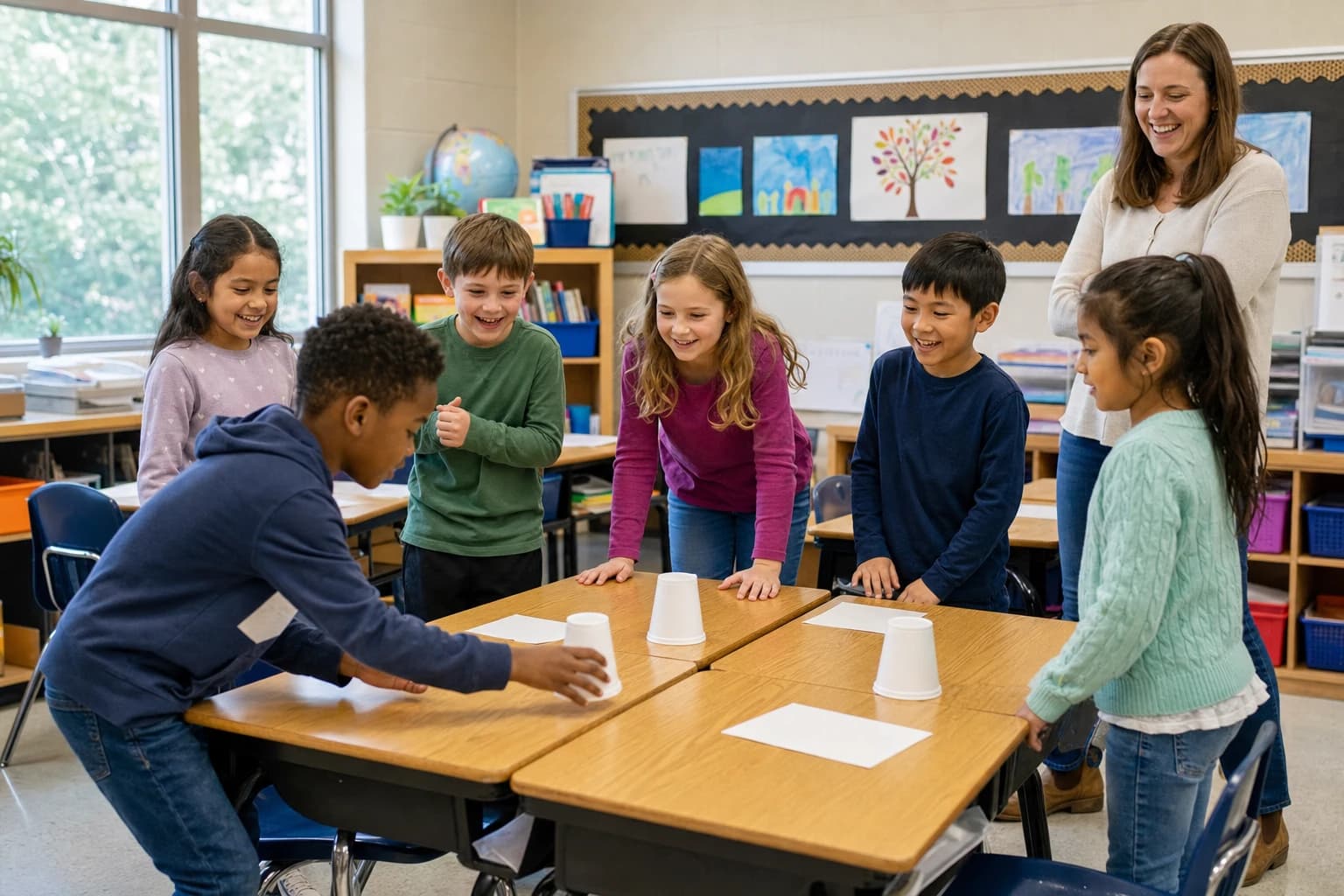
8. Cup Stack Teams
Best for: Grades 1–5. Supplies: 10 lightweight cups per team or station. Setup: 3 minutes. Cleanup: 2 minutes. Noise level: Medium.
Teams build a simple pyramid: four cups on the bottom, then three, then two, then one. Once built, they carefully unstack it back into one tower. Play as a timed challenge or a cooperative “can every team finish?” activity.
Management note: Avoid making speed the only goal if the class gets overly competitive. Give points for quiet teamwork, careful hands, and reset speed.
Small-room adaptation: Run one station at a time while the rest of the class cheers silently with jazz hands or thumbs-up signs.
9. Would You Rather Sides
Best for: K–5. Supplies: question list. Setup: 1 minute. Cleanup: 0 minutes. Noise level: Medium.
Designate one side of the room as option A and the other as option B. Ask simple questions: “Would you rather have art class outside or music class outside?” “Would you rather read a funny book or an adventure book?” Students move to show their answers.
Management note: Keep questions low-stakes and inclusive. Avoid questions about money, family situation, religion, politics, or body image.
Desk adaptation: Students point left or right, hold up one or two fingers, or place their head down for A and sit tall for B.
10. Story Circle
Best for: K–5. Supplies: optional prompt card. Setup: 1 minute. Cleanup: 0 minutes. Noise level: Low.
Start a silly story with one sentence: “The class opened the closet and found a tiny dragon wearing sneakers.” Each student adds one sentence. For younger students, use one word at a time instead of one sentence.
Management note: Set boundaries before starting: no bathroom humor if that is a class issue, no scary details, and no using classmates as characters unless the class has agreed.
Carpet adaptation: Sit in a circle and pass an imaginary microphone. Only the person holding it speaks.
11. Category Countdown
Best for: Grades 2–5. Supplies: paper and pencil per team. Setup: 2 minutes. Cleanup: 2 minutes. Noise level: Low to medium.
Give a category and a time limit of 60 seconds. Teams list as many examples as they can: animals with four legs, foods that start with P, winter words, school supplies, or sports. After time is up, teams read answers. Duplicate answers can count or be crossed out, depending on how competitive you want the game to feel.
Management note: For a calmer version, have teams write silently for the first 30 seconds and whisper for the last 30 seconds.
Desk adaptation: Students work with the person next to them instead of moving into teams.
12. Compliment Web
Best for: Grades 2–5. Supplies: none, or a ball of yarn if allowed. Setup: 1 minute. Cleanup: 0 to 2 minutes. Noise level: Low.
Students sit in a circle. One student gives a specific school-appropriate compliment to another student: “I appreciate that you helped clean up the art table.” The next student continues. If using yarn, each student holds a section before passing it on, creating a web.
Management note: Model two examples first. Require compliments about actions, effort, kindness, or teamwork rather than appearance.
No-supply adaptation: Skip the yarn and simply pass the turn by name.

Easy Party Flow for a 30-Minute Class Celebration
If you are a teacher or room parent trying to plan a short celebration, use this simple order:
- 0:00–0:03: Review party signal, movement boundary, and kindness rule.
- 0:03–0:10: Start with a medium-energy game, such as Four Corners or Would You Rather Sides.
- 0:10–0:18: Play a desk-friendly game, such as Desk Bingo or Category Countdown.
- 0:18–0:24: Add a cooperative challenge, such as Cup Stack Teams or Pass the Clap.
- 0:24–0:30: End with a calmer activity, such as Story Circle, Memory Tray, or Compliment Web.
This order helps students enjoy movement without ending the party at the highest energy point. For more transition-friendly ideas, see 25 No-Equipment Classroom Games for 2nd to 5th Grade Transitions and 18 Quiet Classroom Games for Early Finishers in Kindergarten to 2nd Grade.
Classroom Management Notes That Make Party Games Easier
Use Teams Without Making Students Feel Stuck
For elementary classroom games, quick teams are usually better than carefully chosen teams. Try “left side and right side,” table groups, rows, or birthday months. Avoid letting students pick teams publicly, because it can leave someone feeling unwanted.
Plan for Students Who Do Not Want to Perform
Games like charades can be fun, but not every student wants to act in front of the class. Offer a helper role: card picker, timer watcher, scorekeeper, clue reader, or audience captain. Participation can still be meaningful without forcing a performance.
Keep Prizes Small or Skip Them
Many school party games work best without prizes. If prizes are used, choose class rewards such as choosing the next prompt, leading the next round, or earning a sticker. Avoid food prizes unless you have confirmed school policy and allergy needs.
Have a Calm Backup Game
Keep one quiet option ready in case the room gets too loud. Memory Tray, Story Circle, Pass the Clap, and Category Countdown are useful because they require almost no reset. If you need games that are more academic but still playful, try Educational Indoor Classroom Games for Grades 3–5.
Common Mistakes to Avoid
- Starting with the loudest game. Begin with medium energy and save calm games for the end.
- Using too many materials. More props usually mean more cleanup and more waiting.
- Forgetting the room layout. A game that works in an empty gym may not work between desks.
- Choosing elimination games too often. Students who are “out” can become bored or disruptive. Modify games so students rejoin quickly.
- Ignoring school rules. Check policies for balloons, food, photos, music, and volunteer supervision before party day.
FAQ: Classroom Party Games for Elementary Students
What are the easiest classroom party games with no supplies?
Pass the Clap, Silent Line-Up Challenge, Would You Rather Sides, and Story Circle are the easiest no-supply choices. They can be explained in under one minute and work in most classrooms.
How many games do I need for a 45-minute class party?
Plan three to four games, depending on snack time and transitions. A good mix is one movement game, one seated game, one cooperative challenge, and one calm closing activity.
What games work best in a small classroom with desks?
Desk Bingo, Category Countdown, Memory Tray, Pass the Clap, and seated Would You Rather work well because students can stay at desks. If students move, use zones instead of running paths.
How can I keep classroom party games from getting too loud?
Use a visible timer, short rounds, and a practiced attention signal. Alternate medium-noise games with low-noise games, and give students a clear voice level before each round.
Should classroom party games have winners?
They can, but they do not need to. Cooperative goals, class challenges, and rotating leaders often work better for elementary parties because fewer students are left waiting or disappointed.
Conclusion
The most reliable classroom party games for elementary students are not the ones with the most decorations or supplies. They are the games with clear rules, quick setup, easy cleanup, and flexible movement options. Four Corners, Desk Bingo, Memory Tray, Cup Stack Teams, Pass the Clap, and Story Circle can fill a celebration without turning the room upside down.
Choose two medium-energy games, one seated game, and one calm closing activity. Add clear boundaries, a simple attention signal, and a backup plan, and your class party will feel fun, organized, and manageable for both students and adults.