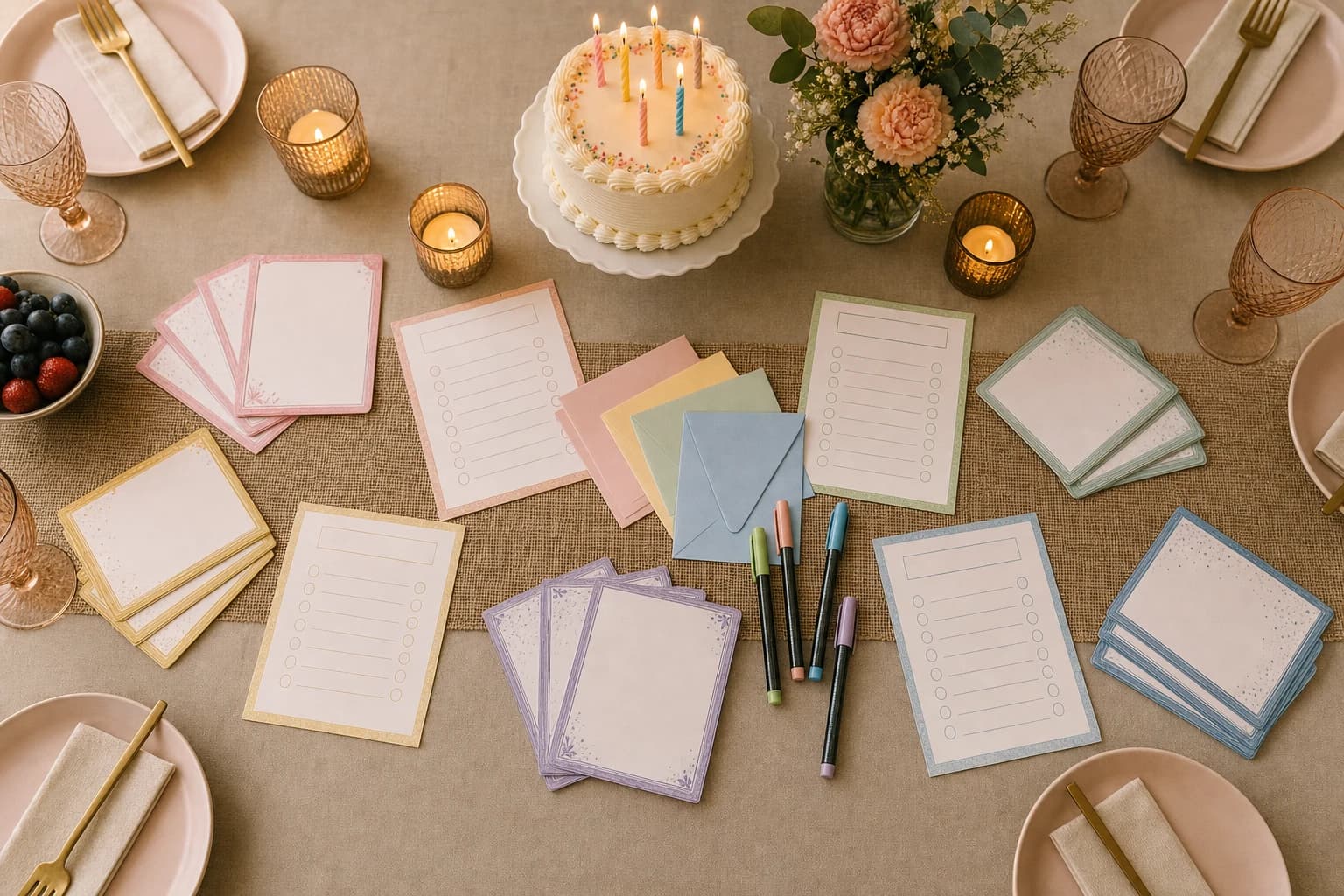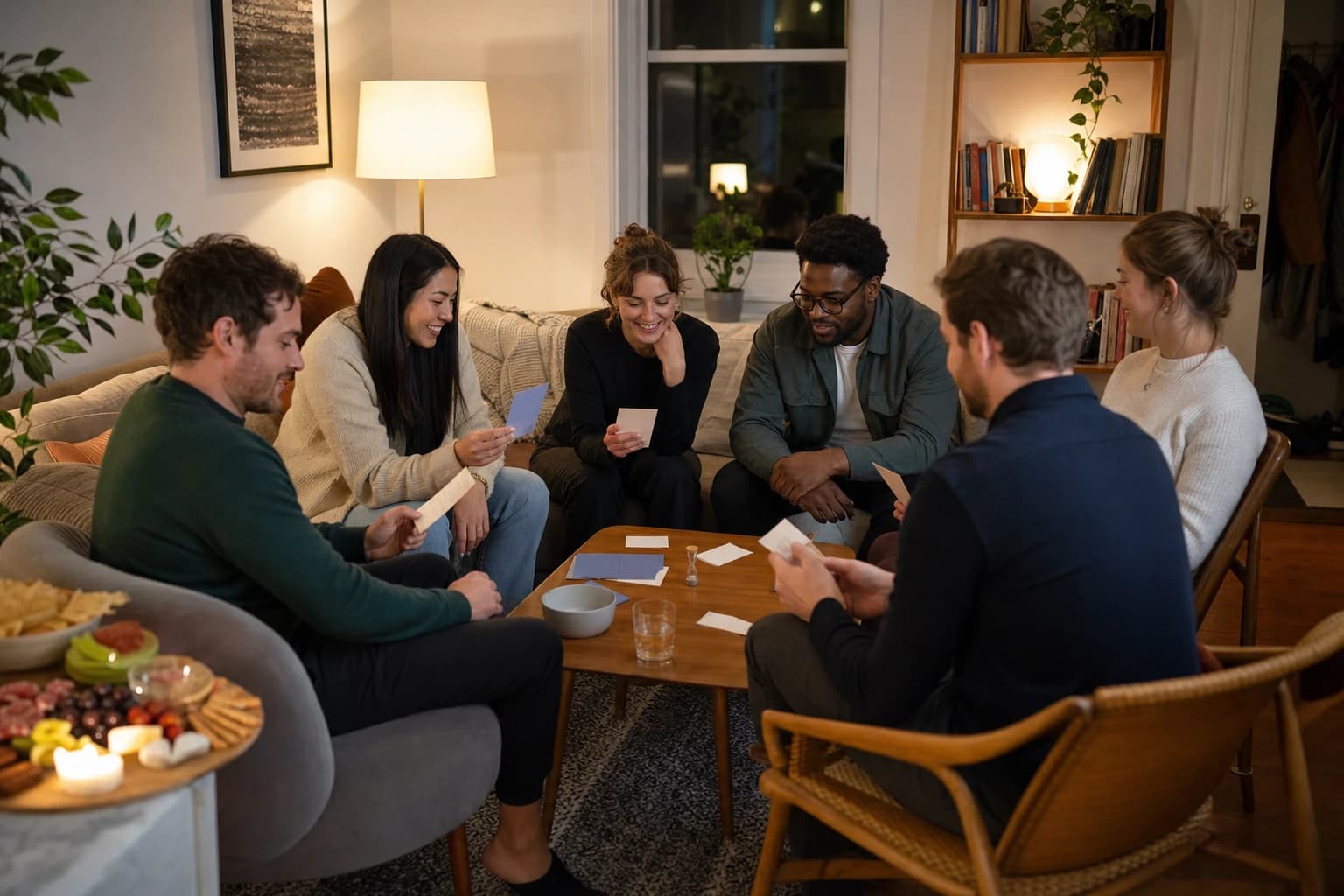
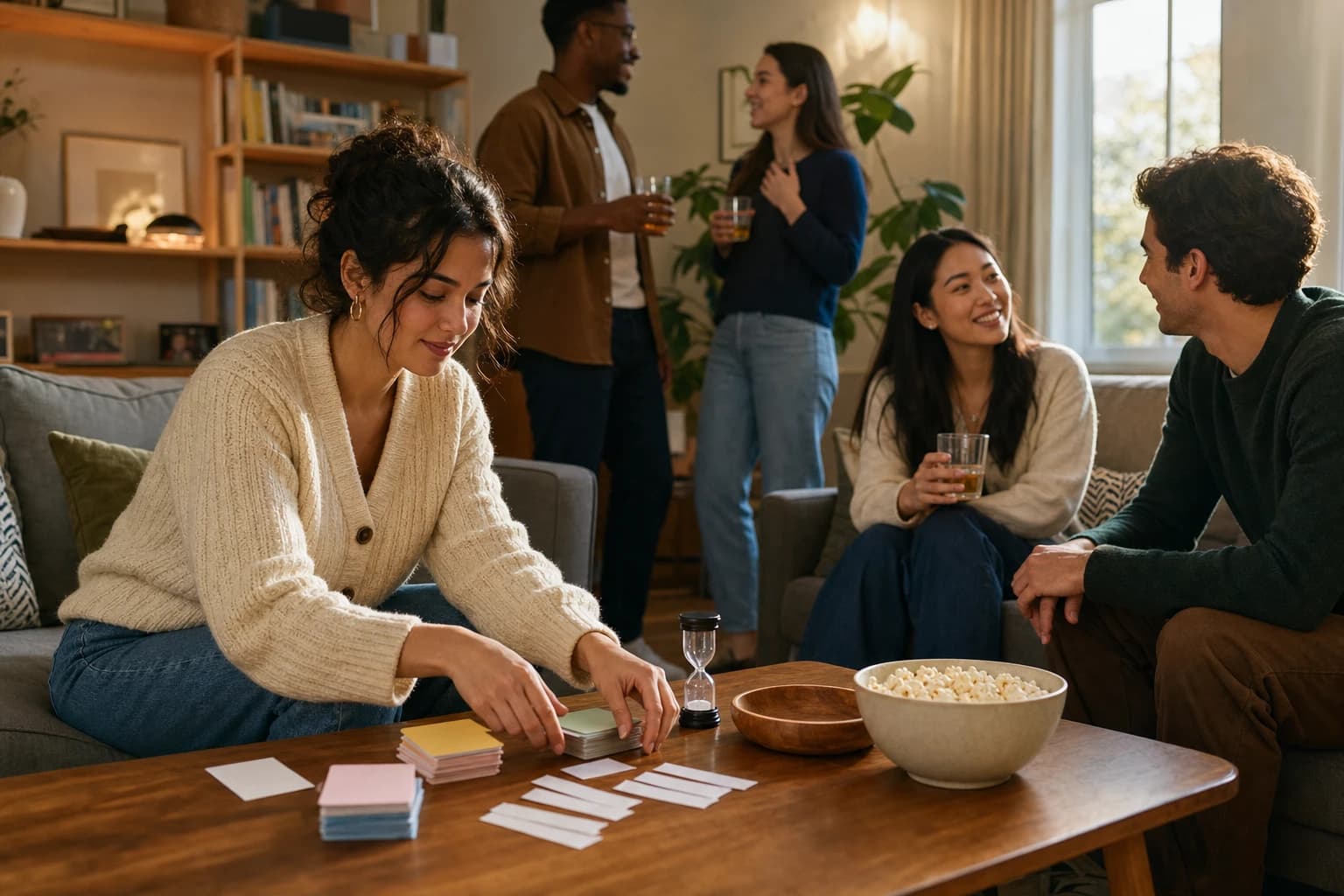
Party games usually fail for ordinary reasons: the rules take too long, the teams feel unfair, the game embarrasses quiet guests, or the host keeps playing after the room has already moved on. The good news is that most party game mistakes are easy to fix once you know what to watch for.
This guide explains why party games fail from a host’s point of view and gives practical fixes you can use before and during the party. You will find a quick troubleshooting table, a simple prep checklist, and examples of better ways to handle rules, reluctant players, prizes, pacing, and mixed-energy groups.
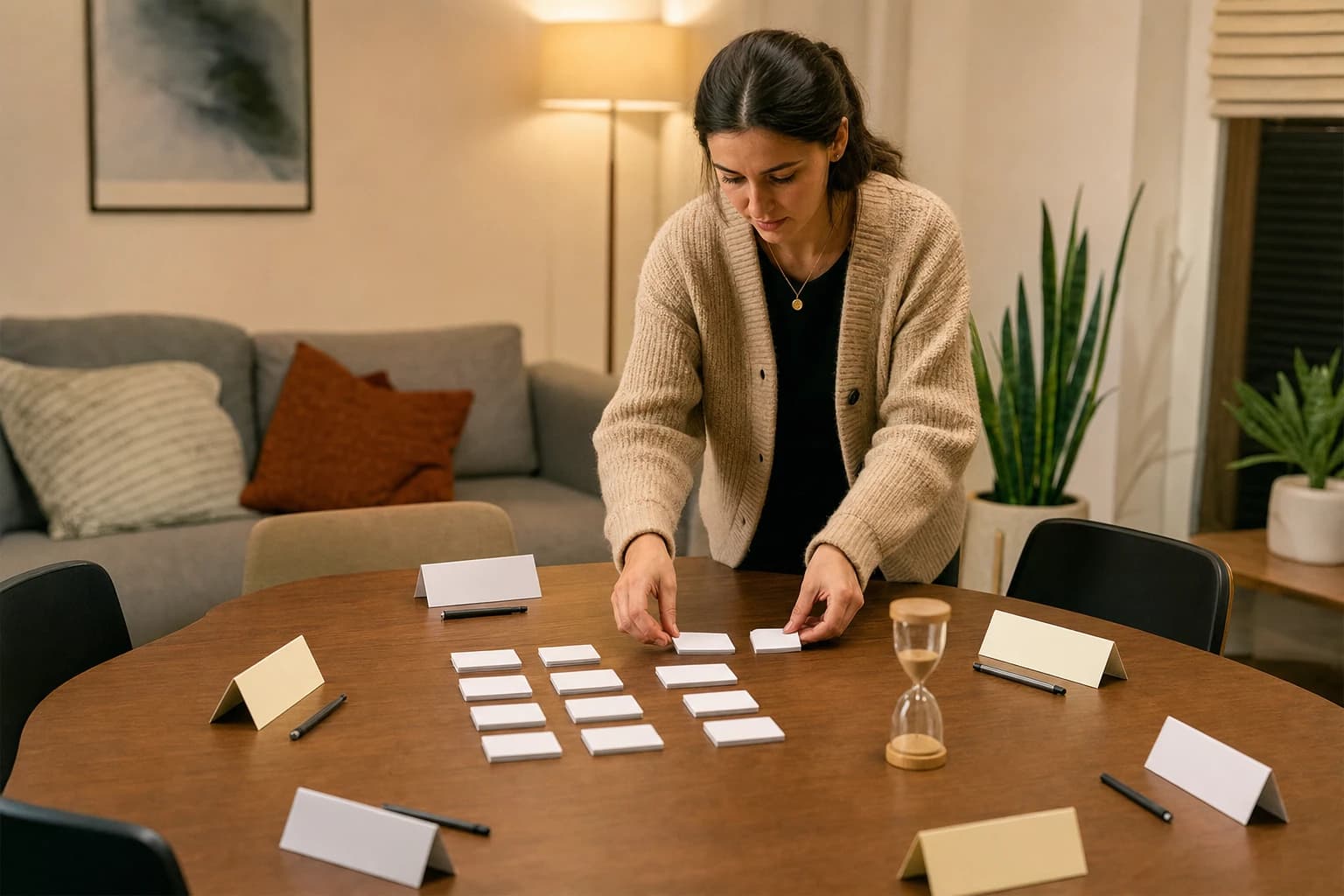
The quick answer: most party games fail before the first round starts
When guests lose interest, it is rarely because they dislike fun. More often, the game was not matched to the room. A loud, active game can feel exhausting after dinner. A thinking game can drag with a large group. A performance game can make shy guests feel trapped. A complicated rule set can lose people before anyone scores a point.
The best party game hosting tips are simple: choose a game that fits the group’s energy, explain only what players need for the first round, make teams feel fair, give people low-pressure ways to participate, and end the game while people still want one more round.
A simple host prep list
Use this 10-minute checklist before guests arrive. It works for most living-room, backyard, classroom, office, and family party games.
- Time needed: 10 minutes of prep, plus 1 minute to explain each game.
- Group size: Best with 6 to 20 people; for larger groups, divide into teams or stations.
- Supplies: timer, paper, pens, score sheet, tape, small slips for team names, optional prize, and any game materials.
- Space check: clear one play area and one waiting area so non-active players are not in the way.
- Backup option: keep one no-equipment game ready in case the room’s energy changes.
For active games, do a quick safety scan. The U.S. Consumer Product Safety Commission’s Public Playground Safety Handbook is written for playgrounds, but the basic principle applies at parties too: look for obvious hazards such as tripping risks, sharp edges, crowding, and unsafe landing areas before play begins.
Party game mistakes and fast fixes
| Mistake | What guests experience | Fast host fix |
|---|---|---|
| Explaining every rule at once | People stop listening before the first turn. | Give the goal, the turn action, and one example. Add edge cases only when they happen. |
| Choosing a game that does not match the room | The game feels too loud, too slow, too silly, or too intense. | Read the room first: use icebreakers early, active games at peak energy, and quick table games later. |
| Letting teams form naturally | Close friends cluster together and quieter guests feel outmatched. | Assign teams by counting off, birthday month, or mixed skill level. |
| Making every player perform | Reluctant players feel embarrassed or pressured. | Offer roles such as scorekeeper, judge, clue reader, timekeeper, or team coach. |
| Keeping score too seriously | The mood shifts from playful to tense. | Use light scoring, short rounds, and prizes that are funny rather than valuable. |
| Playing too long | Guests start checking phones or drifting away. | Use a visible timer and end after 2 or 3 strong rounds. |
How to keep party games fun: a practical hosting method
If you are not sure how to keep party games fun, use this step-by-step method. It works whether you are running a kids’ birthday game, a family game night, or an adult apartment party.
- Pick the energy level first, then the game. Before choosing a game, decide whether the room needs connection, movement, laughter, or calm. If guests do not know each other, start with a low-pressure option such as the ideas in Icebreaker Party Games for Adults Who Do Not Know Each Other Well. If the room is already loud and crowded, choose a short team game instead of a long explanation-heavy game.
- Use the 60-second rule explanation. Your explanation should answer four questions: What is the goal? What does a turn look like? How does a round end? What is not allowed? Official rule sheets often follow this order; for example, Mattel’s UNO instructions clearly separate the object, setup, play, and scoring. For party hosting, keep that structure but shorten it.
- Run one practice turn. A practice turn is better than another minute of talking. Say, “This one does not count,” and demonstrate the exact action. If the game uses clues, act out one clue. If it uses a timer, start the timer. Guests understand faster when they see the rhythm.
- Build balanced teams intentionally. Avoid teams of all couples, all confident players, or all children against adults. For mixed ages, pair a younger player with an older helper or use team challenges where different skills matter. For more ideas, see Team Party Games for Family Game Night With Mixed Ages.
- Give reluctant players an easy way in. Some party games guests do not like are disliked because they feel exposed, not because the concept is bad. Let people pass once per round, choose a partner, or take a non-performing role. A guest who refuses charades may happily keep score, read prompts, or help judge close calls.
- Shorten rounds before the room gets restless. For most casual parties, a round of 3 to 7 minutes is easier to manage than a 20-minute commitment. If people are laughing and asking for another round, continue. If side conversations are growing, end with one final challenge.
- Keep prizes small and optional. Big prizes can make a casual game feel unfair. A sticker, snack, novelty crown, first choice of dessert, or bragging-rights title is usually enough. If children are playing, consider team rewards so one child is not singled out as the only winner.
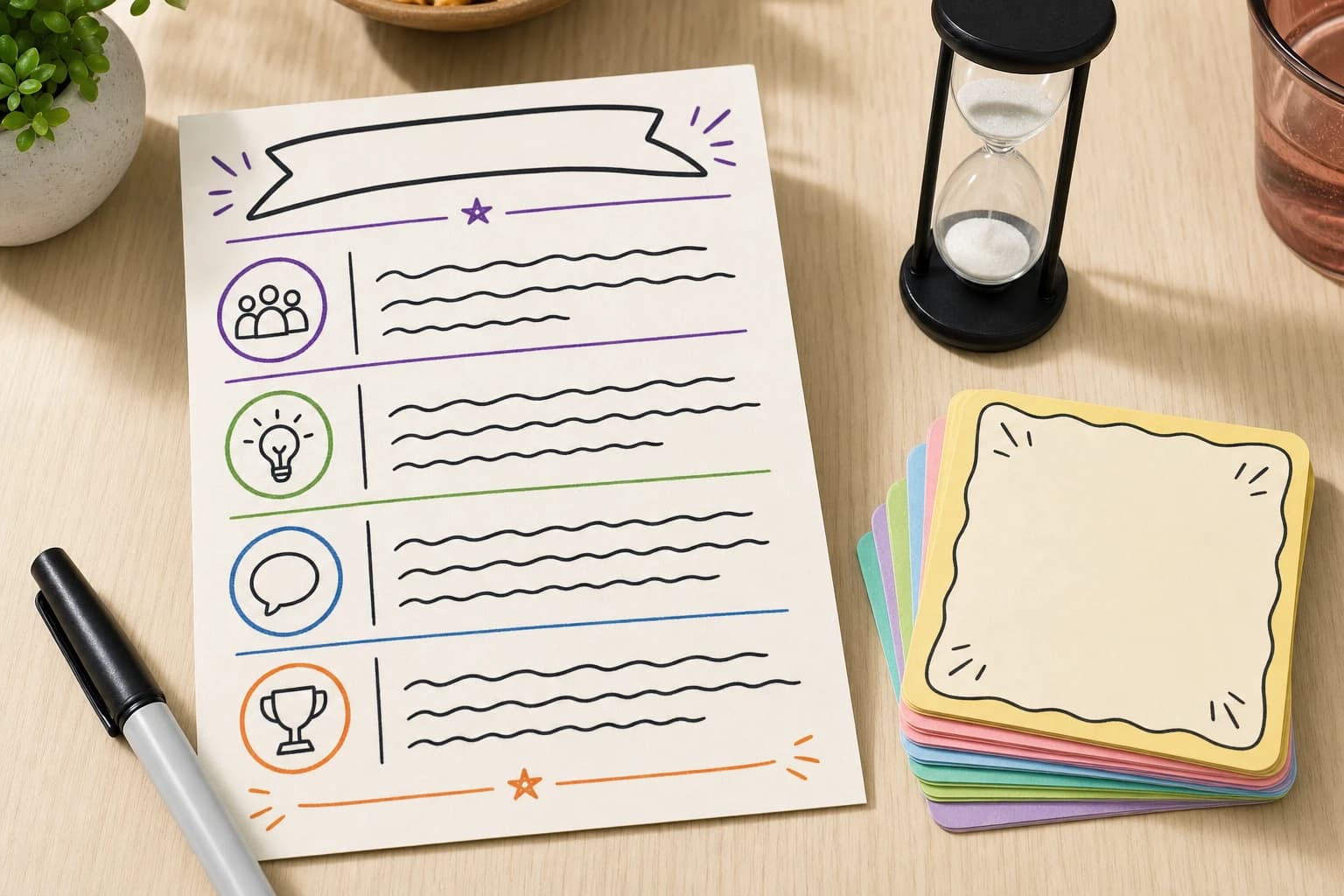
Before-and-after fixes for common hosting problems
Problem: the rules are clear to you but not to guests
Before: “It is kind of like charades, but with teams, and you can use sounds, except not words, and there are bonus points later.”
After: “Your team has 45 seconds to guess as many cards as possible. The actor may move and make sounds but cannot say any word from the card. We will play one practice card first.”
The second version works because it gives the goal, time limit, action, restriction, and practice step. It does not explain rare situations until they matter.
Problem: the teams are uneven
Uneven teams are one of the most overlooked party game mistakes. If one team has all the loud friends or all the experienced players, the other team may mentally quit. Fix this early by assigning teams yourself. For example, use alternating numbers around the room: 1, 2, 1, 2. For a family gathering, split by mixed households instead of parents versus kids. For a teen party, separate best friends if they dominate together.
Problem: the game embarrasses shy guests
Games that require singing, acting, dancing, or personal confessions can be fun with the right group and uncomfortable with the wrong one. Do not surprise guests with forced performance. Announce the type of game before starting and give people options: solo, partner, team representative, or helper role. If half the room hesitates, switch to a guessing, drawing, or team challenge instead.
Problem: the group is too large
Large groups fail when most people are watching instead of playing. Avoid one-at-a-time formats unless each turn is extremely short. For 20 or more players, divide the room into simultaneous teams, stations, or head-to-head pairs. If you regularly host bigger gatherings, the ideas in Large Group Party Games for 20 to 50 People That Keep Everyone Playing are built around avoiding long waits and elimination.
Problem: the game does not fit the space
A tiny apartment is not the place for sprinting games, and a wide backyard can make a quiet card game feel disconnected. Match the game to the room. In small spaces, use seated, verbal, drawing, guessing, or pass-the-object games. You can also pull from No-Equipment Party Games for Adults That Work in Small Apartments when supplies or space are limited.
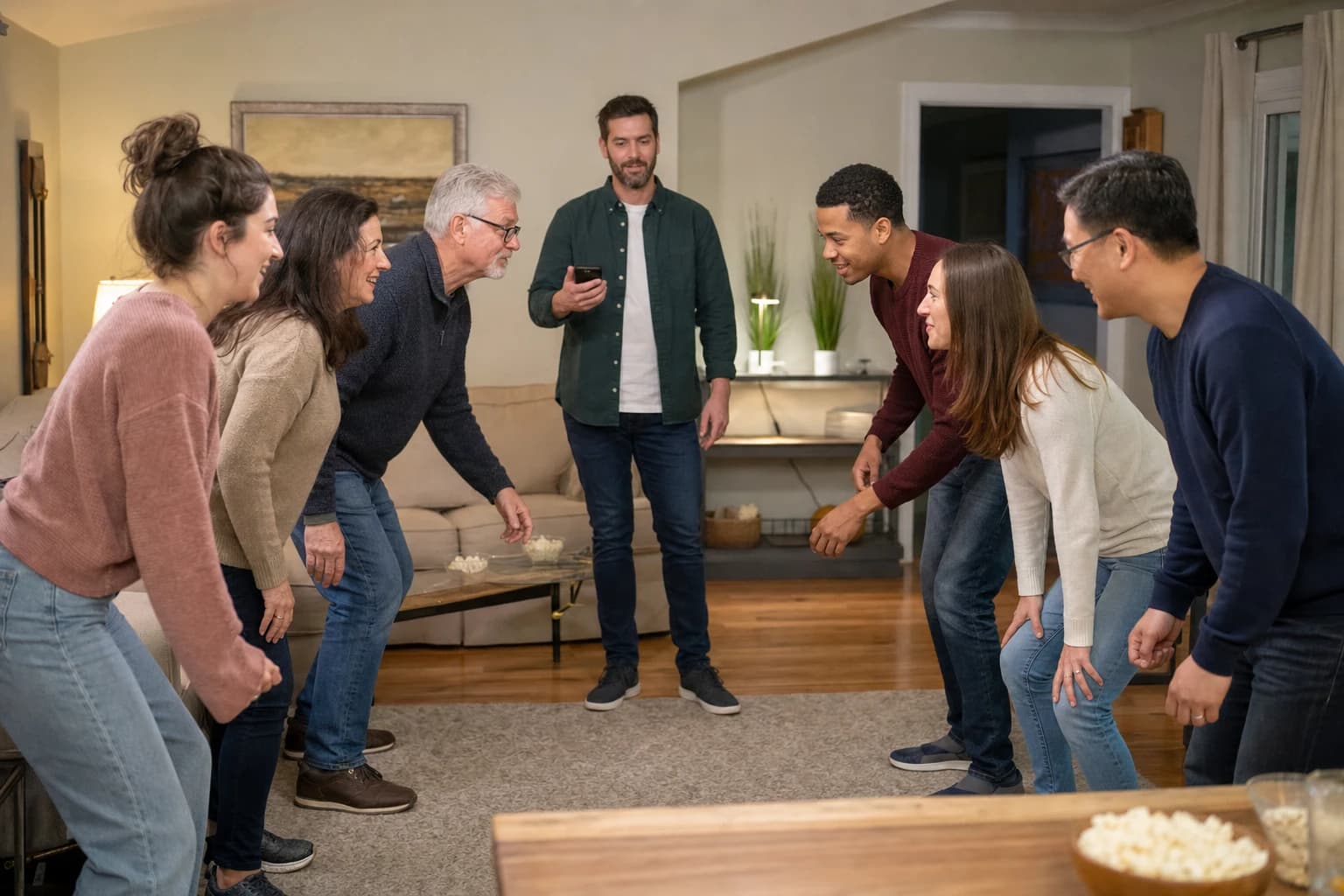
Timing rules that prevent games from dragging
Pacing is the difference between a game people remember and a game they endure. A good host watches the players, not just the score sheet.
- Explain for 60 seconds or less. If it takes longer, simplify the first round.
- Use 30 to 90 seconds for individual turns. Short turns reduce pressure and keep observers engaged.
- Cap most casual games at 15 minutes. If the game is still strong, announce “final round” and end on a high note.
- Do not restart for late arrivals. Add them to a team between rounds instead.
- Stop when laughter drops. If the room becomes quiet except for the active player, change format or end.
For children’s parties, planning the order matters even more because downtime can turn chaotic. A timed structure like How to Plan a 60-Minute Kids Party Game Schedule Without Running Out of Activities can help hosts balance active games, calmer games, and transitions.
Games to reconsider if the group is mixed
Some games are not wrong, but they are risky with guests who have different comfort levels. Be careful with games that involve personal secrets, messy food, intense physical contact, inside jokes, drinking pressure, or public ranking of players. If you would not want a new guest, grandparent, coworker, or shy child to be the center of attention in that format, use a team version or choose a different game.
FAQ: fixing party game mistakes
Why do party games fail even when the idea sounds fun?
Most failures come from execution, not the game idea. The rules may be unclear, the round may take too long, the teams may feel unfair, or the activity may not match the group’s mood.
How many games should I plan for a party?
Plan 2 main games and 1 backup for a casual gathering. It is better to run two games well than to rush through six. For kids’ parties or structured events, use a written schedule with transition time.
What should I do if guests do not want to play?
Do not pressure them. Invite them into helper roles such as timer, judge, clue reader, photographer, or scorekeeper. If several guests decline, switch to a lower-pressure game or let the party move naturally.
Are prizes necessary for party games?
No. Prizes can add fun, but they can also make competition too serious. If you use prizes, keep them small, funny, or team-based.
How do I make rules easier to understand?
Use one sentence for the goal, one sentence for the turn, one sentence for scoring, and one practice example. Avoid explaining every exception before the first round.
What is the best way to end a party game?
End with a final round while people are still engaged. Say, “Last round for the win,” announce the result quickly, and move on to food, music, conversation, or the next activity.
Conclusion: fix the host problem, not the guests
When party games guests do not like fall flat, the cause is usually fixable. Choose the game for the room you actually have, not the room you imagined. Keep rules short, rounds quick, teams balanced, and participation flexible. Watch for boredom, embarrassment, and confusion early, then adjust before the energy disappears.
The best hosts are not the ones with the most complicated games. They are the ones who notice what the group needs and make the game easy to join, easy to understand, and easy to leave on a high note.