A one-hour activity window sounds easy until twelve excited children finish a game in three minutes, ask what is next, and start inventing their own version of the party. A good kids party game schedule prevents that scramble. It gives you enough planned activities, space for transitions, and a calm ending before food, cake, presents, or pickup.
This guide shows how many games to prepare, how to arrange them by energy level, and what a realistic birthday party game timeline looks like for different ages. You will also find backup games, transition phrases, and common mistakes that make a one-hour party feel chaotic.
The short answer: plan 4 to 6 games, plus 2 backups
For a 60-minute party activity block, plan 4 to 6 main games and keep 2 very simple backup activities ready. That does not mean every game will last exactly 10 minutes. Some games need setup, rule explanations, cheering, water breaks, and cleanup. A better planning rule is:
- 5 minutes for arrival or gathering children into the game area
- 40 to 45 minutes for planned games
- 5 to 10 minutes for transitions, water, bathroom needs, and resetting supplies
- 5 minutes for a calm closing activity before the next part of the party
If you are planning party activities for one hour, avoid filling every minute with a different game. Children need time to understand rules, move between spaces, and recover from high-energy play. The Centers for Disease Control and Prevention notes that children and adolescents ages 6 to 17 need 60 minutes or more of physical activity daily, but party hosts should still match activities to the group, space, weather, and supervision available. You can read the CDC’s guidance here: Physical Activity Guidelines for Children.
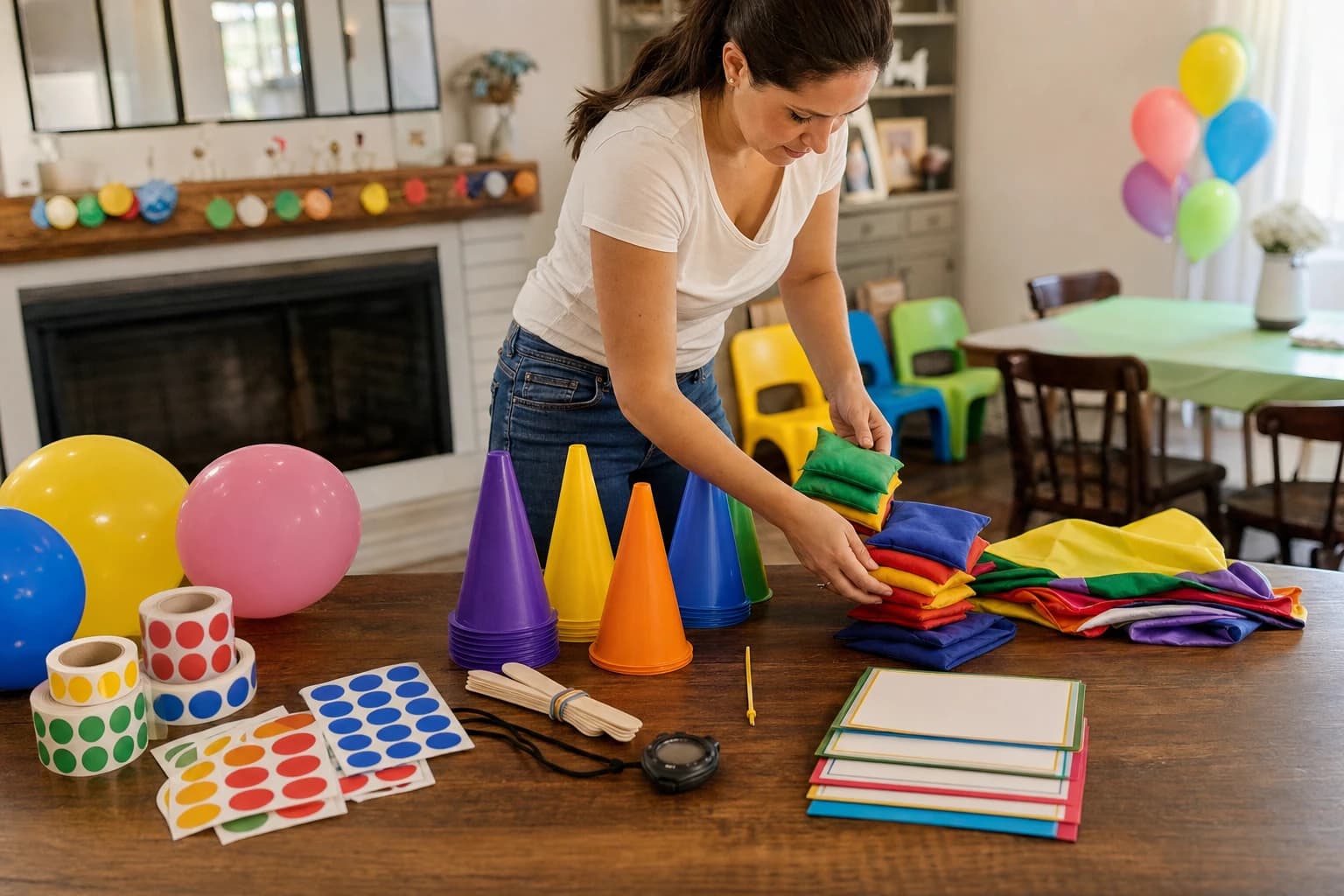
Materials to prepare before the party
You do not need a complicated supply list. The goal is to make switching games fast.
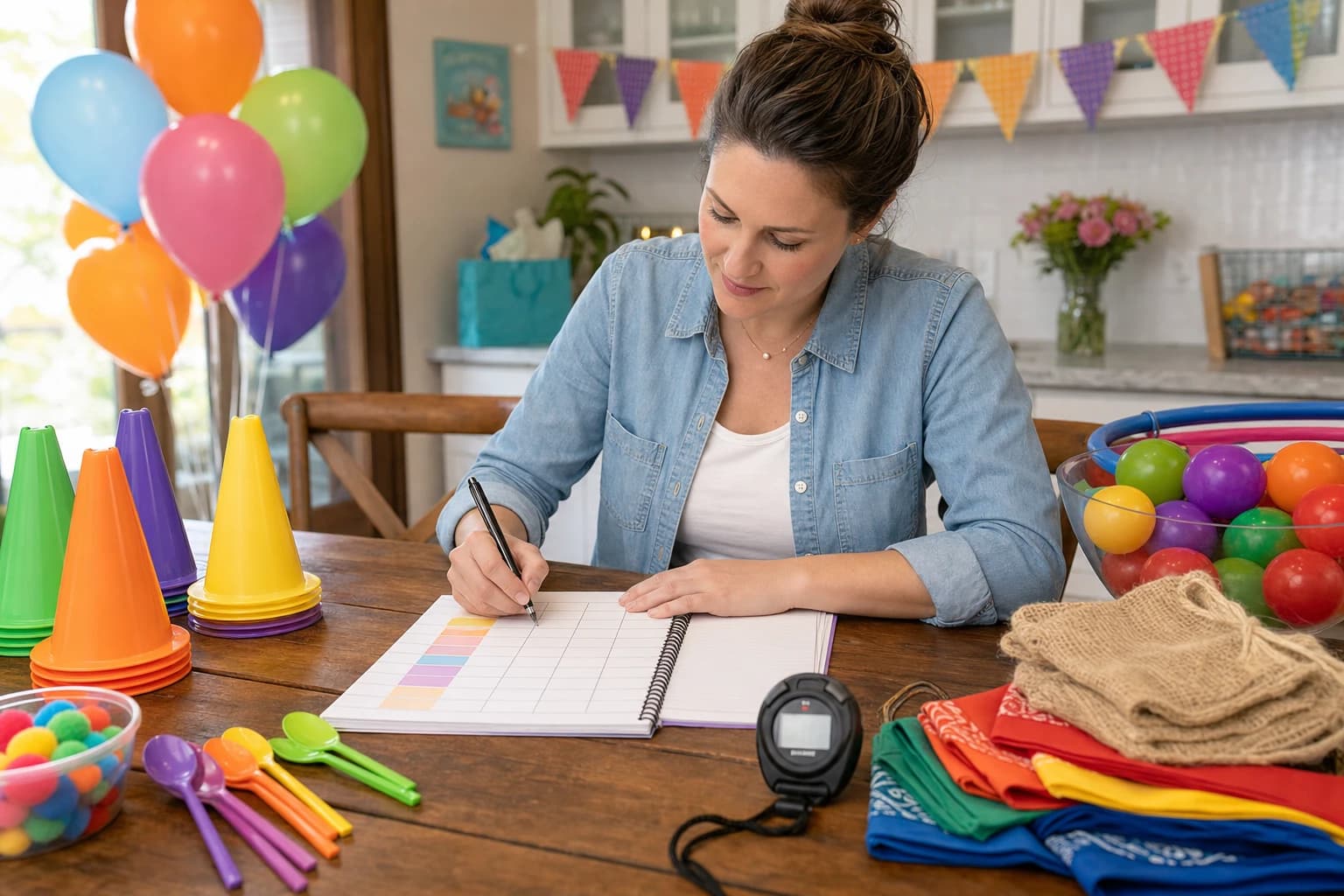
- A printed or handwritten 60-minute schedule
- A phone timer or kitchen timer
- Painter’s tape or cones for marking start lines and boundaries
- Music speaker for freeze dance, musical statues, or transitions
- Small prizes or stickers if you use rewards, ideally enough for everyone
- Two labeled supply bags: one for active games and one for quiet backups
- Water station nearby, especially for outdoor or running games
- A clear place for children who want to watch rather than join for a round
Build the schedule around energy flow, not just game count
The most common scheduling problem is starting with the wildest game first. It feels logical because children arrive excited, but it often makes the rest of the hour harder. Once the group has sprinted, shouted, and chased each other for 10 minutes, a quiet memory game can feel impossible.
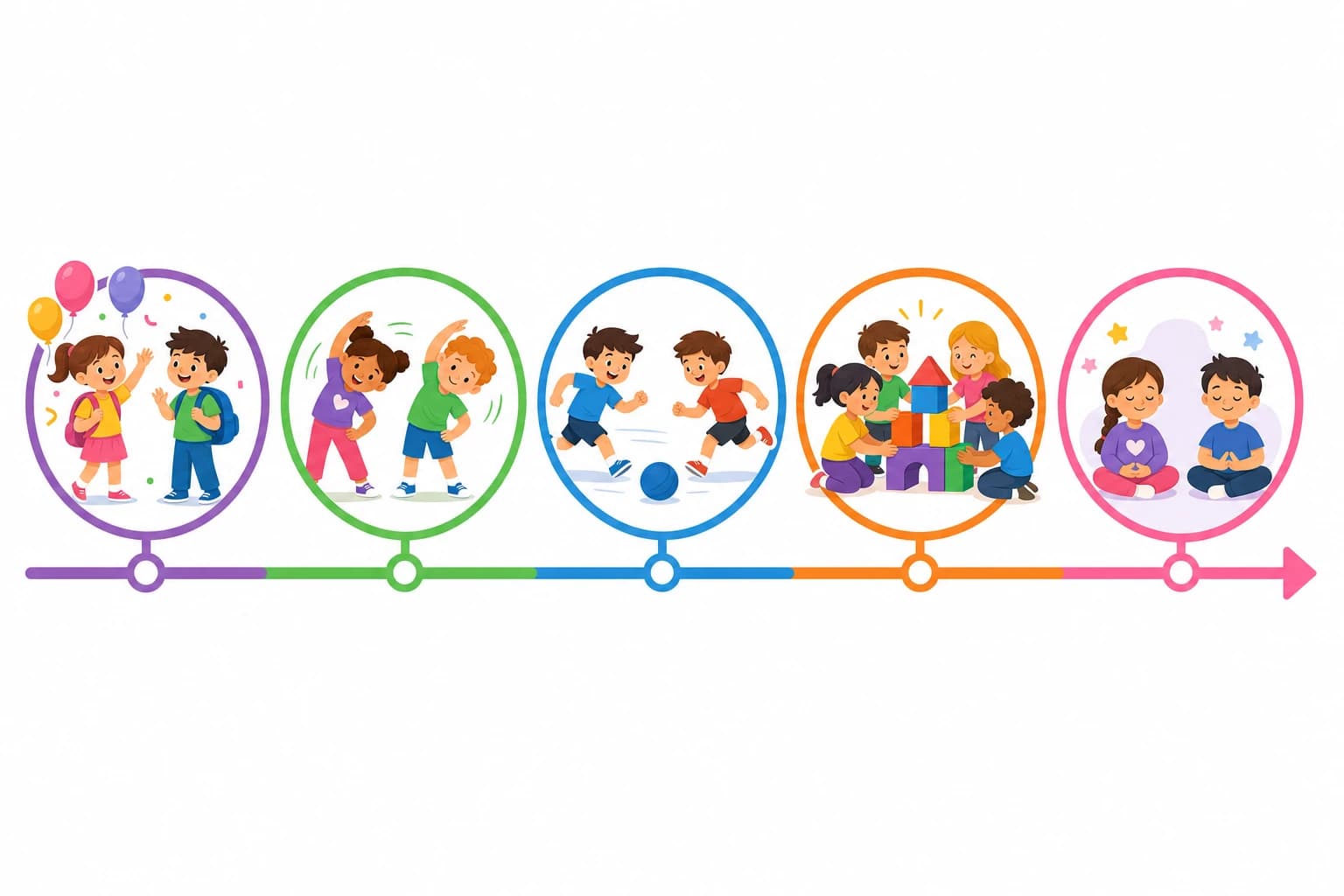
A smoother kids birthday party planning games sequence usually follows this pattern:
- Gathering game: easy, low-pressure, and playable while children are still arriving.
- Warm-up game: movement without too much competition.
- Main active game: the highest-energy activity of the hour.
- Skill or team game: still fun, but more structured.
- Calm closing game: seated, guessing-based, music-based, or creative.
This flow gives children a beginning, middle, and end. It also helps you move from active play into cake, snacks, presents, or pickup without asking a group of children to switch from full-speed running to sitting silently in ten seconds.
Sample 60-minute birthday party game timelines by age
Use these sample schedules as templates, not strict scripts. If a game is going well, let it run a few minutes longer and remove a later game. If attention drops, end the game while it still feels fun.
| Age group | Best number of games | 60-minute sample schedule | Host note |
|---|---|---|---|
| Ages 3–5 | 4 main games + 2 backups | 0:00–0:08 Bubble pop or sticker hunt; 0:08–0:18 Animal walks; 0:18–0:30 Pass the parcel or musical statues; 0:30–0:42 Beanbag toss; 0:42–0:55 Story-based treasure search; 0:55–1:00 calm song or group photo | Use very short rules. Repeat the same instruction more than once. |
| Ages 6–8 | 5 main games + 2 backups | 0:00–0:07 Would You Rather corners; 0:07–0:17 Freeze dance; 0:17–0:30 Relay challenge; 0:30–0:40 Balloon keep-up; 0:40–0:52 Scavenger hunt clues; 0:52–1:00 birthday trivia or quiet guessing game | Mix movement with quick team challenges. Avoid long waiting lines. |
| Ages 9–12 | 4 or 5 main games + 2 backups | 0:00–0:08 Team name and quick challenge; 0:08–0:20 Minute-to-win-it station; 0:20–0:35 capture-the-flag variation or relay; 0:35–0:47 mystery object challenge; 0:47–0:57 group puzzle race; 0:57–1:00 scores, shout-outs, reset | Older kids like clearer goals, teams, and chances to contribute ideas. |
| Mixed ages | 5 simple games + 3 backups | 0:00–0:08 name game; 0:08–0:18 dance or movement game; 0:18–0:30 team relay with helpers; 0:30–0:42 cooperative challenge; 0:42–0:55 treasure hunt; 0:55–1:00 calm group ending | Pair older children with younger ones and choose games where speed is not the only advantage. |
If your party is indoors and space is limited, choose games that keep children playing without running. For ideas that fit a home or small party room, see 25 Indoor Birthday Party Games for Kids Ages 6–10 With Simple Rules and Indoor Games for 10 People in a Small Room.
Step-by-step: how to create your own one-hour game plan
1. Count the children and adults before choosing games
The same activity feels very different with 6 children, 14 children, or 30 children. If you have more than 12 children, avoid games where one child performs while everyone else waits. Use teams, stations, or whole-group games. If you have a large guest list, large group party games that keep everyone playing are usually better than elimination games.
A simple supervision approach is to assign one adult to run the game, one to help with supplies, and one to watch the edges of the play area. This matters most outdoors, near stairs, or when children are using balls, balloons, or blindfold-style games.
2. Choose one anchor game first
The anchor game is the one activity the birthday child is most excited about. It might be a treasure hunt, obstacle course, relay, or themed challenge. Put this game in the middle of the hour, usually between minute 15 and minute 35. That gives late arrivals time to join and prevents the party from peaking too soon.
For example, if the theme is dinosaurs, the anchor game could be a dinosaur egg hunt. The schedule might begin with dinosaur freeze dance, move into the egg hunt, then finish with a quieter fossil guessing game.
3. Add a low-pressure opener
The first game should work even if only half the guests have arrived. Good openers include:
- Sticker hunt around the room
- Dance when the music plays, freeze when it stops
- Choose a corner based on a silly question
- Guess how many candies or blocks are in a jar
- Name game with a soft ball passed around the circle
Do not start with a relay race, scavenger hunt with clues, or anything that requires full teams. Late arrivals will interrupt the instructions and may feel left out.
4. Put the highest-energy game in the middle
Minute 15 to minute 35 is the best window for the biggest movement game. Children are warmed up, most guests have arrived, and there is still time to calm down afterward. Keep rules short: explain the goal, the boundary, how to win or finish, and what happens when the timer ends.
If you are asking how many games for kids party planning, remember that one well-run active game can take 12 to 15 minutes. That includes explaining, dividing teams, playing two rounds, and collecting supplies.
5. Use transitions as mini-activities
Transitions are where many parties lose control. Instead of saying, “Everyone wait while I set up,” give children something specific to do for 60 seconds.
- “Move like a robot to the blue line.”
- “Find a partner and create a silent high-five.”
- “Sit if you have blue socks, stand if you have red on your shirt.”
- “Whisper your favorite cake flavor to the person next to you.”
These tiny prompts buy setup time and keep attention on you without raising your voice.
6. End with a calm game, not a lecture
The last five to ten minutes should slow the group down. Good choices include birthday child trivia, a quiet treasure reveal, charades with no shouting, pass-the-present, or a group story where each child adds one word. This ending makes it easier to move to cake or pickup.
Easy backup games that save the schedule
Backups should need almost no setup. Do not choose a backup that requires assembling teams, hiding objects, or learning complicated rules.
- Silent copycat: One leader makes slow movements while everyone copies. Switch leaders every 30 seconds.
- Would You Rather corners: Label two sides of the room and ask silly choices, such as pizza or tacos.
- Freeze dance: Play music, pause it, and have everyone freeze.
- Birthday statue museum: Children pose like statues. The birthday child chooses the silliest, tallest, or most mysterious statue.
- Pass the object: Pass a soft toy while music plays. When it stops, the child holding it answers a simple question.
- One-minute build: Give teams cups, blocks, or paper and ask them to build the tallest tower in 60 seconds.
How to adjust the schedule for different party situations
For outdoor parties
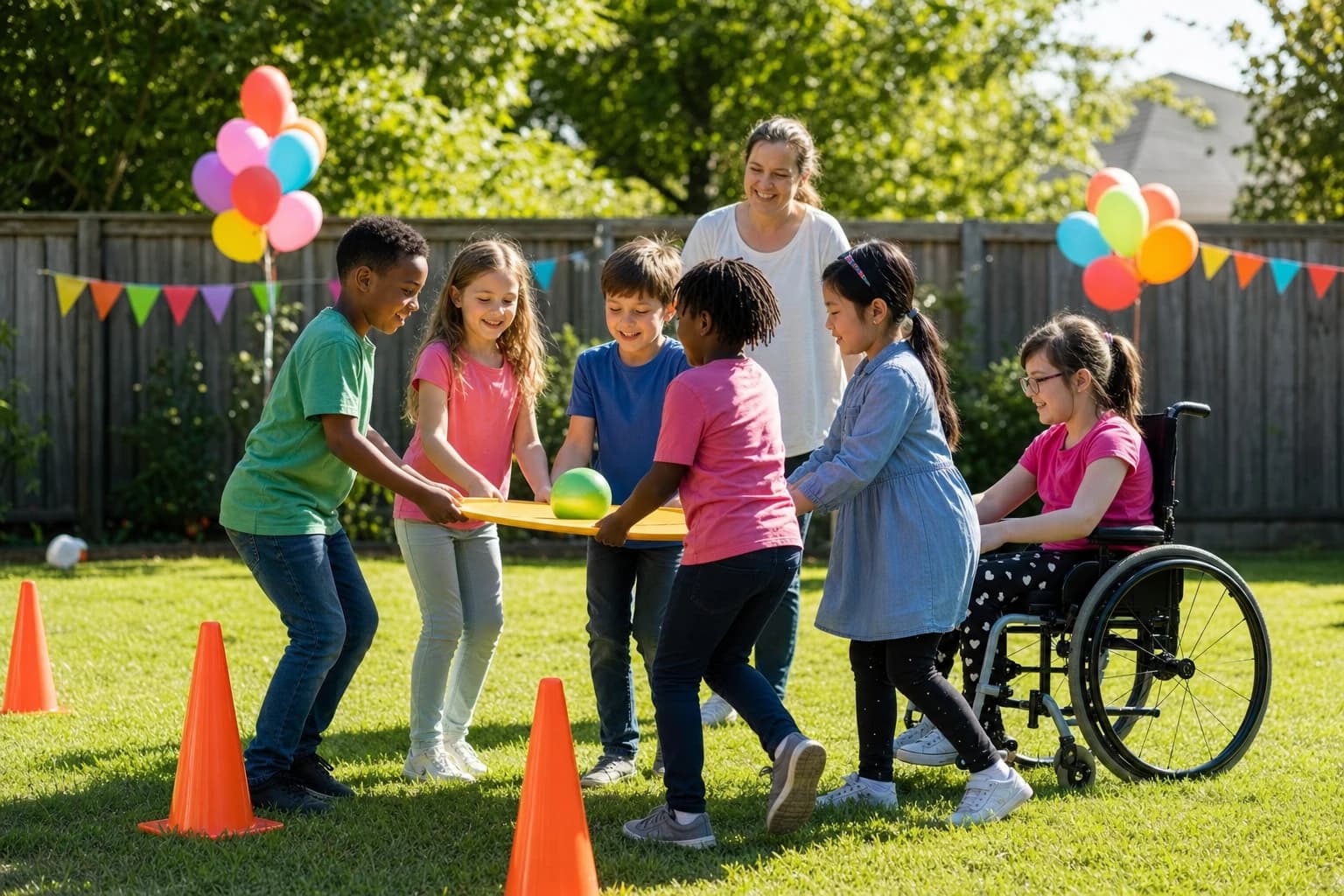
Outdoor parties allow more movement, but they also need stronger boundaries. Mark the play area with cones, rope, chalk, or visible landmarks. Avoid planning every activity around running, especially in hot weather. Mix in tossing games, scavenger hunts, and team puzzles.
For indoor parties
Use fewer running games and more circle, music, guessing, and station activities. Painter’s tape can mark lanes for beanbag toss, target games, or “do not cross” lines. If the room is small, divide the hour into two or three stations instead of one whole-group activity.
For mixed-age parties
Choose games where younger children can participate without perfect coordination and older children can still feel useful. Cooperative games often work better than elimination games. For more ideas, cooperative playground games for kids can be adapted for parties by shortening rounds and adding a theme.
For family parties with adults joining
If grandparents, cousins, and parents are part of the game hour, use team-based challenges rather than child-only races. A mixed-age format can feel more like a family game night; this related guide on how to plan a 60-minute family game night for mixed ages may help if your party includes several generations.
Common mistakes that make the hour feel too short
- Starting with the most exciting game. Save the biggest activity for the middle so the hour has a natural peak.
- Planning only three games. If one falls flat or ends quickly, you will have too much empty time.
- Choosing games with long elimination. Children who are “out” may wander, argue, or lose interest.
- Explaining rules for too long. Give a 30-second explanation, demonstrate once, and start with a practice round if needed.
- Ignoring setup time. A five-minute relay can take ten minutes once you create teams and reset supplies.
- Using prizes that create disappointment. If you offer prizes, make them small and inclusive. Stickers, stamps, or team points are easier than one winner taking everything.
- Not having a rain or indoor plan. For outdoor birthdays, prepare at least three games that work inside without running.
A simple printable-style checklist
Before guests arrive, check these items off:
- I have 4 to 6 main games written in order.
- I have 2 backup games that require little or no setup.
- The highest-energy game is in the middle, not at the beginning.
- I know where children will stand, run, sit, and wait.
- Supplies are grouped by game, not mixed in one box.
- At least one adult knows the schedule besides the host.
- The final activity is calm enough to lead into cake, food, or pickup.
FAQ: Kids party game schedule planning
How many games do I need for a one-hour kids party?
Plan 4 to 6 main games and 2 backups. Younger children usually need shorter, simpler games. Older children can handle fewer games if each one has rounds, teams, or challenges.
How long should each birthday party game last?
Most games work best in 6 to 12 minute blocks. A larger anchor game, such as a treasure hunt or relay tournament, can take 15 minutes including instructions and reset time.
Should I use elimination games?
Use them carefully. Elimination games can be fun for a short round, but they create waiting time. For most kids parties, no-elimination or quick re-entry rules keep more children involved.
What if the children finish every activity too quickly?
Use a backup game, repeat a favorite with a new rule, or turn the last activity into two rounds. For example, freeze dance can become animal freeze dance or slow-motion freeze dance.
What is the best first game for a kids birthday party?
Choose a game that works with late arrivals, such as freeze dance, a sticker hunt, a guessing jar, or would-you-rather corners. Avoid team games until most guests are present.
How do I calm kids down after active games?
Lower the volume, ask children to sit or stand on a marked line, and switch to a guessing, storytelling, trivia, or pass-the-object game. Do this before cake or pickup, not after children have already become restless.
Conclusion
A strong kids party game schedule is not about packing the hour with nonstop entertainment. It is about pacing. Start with an easy arrival game, build toward one exciting middle activity, then guide the group into a calmer ending. With 4 to 6 planned games, 2 backups, clear transitions, and supplies ready in order, a 60-minute activity block can feel organized without feeling stiff.
The best plan is also flexible. If the children love a game, let it breathe. If something is not working, move on quickly. Your schedule is there to support the party, not control every second of it.